

The useful patchy beard styles are the ones that follow the hair you already grow: controlled short stubble, a deliberate mustache or chin-focused shape, or a clean shave. Map the dense and sparse areas before trimming, try one reversible option at a time, and compare relaxed front and profile views in consistent light. No style can make follicles appear where there are none, and a photo or app cannot diagnose why a new bare patch appeared.
This is a decision guide, not a ranking of faces. A cheek gap can be unimportant at one length and obvious at another; maintenance time and skin comfort matter as much as a flattering picture. MogRise can help organize clear front and profile photos into explained observations and a small practical plan, but its image-based analysis is only planning context. Your preference remains the deciding factor, and sudden smooth bald patches or irritation warrant professional advice rather than a styling experiment.
Patchy beard styles start with a growth map, not a filter
Let the existing hair reach a length at which you can see its distribution, without promising that waiting alone will create new density. Stand in ordinary diffuse light and look at the cheeks, sideburn connections, jaw, chin and upper lip separately. Note where hair is strong, where it is simply lighter, and where the skin is clearly exposed. Compare both sides without expecting perfect symmetry. A pattern that has always been there is a different question from a sudden, sharply defined loss of hair.
Take a neutral front photo and a true side profile at eye level, at a comfortable camera distance. Keep the same light and relaxed expression for each option. A close selfie can exaggerate one part of the face and hide another; a dark filter can make wispy hairs appear thicker. If you want a dependable baseline, the guide to appearance progress photos explains how to repeat distance, crop and light. This is about seeing the beard's outline, not scoring your face.
Ask a narrow question: do you want less daily shaving, a little texture around the lower face, or a defined mustache and chin? The answer helps you choose the area worth keeping. Do not assume a full beard is the destination. Some people prefer a clean face, while others like visible stubble even when cheek coverage is uneven. Write down the choice and the maintenance it requires before you touch the trimmer.
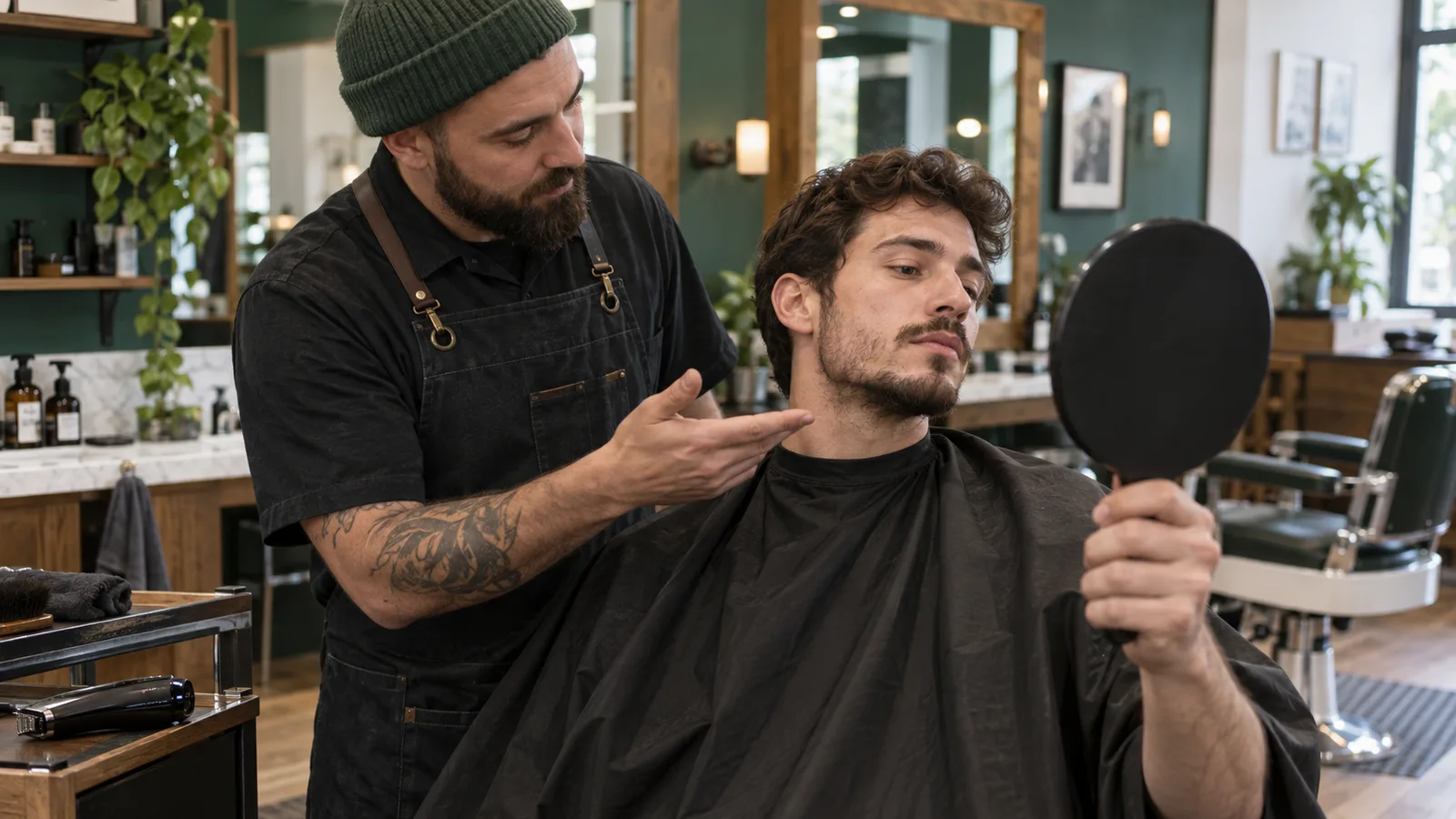
Test short stubble before chasing a full outline
Short stubble can lower the contrast between a dense chin and thinner cheeks, but it is an option rather than a universal winner. Start with a guarded trimmer at a conservative setting and remove little at first. Make a pass with the grain of growth, check the complete face from normal viewing distance, and adjust only if the outline still feels too long. The exact guard number is personal: hair texture, color, density and how quickly it grows change how a setting looks.
Decide whether to keep the cheeks evenly short or trim sparse upper areas a little closer. Avoid drawing a harsh high cheek line just to hide a few gaps. A restrained lower boundary makes stubble read as intentional without requiring a sculpted edge that is difficult to repeat. If your neck is sensitive, do not shave repeatedly to polish the line. Our beard-neckline guide covers a conservative placement and explains why a line too high can make the lower face look disconnected.
Live with the option across ordinary workdays and an active day. Check whether it snags on clothing, causes itching, leaves skin comfortable, and is realistic to maintain with the tools you own. A style that only works immediately after a barber appointment is not necessarily your best daily choice. Take a matched front and profile set once the trim has settled; do not chase a different camera angle until the stubble appears dense enough.

Use the areas that are actually fuller
If the cheeks remain sparse while the mustache or chin is denser, consider a shape that gives those areas a purpose. A short mustache with a modest chin beard, a small goatee, or a mustache alone can be coherent when the missing cheek connectors are not forced into the design. A longer beard is not automatically better: extra length can separate strands and reveal skin beneath. Try a modest outline first, then assess it from both front and side.
Make a simple boundary with a trimmer rather than carving into healthy growth in pursuit of impossible symmetry. Keep the stronger part neat, clean stray hairs only where the design truly needs a boundary, and check it at normal distance instead of a magnifying mirror. Ask the barber to show the maintenance line before they cut. You can decline a shape that needs constant precision or a skin-close shave that irritates you.
The general beard-style-by-face-shape article explores broader balance between facial hair and the face. Here the decision is narrower: which parts of the beard can carry a consistent shape given your particular pattern? MogRise may help compare explained front and profile observations with the available options, but it cannot predict new hair growth or verify that one beard is objectively more attractive. Keep only a change you enjoy wearing and maintaining.

Clean-shaven is a choice, not a defeat
A clean shave can be the least fussy option if growth is very uneven or if the skin and schedule tolerate shaving well. It removes the burden of designing around each gap. Yet it is not automatically better than stubble, and a perfectly close shave can create its own problems. Decide whether you like the look, how your face feels afterward, and whether you can maintain it without burning or bumps.
Use a comfortable preparation and a clean tool, shave gently in a direction your skin tolerates, and avoid repeatedly scraping the same area just to erase shadow. Some men with recurring irritation find a short guarded trim easier than a skin-close shave. The American Academy of Dermatology recommends attention to the skin beneath facial hair and careful shaving of the neck and other areas to reduce irritation. If a product stings or your skin becomes inflamed, stop and simplify rather than making the routine more aggressive.
Do not compare a fresh shave to a two-week beard under different lighting and call the result conclusive. Put on the same everyday clothing, use the same camera setup and consider what each option looks like over several normal days. A good choice supports your actual life. It does not require daily rescanning, a stranger's approval, or a numerical interpretation of your jawline.
Compare the options with one controlled decision
Set up your comparison before the first trim: same room, diffuse light, eye-level phone position, front view and one chosen profile. Keep the expression relaxed and the hair and clothing ordinary. Photograph the stubble option, then wait until a different option can be presented fairly. A clean-shaven image taken in a dark bathroom immediately after a hot shower is not comparable with an outdoor stubble portrait days later.
Read each view for the original question. Does short stubble soften the transition at the cheek? Does a chin-focused shape appear intentional without difficult daily detailing? Does a clean shave save time and leave the skin comfortable? Check both the image and the real-world upkeep. If the alternatives are close, choose the easier one. You do not need an invented universal ranking of beard lengths, and a different preference next season is perfectly ordinary.
With MogRise, clear front and side photos can provide explained analysis and help you keep a small set of controllable priorities. Use that context to decide on one trim to test, not to change five things at once. Camera distance, angle, light and model assumptions can affect the output. A FaceScore is not evidence of human worth or a clinical assessment; end the review once you have made a practical, reversible choice.

Know when a gap stops being only a style question
A lifelong sparse cheek pattern is common, but a newly appearing, smooth round bald area, rapid loss, redness, scaling or pain deserves professional assessment. Do not label it from a selfie. Alopecia areata can affect beard hair, and other conditions can also change the skin or hair. The AAD's guidance on patchy hair loss discusses skin care and dermatologist support; it does not authorize an app to identify a cause from appearance alone.
Avoid miracle growth oils, unverified supplements or self-prescribed treatments based on social posts. A beard-care oil may improve the feel of existing hair and skin; it does not establish new follicles. If the skin is irritated after trimming, pause the experiment, use mild care and seek advice when symptoms persist. The useful boundary is simple: style around a familiar growth pattern, but get a clinician to evaluate a sudden or symptomatic change.
Your next step is modest. Mark where the beard already grows, choose one of short stubble, a focused shape or a clean shave, maintain it for a realistic interval, and take comparable photos only when they answer that decision. Keep what works for your skin and routine. Uneven facial hair is not a verdict about your appearance, and neither an app nor a barber needs to turn it into one.