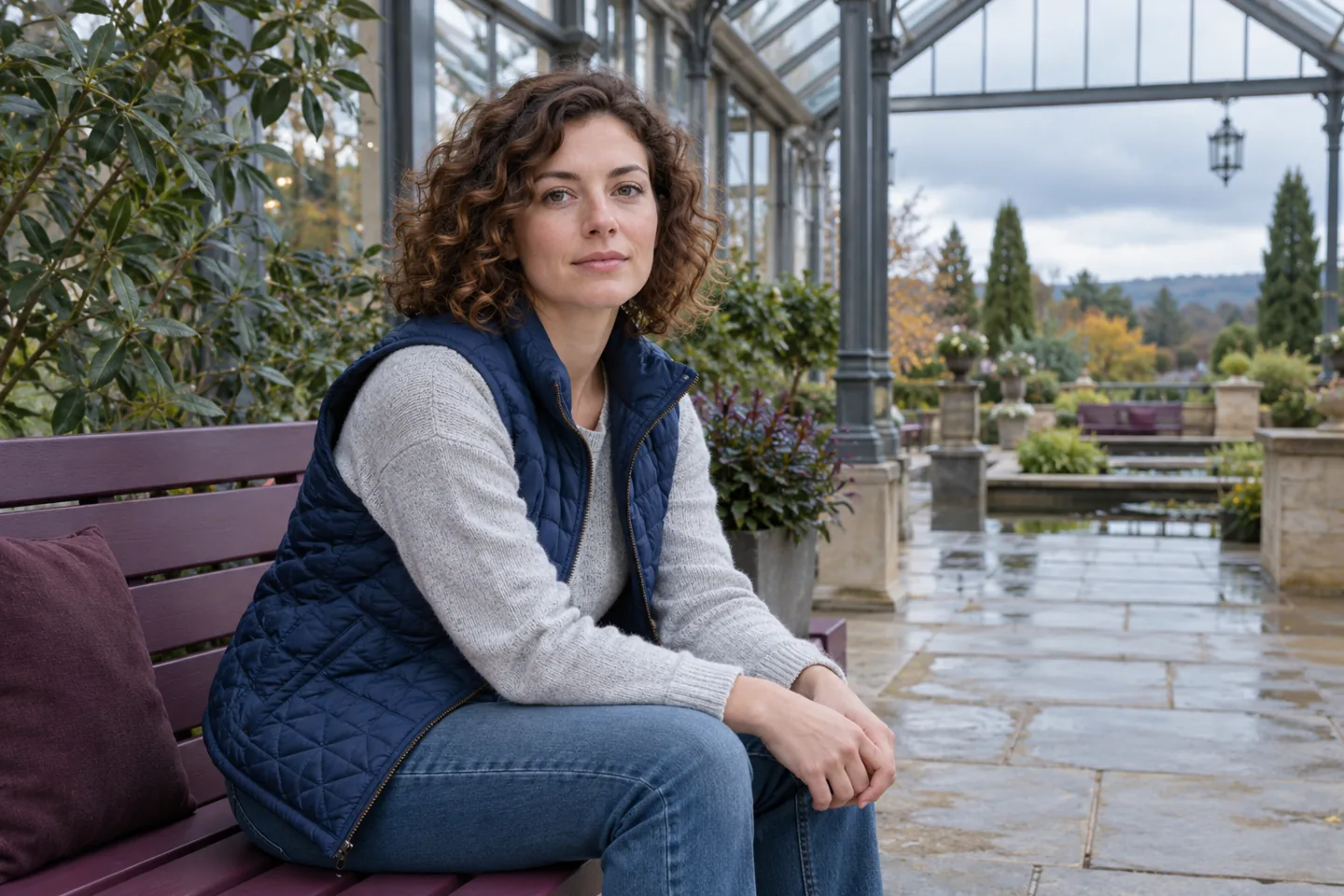
A neutral facial expression for face analysis means an ordinary resting expression without deliberately smiling, frowning, pouting or tightening your jaw. It should feel comfortable, not frozen. The purpose is to make one reference easier to interpret, not to discover your only real face or decide which expression makes you worth more.
You might be choosing a hairstyle, reading a facial-feature explanation or wondering whether a smiling photograph is a useful starting point. This guide keeps that decision specific. MogRise can support broader explained analysis and a small plan from clear front and profile photos, while you remain free to keep the smiling pictures that represent your life. No perfect neutral pose is required before you can make an ordinary grooming choice.
Neutral facial expression: a reference, not a rule
Start by naming what you want to decide. Perhaps you want to see where a fringe covers your forehead, or understand a comment about your visible face outline. A resting reference can help keep expression out of that particular discussion. It does not replace the face you show while talking, laughing or concentrating. Those moments belong to your appearance too, and a useful reference has a narrower job than a complete portrait of your personality.
The FISWG capture guide, version 2.0 of 10 May 2019, includes neutral expression among its capture considerations. That is identification guidance, not a beauty standard or validation of an appearance app. Here, the practical choice is simply to avoid adding a deliberate expression while you consider one visible feature.
Write a short question before opening the camera: can I see the area I want to discuss? Avoid the much broader question of whether this is my best possible face. The first question can be answered with a usable image. The second can keep moving as you change your pose, your expectations and the photographs you compare. You can leave it unanswered and still choose a sensible next step.

Notice effort before adjusting the image
Settle into a comfortable seated or standing position. Stop talking for a moment, let an intentional smile finish and look toward the camera without widening your eyes for it. Let your lips rest as they normally do. Do not press them together, suck in your cheeks, push your tongue into a new position or hold your jaw forward to manufacture an outline. You are making a photograph, not performing an exercise or testing how still you can remain.
If you notice that you are clenching, lifting your brows or holding your breath, pause the capture. Look away and return only if the task still feels useful. You do not need a timed breathing routine, a prescribed number of attempts or another person's approval that your face looks sufficiently blank. Comfortable resting expressions differ. A slight habitual curve at the mouth is not a reason to keep rearranging your face until it resembles somebody else's example.
Keep the capture simple enough to repeat
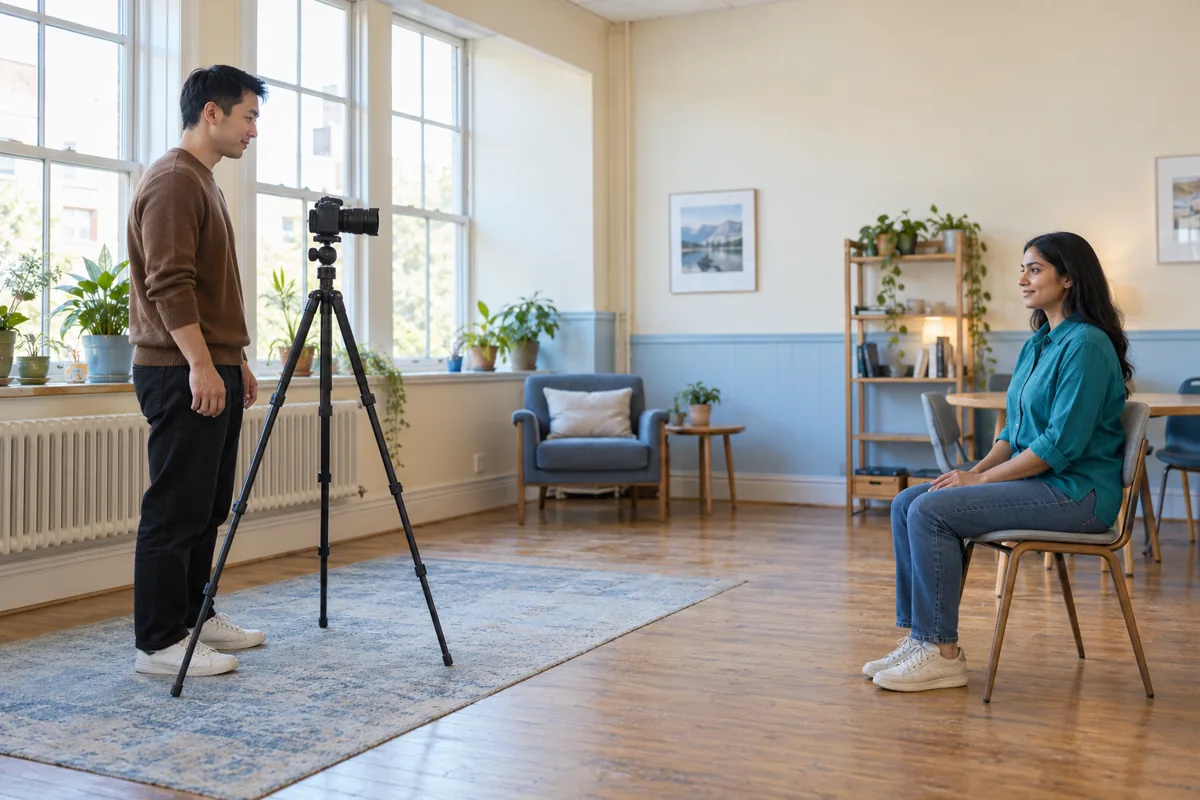
Use ordinary even light and a camera position that lets you see the whole face without leaning into the lens. A stable support or a willing friend can remove the awkwardness of stretching an arm toward your face. Adjust the equipment to you instead of twisting your neck to fit a small preview. Check that the relevant area is visible, then make the photograph. Expensive equipment and a laboratory setup are unnecessary for this limited everyday task.
When you also need a profile reference, turn comfortably rather than pulling the chin into an exaggerated position. Follow the app's actual capture instructions and keep the purpose of each view clear. Our front-versus-side analysis guide explains why the two views answer different questions. They are complementary references, not competing entries in a contest for the most flattering angle. Neither photograph tells you what your face should look like during a conversation.
Keep a smiling photo for its own purpose
A smile and a resting expression can present the mouth, cheeks and eye area differently. Do not convert that observation into a claim that one picture is dishonest. If the aim is to remember an afternoon with friends, an expressive photograph may be exactly the right one. If the aim is a limited feature discussion, choose the resting reference you prepared. The purpose determines the useful image; a single photographic expression does not have to serve every situation.
Avoid arranging a smiling and resting picture into a personal before-and-after judgment. You have changed the expression, not demonstrated a treatment, improvement or loss. If you compare them at all, name only the relevant difference: my smile lifts the visible cheek outline here. Do not infer permanent structure, emotional state or character from that sentence. Other people also see you moving, and you do not owe them the exact expression used for a reference photograph.

Use MogRise for an explained decision
If you choose to use MogRise, start with your clear front and profile references and read the explanation alongside any score. Keep the original question nearby so the report does not turn into a list of everything you might change. For example, you can consider one reversible hair-framing choice rather than interpreting a comment about visible proportions as a demand to alter your face. The app supports planning; it does not define the value of the person in the photographs.
MogRise is free to download and offers in-app purchases. Do not assume that every feature or repeated analysis is free. Check the current offering before proceeding, and use only functions you actually want. This guide does not claim that the app certifies a neutral expression, measures muscle tension or detects your emotions. You can decide that the reference is adequate yourself. If an explanation does not help with your practical question, you do not need another scan to justify setting it aside.
Turn the observation into one small action
Separate three notes: what is visible, what you prefer and what you will try. A visible observation could be that hair covers one side of the upper face. Your preference could be to see that area more clearly. A small action could be to move the hair temporarily before deciding whether any cut is needed. These are different statements. Keeping them separate prevents a photograph from quietly becoming a rule that your features must obey.
Choose an action that can be reversed and evaluated in its actual setting. Try the hairstyle with the glasses or clothes you normally wear, then decide whether it suits your routine and preference. Our appearance-priority guide can help narrow a larger list. A score increase is not necessary to keep a comfortable choice you like. Equally, no score obliges you to keep something inconvenient. End with an ordinary decision, including the decision to leave your current style alone.
Handle an uncertain reference without chasing it
Some photographs are simply unhelpful: the eyes closed during capture, the camera moved or you were speaking. If a clear practical fault prevents the intended task, a replacement can make sense. Decide what fault you are correcting before taking it. Avoid taking another photograph only because you disliked a number or because your resting expression did not resemble a polished online example. Changing the target each time makes a session difficult to finish.
You can also proceed without an image-based answer. A barber can discuss where hair falls while you sit normally, and you can choose a frame by comfort and preference during a fitting. If maintaining a supposed neutral face feels awkward or distressing, stop the session rather than forcing it. An appearance tool is optional. You do not need to solve every uncertainty about expression before leaving the house, meeting somebody or wearing a familiar outfit.
Leave the camera with a useful stopping point
Keep only the reference you need under a clear personal description such as resting front view for fringe discussion. Avoid labeling it my true face or my objective baseline. Note the practical decision separately so you do not have to reconstruct it from a collection of nearly identical images later. Store or delete personal images according to your own preferences and the service's actual controls; do not assume a publication or app promises a retention policy it has not stated.
A finished session can be very small: one usable reference, one explanation worth considering and one choice for your normal routine. Put the camera away once that job is done. Smile, speak and move as you normally would afterward. A neutral reference is useful when it reduces uncertainty around a decision; it has stopped helping when it becomes another expression you feel required to perform throughout the day.