

What should I improve about my appearance first: hair, beard or skin? Start with the option that is clearly visible in neutral photos, safely changeable, affordable to maintain and likely to improve the whole presentation rather than one tiny detail. For many men that means tidying an overdue haircut or beard outline; for others it means making irritated or neglected skin comfortable before styling anything else. There is no universal winner.
The useful method is a short decision process, not a verdict about your face. Take consistent front and profile photos, separate observations into hair, facial hair and skin presentation, choose one reversible experiment, and keep the conditions stable long enough to judge it. MogRise can organize image-based observations and help narrow the list, but it cannot diagnose skin or hair conditions, predict attractiveness, or decide which look fits your life. You remain the editor of the plan.
What should I improve about my appearance? Use four filters
A useful first priority passes four filters. It is visible in ordinary daylight rather than only under one dramatic angle. It is controllable without risky or irreversible action. It fits the time and money you can repeat. Finally, it affects overall coherence: hair framing, beard boundaries and calm skin usually influence the whole face more than chasing a millimetre-level detail. The best first move is often boring, obvious and maintainable.
Score each option informally from one to three for visibility, control, maintenance and comfort. A haircut that has lost its shape may score high on visibility and control but require a monthly appointment. A beard can be adjusted in minutes, yet sparse growth cannot be commanded into a different density. A basic skin routine is highly repeatable, but texture changes take time and medical concerns belong with a professional. These trade-offs prevent impulsive shopping.
Do not ask which category is objectively weakest. Ask which change would make getting ready easier and your presentation more intentional. If two options tie, choose the smaller reversible test. Trimming a beard slightly shorter is easier to evaluate than growing a radically different style for months. Styling hair in two ways is easier to reverse than committing immediately to a severe cut. A first priority should create information as well as improvement.
Build a neutral baseline before choosing hair, beard or skin
Use a clean lens, broad window light, a quiet background and a phone placed around eye height. Take one relaxed frontal image and one profile from each side. Keep your expression natural and avoid portrait filters. These are not audition photographs. They are working references that show how hair frames the forehead, where a beard meets the cheeks and neck, and whether shine, dryness or shaving irritation is distracting under normal light.
Look at the set once at full size and once as small thumbnails. Full size reveals technical problems such as blur or harsh shadow; thumbnails reveal the first broad impression. If the conclusion changes completely between images, the capture conditions are probably driving the decision. The guide to a free FaceScore test explains why an image-based result should be treated as planning context rather than a measurement of human worth.
Write observations without insults: fringe covers the eyes, sides expand the silhouette, beard neckline sits low, cheek line looks uneven, skin appears shiny under this light, or shaving area looks uncomfortable. Avoid labels such as ugly, weak or bad genetics. Precise neutral language points toward an action. Emotional language makes every category feel urgent and encourages you to change too much at once.

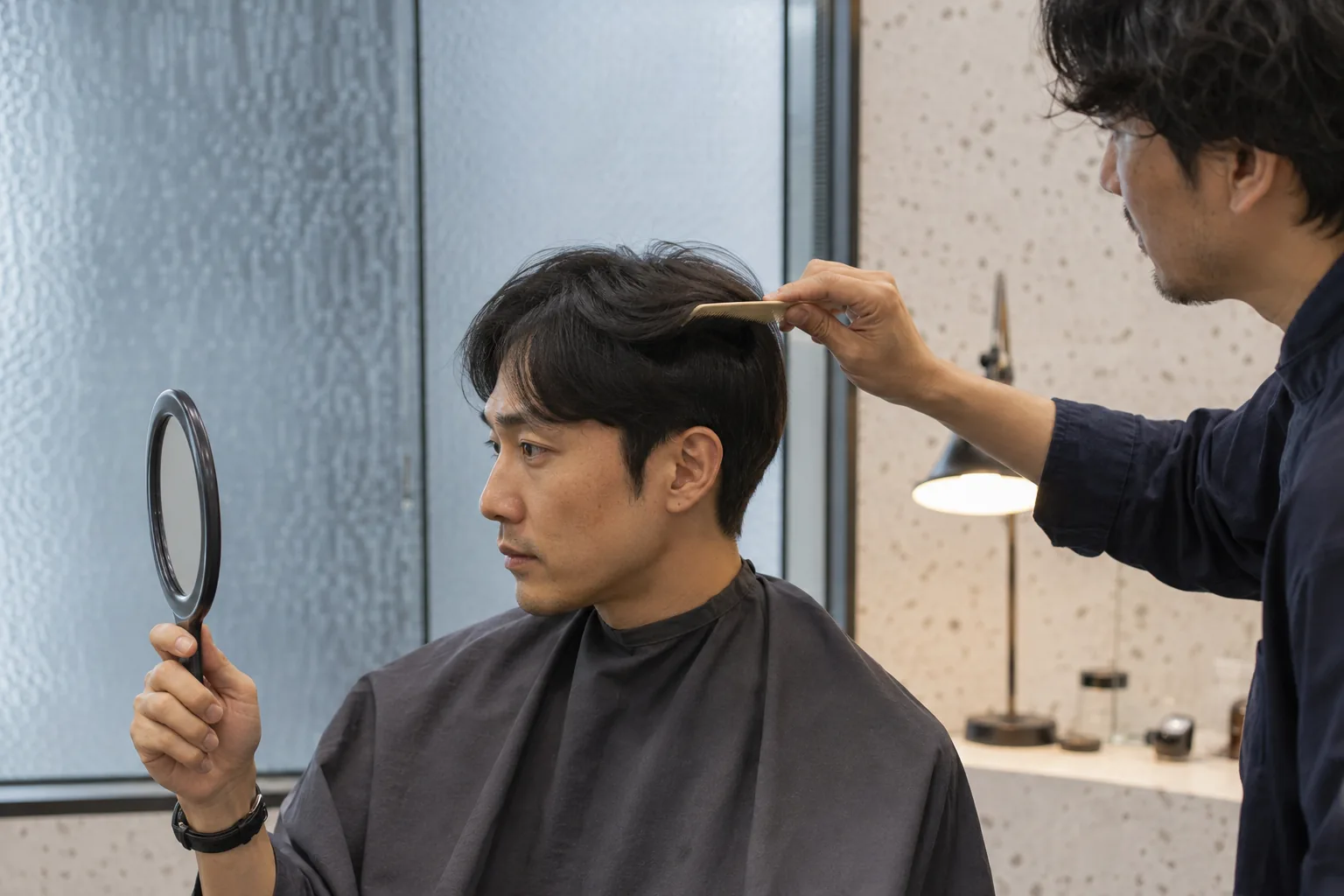
Choose hair first when the frame has lost its intention
Hair is a strong first choice when the current shape obscures the eyes, widens the sides unexpectedly, collapses without heavy product or has simply grown past the cut you intended. Because hair creates the upper frame of the face, a modest cleanup can change overall balance without claiming to change facial anatomy. The goal is not to force a face-shape rule; it is to make texture, density and daily effort work together.
Before cutting, test two realistic arrangements with the same neutral photos. Change only parting, fringe direction, side volume or product amount. Photograph both after ten minutes, not immediately after professional styling. Ask which version holds its shape, keeps key features readable and still feels like you. Bring those references to a barber and discuss maintenance, growth pattern and what happens after two or four weeks.
Do not choose hair first merely because it produces the most AI comments or the most dramatic mock-up. Image previews can misread hairlines, texture and depth. A good trial uses your real hair and accepts its limits. If both simple arrangements look coherent and the cut is already maintained, hair may not be the bottleneck. Move the priority to beard boundaries or skin comfort instead of inventing a haircut problem.
Choose beard first when boundaries create visual noise
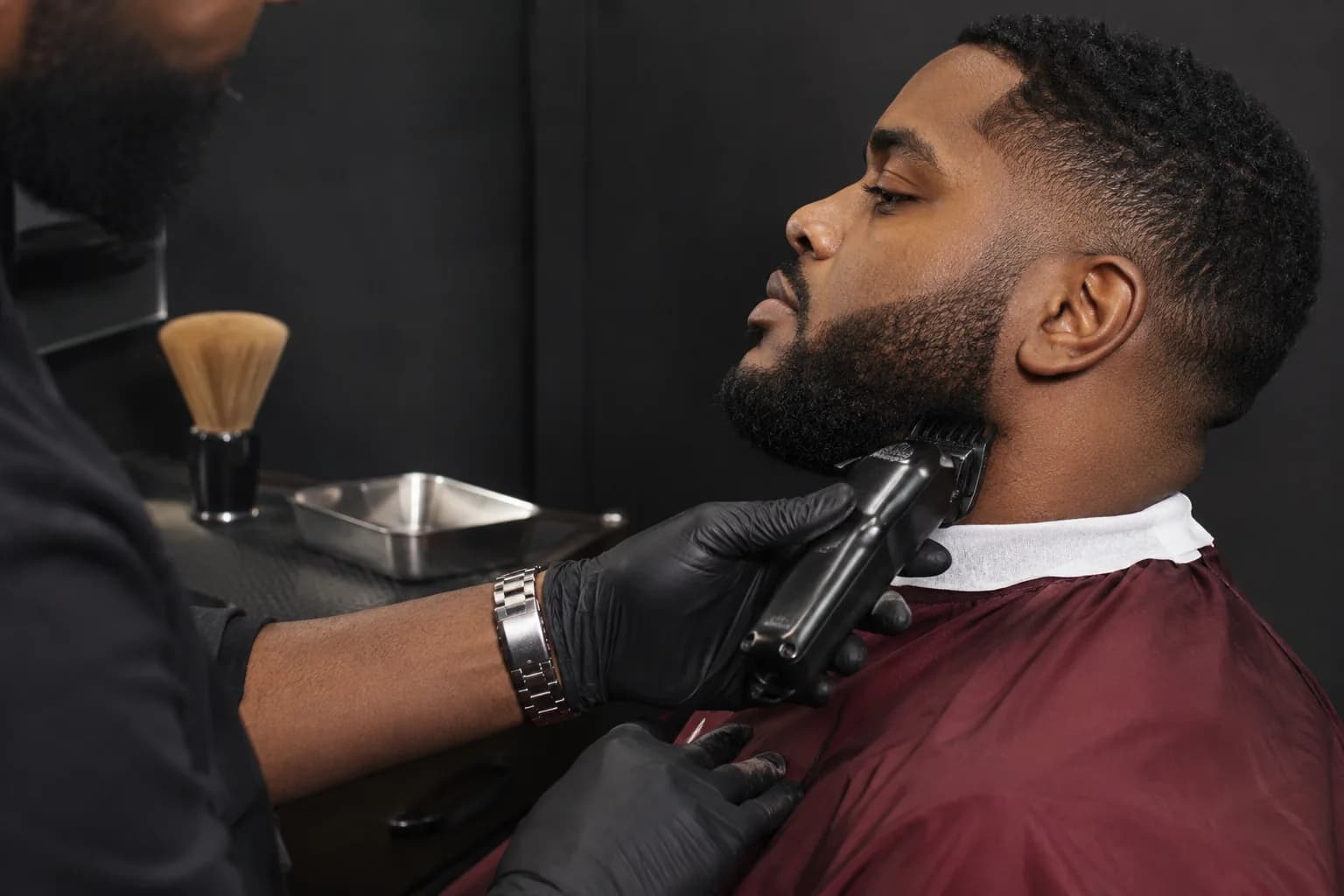
Facial hair is often the fastest reversible test. Choose it first when the neckline drifts down the neck, cheek edges look accidental, sideburns do not connect cleanly with the haircut, or mixed lengths make the lower face look untidy. Start by equalizing length and setting conservative boundaries. Do not carve a sharp artificial line simply because it is easy to see in a close-up.
Density and direction are constraints, not moral grades. A short even stubble may look more intentional than a longer style that exposes patchiness, while a clean shave may suit someone whose skin tolerates it. The American Academy of Dermatology notes that healthy-looking facial hair also depends on caring for the skin beneath it and choosing care according to skin type and beard length. Comfort belongs in the decision, not after it.
Test one guard length and keep it for several ordinary days. Check the result in frontal and profile views, under indoor and outdoor light, and after doing the maintenance yourself. If the outline takes fifteen stressful minutes every morning, it is not a sustainable first priority. A slightly softer line you can reproduce is better than a barber-perfect edge that disappears from the plan after one week.
Choose skin first when comfort or irritation dominates
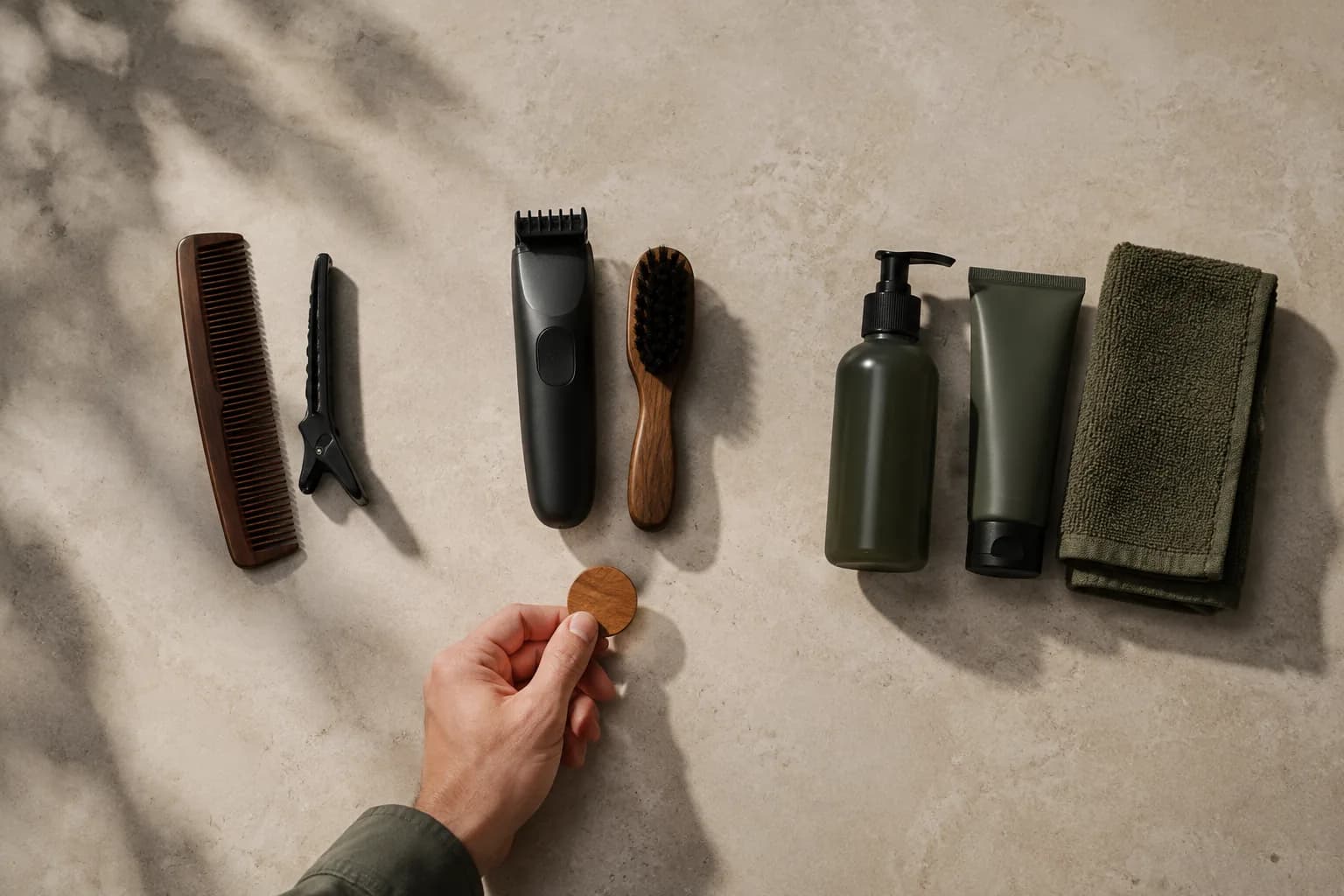
Skin should move to the front when shaving stings, dryness feels tight, visible irritation keeps recurring, or an overloaded routine makes it impossible to know what helps. The first change is not a cabinet of active ingredients. Simplify to gentle cleansing, appropriate moisturizer and daytime sun protection, then observe comfort and consistency. Appearance may improve as presentation becomes calmer, but the primary goal is a routine the skin tolerates.
Use neutral photos only as a broad record. Cameras, light and processing exaggerate or hide texture, so they cannot diagnose acne, dermatitis, infection or hair loss. The American Academy of Dermatology's guidance for men emphasizes identifying skin type, moisturizing and using broad-spectrum sun protection. Introduce products gradually, follow their directions and stop if a product causes significant irritation. Persistent concerns deserve a dermatologist, not a score.
Choose skin first even if hair offers a quicker visual change when discomfort affects every shave or morning. Conversely, if the skin is comfortable and the photo note is just ordinary pores under hard light, do not manufacture a treatment project. Normal texture is not failure. A basic protective routine can remain in the background while your actual first experiment focuses on hair or beard.
Use MogRise to narrow the list, not surrender the decision
Start with clear front and profile photos and read the explained observations rather than hunting for the lowest category. Group repeated notes into hair, beard and skin. Then ask which note is visible across views, within your control and relevant to your real goal. MogRise is most useful here as a structured second look: it can reduce a messy wish list to a few candidates, but it cannot know your comfort, identity, schedule or budget.
The what-to-optimize guide helps separate high-control presentation choices from low-control anatomy. Give high-control items priority: grooming boundaries, hairstyle, product load, photo setup and daily routine. Treat estimated proportions or scores as context only. Never turn one image into a demand for unsafe treatment or permanent intervention. A small reversible action with clear evidence is the stronger plan.
Limit the shortlist to three candidates and select one. Record the reason in a sentence: I will test shorter stubble because the uneven length repeats in every neutral view and takes little maintenance. That sentence is more useful than a target score. It defines the variable, evidence and cost. If you cannot write it without vague promises such as become perfect, the priority is not ready.
Decide with maintenance, not novelty
A new look receives extra attention because it is new. Wait until that effect fades. Evaluate the change on an average workday, after travel, in rushed mornings and under ordinary light. Ask whether the result remains intentional without professional styling or a perfect camera. Maintenance is not a penalty attached to appearance; it is part of the design. A priority that cannot survive your week was never truly first.
If the trial works, keep it stable before adding another category. This creates a clean baseline and protects your time. If it fails, return to the previous version without treating the experiment as personal failure. You learned which cost, shape or routine does not fit. That information improves the next choice. Reversible experiments turn appearance planning into a practical craft instead of a cycle of self-criticism.
The answer to what should I improve about my appearance is therefore specific, not universal: improve the most visible, controllable and sustainable source of distraction, one category at a time. Hair frames, beard defines, and skin comfort supports both. Clear photos and explained analysis can sharpen the question, but your preferences and daily reality choose the winner. Once one change works quietly, let it become normal before looking for another.