

Searches for a free FaceScore test, AI attractiveness test and face rating from a photo all point to the same need: people want a fast reading of how their face presents and a clear idea of what to improve. The score catches attention, but the category breakdown and the quality of the source photo determine whether the result is genuinely useful.
MogRise treats FaceScore as the start of a structured LooksMax workflow. You prepare a repeatable front image, add a true profile when it provides useful context, review connected facial categories and turn the strongest controllable opportunity into one practical action. That approach gives every later scan a purpose and makes progress comparisons much easier to read.
What a free FaceScore test can show from one photo
An AI face rating reads visible information in the submitted image. Depending on the analysis, that can include left-to-right balance, facial thirds, feature spacing, the apparent outline of the jaw, the eye and brow frame, skin presentation, hairstyle silhouette and the technical quality of the photograph. The overall FaceScore summarizes those observations, while the categories show where the number came from.
The same person can create noticeably different inputs by moving a phone closer, lowering the camera, turning toward a window or changing expression. That is why a FaceScore is best understood as a reading of a face in a particular photograph. A stable setup does not make the result absolute, but it makes the categories more comparable and therefore more useful for planning.
Use the first result as a baseline. Note which categories are already strong, which are limited by the photo and which could respond to hair, beard, eyebrow, skincare, posture, clothing or lighting decisions. MogRise combines that category view with written LooksMax AI observations, helping you separate a controllable presentation opportunity from a structural feature that does not need to become a daily project.
Take the best photo for an AI face rating
Place the camera around eye level and step back far enough that the face does not fill the frame from arm's length. A close wide-angle selfie can enlarge the center of the face and compress the ears, jaw and outer frame. Use a timer, tripod or stable shelf, then crop after the picture. Keep the head level and look straight through the lens with a relaxed expression.
Choose soft light from slightly in front. A bright window on one side can create an attractive portrait, yet the shadow may change how symmetry, cheek contour and jaw definition read. For the analysis photo, favor even illumination and a plain background. Keep hair away from important landmarks, remove tinted glasses and avoid filters, beauty modes or artificial background blur.
Take one neutral front image and, if the workflow supports it, one true side profile. Rotate the head and torso together for the profile until the far cheek and eyelashes disappear. Save the camera position, lens, distance, light direction and crop. These details become your capture recipe for the next comparison and prevent an accidental angle change from looking like progress.
- Camera near eye level with enough shooting distance
- Neutral front view and relaxed expression
- Soft, even light with a plain background
- No filters, beauty mode or wide-angle close-up
- Saved setup for every later comparison
Read the FaceScore categories instead of chasing one number
Start with photo quality because every other category depends on it. If the face is tilted, partly hidden or strongly shadowed, retake the image before interpreting small differences. Next read balance and proportions together. A symmetry observation describes left-to-right relationships, while facial thirds and feature spacing describe vertical and horizontal organization. Neither category alone defines the complete face.
Then review the visible frames. The eye category is affected by eyebrow shape, hair falling across the forehead, light and expression. The lower-face category combines the chin, jaw outline, beard and neck transition as they appear in the image. Skin presentation reflects the photographed surface, while hair and style can change the silhouette around the same underlying structure.
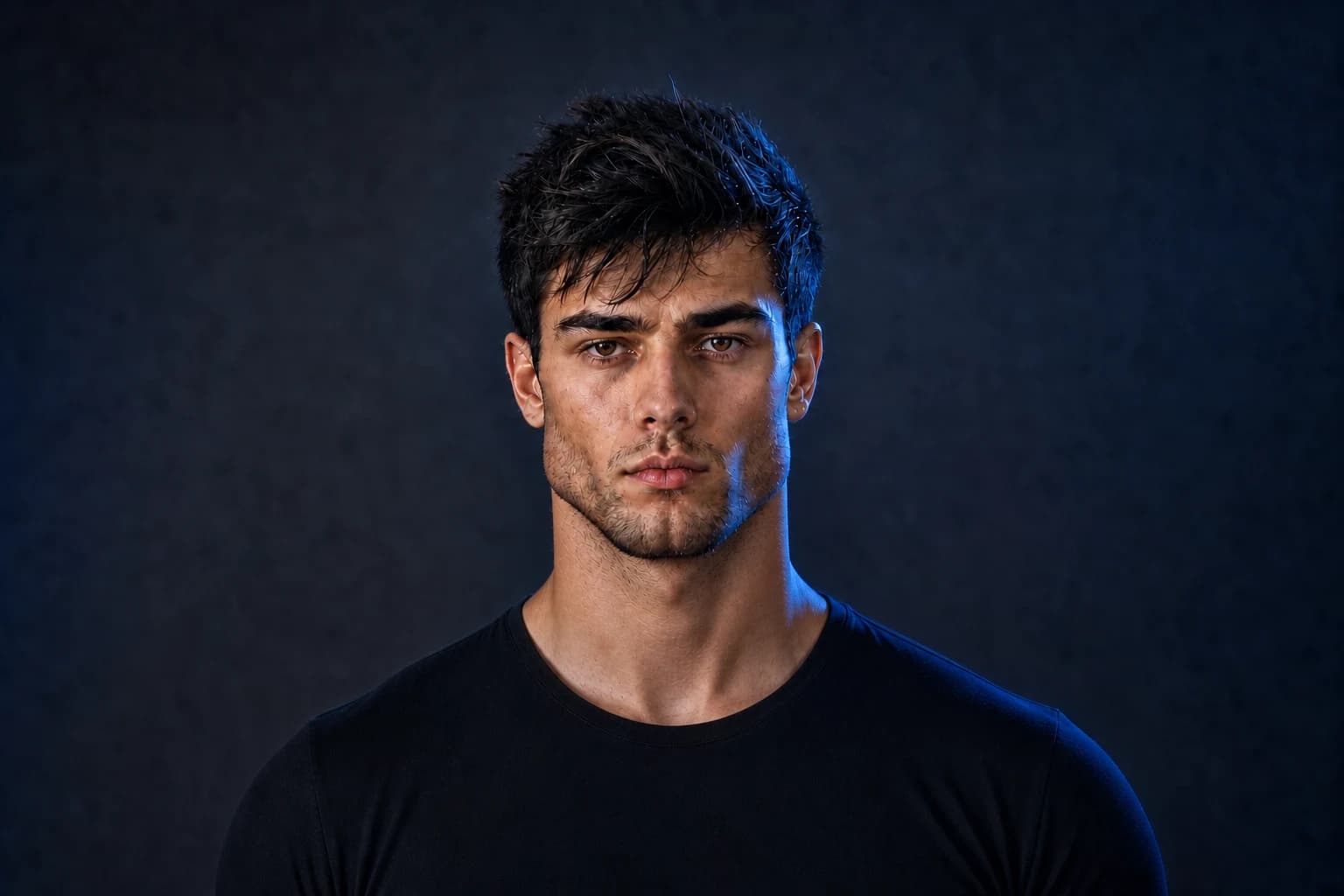
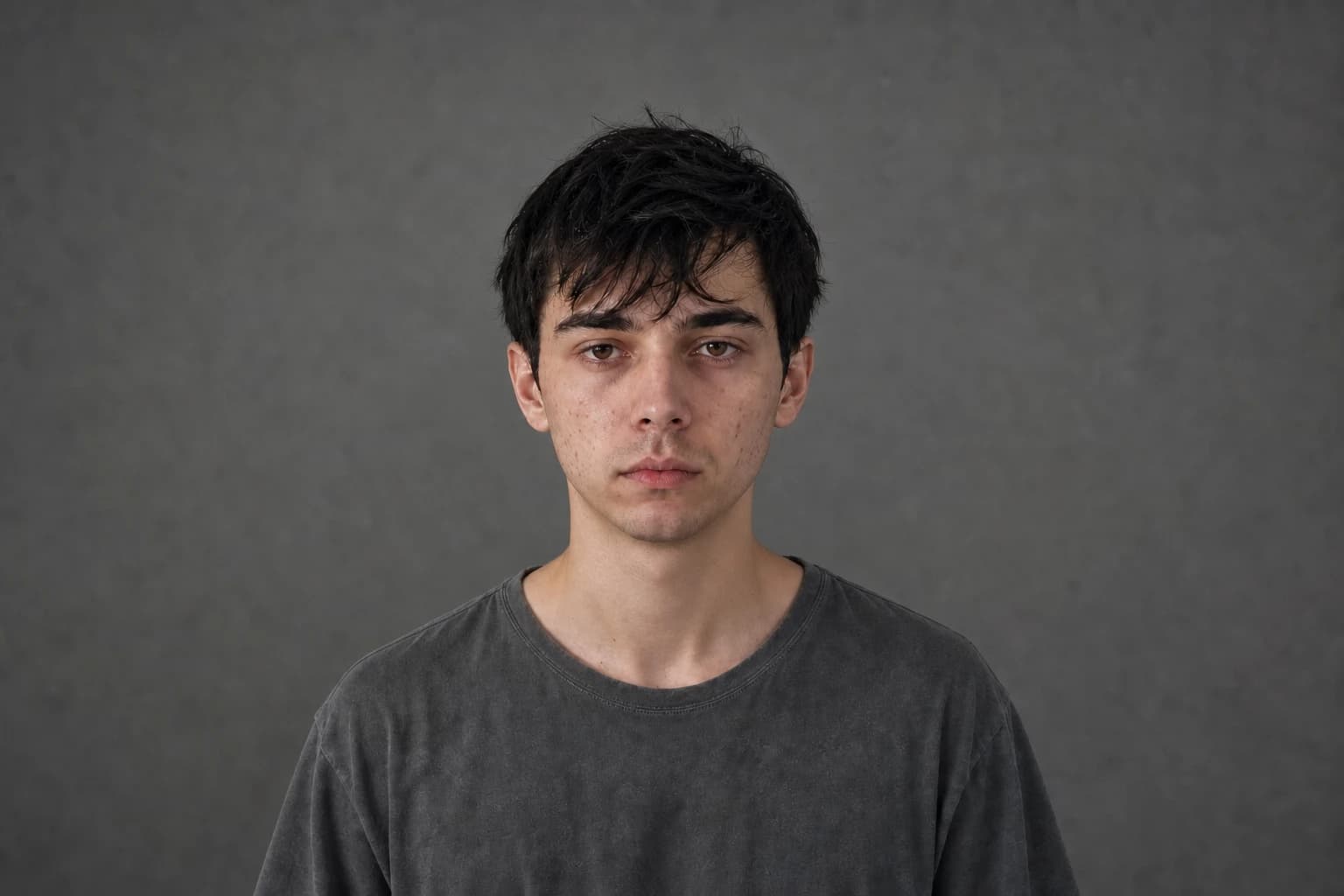
The comparison below makes the category approach concrete. The AFTER image uses a stronger haircut, deliberate stubble, a clearer eye frame, polished skin presentation, upright posture, fitted dark clothing and jaw-defining light on the same Caucasian man. The result looks dramatic because several controllable layers cooperate. Your plan should still begin with one layer, so you can tell which decision deserves to stay.
The overall FaceScore is the summary; the categories are the route from observation to action.
Turn a low category into a specific Glow Up experiment
Translate the broadest weak category into a visible behavior. Instead of writing “improve jawline,” define “compare clean three-millimeter stubble with a neckline placed above the Adam's apple under the same light.” Replace “better eye area” with “brush brows upward, remove only obvious strays, keep hair off the eyes and repeat the neutral photo after a consistent sleep window.” Specific tests create decisions.
Choose a change that can influence more than one relationship without altering the entire setup. A haircut can balance forehead height, temple width and the outer face frame. A beard outline can connect cheeks, mouth, chin and neck. Better posture can improve the head-to-neck line and shoulder frame. Clothing color and neckline can add contrast while keeping the face itself easy to compare.
Give the experiment a fair time window. A hairstyle preview can be compared immediately, while a beard length or simple skincare routine needs consistent days before the result is representative. Record what you changed, keep the camera recipe fixed and review the complete face at normal viewing size. MogRise turns that result into the next prioritized action rather than an endless list.
Use a second photo to check whether the score is stable
After the baseline, take a second neutral image in the same session. Step away and rebuild the setup rather than firing a nearly identical burst. If the category pattern remains similar, you have a more dependable starting point. If the results move sharply, inspect camera height, head rotation, expression, hair placement and light before drawing conclusions about the face.
For progress, compare matched images weekly or after a meaningful change instead of testing every mirror moment. Put the photographs side by side at the same crop, then look first at the complete head-and-shoulder frame. Zoom in only to understand why a change works. This keeps a tiny local difference from outweighing a much stronger overall presentation.
Keep separate structural and styled references. The structural photo uses a neutral expression, clear landmarks and minimal styling interference. The styled photo shows the haircut, beard, clothing and presentation you actually want to evaluate. Together they reveal whether the improvement comes from a reliable grooming decision or merely from a different capture condition.
- Rebuild the same setup for a second baseline
- Compare category patterns before small score changes
- Review progress after meaningful intervals
- Keep structural and styled references separate
- Judge the whole frame before zooming into details
Build your MogRise plan from the free FaceScore result
Open the FaceScore categories next to your MogRise facial analysis and rank opportunities by visibility, control and effort. A controllable framing issue that affects the whole face usually belongs above a tiny measurement difference. Select one primary action, one supporting habit and one capture checkpoint. That is enough structure for a focused first cycle.
A practical plan might pair a medium-height haircut preview with a consistent eyebrow routine, or combine a clean beard neckline with head-and-shoulder posture practice. Write the exact reference you will compare, the date of the next photograph and the condition that counts as success. The objective is not simply a higher number; it is a stronger, repeatable presentation that you can explain.
MogRise is being prepared as a free download for iPhone and iPad, with the App Store link to follow when the listing is available. You can already use the method: capture a reliable baseline, read the categories, select the highest-impact controllable change, run one clear experiment and compare again. Your free FaceScore then becomes the opening step of a personal Glow Up system.
Common FaceScore mistakes that make comparisons less useful
The most common mistake is changing the photograph and the presentation at the same time. A new haircut photographed closer to the camera under harder light cannot be compared fairly with the old baseline. Match the lens, distance, camera height, crop and expression first. Then the visible difference has a much clearer connection to the action you tested.
Another mistake is treating the lowest category as an instruction to overhaul everything. Check whether the category is controllable and whether it matters at normal viewing distance. A moderate hair-frame opportunity may deliver more value than a small proportion difference. Prioritize the change that supports several connected areas and fits your real routine.
Finally, avoid collecting scores without decisions. More tests do not automatically create more insight. Keep one baseline, one active experiment and one scheduled review. When the comparison shows a repeatable benefit, add it to your routine and move to the next priority. This steady sequence is how FaceScore, LooksMax AI and progress photos work together coherently.