

Dress shirt collar fit should let the top button close without a struggle and remain comfortable during ordinary movement. The collar band can sit close to the neck without pressing into it; an obvious gap is a different observation from pressure at the front. Check the shirt on its own before adding a tie, then try the actual combination you intend to wear.
A shirt can look tidy on a hanger and still distract you every time you sit down. This independent guide is for that everyday fitting decision, whether you already own the shirt or are trying another size. You do not need a face score, a new body target or a compulsory collar style. The useful outcome is a garment you can wear comfortably, with a clear reason to keep it, exchange it or ask for fitting advice.
Dress shirt collar fit starts with the band
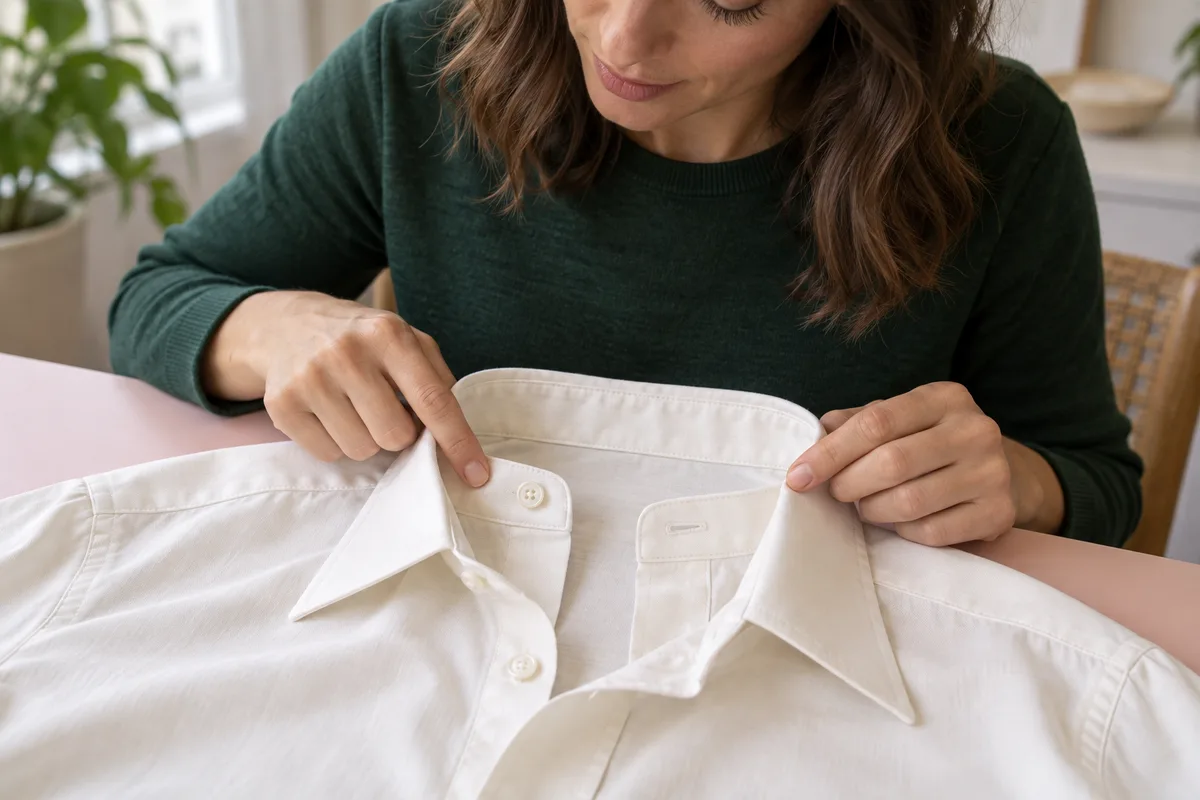
Separate the upright strip around the neck from the folded points above it. The strip is the collar band; its button and buttonhole close the opening. The points influence the visible outline and the space around a tie. A different point shape does not automatically give a tight band more room. Identify which part bothers you before comparing names such as spread, point or button-down.
Lay the shirt on a clean surface and locate that fastening without stretching the fabric. Check that you are using the matching buttonhole and that a folded edge is not trapped underneath. Removable collar stays, if your shirt has them, belong to the points rather than a neck-size adjustment. Follow the maker's directions for those parts. This simple inspection prevents a bent point or awkwardly folded band from being mistaken for a reason to replace the entire shirt.
Close gently, then use the finger check as a clue
Put the shirt on in the way you normally wear it, settle the shoulders and leave your head in an ordinary position. Try the top fastening gently. Do not pull the two ends together hard or lift your chin to make them meet. If closing it already feels like a task, undo it and try another option. A successful photograph of a fastened button would not make that effort disappear during the day.
Proper Cloth's collar-fit guidance suggests room for one or two fingers inside a buttoned collar. Treat that as the maker's fitting clue, not a universal measurement or permission to ignore discomfort. Finger sizes, band construction and preferred ease differ. Insert a finger lightly without levering the fabric away from your neck, then remove your hand. Notice how the collar feels on its own. Passing a finger check is less useful than discovering that you want to undo the button immediately.
Sit down before calling the fit finished
Standing still is only one position. Sit in a normal chair, look to either side as you would during a conversation, and lower your gaze toward a desk. Keep these movements ordinary; this is not a stretch or an endurance test. Notice whether the band keeps demanding attention, whether the front pulls, or whether you feel the need to hold your head differently. Undo an uncomfortable collar rather than trying to get used to it.
Use words that separate feeling from appearance. The band presses when I sit is more informative than the collar looks wrong. A space behind the neck with pressure at the front is not simply the same problem as an evenly roomy band. Show the actual garment to a fitter and explain both observations. Do not try to fix that combination by changing your posture, tightening a tie or repeatedly choosing a smaller size just to remove a visible gap.

Read the size guide before adding extra room
A neck number, a general clothing size and a finished garment measurement are not interchangeable. Read the instructions for the exact brand and shirt. Ask whether the chart describes the body, the finished band or a recommended size, and whether its measuring method already includes ease. Adding a guessed allowance to a measurement that already includes one can send you toward an unnecessarily roomy collar. A familiar letter on the label is not a guarantee across different cuts.
If measuring is requested, use a soft tape as directed without tightening it against the skin. Record the unit and method, not just a bare number. A comfortable shirt you already own can be a useful comparison when the maker explains how to measure a garment, but do not assume its label translates exactly into another range. During a purchase, check the exchange terms before removing tags or altering anything. You can decide that a particular cut is inconvenient without treating your neck as the thing that needs changing.
Add the actual tie and jacket separately
Once the shirt feels comfortable on its own, try the tie and jacket you actually plan to use. Add one item at a time so a new problem has an identifiable trigger. Set the tie without using it to drag the collar inward or disguise a gap. If the combination becomes uncomfortable, loosen or remove the added item and reconsider it. A larger-looking knot is not a solution to a band that already pressed before the tie was there.
Check the visible relationship in ordinary light: do the points sit in a way you like, is the knot sitting where intended, and does the jacket interfere with the shirt? These are clothing observations, not evidence that your jaw or face needs a different shape. A T-shirt opening poses a separate choice, covered in our crew-neck and V-neck guide. Keep that preference discussion separate from whether a buttoned shirt collar has enough comfortable room for its actual job.
Consider a hypothetical event outfit: one shirt is comfortable open at home, while another closes easily with the tie you will wear. The first shirt is not a failed garment; it may simply serve a different purpose. Compare the second option in the complete outfit before deciding. If neither works comfortably, keep looking rather than accepting pressure because the event is formal. A dress requirement describes clothing for an occasion, not a requirement to tolerate an unsuitable fit.

Choose the visible shape after comfort
Collar points, their spread and the height of the band can change the outline you see around the lower face. That does not establish one correct collar for a face category. Start with the occasion, the clothes you own and the look you enjoy. If two comfortable options differ visually, compare them with the same jacket or without either jacket rather than changing the entire outfit and crediting every difference to the collar.
An open collar deserves its own check if that is how you normally dress. Notice whether it sits comfortably and whether the opening behaves as you prefer during ordinary movement. Do not assume an attractive open shape proves the shirt will work buttoned with a tie later. Conversely, you do not have to adopt tie-wearing just to justify a shirt you use casually. Keep the intended use explicit, and avoid buying a hypothetical future outfit at the expense of the one you need now.
Give a fitter a specific problem to solve
Bring the shirt and, when relevant, the tie or jacket to a fitting conversation. Describe the situation: the button is difficult to close, the band presses when seated, or there is a gap behind the neck despite pressure in front. Ask which size or construction they would try next and whether an alteration is realistic for this particular garment. Do not promise yourself that moving a button or cutting fabric will rescue every collar.
If a photo helps communicate the point, use an ordinary whole-outfit reference and explain the sensation separately; a picture cannot establish how the band feels. Try changing one clothing choice at a time. Our appearance-priority guide offers a broader way to keep decisions small, but no app result is needed to approve a comfortable collar. You can simply retain the shirt that works and leave unrelated hair, beard or face questions for another time.

Keep a useful reference, then stop checking
For a shirt that works, note the brand, actual size, fabric and how you wear it. Add a short practical observation, such as comfortable seated with my usual tie. This is a reference for future shopping, not a rule for every shirt you will ever own. If you care for it, follow its own label; do not deliberately use hot washing or drying to force a loose collar smaller. Check the fit again after normal care if something has noticeably changed.
End with a decision: keep this combination, try another size, use the shirt only for the comfortable intended setting, or ask a fitter before altering it. An occasional wrinkle or modest visual difference does not require another inspection. Put the garment aside once the practical question is answered. Good fit should reduce the attention your clothing demands rather than turn every button, photograph or reflection into a new assessment of your appearance.