
A beard cheek line is the upper edge of the beard across each cheek, not the lower edge at the neck. Start with the hair you already have and decide what you want to preserve. You can leave a soft natural boundary alone, remove only clearly separate stray hairs, or ask a barber for a more defined outline. There is no compulsory height or straight line that every face must follow.
This independent guide is about an ordinary grooming choice, not growing new hair, diagnosing patchiness or changing your cheekbones. It needs no app, facial score or new equipment. The useful question is smaller than which beard is best: how much visible coverage do you want to keep, and how much maintenance are you willing to repeat? The photos illustrate preparation and discussion, not actual customer results or a before-and-after test.
Locate the beard cheek line before choosing its shape
Look at the upper transition from beard hair to mostly uncovered cheek. Follow it from the sideburn region toward the mustache area without assuming those areas must connect. Some people have a fairly clear transition; others have scattered hairs above a gradual band. Describe what is there rather than drawing an imaginary dense line across a space with little growth. A soft edge is still an edge, and it does not need to become a geometric border to look intentional.
Keep the other decisions separate. Shortening the whole beard changes length and bulk; lowering the cheek boundary removes coverage higher on the face. Cleaning the neck concerns a different border beneath the jaw. If that is your real question, the beard neckline guide deals with that separate task. Do not bring a neck-placement rule onto the cheek, or change both borders because one small area caught your attention in the mirror.

Choose a level of definition you can maintain
A natural edge is a valid finished choice. You may prefer its softer transition, or simply dislike maintaining a sharp contrast against newly visible growth. A small cleanup is another option: preserve the main coverage and consider only hairs clearly detached above it. A deliberately defined boundary is a larger style decision, especially if achieving it means removing a continuous band of hair. None of these options proves better grooming, masculinity or attractiveness.
Think about an ordinary week rather than the first hour after an appointment. Would you still like the outline when small hairs are visible again? Do you have a comfortable, familiar way to maintain it, or would each touch-up become an uncertain shaving session? If the routine sounds unpleasant, say so before requesting a crisp edge. Keeping more coverage now leaves you room to decide later; lowering a boundary is not a reversible experiment you can undo before leaving the bathroom.
Settle the hair before judging the border
Inspect the beard in its normal, settled state, not while it is flattened by sleep, pulled by a collar or arranged differently on each side. Use a familiar gentle care routine and let the hair settle before deciding where the boundary appears. The AAD beard-care guidance discusses caring for the skin beneath facial hair and gentle everyday care. It is a care reference, not a diagram prescribing your ideal cheek line or an endorsement of a particular beard style.
A light pass with a suitable comb can help you see whether a projecting tip belongs to the beard below rather than being a separate hair higher on the cheek. Do not pull hair taut to make its apparent end match a template. If combing hurts, stop instead of treating resistance as a reason to cut closer. Product residue or wet clumps can obscure what you are seeing. Address ordinary preparation first; do not use a new harsh product merely to make the boundary easier to inspect.
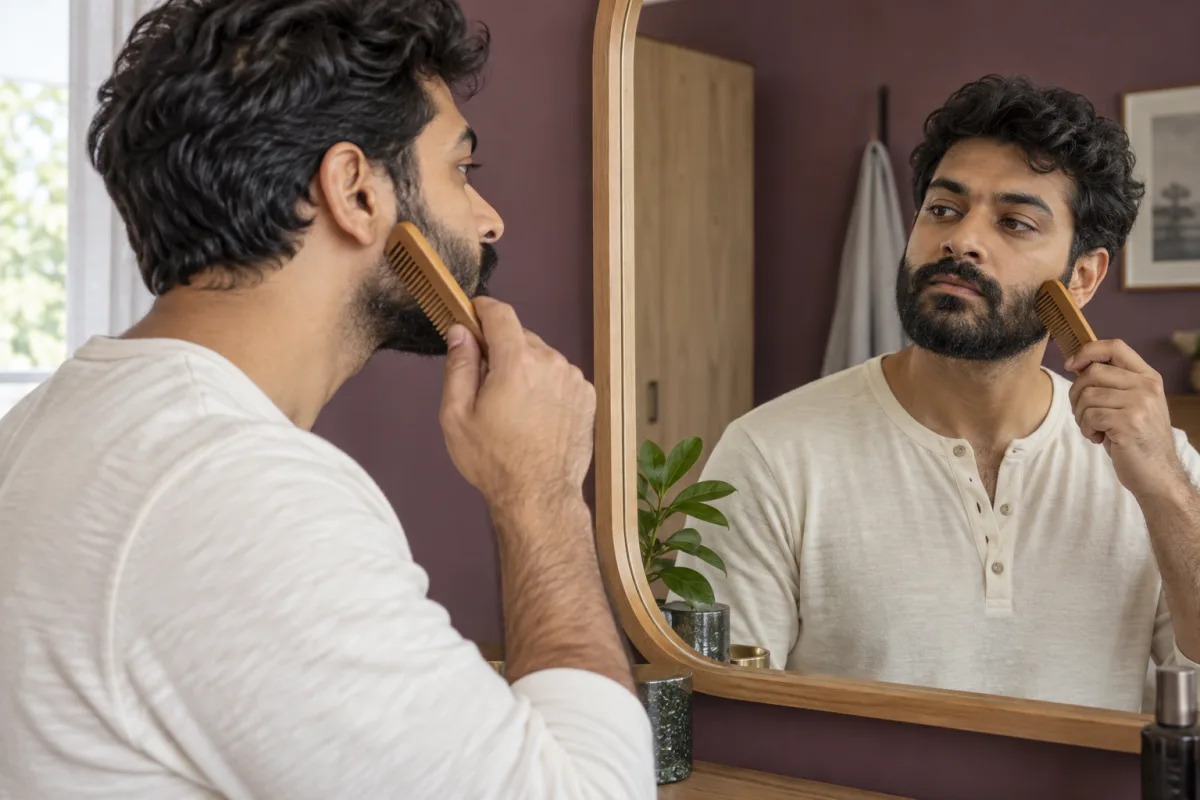
Make a preserve-first decision at normal distance
Stand at a comfortable viewing distance with broad, ordinary light and your head relaxed. Look at the whole beard rather than enlarging one pore or hair on a phone. Name the coverage you want to keep before considering any removal. For example: keep the upper band near the sideburn, keep the existing curve toward the mustache, and do not create a connection where there is none. These are personal instructions, not anatomical measurements or universal landmarks.
Then ask whether a particular hair is clearly outside that decision. If you cannot tell, leave it for now or point it out at a consultation. You do not need to solve every ambiguous hair in the same session. Avoid copying an outline from a photograph with different growth, beard length or lighting. Even a familiar reference picture is a communication aid, not a stencil that fits your face automatically. One clear preservation request is more useful than several competing ideal lines.
Match the method to the job, not the picture
Before using any tool, identify what it does with the attachment actually fitted. A guarded trimmer used to manage beard length is not automatically a precision tool for clearing skin above a border. Check the manufacturer's instructions for your own device, including attachment changes, permitted moisture and cleaning. Switch it off while changing parts as directed. Do not remove a guard simply because a tutorial used a different machine without one. If the intended area or technique is unclear, ask a barber to demonstrate.
Keep the task limited to what you can see and handle confidently. You may choose not to perform close edging at home at all. A comb, a usable mirror and a conversation can be enough for today's decision. If you already maintain a familiar outline, work only within that established plan rather than shortening the entire beard and redesigning its edge at once. This guide does not require straight razors, improvised blade holders, hair-removal chemicals or a new purchase.

If you shave above the edge, respect the skin
Close shaving is optional, not the price of having an intentional beard. If you choose a manual shave on ordinary intact skin, the AAD shaving guidance recommends moistening the area, using shaving cream or gel and following hair growth direction. Those limited preparation principles do not establish the correct outline for you. Follow the directions for your actual razor, and do not transfer electric-trimmer instructions to a manual blade.
Avoid shaving over irritated, broken or otherwise concerning skin to chase a cleaner border. Stop if the area becomes painful or uncomfortable rather than making repeated passes to remove every visible shadow. Hair below the skin surface is not something this grooming guide asks you to eliminate. Persistent discomfort or a new skin concern needs qualified advice, not another attempt at a sharper line. You can retain a softer edge while deciding whether close shaving belongs in your routine at all.
Do not chase symmetry down the cheeks
The two sides do not have to display identical hair distribution. Check them with the head level and in comparable light, but do not assume the lower-looking side sets a compulsory target for the other. A small difference in density can make one border seem stronger even when you have not removed extra hair. Describe that uncertainty instead of repeatedly trimming the denser side until both appear equally sparse.
If you have already taken one side lower than intended, put the tool down. Do not widen the correction across both cheeks just to finish with matching empty areas. Leave the remaining coverage intact and ask a barber how to handle the interim shape. There is no reliable universal regrowth deadline in this guide. Keep length choice separate as well: our short-stubble length guide considers a different decision about maintained hair length, not how far down to place the upper boundary.
Give the barber a specific preservation brief
Instead of only asking for a tidy beard, say which work you do and do not want. A useful starting brief is: keep the existing cheek coverage, leave the main upper border where it is, and discuss any isolated hairs before removing them. If you want a more defined edge, ask the barber to show the proposed area in the mirror before starting. Agree separately on the sideburn transition and mustache connection rather than letting a vague cleanup request decide everything.
You can also explain your maintenance limit: you want an outline that still feels acceptable between appointments, not one that depends on daily close shaving. Ask which part you can reasonably maintain yourself with the equipment you already understand. If the proposed result needs frequent professional work, that is information for your decision, not pressure to agree. An unscored reference photo may clarify a preference, but your own growth and comfort remain the practical constraints.
Finish with an endpoint, not another inspection
After an ordinary cleanup or consultation, look once at normal distance and return to the rest of your day. Ask whether the preserved coverage is still there and whether the routine feels manageable. Do not immediately open a magnified selfie to search for a new defect. You are choosing a beard border, not seeking evidence of your worth or a numerical improvement in facial harmony.
For the next session, remember the agreed boundary and the task that actually needed attention. If you liked the natural edge, leave it alone rather than inventing maintenance because the tool is nearby. If the defined edge costs more time or comfort than expected, discuss a softer option next time. A practical result is a decision you understand and can live with, including the decision not to remove anything today.