
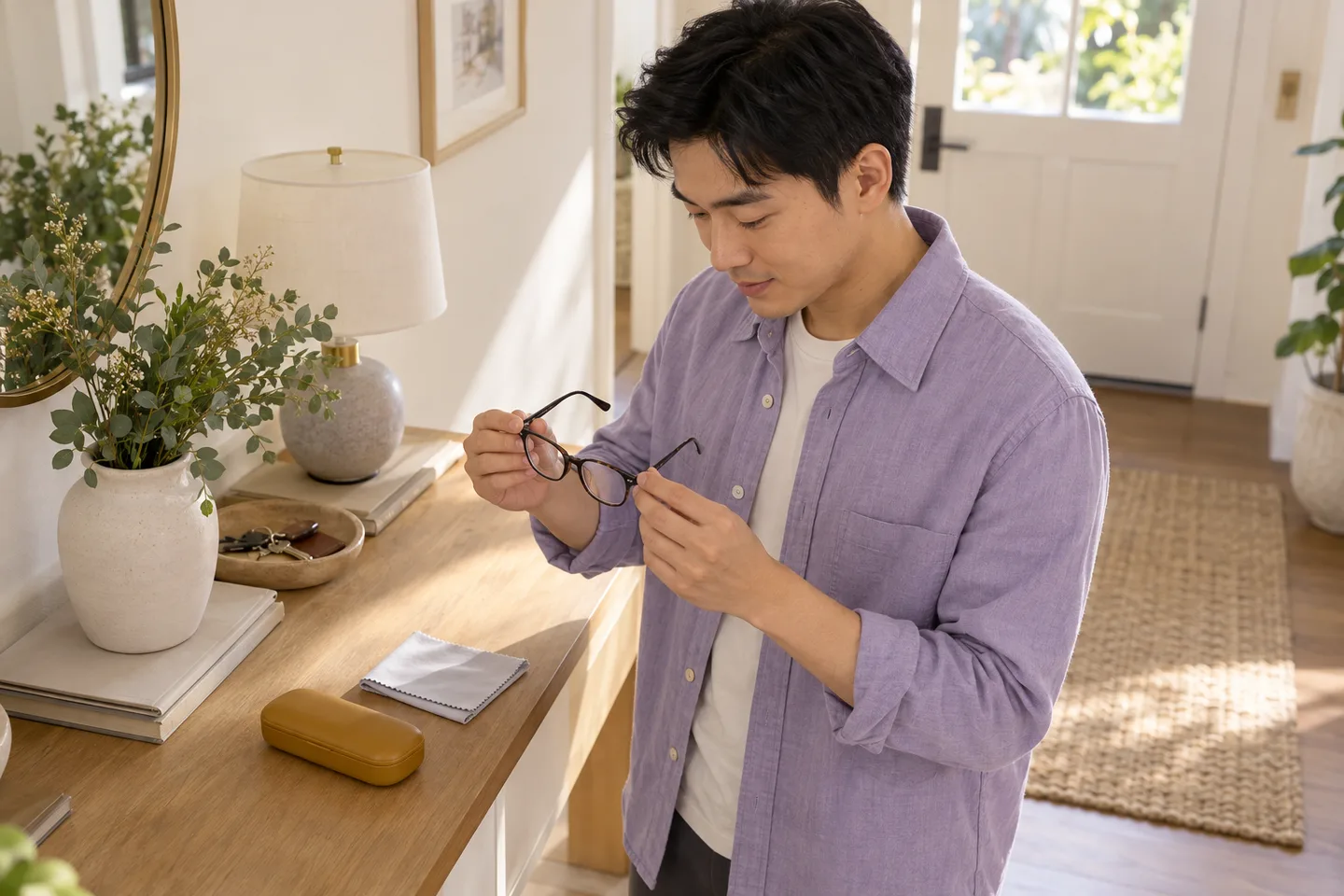
How to clean glasses starts with the care instructions for your particular lenses and frame: remove loose dirt with the approved method before wiping, then use a clean lens cloth with light contact. Do not start by rubbing dusty lenses with your shirt. A repeatable routine is more useful than polishing harder whenever a streak refuses to disappear.
This independent guide concerns ordinary everyday spectacles, not contact lenses, electronic eyewear, protective equipment or specialist sports optics. It does not promise scratch-free lenses, restore damaged coatings or give advice about your prescription. You do not need an app or a new pair to follow the routine. The aim is to make a small maintenance decision easier: what needs cleaning, which method is compatible, and when should you leave the problem to an optician?
How to clean glasses begins with the right instructions
Find the care information supplied with the pair or ask the practice that dispensed it. A familiar-looking frame does not tell you everything about its material, finish or lens treatment. If the original leaflet is missing, identify the frame and lenses rather than borrowing instructions for a different pair. Keep the approved method somewhere easy to find. A short note in the case can save a second search when you are away from home.
ZEISS lens-care guidance advises gentle cleaning with suitable materials and warns against trying to polish scratches away. That is the limited manufacturer guidance used here, not a test of brands or proof that one method suits every coating. Ask specifically whether rinsing, your chosen cleaner and your cloth are appropriate together. A bottle described merely as a surface cleaner is not enough information. If the answer remains unclear, do not improvise with a stronger household product. You can pause maintenance and get the missing instruction without turning that uncertainty into a purchase recommendation.
Make a small, clean working space
Before taking the glasses off, decide where they will go while you prepare. Clear a stable space away from a counter edge, hot appliances and loose objects. Put the case within reach so you are not balancing the pair on a stack of toiletries. Clean and dry your hands, then set out the approved cleaning materials. If you have several pairs, work on one at a time; do not assume that the same instructions apply to all of them.
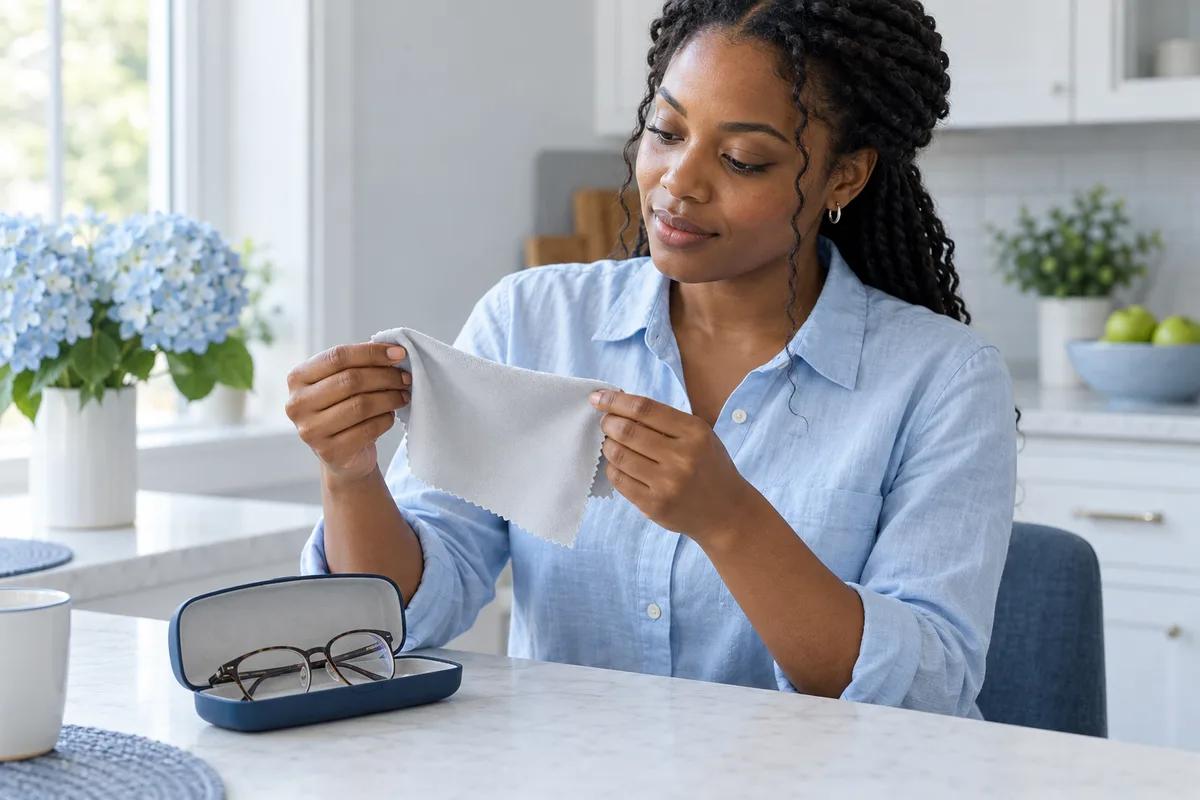
Inspect the cloth before it touches a lens. Is it the dedicated lens cloth, or something that has been loose among keys and crumbs? Does it feel clean, or is there an obvious oily patch? Put a questionable cloth aside instead of searching for a cleaner corner indefinitely. Keep a spare that is actually clean rather than several equally uncertain cloths. This preparation is not an elaborate hygiene ritual or a sterilization procedure. It is simply a way to avoid beginning a delicate task with a dirty tool and no safe place to put the glasses down.
Choose the method before touching a mark
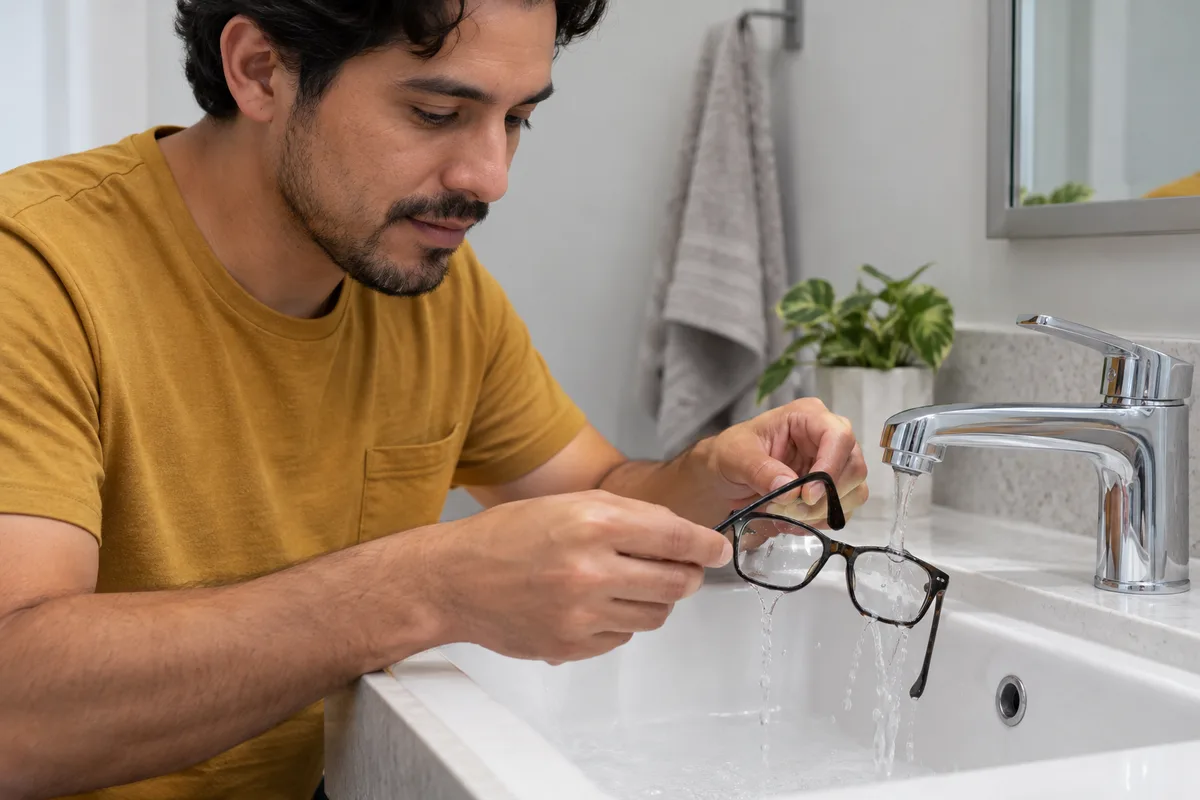
Look at what you are trying to remove without scraping it with a fingernail. Loose dust, an obvious fingerprint and a mark that has remained after ordinary cleaning are different starting points. Use the maker-approved way to remove loose material first. For everyday pairs whose instructions permit rinsing, use a gentle flow of lukewarm water, not heat or a forceful jet. Keep a secure hold on the frame. If the instructions call for a particular cleaning product, follow its directions and compatibility limits rather than estimating a homemade substitute.
Do not combine several products because the first attempt was disappointing. That makes it harder to know which step caused a residue or a problem. A sensible sequence has one approved cleaning method, its required rinse if applicable, and an appropriate drying step. If you cannot carry out that sequence where you are, wait until you can. Breath and a sleeve are not a useful emergency maintenance plan. With specialty materials, decorative finishes or uncertain coatings, ask before applying the ordinary routine pictured here.
Handle lenses and frame as separate jobs
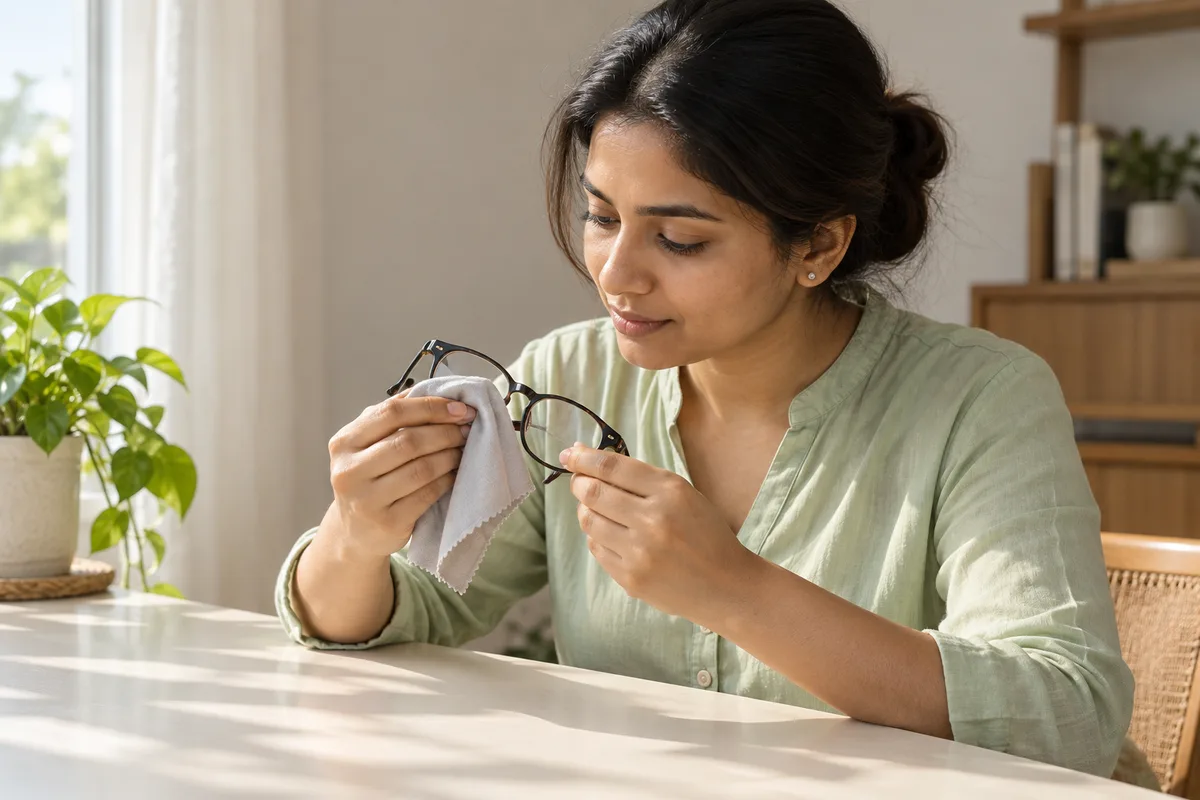
Once loose dirt is dealt with, follow the approved lens-cleaning directions without twisting the glasses. Support the frame close to the area you are working on rather than pulling against one distant temple. Work slowly enough to keep your grip comfortable. There is no useful prize for finishing both lenses in one sweeping movement. If you need to change hands, stop and reposition the pair over the safe working area instead of catching it while it slips.
Then consider the parts that touch your skin: the bridge, nose pads where fitted and the temple ends. They may need attention even when the center of each lens looks clean. Use only the frame-compatible method, and do not force a cloth into a narrow hinge, remove pads or loosen screws for routine cleaning. Leave inaccessible buildup to an optician. Cleaning should not become an adjustment session. If the real issue is comfort or how the pair sits, our glasses and face-shape guide covers the separate fit conversation; a cleaner lens cannot settle that choice.
Dry gently, then make one useful check
Use the drying method specified for the pair and a suitable clean lens cloth. Keep contact light and support the frame rather than squeezing a lens between tightly pinched fingers. Move to a genuinely clean area of cloth when needed. If the fabric drags, feels gritty or seems to spread the same smear around, stop. More pressure is not a troubleshooting method. Return to the care instructions and the condition of your materials before deciding whether another normal clean is appropriate.
Make one check in ordinary diffuse light. Look for remaining visible residue, not tiny imperfections under a phone flashlight. If the glasses are acceptably clean for normal use, finish. A practical endpoint matters: otherwise an everyday task can become repeated inspection and unnecessary rubbing. Before a normal portrait, check the pair once and then think about lighting and camera position. The guide to looking better in photos addresses that different workflow. Cleaning does not remove reflections from a photograph or establish that a picture reveals your true facial appearance.
Treat the cloth as part of the routine
A lens cloth is not permanently clean because it was clean when you received it. Give it a defined storage place, separate from loose belongings, and check its own washing instructions. Wash and dry it as directed, including any restrictions on fabric softener or heat. Do not return a damp cloth to a closed pouch and forget it there. If you cannot tell what the cloth has picked up, use a known clean alternative rather than trusting its appearance alone.
Make the system easy to maintain. For example, keep one clean cloth in use and another ready while the first is being washed. This is an organizational suggestion, not a prescribed replacement schedule. Your actual need depends on how the cloth is handled and the maker's directions. A cloth dropped on a dirty floor needs attention before reuse even if your calendar says it is wash day tomorrow. Conversely, buying an assortment of cleaning accessories will not solve a routine in which all of them are stored loose in the same pocket.
Plan for the moment away from the sink
Before leaving, decide what you can realistically do if a lens becomes smudged. Carry a clean cloth in its own pouch and, if appropriate for the pair, an approved travel cleaner or lens wipe. Follow the product's instructions; a wipe for another surface is not interchangeable because the packet looks similar. Keep any cleaner in its original labeled container. If the required materials are unavailable, protect the glasses and clean them properly later rather than using an unknown liquid from a shared dispenser.
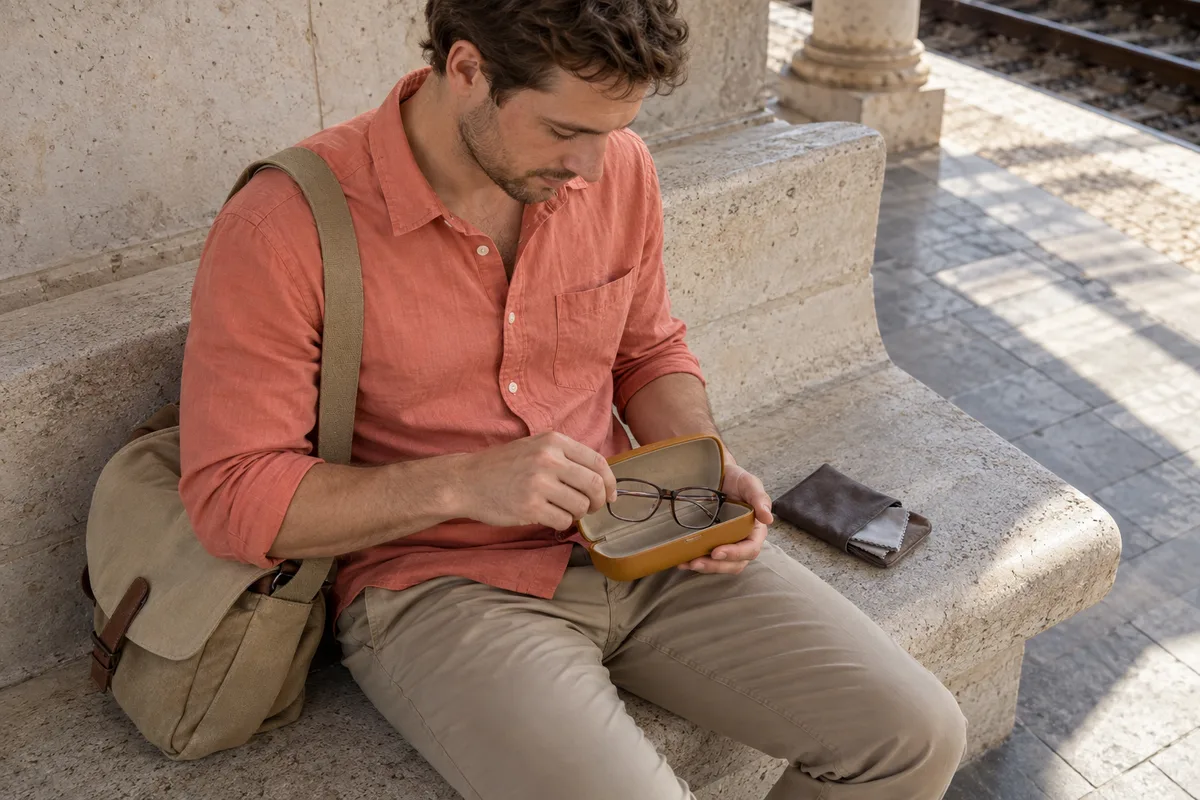
Make room for the case in the bag you actually carry. Choose a place where you can put it back without digging beneath loose keys. When storing the pair, check that it sits normally inside and the lid closes without force. Do not use a cramped case as a way to reshape the temples. On a busy journey, the useful improvement may be remembering the case at all, not finding a more elaborate cleaner. Avoid leaving glasses where heat or an accidental load can damage them; storage and cleaning are related habits, not the same task.
Stop when the question is no longer about dirt
A persistent line, peeling-looking area, loose component or bent frame deserves a different response from another fingerprint. Do not try toothpaste, abrasive powder or an improvised solvent as a repair. Describe what you noticed and what approved cleaning you have already tried, then ask an optician to inspect the pair. You do not have to decide at home whether a mark is definitely a scratch or a coating defect. An honest description is more useful than a confident diagnosis based on a close-up photograph.
Keep maintenance separate from pressure to change your appearance. A smudge is not a failure of grooming, and a comfortable familiar pair does not need replacement to follow a trend. End with a simple arrangement you can repeat: the correct instructions, usable materials and a safe resting place. If something remains unclear, save the question for qualified help rather than increasing force. This guide ends at ordinary care; new vision symptoms or a prescription concern belong with an eye-care professional, not a cleaning tutorial or an appearance score.