
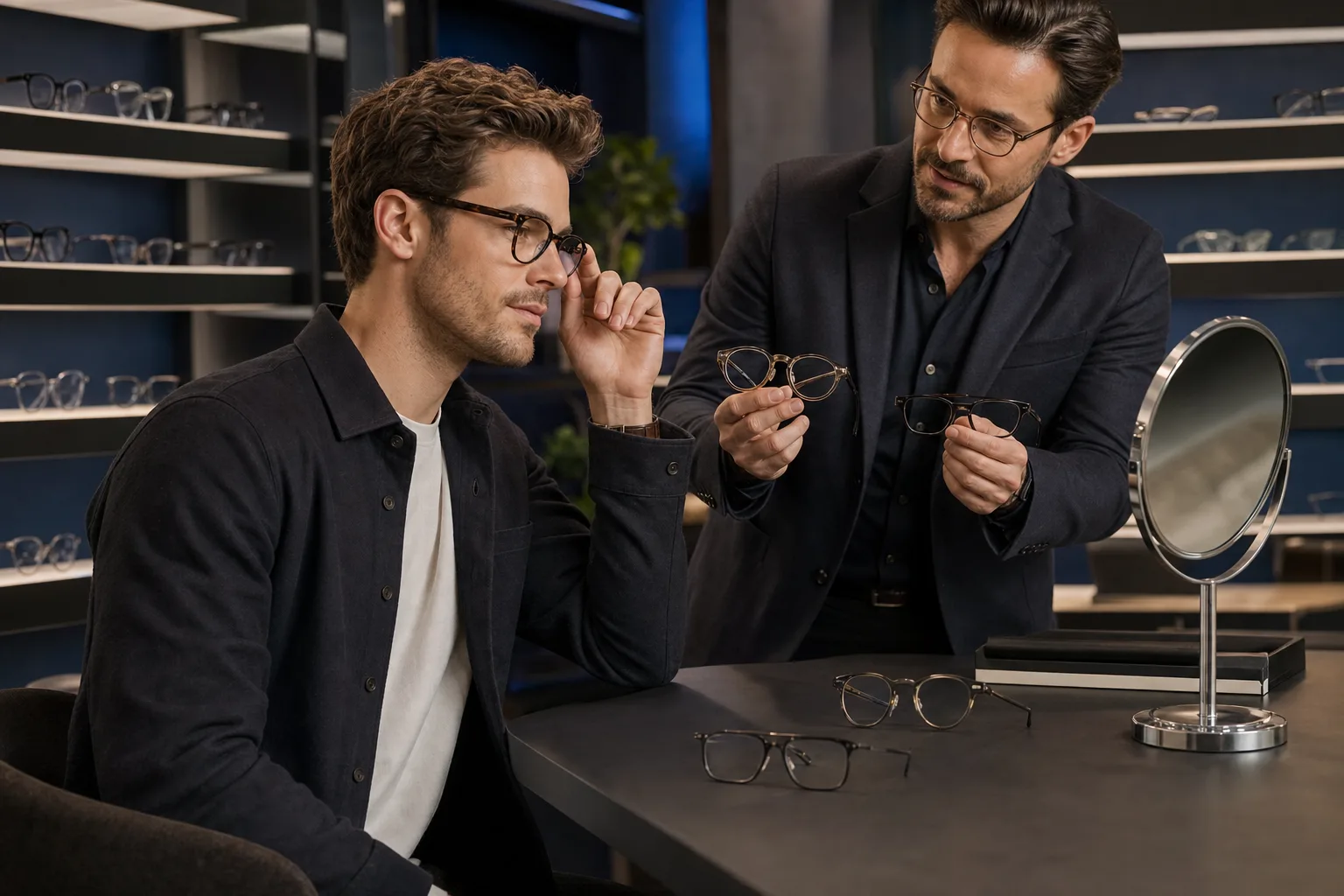
Finding the best glasses for your face shape as a man is not about matching one label to one compulsory frame. Glasses sit across the center of the face, outline the eyes and add a new brow line, so their width, corners, thickness and color can shift the complete impression. A strong choice works with your face, haircut, facial hair and wardrobe at the same time.
MogRise turns that choice into a repeatable LooksMax AI comparison. Begin with a clean front portrait, identify the proportions that matter, preview genuinely different frame families and judge every option against the same image. The result is a small, confident shortlist based on visible differences rather than a wall of nearly identical glasses.
How face shape helps you choose men's glasses
Face shape is useful because it describes the visible relationship between face length, forehead, cheekbones and jaw. A round face tends to have softer corners and similar length and width. A square face shows a broader, more angular jaw. An oblong or rectangular face reads longer, while heart and diamond shapes place more visual width in the upper face or cheekbones. Most men sit between two categories, and that overlap gives you more options.
Use shape to decide what effect a frame should create. Contrast makes the eyewear more structural: sharper rectangular corners can add definition around fuller cheeks, while curved lenses can reduce the repetition of a very angular jaw. Harmony repeats what is already present: a clean square frame can amplify a strong square face, and a softly rounded frame can keep an oval face relaxed. Neither approach is automatically better; the intended impression decides.
The most helpful question is not simply, ‘What shape is my face?’ Ask whether you want more width, length, sharpness, softness or emphasis around the brow. That goal turns a broad category into a practical brief. It also explains why two men with similar face shapes may prefer completely different glasses once hairstyle, beard, personal style and frame thickness enter the picture.
- Use face shape as a starting point, not the entire decision
- Choose between contrast and harmony deliberately
- Define the visual effect before selecting a frame name
- Include hair, beard and wardrobe in the same frame
Identify your face shape from a clean front photo
Take a straight-on portrait at eye level with a neutral expression and soft, even light. Step back from the phone so the lens does not exaggerate the nose or compress the sides of the face. Keep the hairline, both cheekbones, the ears and the complete jaw visible. Remove current glasses for the baseline because an existing frame can hide the natural brow and temple width you are trying to read.
Compare four relationships: total face length, forehead width, cheekbone width and jaw width. Then look at the jaw corners and chin. Similar length and width with softer edges suggests a rounder direction. Similar forehead, cheek and jaw width with a firm angle suggests square. Greater length suggests oblong or oval, while a wider forehead or cheekbone area narrowing toward the chin points toward heart or diamond territory.
Do not force a perfect category when the photo shows a blend. Write a more useful description such as ‘longer face with a broad forehead and softly angled jaw’ or ‘balanced length with strong cheekbones.’ MogRise facial analysis can organize those visible relationships alongside hair, beard and profile observations, giving you a clearer brief for the AI glasses try on than a single geometric label.
- Use an eye-level photo with natural lens distance
- Keep the full hairline, cheeks and jaw visible
- Compare length, forehead, cheekbones and jaw
- Describe blended proportions in plain language
Best frame shapes for oval, round, square and long faces
Oval faces can test the widest range, so proportion becomes the main filter. Start with frames close to the width of the cheekbones and avoid a lens depth that overwhelms the middle of the face. A rectangular D-frame creates a sharper, more masculine line; a softly rounded metal frame feels lighter. The deciding factor is usually whether the frame strengthens the intended style without covering the eyebrows or sitting too low.
Rounder faces often gain definition from rectangular, square or browline frames with visible corners. A frame that is slightly wider than the fullest cheek area can lengthen the visual line, but extreme oversizing can make the face look smaller. Square faces can use round, oval or gently curved frames to introduce contrast around a strong jaw. Thin metal reduces weight, while thicker acetate makes the eyewear a deliberate statement.
Oblong and rectangular faces benefit from enough lens depth to occupy the center of a longer face. Very narrow rectangles can repeat length without adding balance, whereas deeper D-frames, aviator-inspired optical frames or softly rounded shapes create more vertical presence. For heart-shaped faces, test frames that do not add excessive weight above the brows. Diamond faces can compare oval, browline and slightly wider frames that connect smoothly with prominent cheekbones.
Frame width, bridge and temple fit matter more than the label
A flattering shape still fails when the dimensions are wrong. The frame front should sit comfortably across the widest part of the face. If it is too narrow, the temples flare outward and the frame can make the cheeks look wider. If it is too broad, the eyes may appear too close together and the glasses slide or dominate. Use the outer frame edge, pupil position and temple angle as the first visual checks.
The bridge controls height and stability. It should sit securely without pinching, floating above the nose or pulling the frame so low that the eyebrows disappear far above it. Lens depth changes how much of the midface the glasses occupy. A deeper lens creates presence and can balance a longer face, while a shallower lens keeps more cheek and facial-hair area open. Brow alignment should look intentional rather than perfectly copied.
Temple length and hinge position complete the fit. The arms should travel back without strong outward pressure, and the frame should remain level when you move naturally. An AI preview is ideal for comparing shape, apparent width, material and color on one portrait. The physical pair then confirms bridge contact, temple pressure, lens measurements and comfort. Treat those as two connected stages of the same decision.
- Check outer frame width against the cheekbones
- Keep the pupils comfortably placed inside each lens
- Look for a stable bridge and level brow line
- Confirm temple angle and comfort on the physical pair


Coordinate glasses with your haircut and beard
Hair and eyewear share the upper half of the face. A tall, high-volume hairstyle already adds vertical emphasis, so a very narrow frame may make the complete look longer. A wider side part or controlled temple volume can support a stronger browline frame. With a close crop or shaved head, the glasses become one of the clearest shapes around the face, making thickness, color and corner style more noticeable.
A beard adds weight below the frame. Full facial hair paired with heavy dark acetate can create a strong, dense outline, which works well when the haircut and clothing can carry the same visual weight. If you want more openness, compare a thinner metal frame or translucent acetate. Short stubble leaves the jaw more visible, so the frame can either echo that angularity or introduce a softer counter-shape.
Review the complete head and shoulders instead of zooming only into the glasses. Check whether the top line of the frame competes with the hairstyle, whether the lower lens edge crowds the cheeks and whether beard width makes the frame feel narrow. MogRise lets you keep the same portrait while changing the eyewear direction, making these relationships easier to see without changes in pose or expression distracting you.
Choose frame color, material and visual weight
Frame color can either blend with your features or create deliberate contrast. Black and deep tortoiseshell deliver the strongest outline and pair easily with dark wardrobes. Clear or translucent acetate keeps the center of the face lighter. Silver and gunmetal can feel precise and minimal, while warmer metal or brown acetate can connect with warm hair, beard and skin tones. Compare color in ordinary daylight as well as indoor light.
Material changes the impression even when the lens shape is similar. Thick acetate reads graphic and confident. Thin metal exposes more of the brow, eyes and cheek area. A mixed-material frame can place emphasis along the brow while keeping the lower rim light. Choose visual weight in relation to your features: strong hair and beard can support a bolder frame, while a cleaner or more minimal presentation may benefit from less material.
Bring clothing into the test. A dark fitted jacket, navy knit or crisp overshirt gives structured frames a natural context, while softer casual layers may suit rounder or lighter options. You do not need a frame for every outfit. A useful everyday choice should work with the colors and collar shapes you wear most, then add enough distinction to make the eyes and upper face feel intentional.
- Compare bold acetate with lighter metal options
- Test color in daylight and normal indoor light
- Match visual weight to hair, beard and clothing
- Judge the complete head-and-shoulders impression
Use MogRise AI Glasses Try-On to build a shortlist
Start with one clear front-facing portrait without glasses. Keep the expression relaxed, the head upright and the light even across both eyes. In MogRise AI Glasses Try-On, compare up to 20 clear-lens optical frame directions while the portrait, identity, hair, beard and expression stay consistent. That stable base makes differences in shape, width, bridge, material and color much easier to read.
Do not compare twenty near-identical frames. Begin with three distinct families: one angular acetate option, one softer rounded or oval option and one lighter metal or browline direction. Score each against the same brief: desired effect, apparent width, eye placement, harmony with hair and beard, and compatibility with your everyday clothing. Remove weak directions quickly, then compare variations inside the strongest family.
Save the best two or three previews and carry that shortlist into the physical fitting. Use the images to explain the shape, thickness and color you want, then confirm the real bridge, temples and lenses. Add the final choice to your personal Glow Up plan beside haircut, beard and style priorities. Glasses then become a connected upgrade rather than an isolated accessory purchase.
- Use one consistent portrait without existing glasses
- Compare three genuinely different frame families first
- Keep only two or three strong directions
- Confirm real dimensions after the visual shortlist
- Connect eyewear with the wider MogRise style plan
Run a final three-frame decision test
For the final comparison, place three candidates side by side: the safest option, the most distinctive option and the best balance between them. Look at each from normal viewing distance before zooming in. The right frame should make the eyes easier to notice, sit naturally within the width of the face and support the intended style without requiring a forced expression or special camera angle.
Check the candidates with two common outfits and your usual hair styling. If the frame only works with one carefully constructed look, it may be better as a statement pair than an everyday choice. Notice whether beard growth changes the balance after several days and whether the color stays clear in warm indoor light. These simple tests reveal more than repeatedly switching between nearly identical catalog photos.
Choose the pair that wins on fit, visual effect and repeatability. Record why it worked: perhaps the browline added structure, the lens depth balanced a longer face or the material connected better with your hair and wardrobe. That note becomes useful when you buy a second pair or update your style later. A clear decision process is the real shortcut to the best glasses for your face shape.