

To detangle hair, prepare it for its texture, work with a small accessible section and gently clear the ends before moving the starting point higher. A snag is a reason to pause, not pull harder. This guide concerns ordinary knots in loose adult hair, not compact matting, extensions, loc maintenance or a scalp condition. There is no need to force a comb through an area simply because the rest looks tidy.
The practical goal is a manageable grooming session that ends comfortably. It is not perfectly smooth hair in every photograph, a prescribed number of brush strokes or a promise of zero breakage. Men with longer hair can use the same decision process as anyone else: choose a suitable moment, keep the task small and leave enough room to stop. You do not need a face score, an app or a shelf of new products to make those choices.
Detangle hair for one clear task
Decide what is actually catching before you begin. Perhaps the loose ends near a collar have one ordinary snag, or one section is harder to arrange after washing. That is a different task from reshaping the whole hairstyle. Describe the location in plain language rather than calling all your hair damaged or unmanageable. This gives you a useful starting point and avoids treating a single frustrating morning as a verdict on your appearance. Set aside the idea that a good session must change everything.
Choose a moment when you can use both hands without rushing out the door. If you have only enough time to get dressed, postpone the difficult area instead of turning detangling into a race. A suitable haircut can also make everyday handling easier to discuss. The haircut-frequency guide helps organize that separate maintenance conversation; it does not prescribe an appointment because a comb caught once. Keep the immediate task and the longer-term cut decision separate, so one small snag does not become an unnecessary overhaul.
Make the setup easy to leave
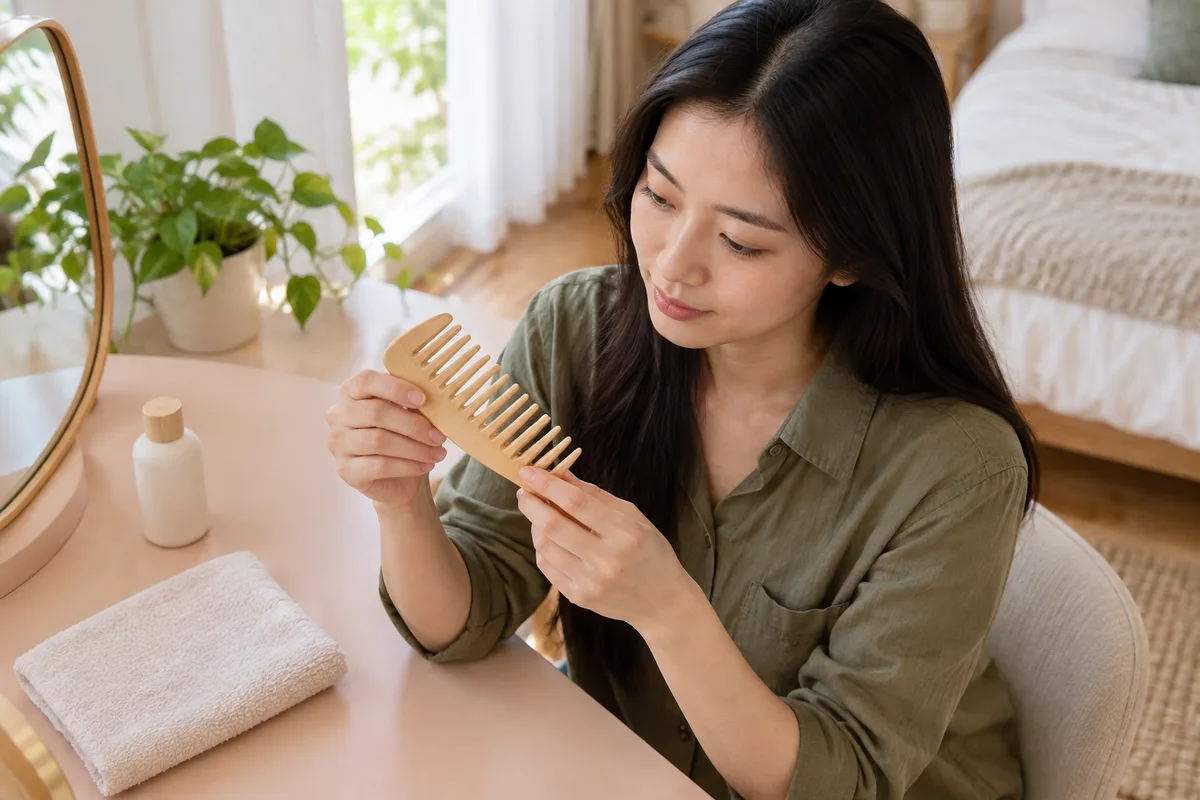
Put the items you already intend to use within comfortable reach. A plain comb, a familiar label-appropriate product and a place to set them down are enough for an initial setup. Check that the comb has no visibly broken tooth or rough edge. A missing tooth is a tool issue, not evidence that your hair needs more treatment. Choose a grip you can hold loosely and put unused brushes away so you are not changing equipment every few seconds in frustration.
Arrange yourself where you can see and reach the chosen area without twisting your neck or balancing on a wet floor. A seated position can make a longer session easier to pause. Keep water and electrical styling tools separate, and do not add heat merely to hurry an awkward knot. If a friend helps, agree on a simple stop signal before any handling begins. They cannot judge comfort from the appearance of the section, and helping does not mean taking over the decision to continue.
Choose the starting condition by texture
The American Academy of Dermatology's hair-care guidance distinguishes straight hair, which can dry a little before combing, from thick curls that can be combed with conditioner before rinsing. It also recommends a wide-tooth comb for wet hair. Those distinctions matter more than a universal instruction to detangle every head completely wet or completely dry.
Use your familiar routine and current product directions to choose the starting point. A rinse-out conditioner is not automatically a leave-in, and a styling cream is not automatically a detangler. The conditioner-placement guide explains that separate format decision. Here, check only whether the product is intended for the use you are considering. Do not mix several formulas or leave a rinse-out product in indefinitely because an online routine looks convenient. If the starting condition feels wrong, pause and reconsider it rather than compensating with a harder stroke.
Change where the stroke starts
The AAD's advice on reducing hair damage recommends gentle combing rather than pulling and rejects the idea that hair needs one hundred daily brush strokes. That is a useful boundary, not a promise that a particular tool will solve every knot. Make the practical task smaller instead of treating resistance as a reason to increase the effort. No product name can turn a forceful pass into a sensible next step.
Upward progress does not mean dragging the comb upward against the hair. It means moving your starting position higher only after the lower part is manageable, with the actual gentle pass directed toward the free ends. Begin with an amount of hair you can comfortably hold and observe. If the comb stops, withdraw it rather than using it as a lever. Return to a smaller area or stop the session. An image of a long uninterrupted stroke is not a requirement to reproduce that stroke on a catching section.

Use one section to judge the plan
Treat the first small area as a practical check, not a challenge you must finish. Notice whether you can maintain a relaxed hand position, whether the chosen tool is easy to control and whether you understand where it is catching. If you cannot tell which hair belongs to the section, separate the task more clearly before continuing. A manageable area makes the next decision visible; a fistful of mixed lengths hides it. There is no universally correct section size measured in centimeters.
For longer curls, the first area might simply help you decide whether you have chosen a sensible time in your usual routine. For shorter loose hair, there may be little length to separate at all. Neither situation requires copying somebody else's elaborate clip arrangement. Keep the unused hair out of the immediate task without pulling it tightly. If your arms become tired or you lose track of the section, set the tool down. You can resume an ordinary grooming task later without proving anything about your discipline.

Do not turn resistance into a test
Avoid judging success by sound, speed or how much hair the comb collects. None tells you that an ordinary snag has been handled well. If you hear repeated catching or find yourself bracing for the next pass, reassess rather than counting more strokes. A quiet pause is more useful than a dramatic tug followed by a reassuring mirror check. Detangling should not become an endurance exercise, and discomfort is not a sign that the method is finally working.
Keep detangling separate from the final style. You may prefer loose waves, an ordinary part or no further arranging at all once the section is manageable. Trying to create a polished shape at the same moment can make it difficult to tell which action is causing resistance. Do not chase every flyaway with the comb, compare your finish with a filtered reference or use a face-analysis score as proof that the session helped. This is a handling decision, not a beauty measurement or a growth experiment.
Prepare a useful request for help
Stop home attempts on a dense, inaccessible or persistently difficult tangle instead of adding force, sharp tools or an improvised chemical recipe. A qualified hairstylist can discuss what can realistically be managed and what options you are comfortable with. Do not cut blindly into hair near the skin. Extensions, established locs and other installed styles need appropriate specialist advice rather than the loose-hair process described here. Asking before doing more is a reasonable outcome, not a failed grooming session.
Describe the problem without diagnosing it: where the area is, when it began catching, what you have already tried and what you would like to preserve. Say clearly if you do not agree to cutting before a discussion. Scalp pain, sores, unexpected hair loss or a continuing concern deserves advice from a qualified health professional, not a stronger brush or an appearance app. A photo may help explain the location during an appointment, but it does not establish the cause. Keep the next conversation specific and leave room for an assessment.

Finish when the ordinary task is manageable
Once you can arrange the selected area comfortably, stop checking it repeatedly. Put the comb down, complete any product step according to its directions and return to your normal day. You do not need an additional scan or a close-up collection to certify the result. Notice ordinary use instead: can you get dressed without revisiting that section, and does your routine feel realistic? Those observations are more useful than claiming a single session has repaired the hair or eliminated future knots.
If the same difficulty keeps returning, bring one concrete observation to your next styling conversation rather than buying a whole new routine at once. Perhaps the hard-to-reach area is always behind one shoulder, or you begin when you are too rushed to work comfortably. Changing the setup may be a more practical first question than changing every product. Follow the comb's care instructions, leave your usual tools accessible and keep the next session small. The aim is a repeatable, comfortable choice with permission to pause, not a daily test of perfect hair.