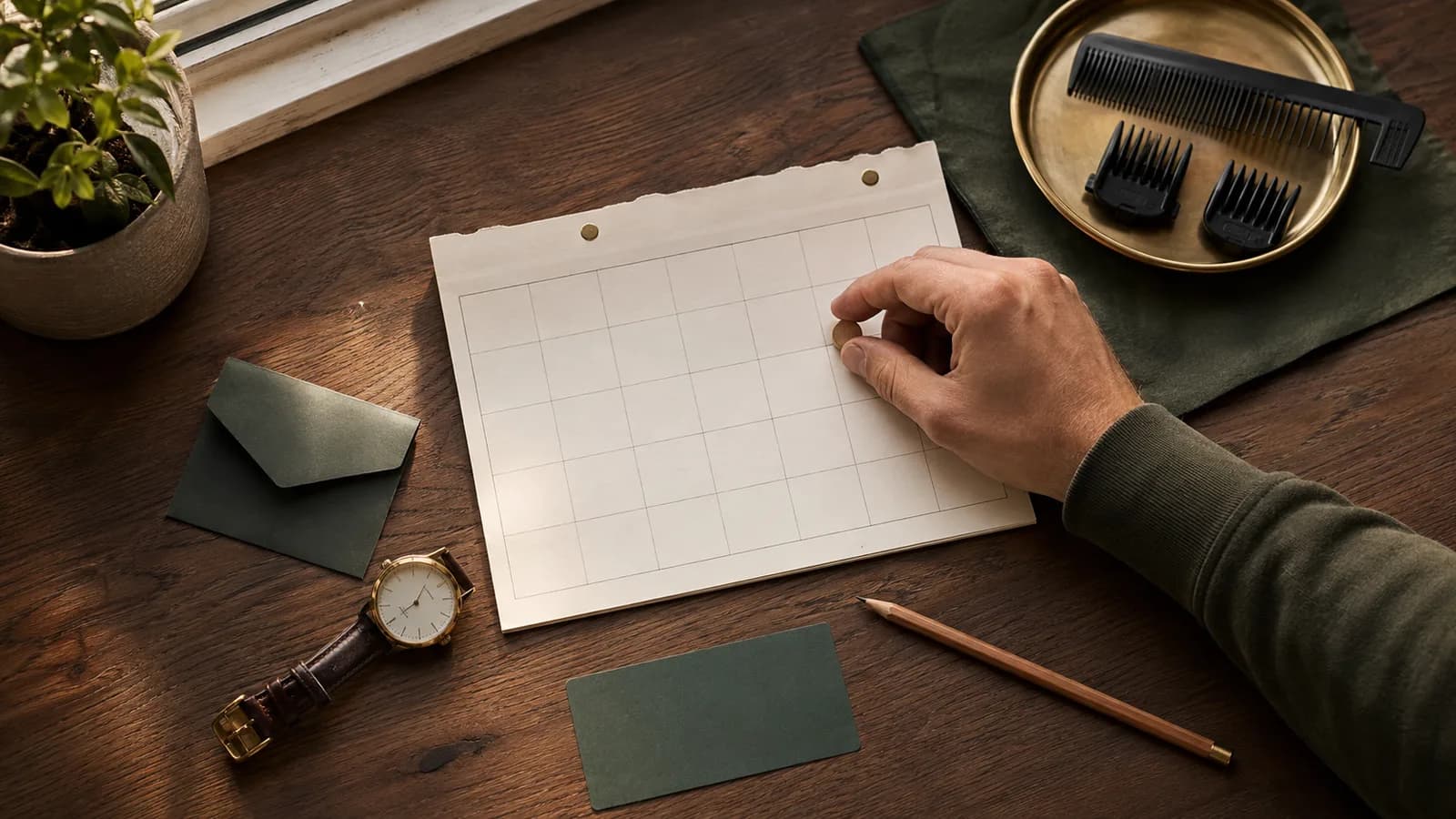
How often should men get a haircut? A useful starting range is every one to three weeks for a very crisp skin fade or uniform buzz, three to five weeks for many short tapers and crops, five to eight weeks for a medium scissor cut, and roughly eight to twelve weeks or longer for many long styles. These are planning ranges, not rules. The right date is when the intended silhouette, edges or manageability stop working for you.
Hair growth speed is only one variable. Contrast makes a close fade look grown out sooner, while a softer outline can develop without appearing accidental. Curl pattern, density, the way the sides expand, how much styling you accept, upcoming events and the price of a visit all matter. This guide helps you observe your own cut over one cycle and turn that evidence into a schedule you can afford and repeat.
How often should men get a haircut? Start with these ranges
Use the shortest interval only when the design depends on millimetre-level contrast. A skin fade, sharp line-up or very close buzz may look different after several days because new growth removes the clean separation between skin and hair. Someone who wants that just-cut finish for work or personal preference might return in one to three weeks. Someone comfortable with a softer transition can wait longer without doing anything wrong.
Many short cuts have more room. A low taper, textured crop, crew cut or short side part often keeps its basic idea for three to five weeks, especially when the barber leaves a natural neckline. Medium scissor cuts commonly move into a different but still intentional shape before they need weight removed. Five to eight weeks is a practical observation window, not a promise that every head will behave identically.
Long hair is usually maintained by shape, condition and the goal of the grow-out rather than a visible line at the neck. Eight to twelve weeks may suit someone preserving layers or removing worn ends, while a deliberate growth phase can run longer with occasional consultations. Book sooner when tangling, uneven weight or styling effort rises; wait when the shape still works. The calendar should serve the haircut, not command it.
Judge the silhouette, edges and daily effort
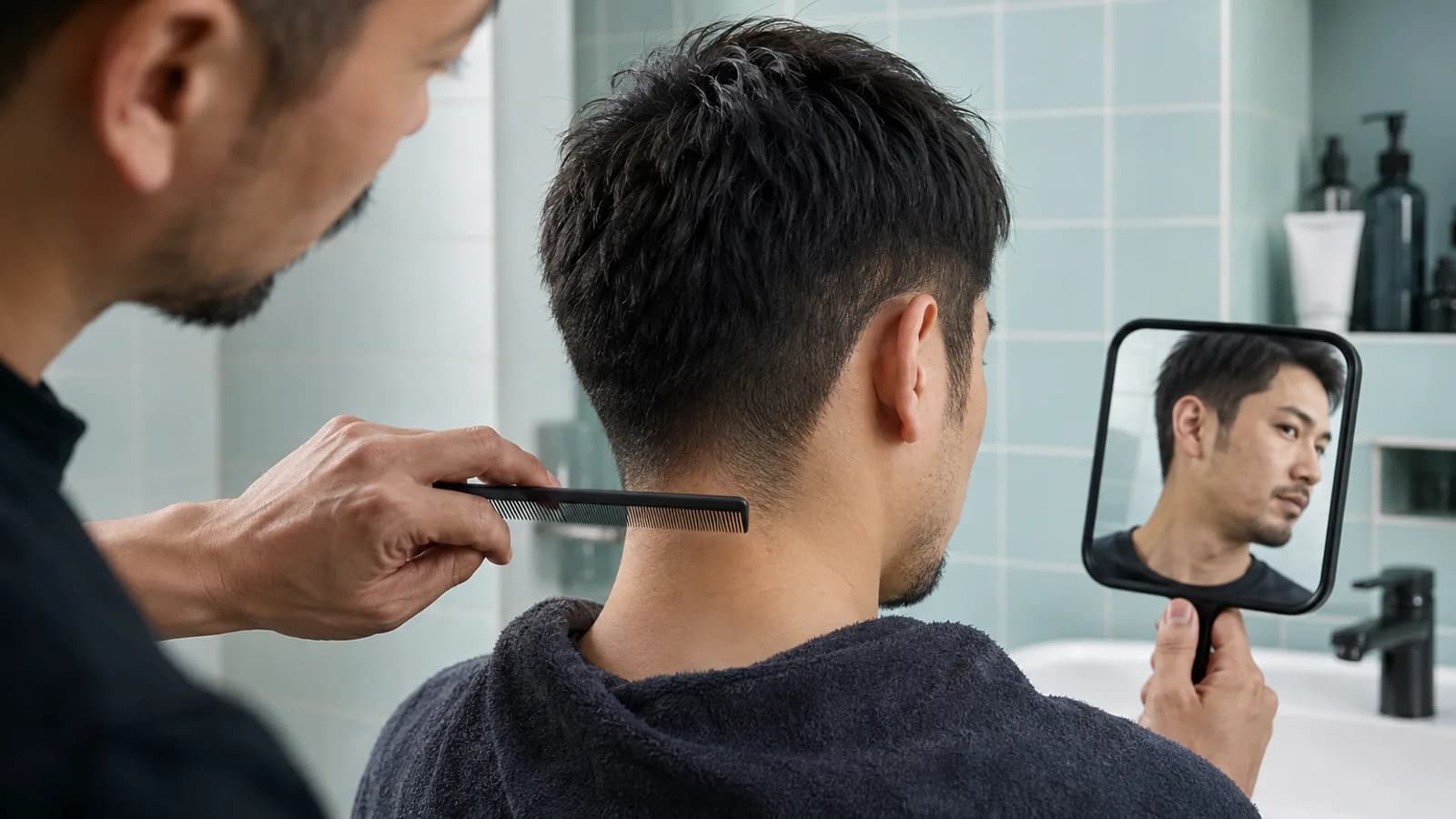
Photograph the fresh cut once from the front, both profiles and the back in ordinary daylight. These are not rating photos. They are a record of the barber's intended outline: how high the sides sit, where volume remains, how the crown connects and whether the neckline is natural or sharply defined. Repeat the same views weekly without changing distance or light. The first week that the design stops reading clearly is your useful maintenance clue.
Watch three zones. First, the silhouette: do the sides begin to widen, does the top collapse, or does the crown stick out? Second, the edges: do sideburns, around-ear lines or the nape look disconnected? Third, effort: does the cut suddenly need much more heat, product or time to resemble its original shape? One weak zone may need a small tidy-up; several together usually justify a full appointment.
Do not judge immediately after waking or after wearing a hat. Wash and style the hair in the ordinary way, then give it time to settle. Humidity can temporarily expand curls, and heavy product can hide a shape problem for one day. Look for the same issue on several normal mornings. A repeatable observation is stronger than a single bad-hair moment or a close-up that magnifies every stray strand.
Fades and buzz cuts: decide how much softness you accept
A fade is built on contrast. The closer its lowest section starts to bare skin, the sooner uniform growth reduces that contrast. A high skin fade with a sharp line-up therefore tends to demand more frequent care than a low taper that follows the natural hairline. If you want a lower-maintenance short cut, ask the barber what the transition will look like after three or four weeks, not only how it looks in the chair.
A buzz cut seems simple, but the schedule depends on its purpose. An even guard length can be refreshed quickly at home by someone trained and comfortable with a clipper, yet a blended buzz or precise edge is easier to distort. Never attempt complex fading merely to avoid an appointment. Clean equipment, good visibility and conservative guards matter more than chasing a perfectly sharp result without the required skill.
Bring reference photos of finishes you genuinely tolerate, including a slightly grown-out look. The guide to haircuts for men with a larger forehead can help you discuss fringe, top length and side volume as flexible framing choices rather than rigid face-shape laws. Once the design is chosen, ask whether a neck-and-edge service between full cuts is available. A small refresh can extend the cycle without unnecessarily removing length from the top.
Medium and long hair follow balance, ends and the growth goal
Medium hair can survive blurred edges while still losing balance. Layers may stop supporting movement, the crown can flatten and the perimeter can become heavy. Instead of waiting for obvious damage, notice whether the same styling routine still distributes volume where the cut intended. A five-to-eight-week check is useful for many medium styles, but maintenance can be earlier for a precise shape or later during a planned transition.
For long hair, decide whether you are maintaining a stable length, growing it, or changing the architecture. Someone maintaining shoulder length may want periodic shaping and attention to worn ends. Someone growing from short to long may need fewer cuts but more careful conversations: remove only what interferes with the plan, preserve useful length and rebalance sections that create an unwanted shelf. State the growth goal before the cape goes on.
A trim does not need to be dramatic to be successful. Ask the stylist to show what amount they intend to remove and describe the result in centimetres or finger width rather than vague words such as tidy. Photograph the result and note the date. After two or three cycles you can see whether eight weeks is unnecessarily early, twelve weeks produces too much tangling, or seasonal humidity changes the schedule.
Curly and coily hair needs a shape-aware schedule
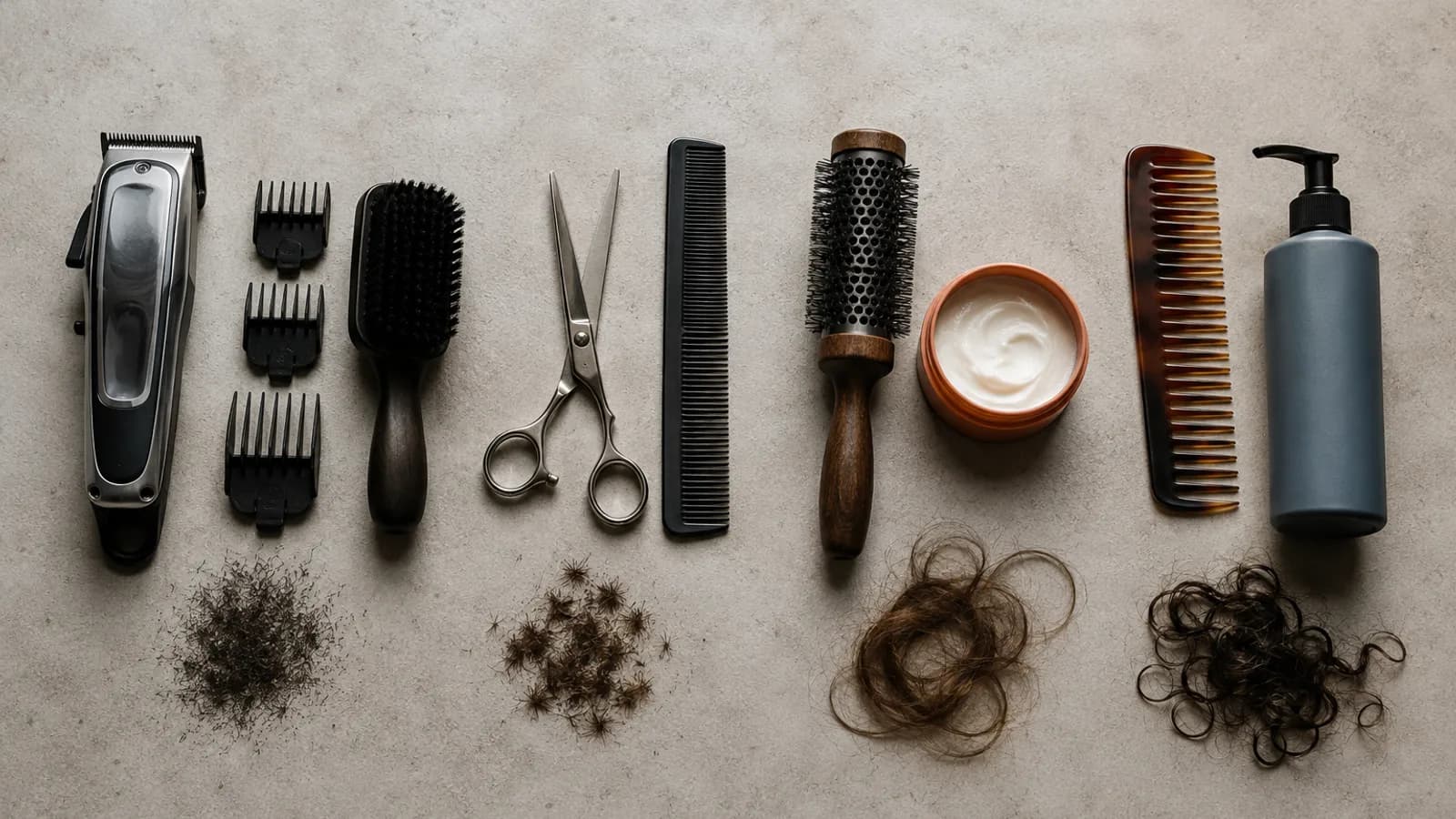
Curly and coily hair can hide length while revealing changes in width, shrinkage and weight distribution. Judge it in the state you wear most often: naturally dried, stretched, twisted or otherwise styled. A cut that looks balanced when wet may settle differently after drying. Take the maintenance photo only after your normal routine, and tell the professional how often you wear each state so the cut is designed around real life.
Do not detangle aggressively just to make an appointment decision. The American Academy of Dermatology recommends learning your hair type, using suitable products, conditioning after washing and handling wet hair gently; tightly curled or textured hair may be easier to comb while damp with a wide-tooth comb. Those care choices influence manageability between trims, but they do not create one medically correct cutting interval.
For a rounded afro, curls with a tapered edge or a longer layered shape, watch for an uneven perimeter, a crown that will not connect, persistent knotting at the ends or a large increase in styling effort. A small shape-up and a full cut are different services. Clarify which one you need. Protecting length while restoring the outline is often more useful than repeating the exact first-day silhouette too frequently.

Haircuts shape existing hair; they do not speed growth
Cutting changes the visible fibre above the skin. It can remove worn ends, make the perimeter look denser and help a style sit more cleanly, but it does not instruct the follicle under the scalp to grow faster or produce thicker hair. Cleveland Clinic explains that a haircut does not make hair grow faster, thicker or darker. Book trims for shape, manageability and condition, not because someone promises accelerated growth.
If you are growing hair, measure success by retained length and a workable shape. Excessive heat, rough detangling and constant tension can increase breakage, which may make progress feel slower. Use gentle care suited to your texture and protect the ends without buying a complicated routine. A stylist can remove split or badly worn sections, but the amount and timing should follow what is actually present, not a mandatory monthly ritual.
Sudden shedding, bald patches, scalp pain, marked itching or a changing hairline are not haircut-scheduling problems. A barber can notice a visible change but cannot diagnose its cause. Pause cosmetic experiments and speak with a qualified healthcare professional or dermatologist. Separating medical concerns from ordinary grow-out keeps the guide honest and prevents a grooming calendar from pretending to provide treatment.
Build a barber schedule your budget can repeat
Track one complete cycle. On the day of the cut, note the service, price, travel time and minutes needed for normal styling. Each week, record only whether silhouette, edges and effort still meet your standard. When two of the three fail consistently, mark that week as the likely return point. Repeat once before turning it into a recurring booking. One unusual humid week should not dictate the whole year.
Translate the interval into an annual cost. A visit every two weeks is about twenty-six appointments; every four weeks is about thirteen; every six weeks is about nine. Multiply by your real total cost, including transport and optional edge services. If the number feels uncomfortable, do not ignore it. Choose a softer design, alternate full cuts with smaller maintenance, learn one safe tidy-up or extend the interval deliberately.
The appearance-priority guide can help decide whether frequent haircut spending is genuinely your first grooming priority or simply habit. Hair should not consume the budget needed for basics that matter more to you. Put the next appointment on a calendar only after the fresh cut proves its cycle. A realistic date removes last-minute panic while leaving room to move it when the shape continues to work.