
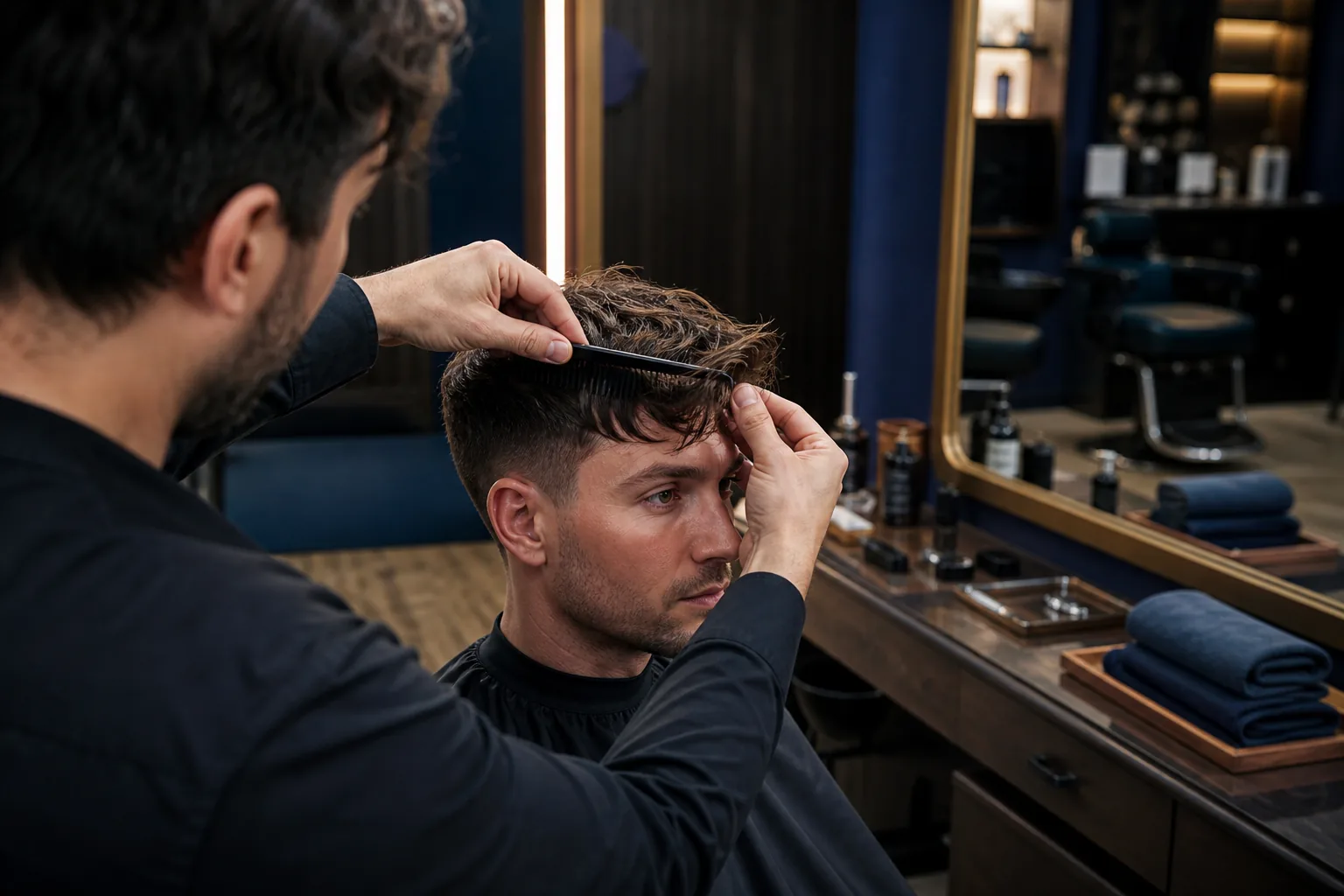
A big forehead does not require a complicated haircut. The biggest visual lever is the direction of the top: forward texture reduces the visible height, diagonal movement divides the upper face, and controlled width at the sides prevents every line from pointing upward. The right cut works with your natural growth instead of demanding a long rescue routine every morning.
This guide goes beyond a list of haircut names. You will learn how the main silhouettes work with straight, wavy, curly, fine and dense hair, why fade height changes the overall frame and what to show your barber. MogRise then turns the choice into a focused LooksMax AI priority you can photograph, maintain and compare.
Start with your hairline, density and face shape
Let your hair dry without product and stand in soft front light. Notice where the hairline begins, whether the temples are even or more recessed and how much density sits in the front section. A naturally high forehead and an irregular hairline do not automatically need the same cut even when they appear similar in a close selfie. Your growth direction also shows which styles will stay in position without constant correction.
Then widen the view to the complete face. A longer face often benefits from less vertical height on top and a little more visual width at the sides. A rounder or wider face can carry more texture above as long as the fringe clearly breaks the forehead area. Jaw shape, cheek width, beard outline and neck all contribute to the silhouette you are trying to balance.
Take one neutral front photo and one true side photo with the camera at eye level. Step far enough back to avoid the enlarged center created by a short wide-angle selfie, then crop afterward. These views reveal whether you need direct coverage, diagonal framing or simply a softer temple transition. MogRise places the observation beside FaceScore, beard and style context rather than judging the forehead alone.
Choose a textured fringe or French crop for direct coverage
A textured fringe is the most flexible starting point for many men. The top stays long enough to fall forward while separated pieces interrupt the forehead without forming a solid block. A matte, lightly broken finish usually looks more natural than a wet, fixed fringe. You can close it for coverage, move it diagonally or open a small section while keeping the same core cut.
A French crop creates a more compact silhouette with clean sides, a controlled top and a clearer front edge. Ask your barber not to cut the front extremely short by default. The useful length depends on where you want the visible forehead to stop and how much your hair lifts, bends or shrinks when dry. Refine the final edge only after the hair has been placed in its real direction.
A Caesar cut takes the same forward principle into a shorter, more even shape. It can look precise on dense, straighter hair but gives an irregular hairline less room to blend than a textured fringe. Compare at least one soft version and one structured version. The best haircut for your big forehead is the one that remains balanced through a normal day, not only immediately after styling.
- Textured fringe for flexible natural coverage
- French crop for a compact, defined silhouette
- Caesar cut for short controlled structure
- Curly fringe for movement without a hard edge
Use side parts, curtains and curls for softer framing
You do not have to cover the whole forehead. A soft side part draws a diagonal across the upper frame and distributes attention. Keep enough length at the front for the section to move instead of standing straight upward. A hard, glossy part can emphasize the hairline, while a matte, relaxed direction often creates an easier connection between the top, temples and rest of the face.
Curtain haircuts divide the top at the center or slightly off center and let both sides frame the forehead. They work especially well when straight or wavy hair has enough length to bend and move. Keep the division soft. A completely flat center can extend the vertical line, while gentle root lift and outward-falling ends create width without building an exaggerated tower above the head.
Curly hair already supplies depth and changing direction. A curly fringe can interrupt the forehead without drawing a geometric line. Ask to preserve weight in the front and avoid thinning the curl pattern until it loses shape. Judge the front length when dry, because shrinkage can lift the final fringe much higher than wet hair suggested in the chair.
Avoid haircut proportions that add unintended height
A very high skin fade can narrow the sides visually and make the forehead plus top appear longer. That does not mean every fade is wrong. A low taper or softer transition preserves more frame around the temples and ears and connects smoothly into a beard. Check the height from both the front and side instead of judging only how clean the shortest section looks.
Extreme pompadours and tightly slicked-back styles expose the complete hairline while adding vertical volume. If you like an open, confident direction, reduce the peak, keep the surface looser and let a few sections move diagonally or sideways. You can preserve the energy of the style without turning the top of the head into the only focal point.
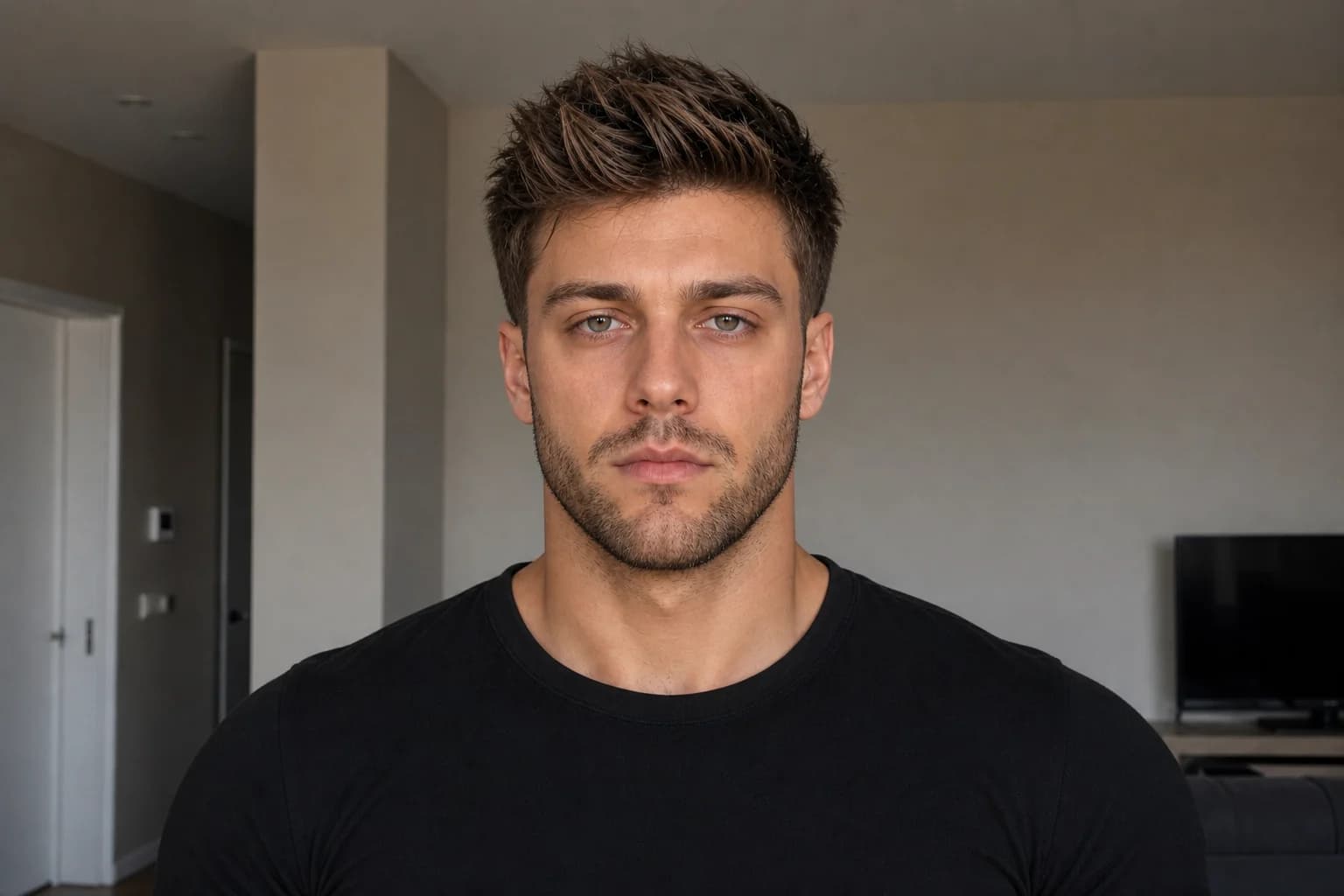
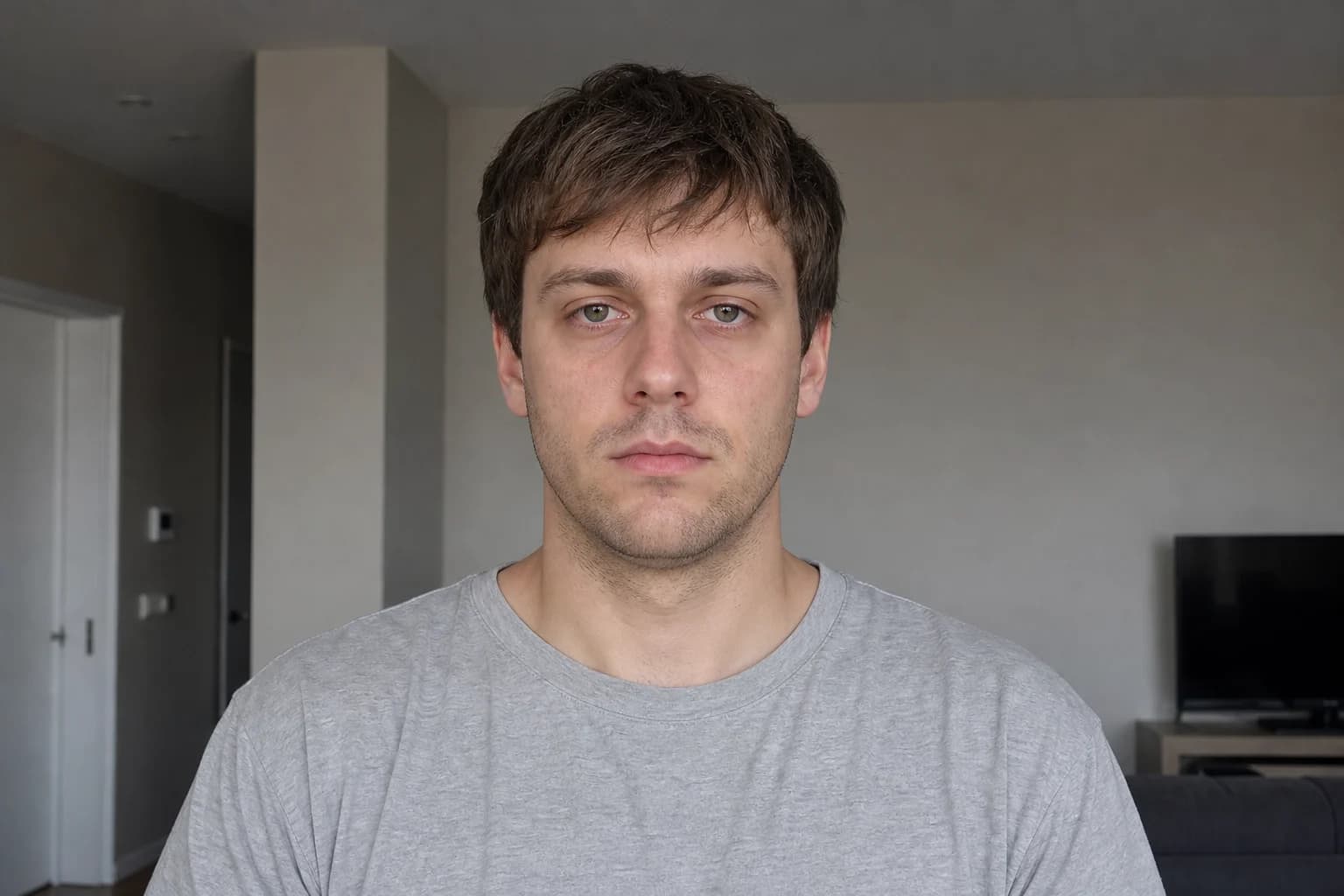
The shared comparison in this article shows the complete-frame principle. The strongest after image coordinates premium high-volume hair, precise masculine beard framing, a rested eye area, polished natural skin, upright posture, stronger shoulders, fitted dark clothing and jaw-defining cinematic light. A haircut becomes more convincing when it supports that complete presentation instead of acting as an isolated concealment trick.
Judge the full silhouette from the front and side, not only how many centimeters of forehead a haircut covers.
Match the haircut to your hair type and maintenance
Straight hair displays edges clearly and can support a French crop, Caesar or soft side part. Ask for point cutting or controlled texture when you do not want the front to read as one solid line. Wavy hair naturally supports loose fringes and curtains; removing too much weight can erase the bend that was helping the style frame the forehead in the first place.
With finer hair, controlled fullness matters more than maximum length. A heavy top can collapse, split into narrow pieces and reveal more of the front than expected. Moderate length, a light matte product and drying in the intended direction often create stronger visual density. Very thick hair needs weight removed in selected areas so the fringe can move rather than sitting like one rigid block.
Choose a cut you can reproduce on an ordinary morning. Test a simple routine: dry in the growth direction, add a small amount of matte product and separate only a few pieces. Record the time and durability in your Glow Up plan. A haircut with slightly less theoretical coverage can be the better choice when it looks clean every day and takes five minutes instead of twenty.
Give your barber clear visual instructions
Bring two or three reference images that show a hairline and texture reasonably similar to yours. Point to the specific element you want from each image: fringe length, taper height, temple outline or direction on top. A haircut label such as French crop is not enough by itself because different barbers use the same name for noticeably different lengths and shapes.
Say that you want to balance the visible forehead height and explain how much styling you will actually do each day. Ask to keep the front longer during the first pass and adjust it gradually when dry. Have the barber show you the top directed forward, diagonally and slightly open. That gives you several usable versions instead of one position that works only in the chair.
After the appointment, reproduce the original front and profile photos with the same camera, distance, light, expression and similar clothing. Compare the forehead frame, facial width, profile, beard connection and overall presence. MogRise can keep that sequence inside your LooksMax AI workflow so your next haircut decision begins with a clean comparison instead of memory.
Build the haircut into your MogRise plan
Define one clear goal first: less visible height, more side framing, softer temples or a stronger overall silhouette. Make the haircut the main variable. If you change hair color, beard length, glasses and camera angle at the same time, you will struggle to identify what improved the image. A focused experiment creates a much more useful result.
Plan the styling and maintenance at the same time. Save the product, drying direction and preparation time that worked. Set a date to review the front length or taper before the complete shape grows away. This turns one successful barber appointment into a repeatable routine that fits your day and moves your presentation toward its true potential.
MogRise is being prepared as a free download for iPhone and iPad, and the App Store link will be added when the listing is available. Until then, you can use the complete workflow now: clean baseline photos, an appropriate silhouette, realistic references, precise barber instructions and a matched comparison. That is how LooksMax AI becomes an actionable Glow Up plan instead of a collection of random haircut ideas.