

Conditioner for men should be chosen and applied for your actual hair, not for a gender label on the bottle. For an ordinary rinse-out formula, read the directions, distribute a modest amount over the intended lengths and rinse as instructed. Fine short hair and long dry curls do not need an identical application pattern. Conditioner is not shampoo, a styling hold product or a promise of new growth.
The useful question is small: which part of my hair needs easier everyday handling, and can I care for it without leaving a finish I dislike? This independent guide gives you a placement-and-amount routine rather than a brand ranking. You do not need an app, a hair score or an expensive matching set to follow it. Keep any prescribed scalp treatment separate, and do not turn irritation or unusual shedding into a cosmetic experiment.
Conditioner for men starts with the format
Before opening the bottle, find the words that tell you what happens after application. Rinse-out, leave-in, mask and styling cream are not interchangeable instructions. A familiar creamy texture does not tell you whether the formula belongs in wet hair for a short contact time or is designed to remain after washing. Read the back rather than guessing from a photograph of the package. If the label is unclear, ask the maker before extending the contact time or leaving it in overnight.
Choose one job for this session. Perhaps the longer ends are awkward to manage after washing, or you want to see whether your current rinse-out step feels too heavy. That is different from wanting more hold at the fringe. Keep a styling product for its intended task instead of asking conditioner to create a fixed hairstyle. The styling-texture guide covers that separate decision. Here, a simpler wash-day step is enough; you are not rebuilding the whole shelf or choosing a new haircut at the same time.

Map the lengths before choosing an amount
The American Academy of Dermatology's healthy-hair guide distinguishes application by hair type: ends for fine or straight hair, and the whole length for dry or curly hair. It does not give every adult one identical dose. Use that limited distinction as a starting point, alongside the particular product's directions.
Look at the hair you can actually separate, not an imagined long section from a tutorial. A very short crop has little exposed length to work with; do not scrape cream across the scalp just to imitate someone else's handful. With longer hair, identify where the ends are and how easily you can distribute product without pulling. If you cannot reach a section comfortably, ask a stylist to demonstrate on your next ordinary visit. Describe the problem plainly: the ends catch, the top feels coated, or the instructions are difficult to apply at this length.
Keep cleansing and conditioning as separate decisions
Finish rinsing shampoo before beginning the next step, unless the exact product specifically gives a different method. Do not pour conditioner into the shampoo bottle or mix unfamiliar formulas in your palm to save time. Each label describes its own use. A two-in-one product has its own instructions too; it is not a reason to improvise a homemade equivalent. Keeping the steps identifiable makes it easier to explain what you did if the routine does not feel comfortable afterward.
This guide does not assign a new shampoo calendar. If washing frequency is your real uncertainty, use the washing-frequency guide rather than changing that schedule and the conditioner together. A small comparison becomes confusing when the haircut, cleansing, product, amount and drying method all change on the same day. Keep the rest of the routine familiar for now. You want an understandable answer to one ordinary question, not an elaborate test that makes showering feel like laboratory work.
Distribute a modest amount without chasing a lather
Follow the label's amount guidance and start conservatively within it. Different bottle openings and product consistencies make a universal coin-sized serving unreliable. Put the intended amount in your hand where you can see it, rather than squeezing directly onto the head. Spread it enough to guide it over the intended sections with relaxed fingers. The purpose is an even, manageable application, not a thick visible coating. Stop adding product simply because the first amount does not look dramatic in a mirror.
Conditioner does not need to behave like a foaming cleanser. Do not keep rubbing to produce bubbles or deliberately roughen the hair so the product feels active. Work in sections if that makes a longer length easier to reach. If the formula seems difficult to spread, recheck whether the hair moisture and application method match the instructions before adding more. A comfortable application should be easy to describe afterward: one formula, one modest amount and the lengths intended by its label.

Use the stated contact time and rinse deliberately
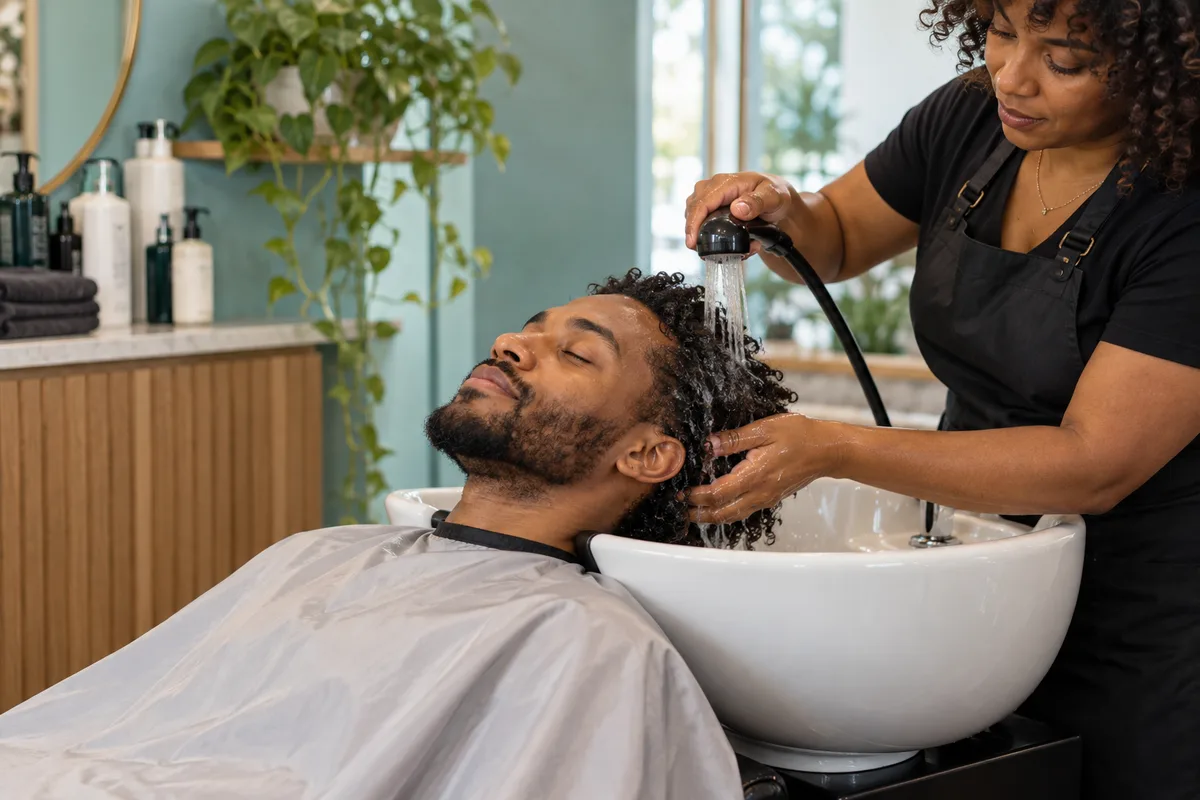
Check the contact time before you start so you do not have to read a slippery bottle while product is already in your hair. Longer is not automatically better. If the formula is rinse-out, do not decide that leaving a little behind converts it into a leave-in product. Use the rinse method the maker specifies and keep the stream away from the eyes. Keep the area underfoot free of spilled product; a routine should not create a slippery obstacle while you are concentrating on your hair.
During rinsing, move deliberately through the sections you treated rather than repeatedly scrubbing one visible spot. There is no universal number of seconds that proves every formula has been removed. Follow its instructions and ask the manufacturer if the endpoint is unclear. Do not keep adding shampoo to correct an uncertain feel in the same session. If a product causes burning, itching or another reaction, stop using it rather than treating discomfort as evidence that a stronger rinse or longer contact time will improve the result.
Let handling stay gentle after the product step
The AAD hair-damage guide advises avoiding pulling and tugging during combing and seeking professional help for continuing hair concerns. Conditioner is not permission to force a tool through resistance. Pause at a snag instead of turning it into a test of how hard you can pull.
Arrange the handoff from washing to the rest of your morning before reaching for another product. Keep a clean towel accessible and choose a familiar gentle drying method. Do not add vigorous brushing, high heat and several styling layers just because you want an immediate polished photograph. This article is about one rinse-out step, not a promise that natural texture will disappear. If your routine needs a detailed detangling method for a particular texture or protective style, ask a qualified stylist rather than adopting a technique from an unrelated hair type.
Judge ordinary wear, not a wet-hair photograph
Let the hair reach its usual dry state before deciding whether you like the finish. Wet hair, a salon blow-dry and your normal morning are different conditions. Notice practical things: does the application fit the time you have, do you dislike a coated feeling, and can you manage the sections you intended to care for? Do not infer follicle growth, scalp health or permanent repair from shine. A photograph can show presentation, but it cannot settle those medical or biological questions.
Make one short note if it helps: next wash I will recheck the amount within the instructions, or I need help reaching the back section. Those are illustrative choices, not reported product-test results. There is no need to collect daily photos or score each strand. If an otherwise comfortable formula does not give the finish you prefer, that is a preference mismatch, not proof the entire category is bad. Put the bottle away and return to the day rather than repeatedly inspecting the same hair under different lights.

Keep the routine small and its limits clear
Keep the version that you can carry out comfortably and explain clearly. You should know the format, intended placement, approximate amount for your own use and the maker's contact-and-rinse directions. If any of those remain uncertain, resolve that one point instead of buying a mask, oil and leave-in to cover it up. A men's label is not a special requirement, and a more elaborate shelf does not establish a better routine. Existing suitable care can be enough without another purchase.
Cosmetic care is not a way to diagnose a sore scalp, explain sudden hair loss or promise permanent restoration of damaged ends. Stop an uncomfortable experiment and seek qualified advice for concerning changes. For an ordinary routine question, finish with one manageable action at the next wash and leave the rest stable. You do not need a FaceScore or a transformation story to justify easier hair care. The useful result is a repeatable step that serves your actual hair and leaves room for everyday life.