

Hair clay vs paste vs cream comes down to the job you need the product to do. Clay usually suits matte texture and firmer separation, paste is a flexible middle ground, and cream gives softer control with less grip. Those are useful starting points, not fixed laws: names are not standardized, and two jars in the same category can behave differently. Read the actual hold and finish description, start with a tiny amount, and judge the result in your own hair.
The right product should help a haircut sit naturally without forcing you into a twenty-minute routine. Before shopping, decide whether you need lift, separation, smoothness or only frizz control. Then consider strand thickness, density, curl pattern, hair length and how often you want to restyle. This independent guide gives you a simple selection and testing method. It does not rank brands, promise hair growth or treat styling as a way to change facial anatomy.
Hair clay vs paste vs cream starts with hold and finish
Hold describes how strongly a product helps hair keep a chosen shape. Finish describes how it reflects light: matte, natural or glossy. These two axes are more useful than a fashionable category name. A short textured crop might need medium hold and low shine; a longer swept shape may need movement rather than maximum grip. Write those two requirements down before opening a jar. If you cannot name the desired outcome, buying a stronger product rarely solves the uncertainty.
Labels such as strong, medium and natural are relative to each formula. Use them to compare products within one range, not as laboratory measurements. Weather, hair length and the amount applied change the experience. A product that feels firm on short, dry hair may spread more softly through damp, longer hair. Treat the first application as a test. The goal is enough control to support the cut, not a shell that makes every strand look identical.
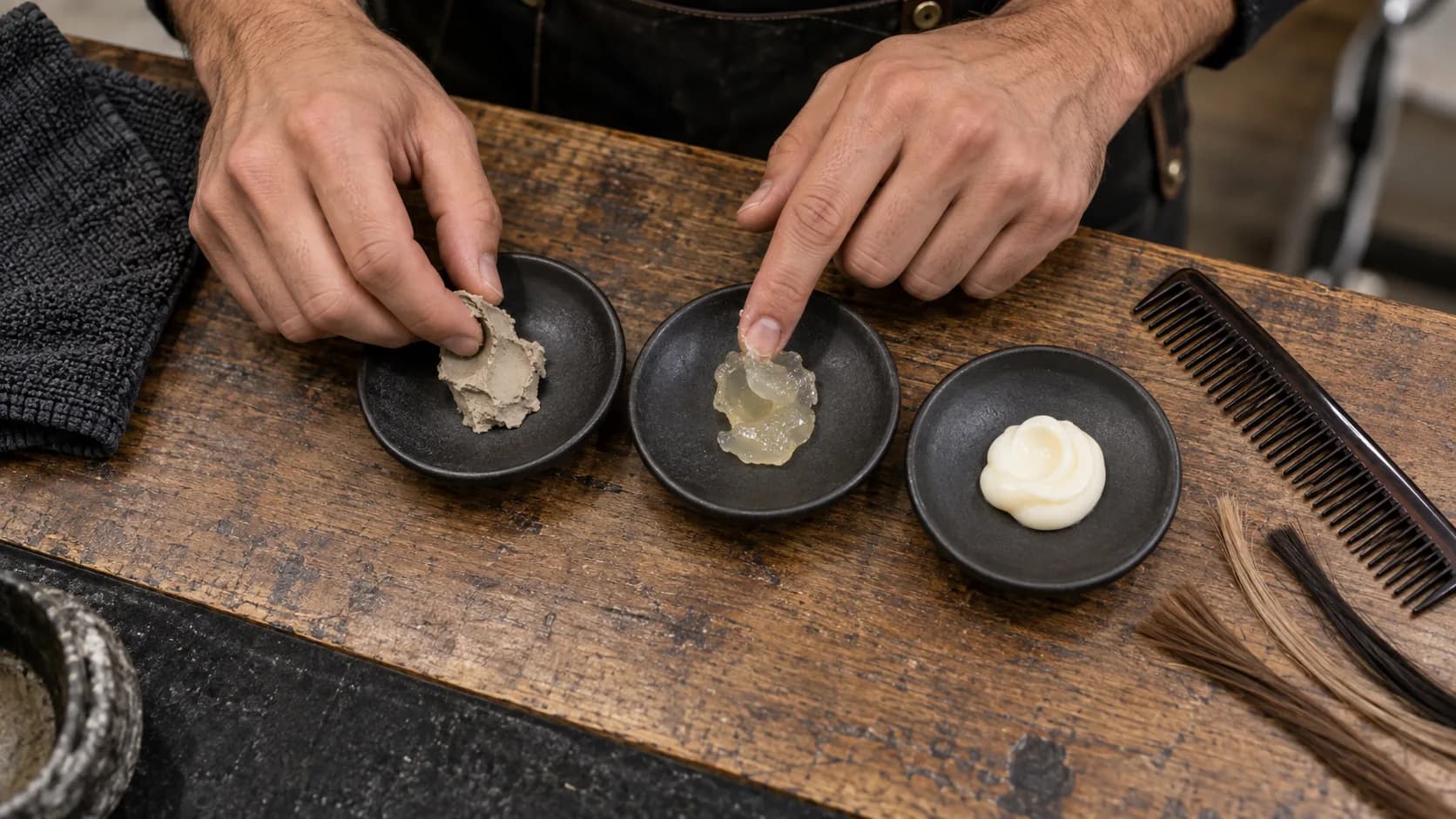
What hair clay is good at
Clay is the clearest starting point when you want a dry-looking, separated or textured finish. Many clay products feel dense in the jar and add grip between strands, which can help short to medium styles keep definition. That grip can make hair appear fuller in normal light because strands do not collapse into one shiny mass. It does not create new hair or treat thinning. On very dry, tightly curled or long hair, a heavy matte formula may feel rough unless the hair already has enough moisture and flexibility.
Choose clay for deliberate texture, modest volume and low shine, then begin with less than you think you need. Warm it thoroughly between the palms so no pale clumps remain. Spread it through the back and sides before touching the visible front. If the result drags, flakes or makes the hair look dusty, the formula or amount may be wrong. Adding more clay usually makes that problem worse; wash or lightly reset and try a smaller amount on another day.
Why paste is the flexible middle option
Paste is often useful when you want control without choosing an extreme matte or polished finish. Many pastes give medium, workable hold and allow some movement during the day. That makes them practical for side parts, loose texture and short-to-medium styles that should look intentional but not rigid. The category is broad: one paste may be creamy and light, another dense and nearly clay-like. Check the specific product rather than assuming every paste will behave like the last one you tried.
A flexible paste is a sensible first experiment if you are unsure. Apply it to mostly dry hair for more definition or slightly damp hair for softer distribution, unless the directions say otherwise. If fine hair falls flat, reduce the amount before seeking more hold. If dense hair pushes the shape apart, use a little more in thin layers or ask a barber whether a stronger formula fits the cut. The best middle ground is the one you can apply consistently without residue.
When styling cream makes more sense
Cream generally suits people who want softness, light definition and frizz control more than rigid structure. It can help longer, wavy, curly or coarse hair sit together while preserving movement. A light cream may also be easier for someone who dislikes the tacky feeling of waxier products. It will not usually hold a high-volume shape against wind or gravity. That is not a failure if your actual goal is a tidy, touchable result rather than an architectural style.
Work a small amount through the lengths and avoid concentrating it at the roots of fine hair, where weight can remove lift. For curls, distribute gently rather than brushing the pattern apart after it forms. If the hair looks greasy, the amount may be too large or the formula too rich. If it remains fluffy and uncontrolled, you may need a stronger cream, a small layer of paste, or a haircut whose shape does more of the work. Product cannot compensate indefinitely for an incompatible cut.
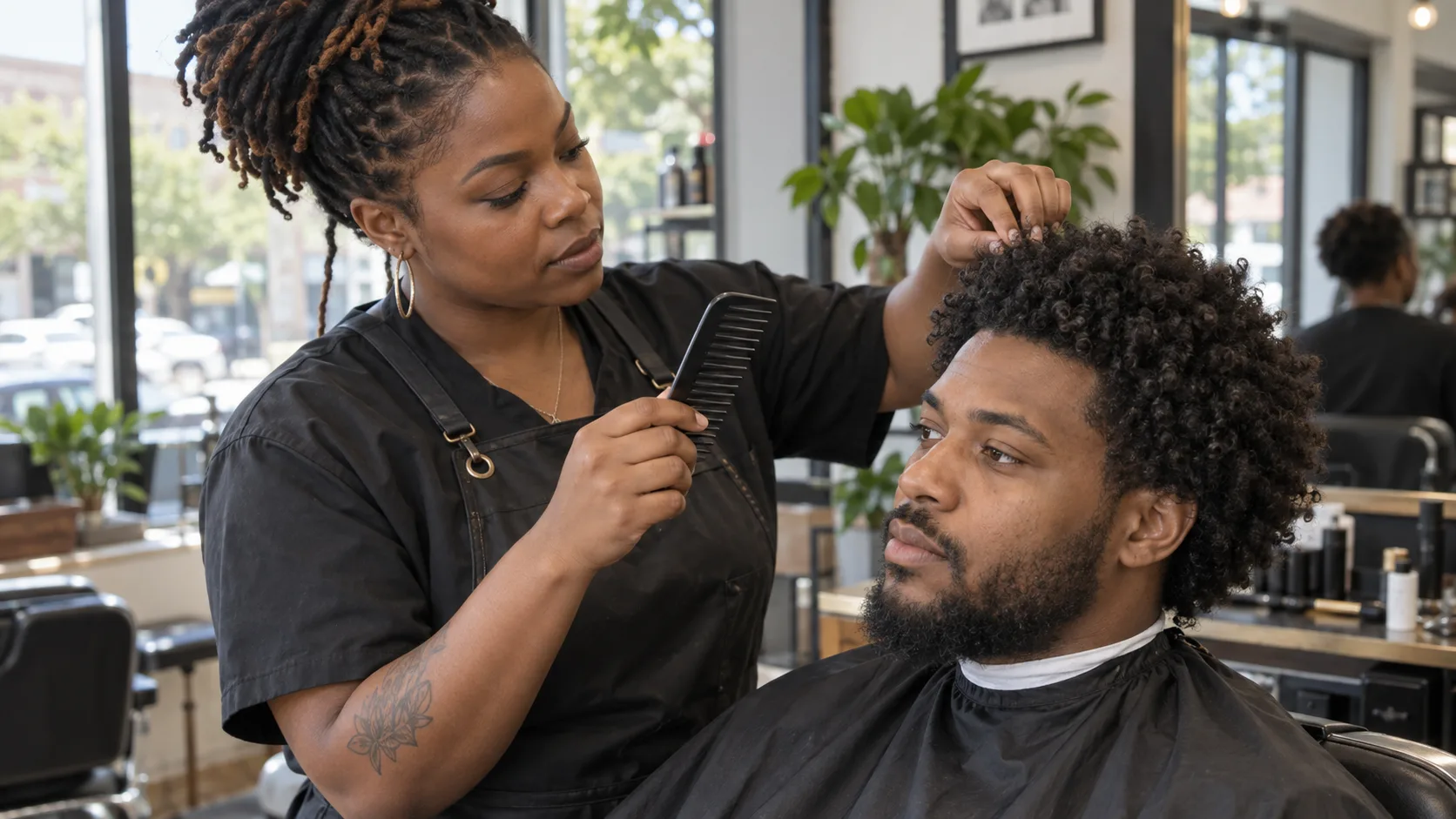
Match the product to hair behavior, not a face label
Fine hair is easily weighed down, so begin with a very small amount and favor spreadable, lower-shine formulas. Thick or dense hair may need stronger control, yet using one large scoop can coat the outside while leaving the interior untouched. Divide the hair mentally into areas and apply thin layers. Straight hair often shows shine and clumps clearly; wavy or curly hair may prioritize smooth grouping and moisture. These are tendencies, not identity boxes. Your own result is the final test.
Hair length changes the task too. Very short hair needs separation and direction; medium hair must balance control with movement; longer hair benefits from even distribution and may need less grip. Do not choose a product because an online model has a similar face shape. The haircut, growth direction and daily routine determine the styling job. If you are still deciding on the cut itself, the existing face-shape haircut guide can help you discuss framing with a barber without pretending that one shape has one mandatory style.
Use a small amount and build in layers
Start with a pea-sized amount for short hair, spread it until the hands carry a thin, even film, then apply from the back toward the front. This keeps the fringe or hairline from receiving the whole dose. Reach beneath the surface rather than polishing only the top. Add another very small amount only where hold is missing. Product is easier to add than remove. A visible greasy patch, white residue or stuck-together front usually means distribution or quantity failed before product strength did.
Decide whether to use dry or damp hair based on the desired effect and the directions. Drier hair often gives more grip and separation; dampness can make a product spread more evenly and soften the finish. Avoid rubbing wet, fragile hair aggressively. The American Academy of Dermatology notes that wet hair can break more easily for many people and recommends reducing damaging styling habits. Hair with tight curls may have different combing needs, so handle your own texture gently rather than following one universal rule.

Run a three-day product test
Test one formula for three ordinary days rather than judging it from a single perfect morning. On day one, use the smallest useful amount on dry hair. On day two, adjust only the quantity. On day three, if the directions allow it, compare slightly damp application. Keep the haircut and basic drying method the same. Notice initial shape, midday collapse, restylability, scalp comfort and how easily the product washes out. You need observations, not a score or a dramatic before-and-after picture.
Define success before the test: perhaps the fringe stays out of your eyes, curls remain grouped, or the style survives a commute without looking coated. If it succeeds, stop shopping. If it fails, identify one reason. Too much shine points toward a more matte finish; stiffness suggests less hold or less product; collapse can mean more grip, better drying, or a cut that needs refreshing. Changing one variable prevents a bathroom shelf full of nearly identical jars.
Restyle without piling on product
A flexible style should often respond to clean fingers, a little water on the hands or a quick change of direction. Before adding more product at midday, try reshaping what is already present. Repeated layers can turn a natural finish heavy and collect dust or sweat. If the style consistently fails by lunch, record whether humidity, a hat, exercise or insufficient drying was responsible. The answer may be a different preparation method rather than a stronger tin carried everywhere.
At the end of the day, follow the product's cleansing directions and pay attention to scalp comfort. Stop using a formula that repeatedly causes irritation and seek appropriate professional advice if symptoms persist. Styling products are cosmetic tools, not treatments for sudden shedding, scalp disease or hair loss. A barber can explain how the cut behaves; a qualified clinician is the right person for a health concern. Keeping those roles separate makes the product choice simpler and safer.

Choose the simplest product that does the job
The final choice is practical. Pick clay when matte grip and texture are central, paste when you want adaptable everyday hold, and cream when softness and control matter more than structure. Then verify the individual formula, because marketing names overlap. Use one product for a full test before combining products. A good result fits your hair, feels comfortable, washes out reasonably and does not demand constant mirror checks. It should support the haircut rather than become the main event.
You do not need the strongest hold, the most expensive jar or a product for every possible finish. Ask your barber to show the amount and application order used on your actual cut, then reproduce the method at home with realistic time. If a simpler option works, keep it. Hair clay vs paste vs cream is not a contest with one winner; it is a short decision about grip, shine, movement and the routine you are willing to repeat.