

Beard oil vs balm is mainly a choice about texture, finish and the job you want a product to do. Oil is usually a liquid used for conditioning; a styling balm may add light hold, but some balms are simply light leave-in creams. Read the actual directions rather than trusting the name. You do not automatically need both, and neither should be treated as a way to grow new beard hair.
Start with an ordinary complaint: the beard feels rough, a few hairs will not sit comfortably, the finish looks too shiny, or the skin underneath needs appropriate care. Those are different questions. This independent guide helps you separate them before buying another bottle. It is not a brand ranking, a medical treatment plan or a promise that one product will make every beard look better. Keeping a routine you already like is a perfectly useful result.
Beard oil vs balm: define the job first
Say what you want in one sentence, without naming a product. For example: I want the longer ends to feel less rough, or I want a small amount of control at the sides. The first points toward conditioning and the second toward a formula explicitly intended for shaping. If the concern is uncomfortable skin, do not assume that stronger hold answers it. A beard can look tidy while the skin beneath it feels unhappy, and a soft beard can still have its own natural direction.
Separate care from silhouette. Your existing growth pattern, haircut and beard length determine much of the visible frame. A product can change the way hairs sit or catch the light; that is not the same as changing the face underneath. The beard style guide discusses the broader framing decision. Here the narrower question is whether a leave-in product earns a place in your routine. You do not need to redesign the entire beard to find out.
Read the texture and directions, not just the category
An oil generally pours or dispenses in drops. Balms are less predictable: one may be a firm waxy mixture, another a soft butter-like product, and another a light cream. Some products described as softeners also have rinse-out directions. Check whether the exact formula is meant to stay in the beard, whether it claims styling hold and whether it is intended for the skin. Similar names on two containers do not establish interchangeable instructions, amounts or results.
Look for a useful description of finish: flexible, light, matte-looking or shiny. Treat those as the manufacturer's intended effect, not an outcome guaranteed on your hair. Ingredients and directions can help distinguish formulas, but an ingredient list alone cannot tell you exactly how heavy a finished product will feel. Avoid deciding that all oils are greasy or every balm holds firmly. Choose a small, realistic test of the particular product instead of buying an entire category on reputation.
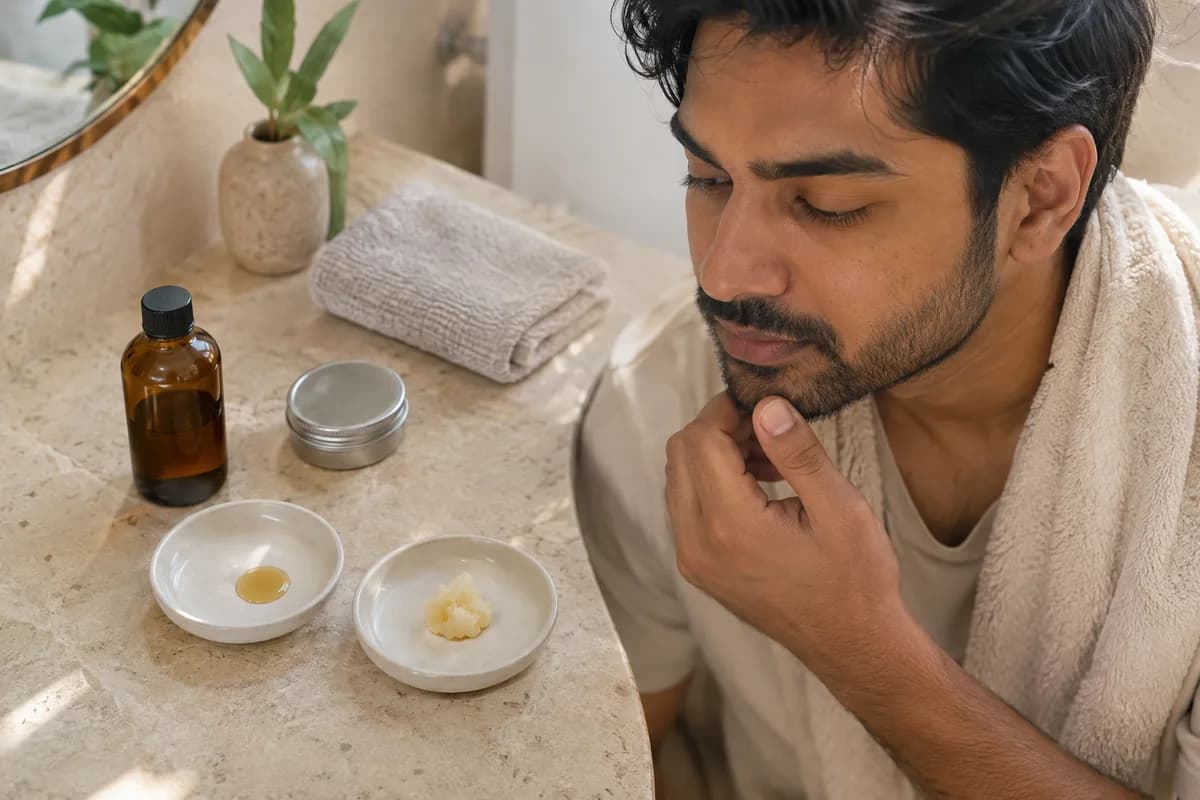
Keep the skin decision separate from styling
Skin comfort belongs before decorative hold. The American Academy of Dermatology's beard-care guidance distinguishes conditioning options by skin type, including beard oil for normal or dry skin and a fragrance-free, non-comedogenic moisturizer for sensitive skin. It does not say everyone needs an oil-and-balm pair. Use that distinction as a reason to choose appropriate care, not to diagnose yourself from flakes or assume that a perfumed beard product is the answer to every uncomfortable sensation.
If your present facial moisturizer already suits the area, ask whether another leave-in product has a separate purpose. More layers can make it harder to identify which formula you dislike. Do not scrub away a greasy finish repeatedly, apply oil over a reaction or assume tingling proves something is working. Continuing irritation, a rash or other concerning changes deserve qualified advice rather than a stronger cosmetic experiment. Styling guidance cannot establish what is causing a skin problem.
Introduce one formula before comparing daily wear
Before a new product goes over the whole beard area, read the American Academy of Dermatology's product-testing advice. It describes a small-area trial twice daily for seven to ten days, leaving the product on for its normal contact time. Stop using a product that causes a reaction. This preliminary check is different from a medical allergy test and cannot guarantee that a formula will suit you indefinitely. People with known allergies or an existing skin condition should follow their clinician's advice.
Only after that introduction should you judge the ordinary grooming experience. Keep the cleanser, beard length and other products stable so the new variable is understandable. There is no need to apply two unfamiliar formulas together, compare one side of the face against another or deliberately provoke discomfort to complete a test. If a trial is not comfortable, you can stop. You are choosing a manageable cosmetic routine, not collecting data for a competition between bottles.
Start small and distribute instead of coating
Use clean hands and follow the exact product's directions for the beard's moisture level and amount. Begin conservatively within those instructions. A dropper full is not a universal serving, and a large scoop of balm is not evidence of thorough care. Spread the product through your hands before distributing it as directed, rather than depositing the whole amount on the front of the chin. Keep it away from the eyes and mouth, and do not improvise with concentrated fragrance or essential oils.
Pause before adding more. You want to know whether the amount already applied is enough, not discover the limit by making the beard visibly saturated. Notice whether your hands remain coated and whether the same small area keeps collecting product. If an instruction is unclear, ask the maker or a barber familiar with that formula. Different dropper openings, beard lengths and consistencies make a fixed internet dose a poor substitute for the actual directions and your ordinary comfort.

Ask for light control without forcing every hair
If hold is the real goal, check that the balm is actually described as a styling formula. A light moisturizer called balm may not provide the control you imagined. After applying as directed, use a suitable comb gently rather than repeatedly dragging at a stubborn spot. Let the beard keep some natural texture. One hair that curves differently is not a reason to add another scoop, clamp it flat with heat or make an unplanned cut at the bathroom counter.
A product cannot replace every maintenance decision. If the same side always feels bulky or the ends keep catching, ask a barber about shape and manageable length at the next ordinary appointment. Describe what happens during a normal day, not a promise that all hairs must remain motionless. You may find that less product gives the flexible finish you wanted, or that conditioning alone is enough. The aim is a beard that feels livable, not an immovable shell.
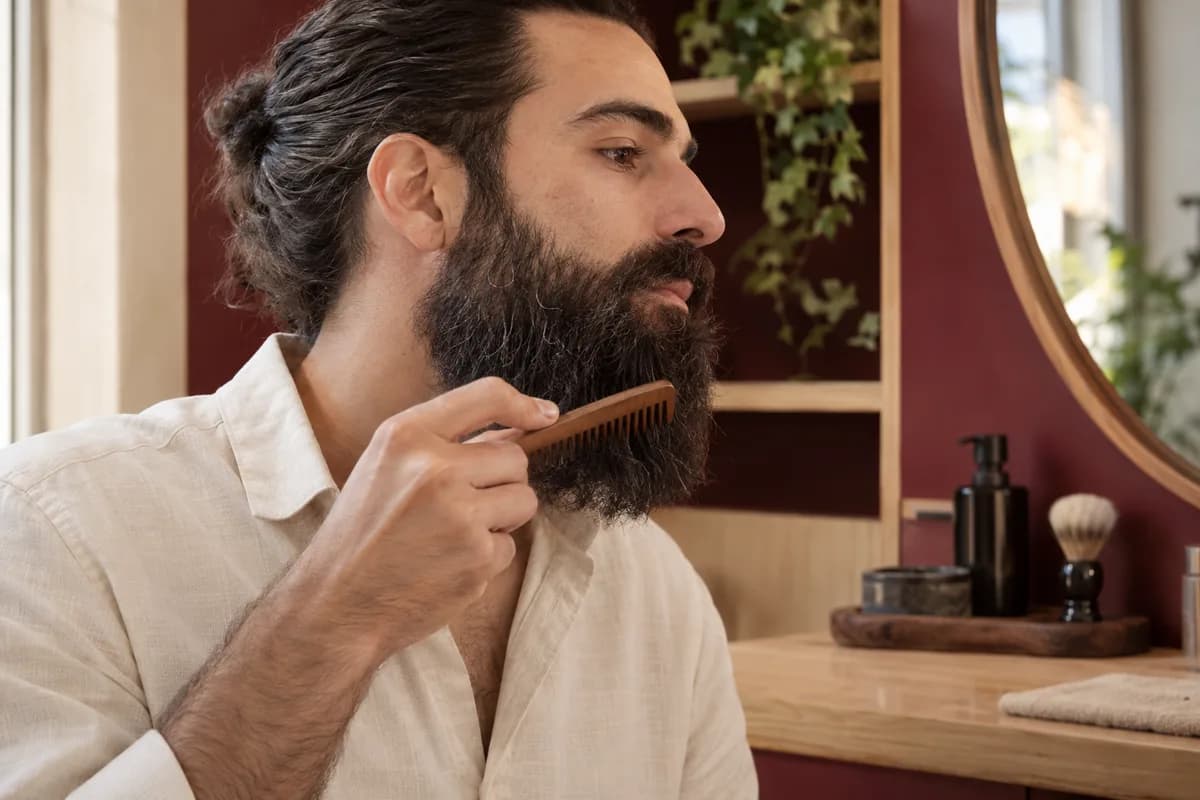
Review finish in an ordinary day, not a glare test
Look at the finished beard in normal light and then get on with the day. Consider feel, unwanted residue, the amount of time spent and whether the chosen shape remains comfortable. A narrow spotlight can exaggerate shine, while a flattering photograph can hide a finish you dislike in person. If you want a visual note, the photo guide explains sensible framing. Keep the conditions similar and the purpose small; this is not a reason to start rating your face after each application.
An illustrative decision might be: the beard feels comfortable, but the front looks shinier than I prefer, so next time I will reassess the amount within the directions. Another might be: the light cream is comfortable, and I do not need shaping hold. These are examples, not reported tests or user results. Keep one short note and put the products away. A formula can be a poor fit for your preference without being universally bad or needing replacement by a more expensive routine.

Keep one product, combine deliberately, or keep neither
Do not buy a pair simply because the packaging suggests a sequence. If one suitable formula does the job, stop there. If you already tolerate both and want separate care and styling roles, follow their instructions and check compatibility rather than assuming a universal oil-first or balm-first rule. Adding a second layer should answer a remaining need. Do not use combination routines to disguise a reaction, promise faster growth or make sparse areas produce new hair.
Finish with a practical decision: what do I want this product to do, is the formula meant for that job, and does the routine remain comfortable at an ordinary amount? Keep the answer in plain language. You do not need a FaceScore, a purchase or a dramatic beard change to complete this guide. A comfortable existing routine, one carefully introduced formula or a decision not to add another product can each be the right stopping point for your own everyday grooming.