

Nose width is not one interchangeable feature: the bridge, tip and base can look different, and a close photograph can change their apparent relationship to the face. Start by naming the region you mean, using a clear whole-face reference and separating description from preference. There is no universal width that establishes attractiveness or human worth. MogRise can support a broader explained face-analysis and planning workflow, but this guide does not claim a dedicated nasal measurement or prescribe changing your nose.
Imagine you are choosing a new portrait or preparing a styling conversation. You notice that the nose looks broad in one image, then wonder whether you should change everything around it. A useful first step is smaller: decide which visible region drew your attention and what decision, if any, actually needs to follow. You might improve the reference photo, clarify a question about the analysis, test a comfortable clothing frame or simply leave an ordinary feature alone. Those are different outcomes, and all can be reasonable.
Nose width: name the region before the label
Look at the complete face at ordinary viewing size before enlarging anything. If you mean the upper central portion, say bridge. If you mean the rounded central end, say tip. If you mean the lower spread around the outer wings, say base. A phrase such as broad nose leaves these possibilities mixed together. Your note does not need technical precision; it needs enough clarity that you know what you are discussing. Avoid tracing a shadow edge and assuming that it is the boundary of the same structure in every photograph.
The FISWG feature list treats the nasal body, tip, base and nostrils as distinguishable descriptive components. It is a forensic comparison reference, not a beauty standard or validation of a consumer app. Use its vocabulary only to avoid confusing different regions. Do not import its professional identification purpose into your appearance routine. A clear label should reduce the amount of checking you do, rather than create a new list of tiny features you feel obliged to grade.

Separate width from projection and opening
A frontal impression of breadth does not answer how far the nose projects in profile. Likewise, a visible nostril opening is not the same thing as the outside span of the base. You can describe a relatively narrow upper region and a fuller lower region without finding a contradiction. Do not resolve that description by forcing the whole nose into one internet category. Ask which view supports the particular observation, and leave dimensions you cannot see as uncertain instead of inventing a number for them.
The nose-and-chin profile guide deals with a different relationship: the side silhouette and its context. This article stays with the frontal width question. If a styling conversation includes both, keep two separate notes rather than using the side picture to confirm a frontal label automatically. A useful note might say that the lower region attracts attention in the front portrait, while the profile question remains unrelated to today's choice. That is more informative than deciding that one feature must be reduced to make every view agree.
Prepare a reference you can actually discuss
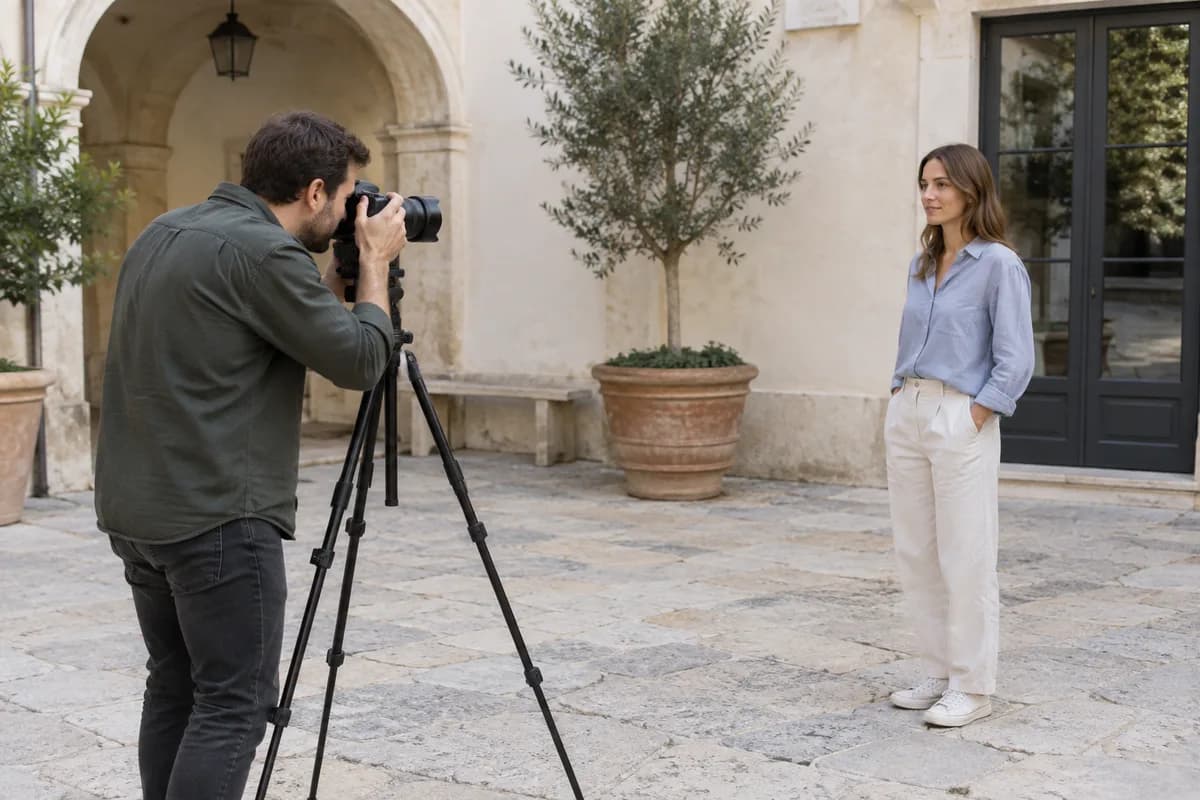
Choose one clear frontal photograph with your head comfortably level, lips relaxed and the entire face visible. Use broad, even light and place the camera at approximately eye height, several steps away when practical. Ask a friend or use a stable support rather than bringing the phone very close to inspect the nose. Keep the original image without a shape-changing filter. These are practical conditions for a clearer conversation, not a promise that your photograph is a clinical measurement or a complete representation of a three-dimensional face.
The Ward and colleagues distance paper uses a mathematical model to show how short-distance photography can alter apparent nasal breadth relative to facial width. It does not give you a correction percentage for your own selfie. Treat that distinction as a reason to improve the reference, not to subtract a published number from your face. If two images use different distances, label the conditions as different and avoid treating their disagreement as evidence of a physical change.
Do not use a smile as a neutral reference
Keep an expressive photograph if it represents a moment you like. It simply answers a different question from a relaxed reference. When comparing pictures, notice whether you are speaking, smiling broadly or holding your lips differently. Do not call the feature changed when the images differ in expression, pose and framing at the same time. Nor should you try to freeze your everyday face into one approved expression. The goal is to recognize what kind of image you are looking at, not to make conversation or laughter feel like a mistake.
Use two categories if it helps: a relaxed image for a bounded observation, and ordinary portraits for deciding what you want to share. Put the reference aside after it has answered the question. If the nose becomes the only thing you can see in every friendly picture, return to the full scene and the purpose of the photograph. A useful portrait can show your presence, interests and expression; it does not need to demonstrate an ideal relationship between every visible feature or survive a magnified anatomical inspection.

Use an explanation, not a number, in MogRise
If you use MogRise, start with clear front and profile photos for the broader guided analysis. Read the explanation attached to an observation before deciding it is a task. Write down what the report actually says and what remains unclear. This workflow is not a dedicated nose-width calculator, diagnosis or verified reconstruction of your anatomy. A PSL score or FaceScore supplies planning context, never a measure of your value. You can disagree with a styling suggestion or decide that the available information does not justify any change.
For example, an observation about overall presentation might lead you to review the photo conditions or discuss a simple frame choice. It does not establish that your nasal base has an unacceptable size. Our facial-harmony guide explains why whole-face context matters; use that wider reading instead of isolating one number. MogRise is free to download, with in-app purchases; that does not mean every analysis or unlimited use is free. Check the current offering before starting, and keep the session focused on the actual question you brought to it.
Choose one reversible presentation question
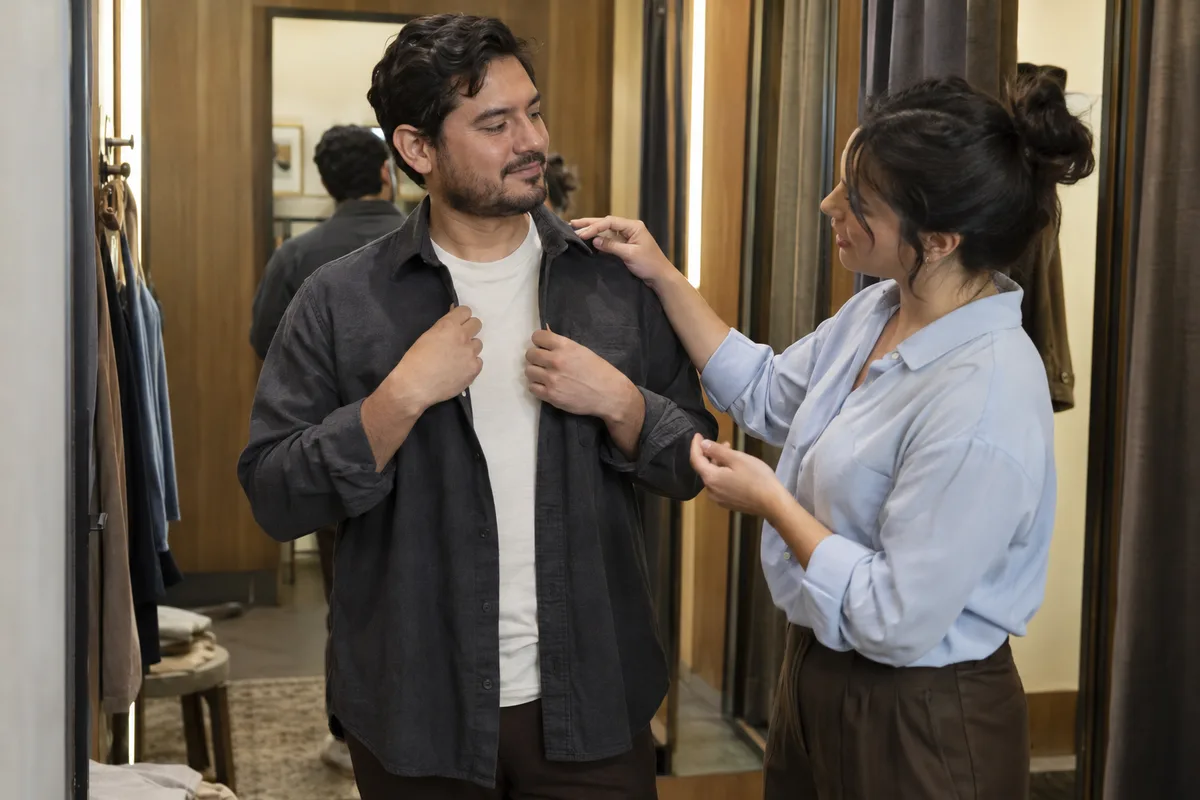
Turn the observation into a decision only if a real decision exists. For a portrait, the task might be to choose a clearer image rather than a more flattering distortion. For a wardrobe conversation, it might be to compare two comfortable collars in the same light. For glasses, comfort and proper fit belong with an optician, not with a rule that promises to hide a nose. Do not combine a haircut, beard change, new frame and several photo tricks merely because one close image made you uncertain.
State the question in words you can act on: does this collar feel comfortable and suit the outfit, or does this portrait represent me naturally? Keep the nose itself out of the success condition. A changed frame may change the impression of the whole face, but it does not narrow nasal tissue. Avoid squeezing devices, forceful massage and shape-changing promises as shortcuts. This is a presentation experiment, not an anatomy project. Keeping your current style or deciding to do nothing remains a legitimate answer to the same observation.
Review the decision without repeatedly rescanning
Before a comparison, choose the conditions you will keep stable and the question you will answer. Wear the same basic layers when testing a collar, or use the same ordinary viewing size when choosing a portrait. Ask whether the option is usable, comfortable and appropriate for the situation. Do not keep searching for the camera distance that gives the smallest-looking nose, then present that image as anatomical evidence. A useful review ends with a choice or a clear uncertainty, not another demand to find a reassuring score.
Set a stopping point for the session. If the reference is unclear, one practical correction may be enough; if it is clear and no task follows, close the report. Keep only the notes or images needed for your chosen purpose. There is no requirement to turn every descriptive feature into a daily target or a progress graph. Repeatedly changing the question makes it impossible to finish. Return to ordinary activities after the decision, and judge the routine by whether it helps you participate in them rather than by another magnified nose inspection.
Know which questions an appearance guide cannot answer
A photograph-based discussion of width does not assess breathing, pain, an injury or a new physical change. Bring those concerns to a qualified clinician instead of trying to interpret them through an appearance score. This guide does not recommend an intervention or tell you that a procedure is needed. Similarly, a new symptom is not a styling opportunity. Separate a comfortable everyday preference from a health question so that the next step matches the issue rather than the most dramatic result you found online.
If appearance checking is becoming upsetting or interfering with your life, take a break from rating content and consider speaking with a qualified professional or someone you trust. You do not need to settle your nose category first. The useful end of this workflow is a clear description and, where appropriate, one modest presentation choice. It is not a verdict on an ordinary feature. Leave room for uncertainty, natural variation and a face that moves when you talk. Your life does not need to wait for a width label to feel resolved.