
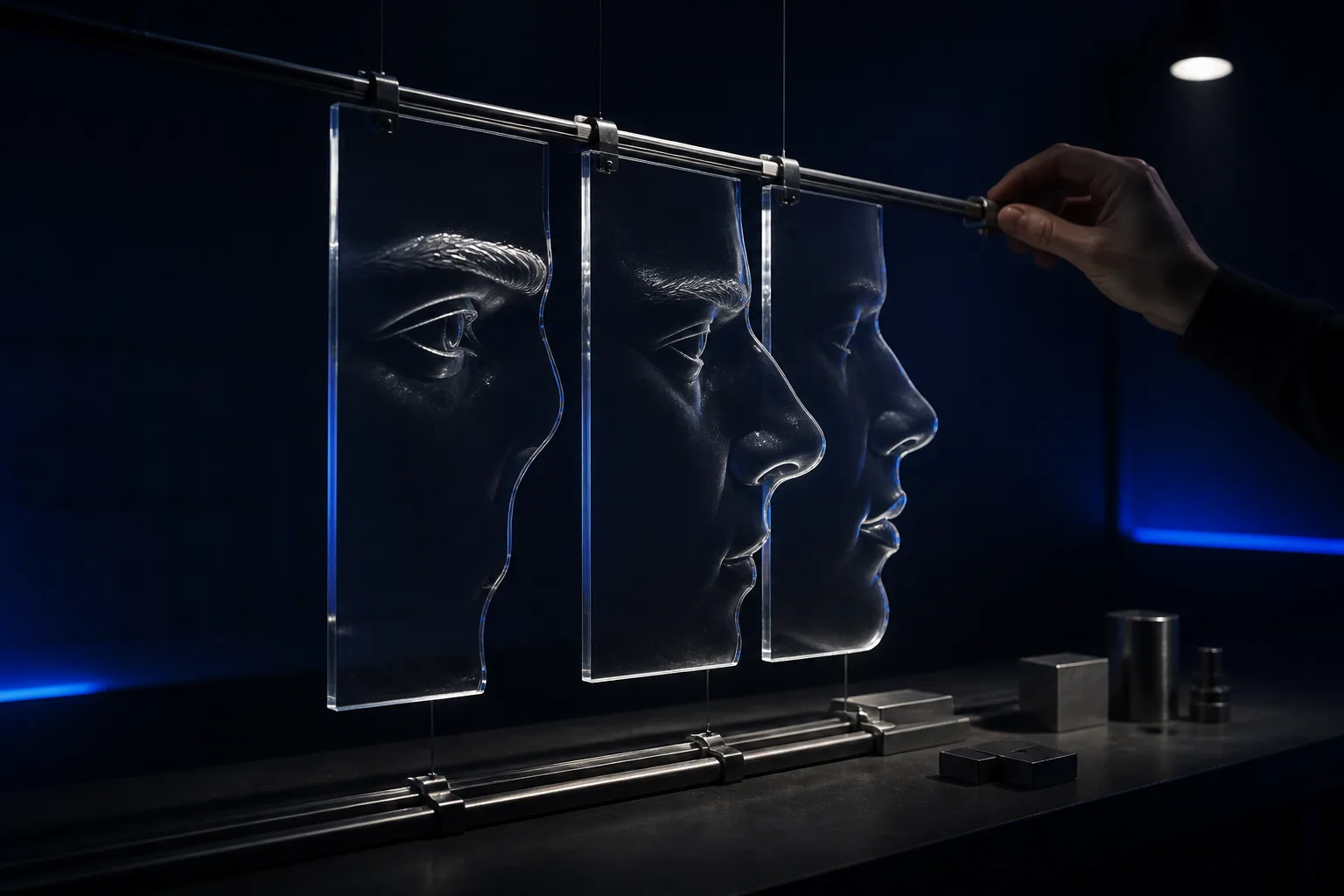
A face can have several individually strong features and still look most convincing when those features share one clear visual direction. That complete impression is facial harmony. The eye area relates to the brows, the nose relates to the cheeks and lips, the chin completes the lower third, and hair, beard and glasses define the outer frame. No single measurement explains the whole composition.
This makes facial harmony useful for LooksMax planning. Instead of isolating one feature and chasing a random change, you can study how the complete face reads from normal distance. MogRise connects facial analysis, PSL scale context and FaceScore categories with practical decisions, so the next action supports the whole look rather than one detail in isolation.
What facial harmony means in a LooksMax AI analysis
In a LooksMax AI analysis, facial harmony describes the relationship between features rather than a standalone score. The width of the brows affects how the eye area reads. Hairstyle changes the apparent height and width of the forehead. Beard shape can connect the cheeks, mouth and jaw into a stronger lower frame. Each part changes the context around the others.
Think of the face as a composition with an inner structure and an outer frame. The inner structure includes feature spacing, facial thirds, symmetry, cheek position and the relation between nose, lips and chin. The outer frame includes hair silhouette, temples, beard, glasses, neckline, shoulders and posture. Harmony appears when those layers reinforce one another.
MogRise makes that idea actionable by grouping observations into categories you can compare. A FaceScore or PSL scale result provides orientation, while the written facial analysis explains which relationships already work and which controllable presentation choice could create a cleaner overall balance. The useful question becomes not “Which feature is wrong?” but “Which change improves several relationships at once?”
Facial harmony versus symmetry, proportions and the golden ratio
Symmetry compares the left and right sides. Proportion compares distances and sizes, such as the three horizontal sections of the face or the spacing between the eyes. The golden ratio is one famous mathematical reference. Facial harmony is broader because it asks how all visible relationships work together in a real face, expression and photograph.
A perfectly mirrored image can look less natural than an ordinary portrait because real faces have character, expression and small directional differences. Likewise, one proportion can sit close to a reference while the overall frame still needs better coordination. Hair volume, eyebrow weight, beard length and glasses width can make the same structural face read very differently without changing its identity.
Use measurements as clues, not as the entire plan. If a front photo suggests a long-looking upper third, first test a hairstyle with more controlled height or a fringe direction that balances the forehead. If the lower face reads narrow, compare beard shapes and necklines that give it clearer boundaries. The practical win comes from matching the frame to the structure.
Facial harmony is the complete composition: proportions provide the map, while grooming, style, posture and light determine how clearly the map reads.
Create reliable front and profile photos before judging harmony
Start with one neutral front photo and one true side profile. Put the camera around eye level, use the same lens, step back to reduce close-range distortion and crop afterward. Soft light from slightly in front should reveal the eye area, cheek contour and jaw-to-neck transition without creating one dramatic shadow that dominates the analysis.
For the front view, keep the head level, expression relaxed and shoulders visible. Move hair away from the face for the structural reference, then take a second presentation photo with normal styling. For the profile, turn the whole body and head together until the far eyelashes and cheek are no longer visible. This makes forehead, nose, lips, chin and neck easier to compare.
Save the camera height, distance, background and light direction. A FaceScore can change when the photo changes, even when the face has not. Stable inputs allow MogRise LooksMax AI to compare actual grooming and presentation decisions. They also prevent a flattering angle from being mistaken for a permanent improvement in facial harmony.
- Neutral front photo at eye level
- True side profile with a level head
- Soft, repeatable front-side light
- Enough distance to avoid wide-angle distortion
- One structural photo and one styled photo
Read the face in connected zones instead of isolated features
Begin with the upper frame: hairline, hairstyle silhouette, forehead and brows. Then move through the eye-to-cheek zone, where brow density, eye openness and cheek contour create contrast. Finish with the nose-to-chin line, mouth, beard and jaw-to-neck transition. At each stage, ask how the neighboring elements support one another.
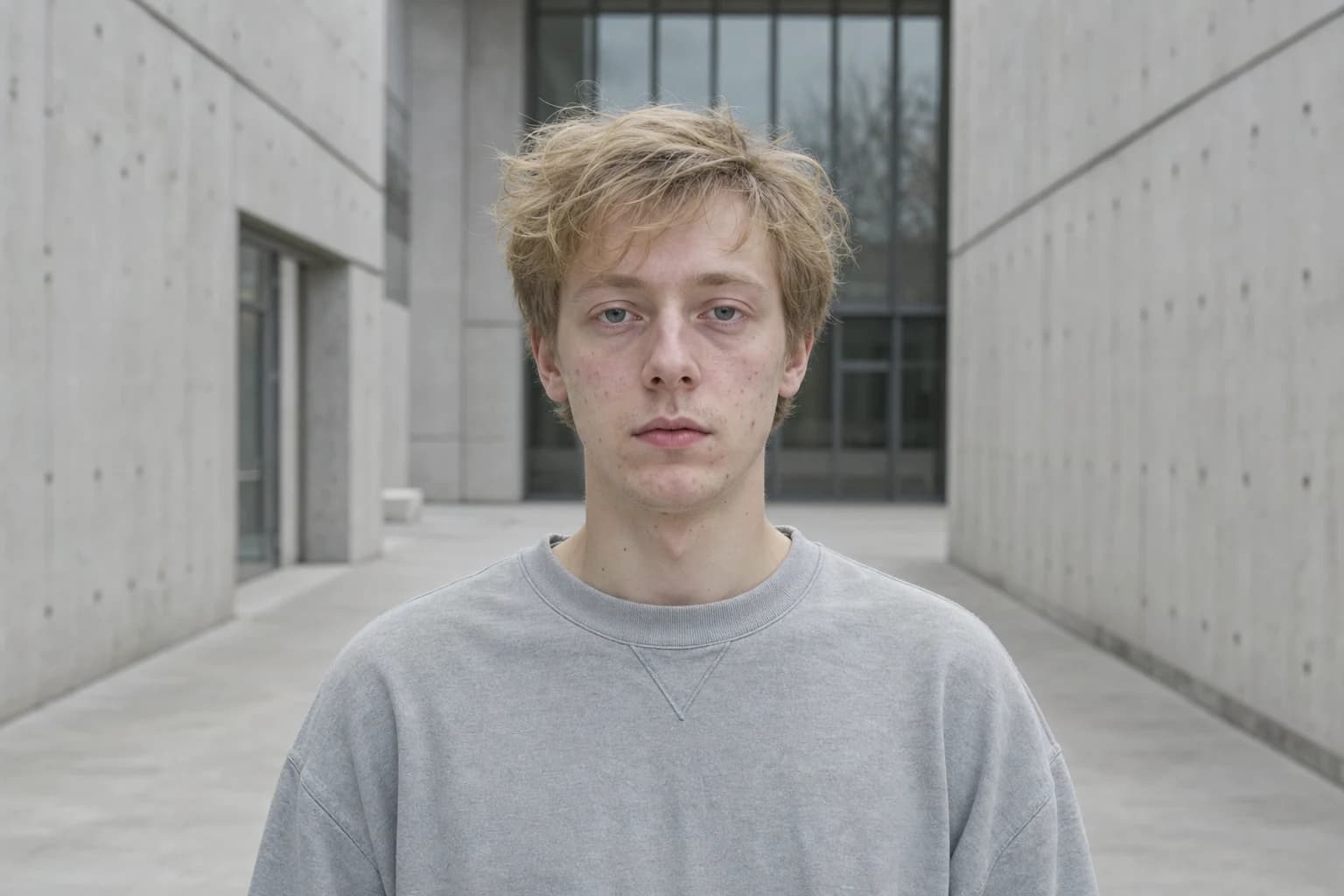
The comparison below demonstrates why the connected view matters. The AFTER image combines a premium high-volume haircut, precise masculine stubble, a more rested eye area, polished natural skin, upright posture, stronger shoulders, fitted dark clothing and jaw-defining light. The effect is dramatic because every controllable layer points in the same direction, not because one isolated detail carries the transformation.
Now zoom back out. View both images small enough to see head, neck and shoulders together. Facial harmony is often clearer at that scale because the viewer experiences the whole frame before noticing measurements. Use the close view to identify the action, but use the normal view to decide whether that action improves the complete presentation.

Improve facial harmony with hair, beard and eyebrow framing
Hair is usually the largest controllable shape around the face. Compare height, width, temple coverage, fringe direction and side bulk rather than choosing a haircut only by name. The strongest option supports the head shape from both front and profile and keeps attention flowing toward the eyes and jaw. Save two previews before committing to a direction.
Beard and stubble control the outline of the lower third. A clean cheek line, deliberate neckline and consistent density can connect the mouth, chin and jaw. Choose the length that complements your actual growth pattern. If the beard is short, precision matters more than size; if it is fuller, the outer silhouette should remain clear from normal conversation distance.
Eyebrows complete the eye frame. Brush them into their natural direction, remove obvious outliers and preserve enough density for a masculine anchor. Coordinate their visual weight with hairstyle and facial hair. MogRise can place these options beside the facial analysis so you compare combinations instead of making three disconnected grooming decisions.
Use skin, posture, clothing and light to unify the presentation
Even skin presentation lets the structure read without distraction. Keep the routine simple and repeatable: clean, moisturized skin and a calm natural finish create a consistent surface for comparison. Track changes under the same light rather than rewarding a filter or an unusually bright exposure. Consistency makes the whole-face effect easier to see.
Posture affects the frame below the face. Stack the head over the shoulders, lengthen the back of the neck and let the chest sit open without forcing it. A fitted crew neck, polo or open overshirt can then connect jaw, neck and shoulder width. Dark navy, charcoal and black create an especially clean outline in progress photos.
Finish with soft directional light. Place it slightly above eye level and toward the front so the eyes remain clear while the cheekbones and jaw receive definition. Avoid changing hair, beard, posture, clothing and lighting between comparison photos. When the setup stays fixed, you can see which styling decision genuinely strengthens facial harmony.
- Simple, consistent skin presentation
- Head stacked naturally over the shoulders
- A neckline that supports neck and jaw
- Fitted dark clothing for a clear frame
- Soft light that keeps the eyes visible
Build a facial harmony Glow Up plan in MogRise
Review the MogRise facial analysis and select the relationship with the widest effect. It might be hairstyle-to-forehead balance, brow-to-eye framing, beard-to-jaw definition or posture-to-neck alignment. Choose one primary change and one supporting routine. This keeps the plan focused while still improving the full composition.
Write the action precisely. Replace “improve harmony” with “test medium height and more temple width in two haircut previews,” or “keep 4 mm stubble with a clean neckline and compare it after two weeks.” Add the exact front and profile setup you will repeat. A concrete action creates a fair before-and-after review.
MogRise is being prepared as a free download for iPhone and iPad, with the App Store link coming when the listing is available. You can use the workflow now: capture consistent photos, read connected zones, choose one controllable frame change, repeat the comparison and keep the option that makes the whole face read more clearly. That is how facial harmony becomes a practical LooksMax plan.