
Dry lips are usually a reason to simplify ordinary care: use a non-irritating lip product, avoid licking or picking and include outdoor protection. Start with comfort rather than a perfectly smooth close-up. If the problem persists, or the lips become hot, painful and swollen, seek qualified advice instead of adding more cosmetic steps. This guide helps you organize a gentle routine; it does not diagnose the cause of a lip problem.
The useful question is not which product will make your lips look ideal tomorrow. It is which small routine you can follow without discomfort or constant checking. A workday, a bike commute and an evening at home create different opportunities to remember care. You can adapt those opportunities without buying a collection of products, measuring lip proportions or turning normal texture into an appearance score. Natural color and shape are not problems to correct.
Dry lips: identify the task without diagnosing
Describe what you actually notice in plain language: tightness after a commute, flaky skin you keep touching, or a product that feels unpleasant on application. Add when it happens and what you used, rather than naming a condition from an internet photograph. Those details can help you make an ordinary care decision or explain the problem to a professional. A note saying that a balm stings is more useful than calling your lips defective or deciding that every dry patch must have the same cause.
Keep the task narrow. Lip care is not the same as choosing a mustache edge, changing facial contrast or assessing the distance below the nose. Our simple skincare guide covers the wider face routine; you do not need to redesign that entire routine to make one lip-care step easier. Separate appearance preferences from physical discomfort. You may prefer a less glossy finish, but that preference should not lead you to scrub an uncomfortable surface or continue a product that hurts simply because it photographs well.
Choose a balm you can comfortably use
Compare the actual label and how the format fits your day, not the most dramatic promise on the shelf. A plain stick is convenient when you are away from home; a pot may be easier to keep beside an evening routine. Fragrance, flavor, glossy finish and elaborate packaging are separate choices, not evidence of better care. If you cannot understand the intended use or have a known ingredient concern, ask a pharmacist. This article does not rank brands or claim that one formula suits everyone.
The AAD lip-care guidance favors non-irritating products and advises stopping a product that burns or stings. Petrolatum is among its suggested ingredients. Use those principles as a selection filter, not as a promise that any particular package will solve your problem. Read the ingredients and directions of the product in front of you. A cooling or tingling sensation is not a progress indicator. There is no need to tolerate an unpleasant balm while waiting for an appearance change you have been promised online.

Make application gentle and straightforward
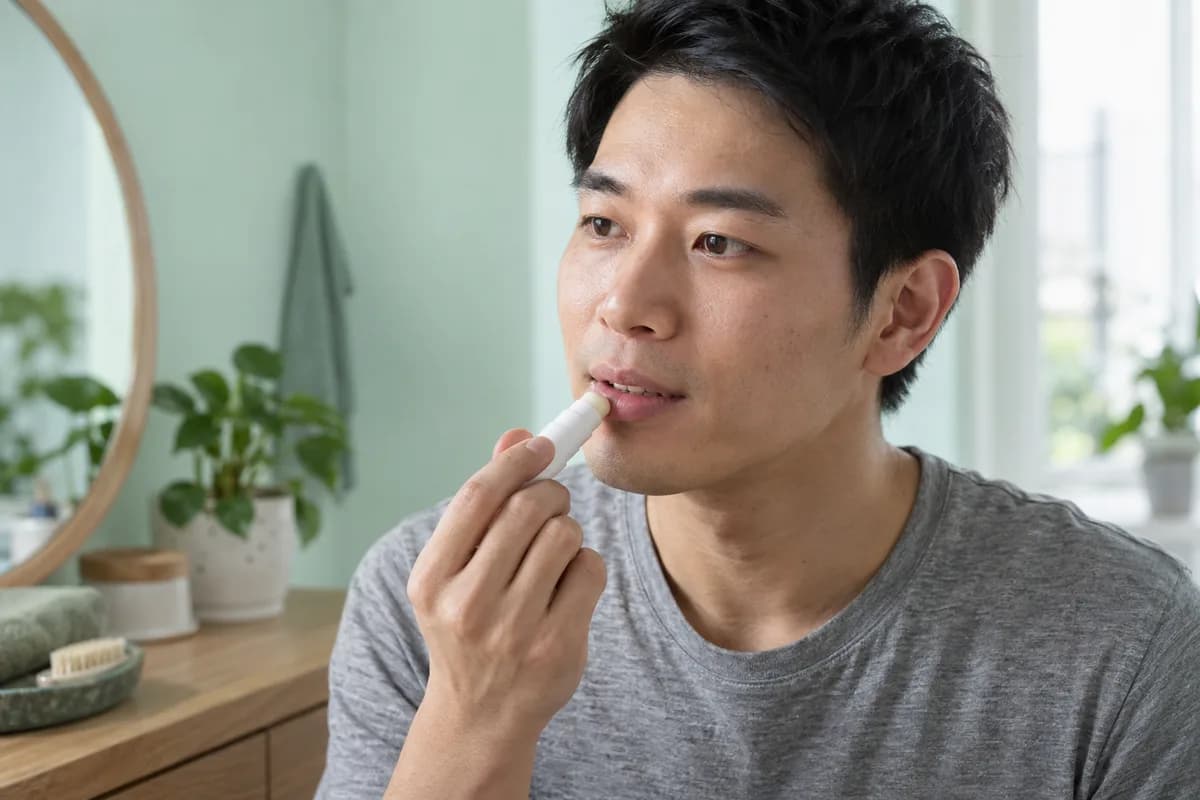
Wash your hands before applying balm, especially if the format involves a fingertip, and use the product according to its directions. Keep the application ordinary: a light, comfortable layer, without pressing hard to flatten the lip surface. Close the container afterward and give it a clean storage place. The photograph illustrates application, not a prescribed quantity or a result. If a product is uncomfortable, stop; taking a better-looking picture is not a reason to keep applying it or to layer another product over the irritation.
Choose a practical moment rather than an elaborate ritual. You might apply your usual tolerated product after getting ready and again before bed, with additional use as needed and according to its instructions. Do not make each application a long mirror inspection. If facial hair makes access awkward, move it aside gently instead of spreading balm through the mustache. Keep razors, exfoliating tools and lip products separate. The goal is an easy action you can repeat with clean hands, not a perfectly polished mouth before you leave the house.
Replace the licking and picking loop
Notice the moment your hand or tongue moves toward a dry patch. A practical response is to pause, leave the skin alone and reach for your tolerated product when appropriate. You do not have to pull off a flake to make the routine count. Avoid scrubbing, brushing or rubbing the surface just before a photograph. The NHS dry-lip advice warns against repeated licking, biting and picking. Its advice also includes not sharing lip balm. Keep a personal product rather than borrowing one simply because it is within reach.
Make the habit easier to interrupt without judging yourself. Put the balm where you normally pause, such as a clean pocket pouch or the place where you keep your keys. If you notice picking while working, move your hands back to the task and take a brief ordinary break. Do not set yourself a punishment or a strict streak target. A missed cue does not require an aggressive reset. Returning to one gentle action is a more useful response than compensating with extra friction, several new products or constant inspection.
Plan for outdoors, not just the bathroom
A morning application at home is not the whole outdoor plan. The AAD recommends a non-irritating lip product with SPF 30 or higher and reapplication every two hours outdoors. Check the specific label as well, including any instructions after eating or drinking. Keep the product accessible before a walk or cycle ride, not buried in a bag you will not open. Do not assume a tinted or glossy product provides sun protection unless its label says so. Shade and ordinary protective clothing still belong in your day.
Adapt the plan to the journey you actually make. For a short commute, put the product with the items you already carry; for a longer outdoor day, think about where you can use it with clean hands. There is no universal lip-care schedule that makes weather irrelevant. Our facial sunscreen guide explains the separate wider-face protection task. Keep those tasks coordinated but distinct: applying facial sunscreen somewhere nearby does not establish that your lips received the labeled protection of a product intended for them.
Build three realistic cues into your day
Use getting ready, leaving home and preparing for bed as possible cues. At the first cue, check that the product you use is comfortable and still fits the intended routine. At the second, take the outdoor option you need rather than relying on a product left on the bathroom shelf. At the third, put your usual care where you will remember it. These are organizing suggestions, not a medical dosing schedule. Follow the actual product instructions and any advice given for your circumstances.
Keep the setup small enough to maintain. A clean personal pouch, a product with readable directions and one convenient storage spot may be all the organization you need. You do not need separate products for every room or an emergency shopping list whenever your lips feel different. If you forget the balm on one outing, avoid replacing it with licking or a harsh improvised scrub. Review what made the routine inconvenient and adjust that practical detail. An easier location often answers the habit question better than another complicated step.

Review comfort without chasing a photo result
When you review the routine, ask whether application is comfortable, whether you can remember the necessary steps and whether the concern is improving or needs advice. Record a few useful details, not a rating of your mouth. Different lighting can make gloss and surface texture look different, so a close phone photograph should not decide whether care worked. If you want an ordinary portrait, use consistent light and distance. Avoid rubbing away skin or layering shine simply to create a temporary image that hides the question you are trying to understand.
The guide to appearance progress photos discusses repeatable images for styling changes. Lip discomfort is different: a photograph cannot determine the cause, and an app score cannot establish recovery. You do not need MogRise or a FaceScore to follow this independent routine. Scores are planning context, never a measure of human worth or lip health. Preserve the useful distinction between noticing your presentation and evaluating a physical symptom. If the concern is symptoms, the appropriate next step may be professional advice rather than a new scan.
Know when the next step is advice
Do not keep adding products indefinitely when ordinary care is not helping. The AAD advises dermatology assessment if dry, chapped lips do not improve after two to three weeks of gentle care. The NHS advises a clinician for lips that are hot, painful and swollen. You do not need to wait for a cosmetic review date when the problem is concerning. Seek timely advice for significant or worsening symptoms; this article cannot assess severity, identify an infection or select a treatment from a picture.
Prepare a simple account for the conversation: when the concern began, what it feels like, where it appears and which products you used. Bring the product names or labels rather than trying to reconstruct them from memory. If a prescribed medicine is involved, contact its prescriber instead of changing it yourself because of a grooming guide. Ask what care is appropriate and what would warrant follow-up. Leave the conversation with a clear next action, not an obligation to make your lips look like a filtered example.