

The simplest sunscreen for men's face is a broad-spectrum SPF 30 or higher that you can apply generously and wear consistently. Choose a comfortable lotion, fluid, cream or gel rather than a product marketed by gender; cover the face, ears, exposed neck and thinning scalp, follow the label, and reapply at least every two hours while outdoors or sooner after swimming, sweating or towelling. Add shade, clothing, a hat and sunglasses because sunscreen is only one layer of protection.
This guide does not rank brands or promise a perfectly matte, invisible finish. It shows how to read the useful parts of a label, match texture to real skin comfort, work around facial hair and build a repeatable outdoor plan. If you have a diagnosed skin condition, a known allergy, take a medicine that increases sun sensitivity, or react repeatedly to sunscreen, ask a dermatologist or other qualified clinician for individual advice.
Sunscreen for men's face: start with three label checks
First, look for broad-spectrum protection. SPF mainly expresses protection against UVB, the radiation strongly associated with sunburn, while a broad-spectrum product also covers UVA. The American Academy of Dermatology recommends broad-spectrum, water-resistant sunscreen with SPF 30 or higher. A large SPF number does not make application, shade or reapplication optional, and it is not permission to extend time in strong sun.
Second, choose a protection level for the day you will actually have. SPF 30 or higher is a useful baseline; stronger exposure at altitude, near water or snow, in a sunny climate, or during long outdoor work deserves more caution and often a higher factor. Check the local UV index before a long day outside. Skin that rarely burns can still be affected by ultraviolet radiation, so skin tone changes the risk pattern but does not remove the need for protection.
Third, look for water resistance when sweat, sport or swimming is likely, and read the stated duration. Water resistant does not mean waterproof. Reapply according to the label and after the film has been disturbed. For an ordinary indoor day with brief exposure, comfort may matter most; for a run, beach day or outdoor job, resistance, a cap or brimmed hat and a planned reapplication break matter more.

Choose texture by skin feel, not by a men's label
Facial sunscreens use different vehicles because people tolerate different finishes. A light fluid or gel may settle more comfortably on oilier skin; a cream may suit skin that feels dry or tight. These are starting points, not rules. A very light formula can sting or dry one person, while a richer product can sit comfortably on another. Test the complete formula on your own skin instead of assuming one filter family guarantees a finish.
If shine is the obstacle, reduce unnecessary layers before changing protection. A gentle cleanse, a light moisturizer only where needed, then sunscreen can feel better than stacking several rich products. Some sunscreens provide enough moisture for a comfortable morning on their own. The existing simple skincare routine explains how to keep cleanser, moisturizer and sun protection in a short order without adding multiple active products at once.
Sensitive eyes and fragrance reactions often decide whether a product becomes usable. Keep sunscreen out of the eyes, wash hands after application and try a fragrance-free option if fragrance has caused trouble before. Test a small area before a long outdoor event. Stop using a product that causes significant burning, swelling, hives or a persistent rash, rinse it off and obtain appropriate medical help for a serious or continuing reaction.
Apply enough without leaving the hairline, ears and neck exposed
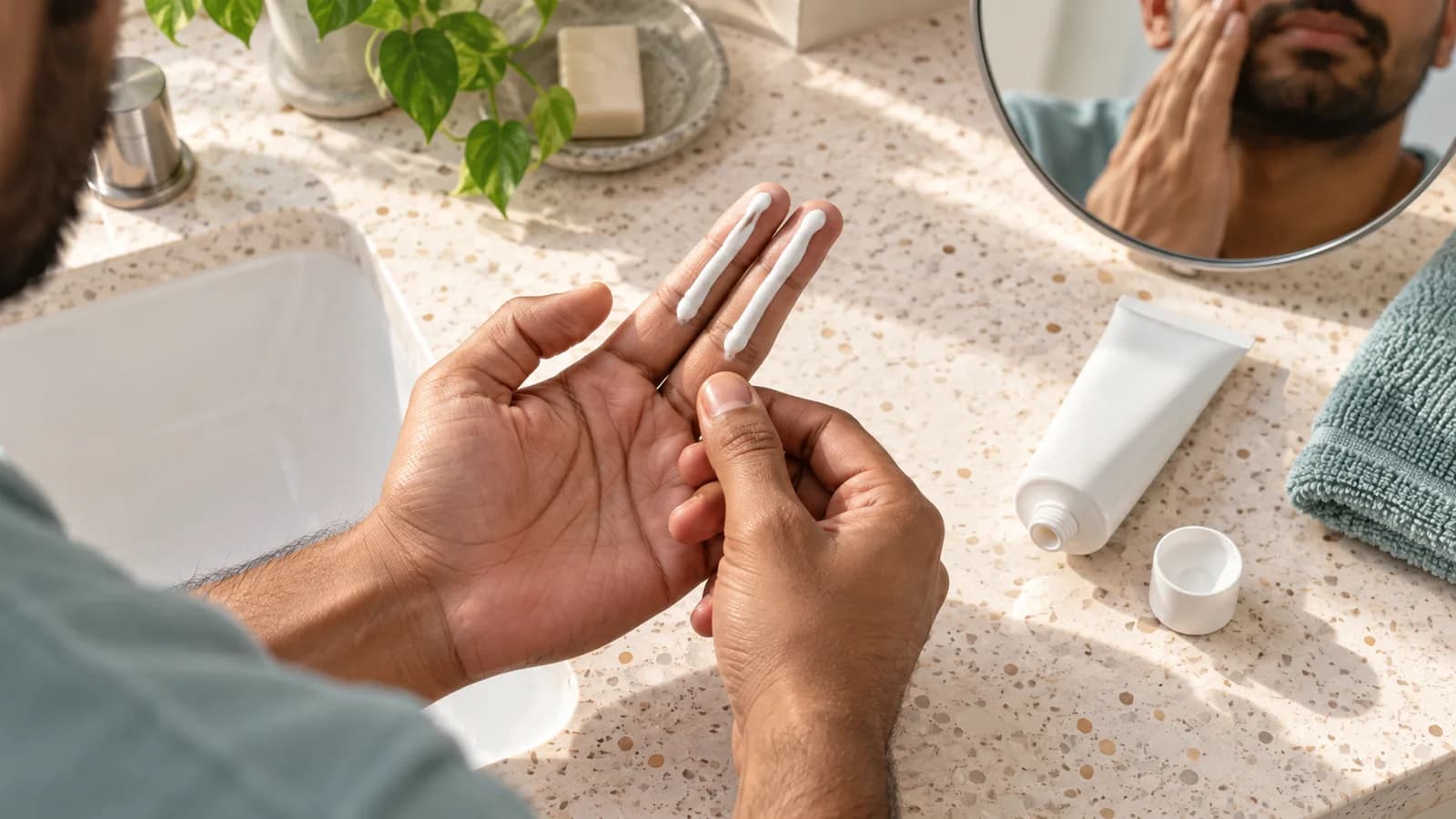
The labelled SPF is tested with a defined application amount, while real users commonly spread a thinner film. Follow the product directions and use enough to create an even layer across all exposed skin. A two-finger line of product is a practical reminder some people use for face and neck, but tube openings and formula density differ, so it is not a laboratory guarantee. Coverage matters more than copying a social-media measurement perfectly.
Dot the product across forehead, cheeks, nose, chin and exposed neck, then connect the dots with gentle passes. Work toward the hairline instead of stopping a centimetre before it. Cover the sides of the face, tops and backs of ears and the area beneath the jaw. If hair is thinning or closely shaved, protect the visible scalp as well or use a suitable hat. Do not rely on a hairstyle to cover skin that shifts into direct sun.
Give the layer time to settle according to the product instructions before hard sweating, dressing or rubbing the face. Sunscreen belongs after the rest of the morning skincare and before cosmetics, if used. Piling on and immediately wiping with a collar can create gaps. If the formula pills, let earlier layers settle, use less of non-protective products and press rather than repeatedly rubbing the sunscreen into a breaking film.
Work sunscreen through beard edges and around a fresh shave
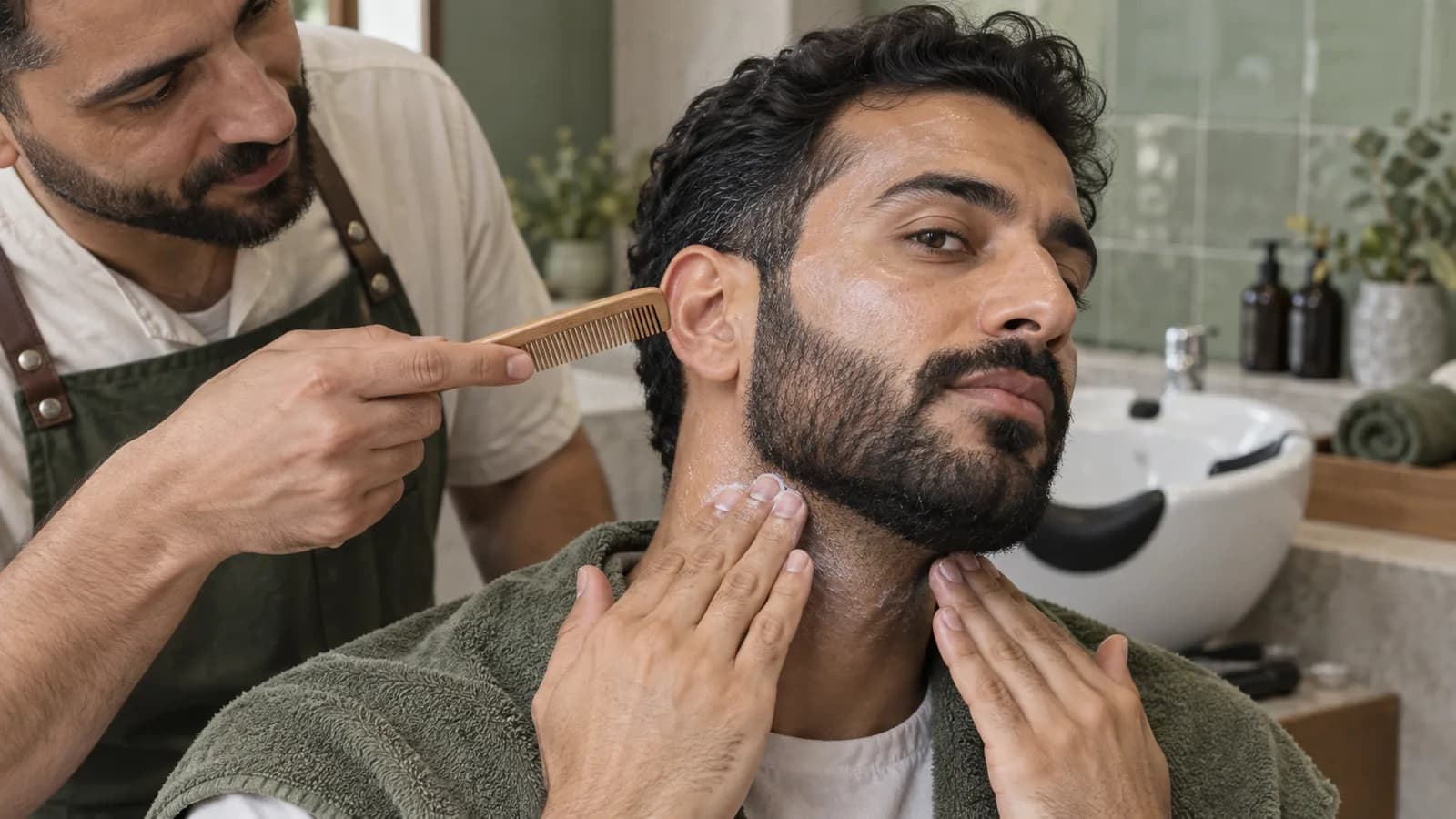
Dense facial hair shades some skin but does not create a measured, reliable sunscreen film. Apply sunscreen to exposed cheeks, upper lip, nose, temples, ears, neck and every visible area between beard sections. At a short beard or stubble boundary, use fingertips to press product down to the skin rather than coating only the hair. A longer beard may cover more surface, while the exposed upper cheek and neck still need deliberate attention.
Separate beard grooming from sun protection. Comb the beard into its normal position, apply skincare to accessible skin, and keep heavy beard oil away from areas where it causes the sunscreen film to slide. You do not need to saturate a full beard with face lotion. Protect exposed skin and add physical shade for the lower face when practical. Wash product from the beard at the end of the day if residue feels uncomfortable.
After shaving, the skin may feel more reactive because of friction and repeated blade passes. Use a comfortable shave, rinse, pat dry and apply a plain moisturizer if needed before sunscreen. The guide to preventing razor burn covers pressure, growth direction and aftercare in more depth. If a sunscreen repeatedly stings intact freshly shaved skin, test another fragrance-free vehicle rather than accepting daily discomfort.
Reapply for exposure, sweat and rubbing—not just the clock
The FDA advises reapplying sunscreen at least every two hours and more often when swimming or sweating. The product label remains the specific rule for its water-resistance window. Towelling, wiping sweat, touching the face, helmet straps and shirt collars can remove part of the layer before two hours pass. If you remain outdoors, treat those events as reasons to restore coverage instead of waiting for a perfect timer.
For reapplication, move into shade, dry obvious water or sweat gently, then apply another even layer. A stick or spray may be convenient, but convenience does not excuse patchy coverage. The FDA says not to spray sunscreen directly onto the face; spray into the hands first if the label permits facial use, then apply while avoiding inhalation and the eye area. Never spray near flame or while smoking.
Build the plan around the day. A commuter may keep sunscreen near keys for morning use. An outdoor athlete can place a small tube with water and a clean towel. Someone who works outside needs shade breaks, protective clothing and workplace measures rather than relying on a single application. Make the reapplication cue an event you already notice: lunch outside, the end of a swim or a change of sports session.
Sunscreen cannot make high exposure harmless. Seek shade during strong UV, wear closely woven clothing where practical, add a broad-brimmed hat and use UV-protective sunglasses. Water, sand and snow can intensify exposure through reflection. If the UV index is high, adjust time and location as well as the product. A well-designed routine lowers exposure; it does not calculate the maximum time you can remain in the sun.

Fix white cast, shine, pilling and eye sting without skipping protection
A visible cast is especially frustrating on deeper skin tones and around dark facial hair. Test formulas in daylight, after the full amount has settled, rather than judging one small dot under bathroom light. Tinted or more transparent vehicles may reduce contrast, but the shade must still look acceptable across hairline, ears and beard borders. Do not compensate for an obvious cast by applying only a token amount.
For excess shine, let the layer set before touching it. A lighter vehicle, fewer rich products underneath or careful blotting after the film has formed may be more workable. Avoid aggressive powdering or rubbing that moves the layer into patches. A natural skin finish is not a failure. The protective standard and consistent coverage matter more than making a face look completely matte under every indoor lamp.
Pilling usually means layers are not combining well or too much rubbing is happening. Simplify the morning: gentle cleanse if needed, one compatible moisturizer where required, then sunscreen. Let each layer settle and use calm outward passes. Change one variable at a time so you can identify the conflict. Mixing sunscreen with moisturizer in your palm is not a reliable shortcut because it can disrupt the intended film and distribution.
Eye sting needs a practical boundary. Keep the product outside the eyelids unless its directions say otherwise, avoid rubbing sweaty sunscreen into the eyes and use sunglasses plus a hat for added shade. If discomfort continues, try a different suitable formula around that area after patch testing. Severe pain, vision changes, marked swelling or a persistent reaction requires prompt professional advice rather than another cosmetic experiment.
The final choice is deliberately ordinary: broad-spectrum SPF 30 or higher, a texture you tolerate, enough product for even coverage, and a realistic reapplication plan. Put it where the morning routine and outdoor bag make it easy to use. Sunscreen for men's face works best as part of shade, clothing and sensible exposure—not as a luxury styling product or a licence to chase more sun.