

Hooded vs deep set eyes compares two different descriptions: hooding concerns a fold that partly covers the upper-lid crease, while deep set describes the eye's apparent position relative to the surrounding brow and socket. They can occur together. A dark shadow alone does not establish either feature, and neither label is an attractiveness score or a diagnosis.
The practical question is not which type wins. It is whether you are seeing a fold, a depth impression, a lighting effect, or a mixture. This independent guide gives you a small observation method and a stopping point. You can use it without an app, makeup purchases or measurements. If your only goal was to understand an unfamiliar phrase, a clear description is already a complete result.
Hooded vs deep set eyes starts with two questions
First ask what covers the visible upper lid when your eyes are comfortably open. Can you see a crease, and does a fold above it overlap some of the mobile lid? Second ask how the eye area appears in relation to the brow ridge in a contextual view. These are separate questions. Do not turn the amount of visible lid into a shortcut for eye depth, or assume that a strong brow necessarily means a hidden crease.
The FISWG feature list, version 2.0, separates upper-lid fold and crease visibility from eye projection. It is a forensic comparison vocabulary, not a beauty classification or product endorsement. Its useful lesson here is simply to keep observations distinct. A photograph does not give you a clinical depth measurement or tell you whether a structure needs changing.
Start with ordinary words: the fold partly covers the crease, or the eyes appear set back beneath the brow in this view. Add uncertainty when the picture does not show enough. You do not have to select one label from a menu. A description that includes both traits, neither trait or an unclear detail can be more accurate than forcing the face into a single category.
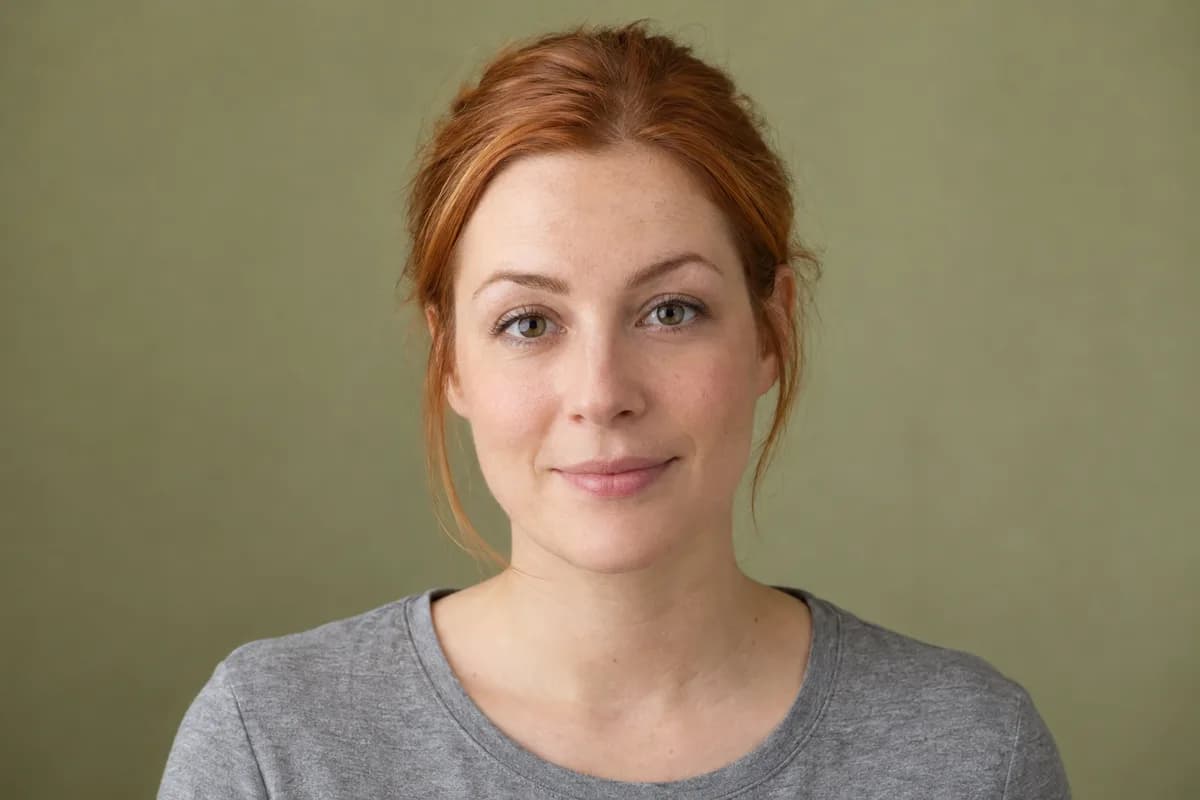
A hooded lid is not simply a small eye
Hooding describes the way skin above the upper lid overlaps the crease or lid area. The amount may vary across the lid rather than covering it evenly. A little mobile lid may remain visible toward one corner. Avoid treating a narrow strip of lid as a precise threshold. In everyday beauty language, partial hooding is a description, not a standardized numerical grade that every observer must agree on.
The opening between the lids is another feature. An eye can have a hooded upper lid while its visible opening looks elongated, rounded or somewhere between. This is why lists that place hooded, almond and deep set in competing boxes can be confusing. They mix a fold, an outline and a position. Describe each separately if it matters; do not use one word to stand in for the entire eye region.
Depth is a relationship, not a shadow score
Deep set is ordinary descriptive wording for eyes that appear farther back relative to the surrounding brow and socket. It does not refer to how dark the under-eye area is, how much sleep someone had, or whether the lid crease is covered. You cannot establish an anatomical depth in millimeters from a casual photograph. Keep the description relative and modest, especially when the brow or lighting dominates the image.
A three-quarter view can provide context about the brow-to-eye relationship that a tightly cropped front image removes. It is still a surface view, not a scan of the orbit. Do not press a finger, ruler or other object against the eye area to create a test. An uncertain description is harmless; a makeshift physical measurement adds risk without making a home observation clinically reliable.
Also separate depth from eye spacing or the direction of the corners. Those descriptions address different relationships. You do not need a collection of angles and ratios to understand this one distinction. If several labels become relevant, write a short sentence for each rather than combining them into a claim about superior eyes. The whole face still matters more to a styling choice than one isolated shadow.

Make one relaxed, evenly lit reference
Use a clean camera lens and turn off face-shaping filters. Face broad window light rather than a ceiling spotlight, and keep the camera roughly at eye height. A friend standing several steps away can photograph the full head and shoulders; crop afterward if needed. Looking at a whole portrait helps you keep the brow, lid and surrounding face in context instead of enlarging a tiny detail until every crease seems dramatic.
Allow the forehead and brows to rest. Look toward the lens with eyes naturally open, blink normally between pictures, and do not squint or lift the brows to change the visible lid. If you usually wear glasses, one reference without them may make the fold easier to see, but only if removing them is comfortable. Do not sacrifice clear vision or a relaxed posture just to meet a styling checklist.
One useful front reference and an optional contextual three-quarter view are enough. If you repeat a picture, keep the camera, position and light similar. The front and side analysis guide explains why views answer different questions. A side image is not an interchangeable replacement for the front when your question is how much of a crease is visible with a normal forward gaze.

Check what the photograph changed
A light above the forehead may deepen the brow shadow. Light from below can change that impression in the opposite direction. Neither photograph establishes that your anatomy changed between rooms. If the main difference is a patch of darkness, first change the lighting, not your description of the eye. Do not choose the harshest frame because it seems to prove the most distinctive type.
Expression is equally important. Raising the brows can reveal more lid; smiling or narrowing the eyes can reduce the visible opening. Looking downward changes the relationship you are trying to describe. Those are ordinary movements, not mistakes in everyday life. They simply make an expression-heavy picture a poor neutral reference. Avoid comparing a relaxed portrait with a selfie taken while deliberately opening your eyes wider.
Turn the observation into a bounded note
Write three things: what is visible, under which conditions, and what remains uncertain. For example: with relaxed brows in broad daylight, part of the upper-lid crease is covered; depth is unclear from the front. Another reasonable note is that the eye region appears recessed in the three-quarter portrait while the crease remains visible. You do not need to attach a number or compare your note with another person's face.
If you later use MogRise, clear front and profile photos can support an explained analysis and a small set of appearance priorities. Do not assume the app measures orbital depth, diagnoses eyelids or validates this particular label. The MogRise overview describes the broader planning workflow. FaceScore and PSL are planning context, not objective human worth. A useful note should still make sense after removing an overall score.
MogRise is free to download, not a promise that every feature or unlimited use is free. No upload is needed for this observation method. Keep only the reference you actually need, and stop if repeated checking is making the question larger rather than clearer. If there is no practical decision to make, learning the difference between two words is enough.
Try comfortable framing, not an anatomy correction
A styling experiment is optional. Start with something reversible that you already use: move a fringe away from the eye area, gently arrange existing brow hair without removing it, or compare comfortable spectacle frames. Choose according to your taste and daily routine. Do not treat a hooded fold as something to erase or depth as a feature you must exaggerate. The experiment changes presentation, not the underlying category.
For glasses, ask an optician about fit and clear vision rather than choosing solely from a face-type chart. Notice whether the frame slips, touches lashes, presses at the temples or creates a distracting reflection in your usual light. The glasses fit guide gives a broader decision process. A frame you enjoy wearing comfortably is a more useful outcome than matching an internet rule about what people with your eyes should wear.
If you wear eye makeup, consider where a small amount remains visible with eyes naturally open, rather than copying a closed-eye tutorial exactly. Follow product directions and stop using anything that irritates you. Do not add adhesive, pressure, stretching routines or exercises to force the lid into a different shape. Compare one modest styling choice in ordinary light, then keep or reject it according to comfort and preference.

Know when this is no longer a styling question
A familiar fold is not the same as a newly drooping lid. NANOS advises emergency assessment for sudden eyelid drooping, even without pain. Read its patient information on droopy eyelids for this medical boundary; do not use an appearance score.
For persistent discomfort, difficulty seeing or a gradual change that concerns you, seek qualified eye care rather than trying to classify it from photos. This guide cannot distinguish a cosmetic fold from a clinical condition. A styling article also cannot tell you whether a procedure is suitable. Do not infer a need for treatment from a category, and do not delay care while collecting more reference pictures.
For an ordinary, stable appearance question, finish with the smallest useful conclusion. You may now understand that a fold and apparent depth are different, that both can coexist, and that your photo leaves something uncertain. Put the reference away. Choose comfortable framing if you wanted it, or make no change at all. Your eyes do not need a perfect label for your everyday presentation to work.