

Face analysis front vs side profile is a comparison of two different views, not a contest between two scores. A straight-on photo can show the overall frame, the relationship between visible left and right sides, and how hair or glasses sit around the face. A true side profile can show the outline from forehead through nose and chin to neck. Neither view reveals a complete three-dimensional face, diagnoses a condition, or tells you how attractive a person is. Use both only when they help answer one practical question.
This guide is about interpreting the views, not another recipe for prettier selfies or a rerun of why a FaceScore changes between photos. Start with a reasonably consistent pair, name the feature you are deciding about, and keep light, distance and expression from becoming the story. The two pictures can disagree without either being defective: they flatten different directions of a moving face into a moment. If a supposed problem appears in only one extreme angle, check the photograph before planning a change to yourself.
Face analysis front vs side profile: ask one question first
Before studying a feature, write a question that has a reversible answer. Does a particular haircut frame the face well from the front and still sit cleanly at the side? Do the glasses stay comfortable and balanced when viewed in profile? Is the beard outline easy to maintain in both views? Those questions can lead to a salon consultation or a small home trial. Asking which photograph proves that your whole face is good or bad leads nowhere useful, because the camera cannot supply that verdict.
The frontal picture and profile are complementary observations. The forensic-image comparison feature list published by the Facial Identification Scientific Working Group describes features such as hairline, brows, nose, chin and jaw contour and notes that some contours are visible in profile. That is a vocabulary for describing visible form, not a beauty standard or a license to measure your worth. A single two-dimensional view leaves depth, movement, expression, texture and context out of the frame. Treat apparent proportions as tentative observations, especially with smartphone photographs.
Choose one decision before opening an analysis app. Perhaps you are deciding whether to keep the sideburns, whether a collar crowds your jaw, or whether the hair at the temples changes the frontal frame. Make a note of what you could actually adjust within a week. If the observation concerns a medical, dental or breathing question, photographs and appearance tools are the wrong final authority; speak to a qualified professional instead. Keeping the question narrow makes a two-view comparison useful rather than an invitation to inspect every detail.
What the front view is good at—and what it misses
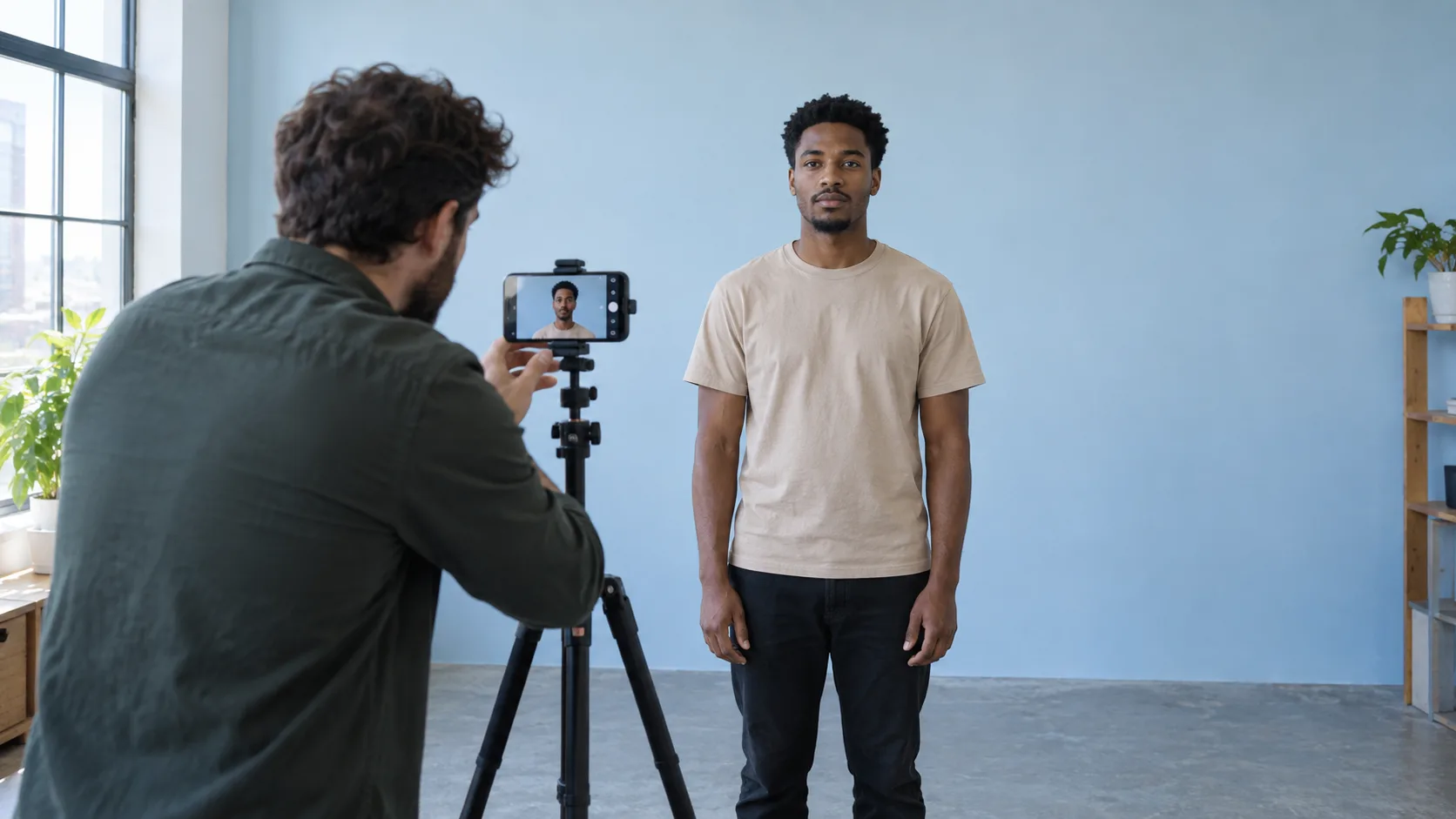
With the head level and facing the camera, the front view helps you notice the outline of the hair around the forehead and temples, the visible width of the face, the placement of glasses, and how a beard is distributed across the cheeks and chin. Both sides appear in one frame, but ordinary small differences do not need correcting. A raised brow, a slight turn or a smile can change the comparison. The practical question is often whether a chosen style feels coherent at normal viewing distance, not whether two halves form a perfect diagram.
The front view does not give a reliable answer about projection. It may show the outline of the jaw from cheek to chin, but it cannot show how the chin, nose, lips and neck line sit front to back. Hair that looks full straight on may have a very different silhouette at the temple. Glasses that seem symmetrical can slide or project differently in profile. Resist inventing depth from one picture, and do not interpret a soft jaw contour in flat lighting as evidence of a particular bone structure.
If you want to compare a frontal style change, make one controlled version at a time. Try a different parting or glasses frame under similar light, stand at the same distance, and inspect the entire face rather than zooming into a tiny region. The existing guide to facial harmony discusses how broad balance is more useful than a universal formula; this article narrows that idea to deciding which view can answer which question. Close the comparison when you have a sensible next step, rather than multiplying pictures until one seems flattering enough.
What a true side profile adds
A side profile shows the visible silhouette: forehead, bridge and tip of the nose, lips, chin, the line below the jaw, neck and hair shape. It can clarify whether a fringe, collar or beard outline looks different from the side than it did from the front. It does not reveal the hidden half of the face or tell you how the two sides compare. A three-quarter pose is not a true profile; the nearer cheek and eye still affect its outline. For a simple paired review, choose one consistent side and turn the head without lifting the chin.
Profile photographs are especially sensitive to posture, camera height and the way hair or a beard obscures the edge. A chin held upward can make the neck line look sharper; looking down changes it again. A very close phone can make nearer features disproportionately large. It is easy to mistake a photographic change for an anatomical one. View the picture beside the frontal image, remember the conditions in which it was taken, and avoid drawing lines or angles you cannot reproduce under ordinary conditions.
The person in the profile image is not a before-and-after promise or a template for anybody else's face. There are many normal silhouettes. If your decision is about facial hair, compare a modest trim and how it frames the lower face; our beard-by-face-shape guide gives broader styling options without requiring a score. If it is about glasses, prioritize fit and everyday comfort as well as appearance. The value of the profile is that it can expose a style issue the front view conceals, not a supposed defect that must be fixed.

Make a fair pair before reading the result
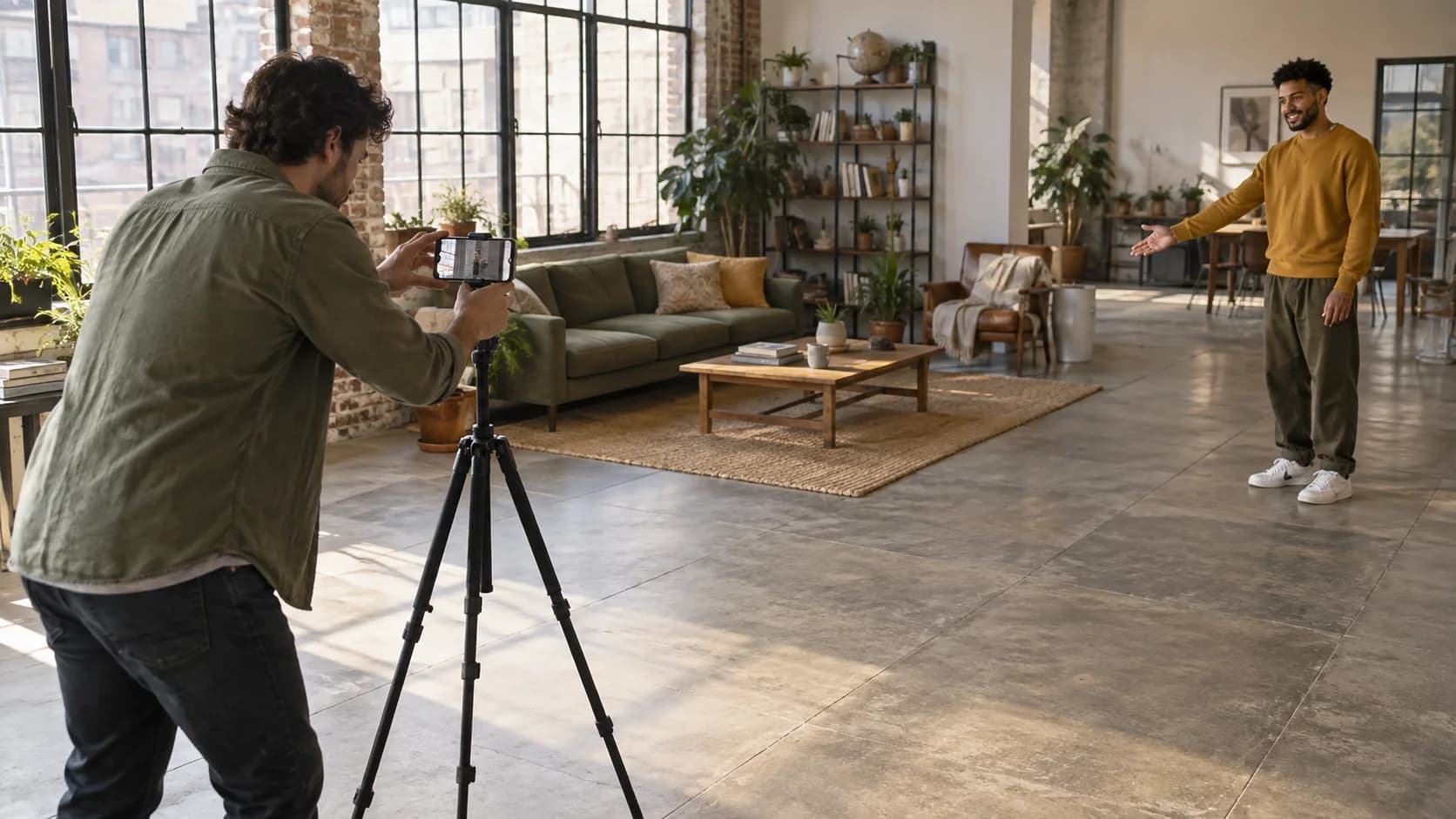
Use a phone at eye level, preferably supported rather than stretched toward the face. Step back enough to keep the nose from becoming the nearest oversized part of the picture; crop later if needed. Face broad, soft light rather than a bright spot from one side. Keep the same location, camera mode, distance and relaxed expression for both views, then rotate the person, not the camera, for the profile. A simple blank wall reduces visual clutter. The aim is comparability, not a clinical portrait or an expensive camera setup.
Official U.S. passport-photo guidance asks for a front-facing view with a neutral expression and even light, avoiding shadows and digital alteration. An appearance comparison is not a passport application, but these basic controls are useful because shadows and filters can change what appears to be a feature. Do not infer that the passport rules validate an AI score. A filtered or mirror-flipped selfie can still be a fun portrait; it is simply a poor baseline for comparing left and right or tracking one grooming change.
If you cannot tell whether the frontal and side images share the same conditions, take them again once. Do not spend the evening chasing a mathematically perfect angle. Hold the hair and clothing as you normally wear them, unless the specific question requires moving hair away. The earlier progress-photo guide explains how to repeat a setup over weeks; here one fair pair is enough to distinguish which parts of a style are visible from each direction. Keep the images private according to your own comfort and review only as long as the decision needs.
Translate the two views into one small style decision
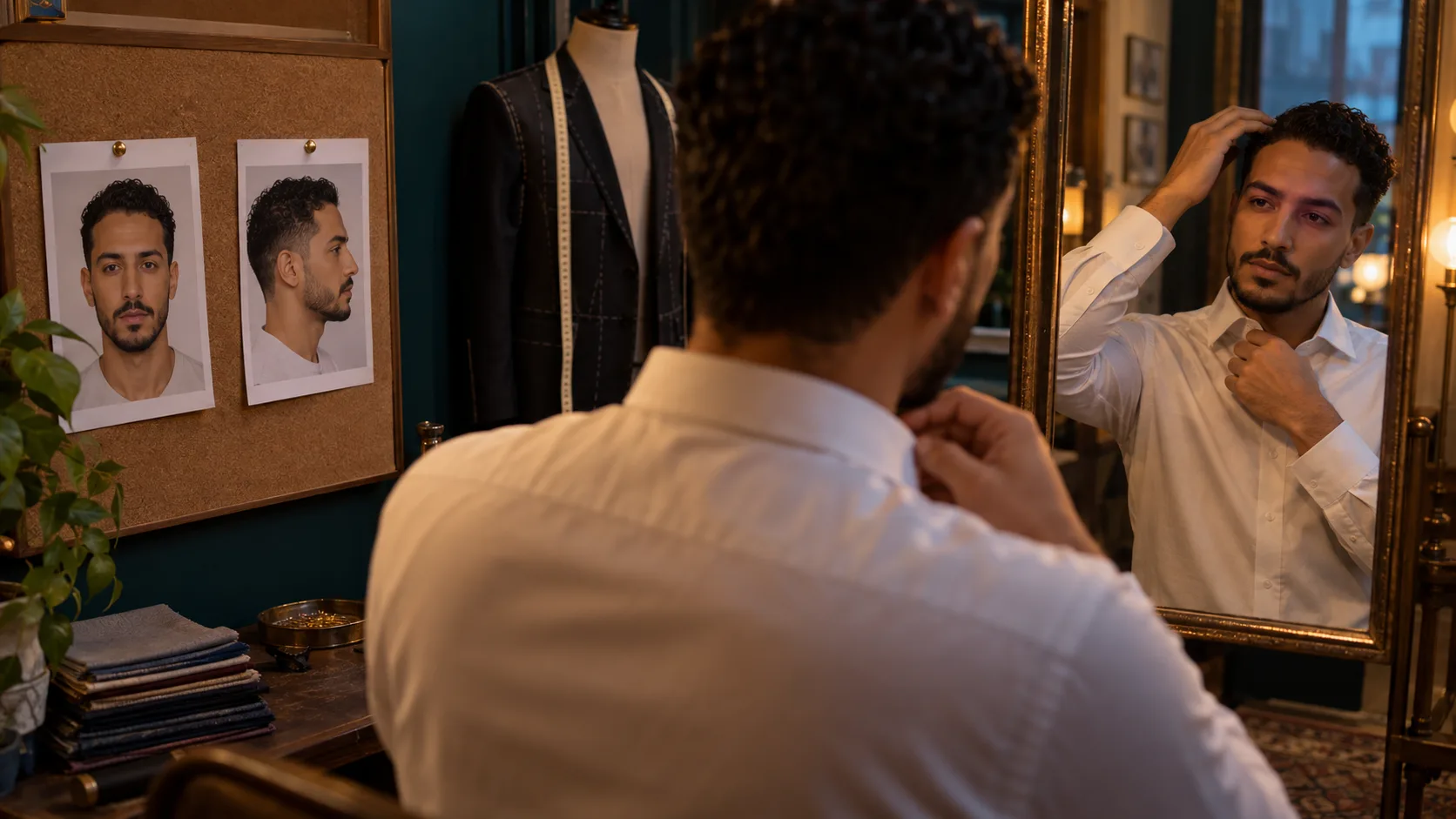
Look at the images at an ordinary size and write two short observations, one per view. For example: the front view shows a fringe softening the forehead frame; the profile shows that the same fringe falls into the eye when worn normally. That is a maintenance question, not a reason to alter the face. Or the front shows a beard distributed evenly enough for short stubble while the side shows a neckline that needs a less aggressive trim. These are testable, reversible adjustments rather than universal attractiveness rules.
Choose the option that fits the rest of your life. A collar may look sharp in a photograph but feel uncomfortable all day. A haircut may need daily heat styling that you do not want to do. A beard shape may look clean from one angle while demanding an irritating close shave. The photos can help you discuss these tradeoffs with a barber, stylist or optician, but the person wearing the change sets the priority. If the two views support different choices, try the least demanding option first and review it later.
An app such as MogRise can organize front and side photos into explained observations and a small plan when that helps you make a decision. It cannot certify an ideal profile, measure human value, diagnose a bite or prove that one style will improve your life. A FaceScore, if shown, is context shaped by the image and model assumptions. The independent method still works without an app: one fair pair, one question, one reversible experiment and a reality check in an ordinary mirror before treating any photo as truth.
When the pictures disagree, stop short of a verdict
Do not turn visible asymmetry, a chin shape or a number into a medical claim. Sudden changes, pain, swelling, breathing concerns or functional problems deserve appropriate professional assessment; an image-analysis app is not designed to settle them. For ordinary presentation choices, there is no need to pursue surgery, extreme exercise, restrictive dieting or repeated scanning. A good guide should leave you with a manageable action and the freedom to stop, not with a list of supposedly defective facial measurements.
Put the photographs away after making the choice. If the trial works in regular light and feels comfortable, keep it; if not, reverse it or ask a professional. Front and side views can map a haircut, frame or beard, but remain partial pictures of one moment. Decide what you can wear and maintain, not what supposedly proves a face's value. That is enough analysis for a practical next step.