
Useful appearance progress photos repeat the same camera, lens, distance, height, light, background, crop and relaxed expression. Take a front view and one consistent profile, record the grooming or style variable you are testing, then wait long enough for that variable to change before you compare. The goal is not a dramatic before-and-after or a daily attractiveness score. It is a modest record that helps you decide whether to keep, adjust or stop one reversible choice.
This guide uses a four-week check-in as a practical example, not a biological promise. A haircut, beard shape, skincare routine, posture cue or clothing choice can require a different review window. MogRise can help connect clear front and profile photos to an explained analysis and a small plan, but an image-based result is affected by capture conditions and cannot measure health, objective attractiveness or personal worth.
Appearance progress photos need a fixed question first
Start by writing one decision that the next photo set should support. Examples include whether a shorter side length frames the face more cleanly, whether a beard boundary remains easy to maintain, whether a simple routine feels calm enough to continue, or whether a shirt neckline balances the head and shoulders. A question this narrow tells you which views matter. It also prevents a normal photo difference from becoming a vague judgment about your entire appearance.
Choose one visible variable and hold the others as steady as reasonably possible. If you change the haircut, beard length, glasses, lighting and pose together, the later photo cannot tell you which difference shaped the result. Temporary factors such as sleep, a recent workout, skin irritation, weather and a fresh trim can also affect presentation. Note unusual conditions instead of treating every change as progress or failure.
Standardization is not just an aesthetic preference. A recent open-access study developing reproducible mobile facial images controlled lighting, head rotation, tilt, distance and expression because those factors altered the usefulness of the captures. Your home setup does not need clinical equipment, and a personal grooming check is not a clinical measurement. The practical lesson is simply to make the repeatable variables boring before interpreting a subtle difference.
Lock a simple camera and lighting setup
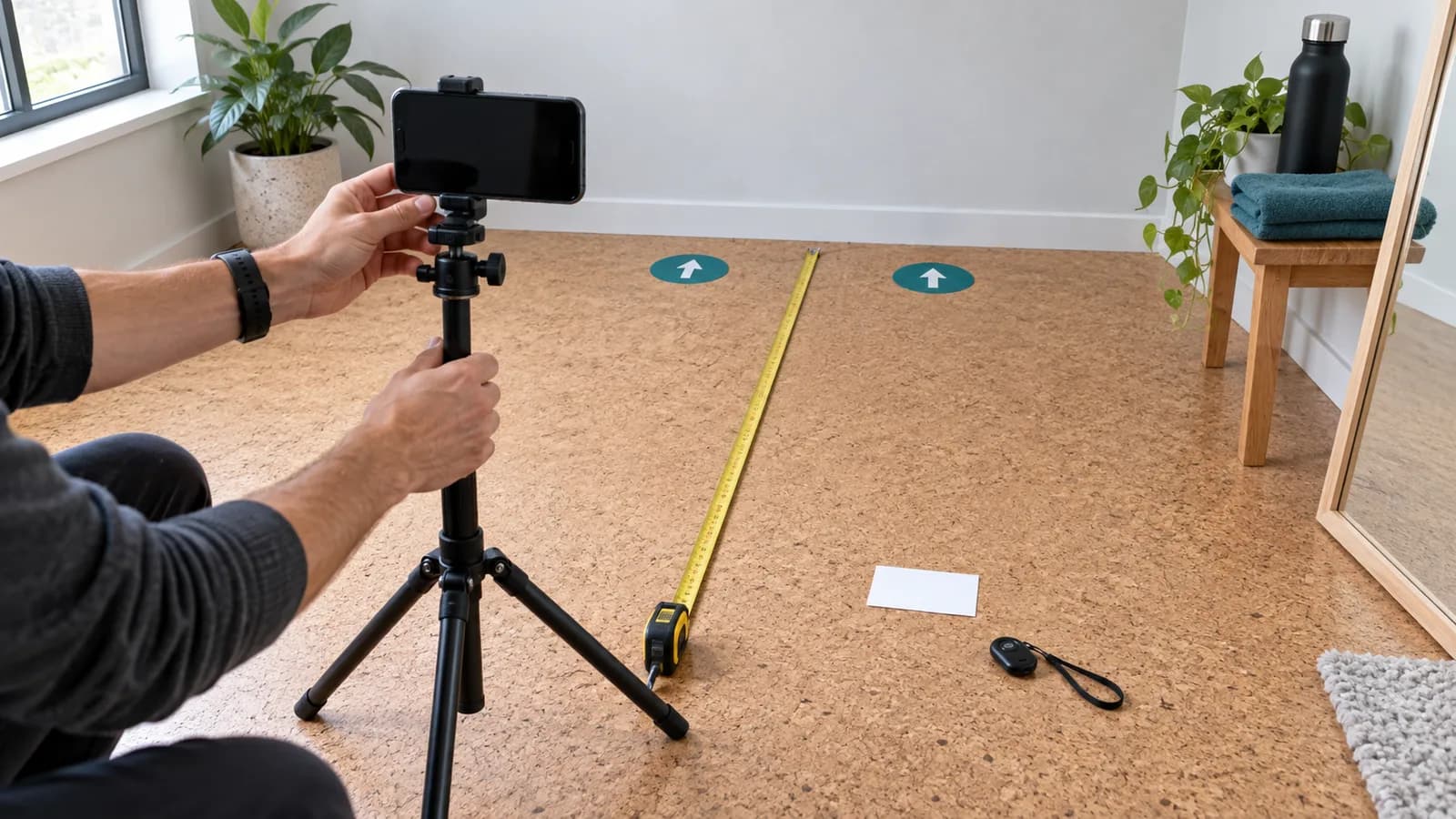
Pick one quiet location with a plain background and diffuse light you can reproduce. Face a broad window without direct sun, or use the same fixed room lights each session. Avoid switching between a bright window in the first set and warm ceiling lights in the next. Mark where the tripod and your feet stand. Measure the approximate lens height and distance once, then save those details in a short note or an ordinary photo of the empty setup.
Use the same phone, the same rear or front camera and the same zoom setting. A small tripod and timer are more repeatable than an arm-length selfie because pressing the shutter does not change distance or tilt. Place the lens around eye level for a head-and-shoulders portrait, clean it, disable beauty filters and keep the phone vertical or horizontal every time. If you must replace the device, treat the first set from the new camera as a new baseline.
Keep framing easy to reconstruct: a little space above the hair, both ears or outer face edges visible in the front view, shoulders at the same height in the crop and a consistent amount of upper torso. Do not force your head against a wall or stretch the neck into an unnatural position. The guide to why a FaceScore changes between photos explains in more detail how light, distance, lens, angle and expression can create apparent differences before any real-world choice has changed.
Capture front and profile views without performing for the camera
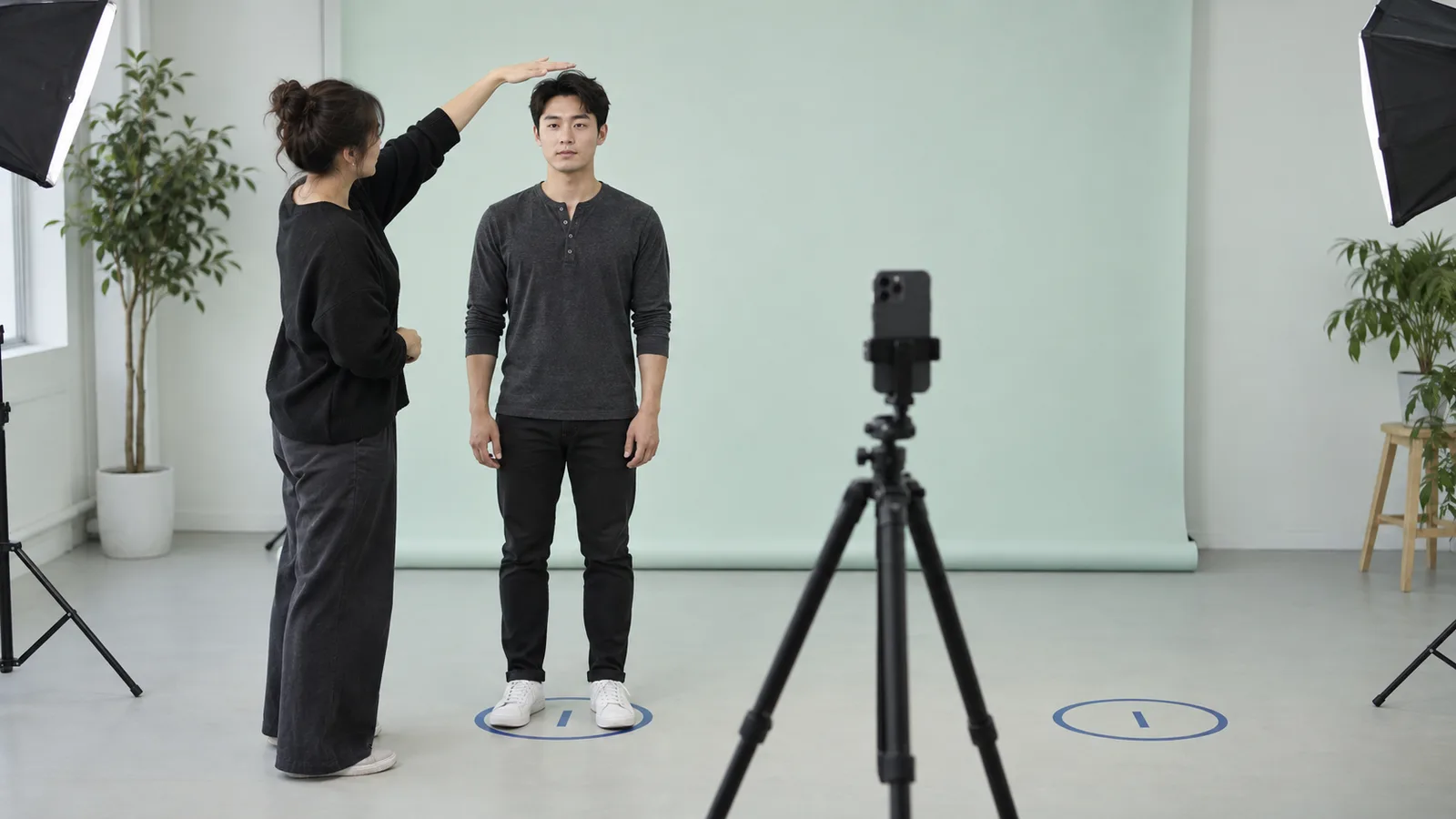
For the front view, stand evenly, let the shoulders settle, keep the chin level and look toward the lens with a relaxed mouth and eyes. Do not suck in the cheeks, clench the jaw, raise the brows or search for your most flattering side. Those actions may be fine in a social photo, but they turn a progress record into a pose comparison. Take two or three frames and keep the technically clean one, not the one with the highest imagined score.
For the profile, turn your whole body or use a floor marker rather than twisting only the neck. Choose either left or right for the repeating record and keep the gaze level. A second side can be useful for a specific haircut or beard decision, but only add views you will reliably repeat. Keep hair in its normal state, remove a hat, and note whether the photo was taken before or after a haircut, shave or styling product.
Capture the set at roughly the same point in your routine and day. Skin can look different immediately after shaving, exercise, washing or applying a reflective product. Hair changes when wet, freshly styled or several weeks past a cut. You do not need perfect laboratory control; you need enough consistency to recognize obvious setup drift. When conditions are unusually different, postpone the set or label it as non-comparable instead of forcing a conclusion.
Let one controllable change earn the next check-in
Choose a change you can explain and maintain: a trim schedule, one beard length, a consistent sunscreen habit, a calmer shaving method, a shirt-collar direction or a posture reminder. Define the action rather than a promised result. ‘Use the same beard guard for four weeks’ is trackable; ‘build a perfect jawline’ is not. Avoid unsafe, irreversible or medical interventions based on an appearance photo or an automated suggestion.
An app-assisted workflow should narrow the decision rather than multiply it. With MogRise, begin with clear front and profile photos, read the explained observations and select a small number of controllable priorities. Use the article on choosing what to improve first when hair, beard and skin all compete for attention. Then turn the chosen priority into a realistic action that fits time, budget, comfort and professional advice where needed.
Keep everything else ordinary during the test. You can continue normal hygiene, clothing and life, but avoid introducing several new products or styling changes solely to make the later image look better. If the choice causes irritation, pain, distress or excessive checking, stop early; the calendar is not a contract. A useful plan should reduce uncertainty and support daily life, not make you monitor your face whenever you pass a reflective surface.
Choose a review cadence that matches the decision
Four weeks is long enough to interrupt daily checking and short enough for a practical grooming review, but it is not a universal answer. A shirt neckline or glasses choice can be reviewed after several normal wears. A haircut may need one fresh-cut set and another as it grows. A gentle skincare routine often deserves more patience and clinical guidance for persistent symptoms. Record the next review date when you choose the action, then leave the baseline alone.
Do not create a new score every morning. Daily photos amplify normal variation in light, sleep, expression, skin surface and styling while giving slow changes little time to become visible. If you need a record between formal check-ins, write a brief note about comfort, effort or maintenance rather than taking another portrait. The 30-day glow-up plan offers a broader structure for keeping only a few priorities active without turning the month into a transformation promise.
Store the sets in a clearly named private album or folder and keep only the views you need. Record the date, selected variable, camera position and any obvious exception such as a new phone or different haircut timing. Decide whether the files need cloud backup or should remain local, and delete accidental frames. Never publish a progress set merely because it exists; sharing a face image is a separate choice with privacy and audience consequences.
Compare evidence, not your worth
At review time, place only matched views beside each other at the same size. Check the background, crop, eye line, camera height, distance, light direction and expression before discussing the appearance variable. Research on facial photography has shown that camera-to-subject distance can change represented proportions and shape. If the setup drift is obvious, the honest result is ‘not comparable’; take a new standardized set rather than inventing an explanation.
Look for the answer to the original question. Is the haircut easier to style and does its outline remain balanced in front and profile? Does the beard boundary still look intentional at normal viewing distance? Does the collar direction work across several outfits? Combine the image with lived evidence such as comfort, time and maintenance. One flattering frame should not overrule a choice that is impractical, and one awkward frame should not erase a change you genuinely prefer.
If you use MogRise for the later review, keep the capture conditions matched and read category explanations before any overall score. Choose at most one next adjustment, or keep the current plan if it is working. Scores and visual estimates are planning context, not objective measures of beauty or value. Finish the session when the decision is made, archive the set and return to normal life instead of rescanning until a number changes.
Appearance progress photos work when they lower noise. A fixed setup, one variable, a sensible interval and a narrow question create a record you can actually use. The successful outcome is not a dramatic reveal. It is the ability to say, with appropriate uncertainty, ‘keep this,’ ‘adjust that,’ or ‘this photo set cannot answer the question yet.’