
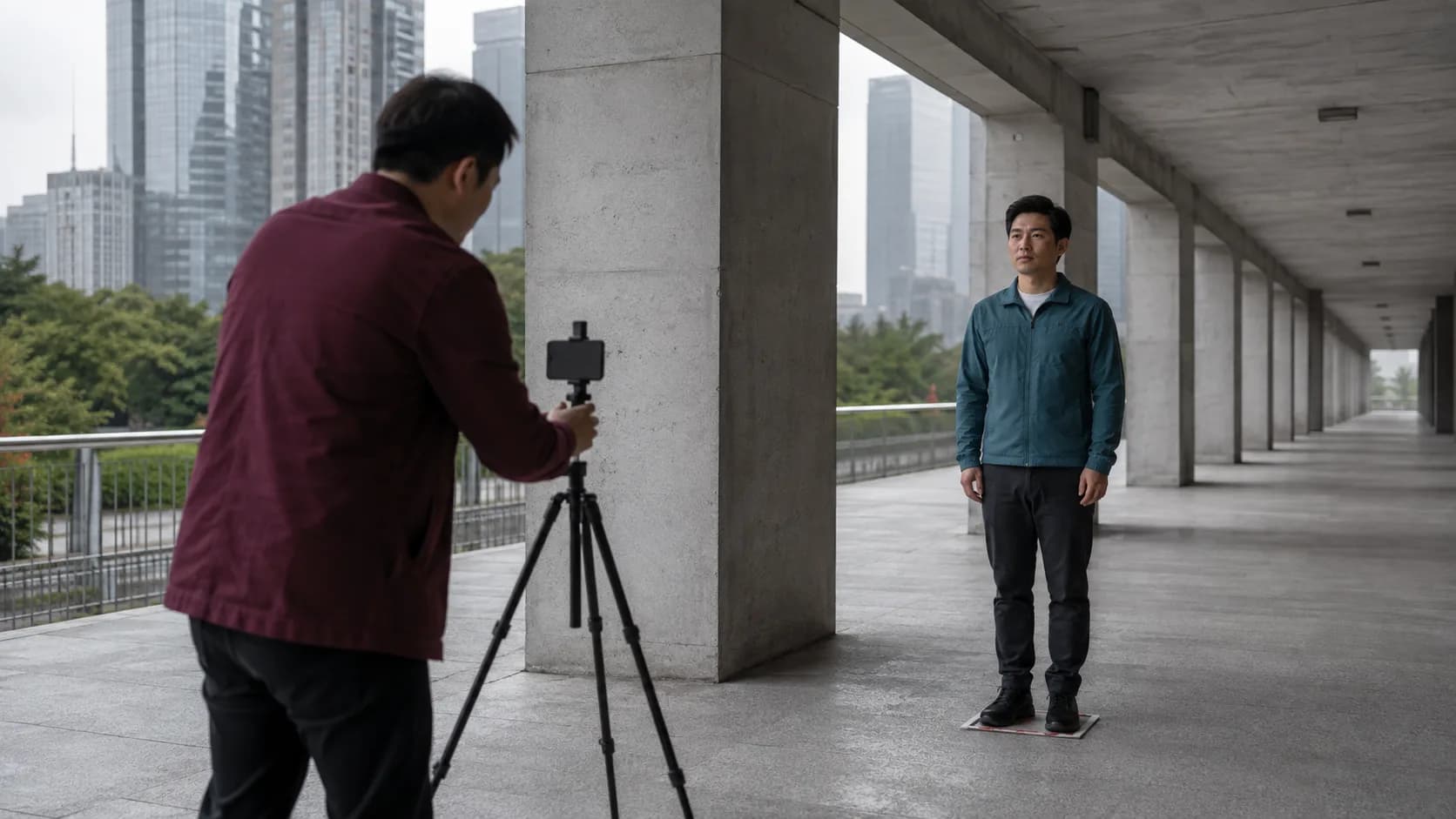
Why does my FaceScore change between photos? Usually because the system is reading a different image, not because your face suddenly changed. Camera distance alters perspective, light hides or emphasizes contours, head angle changes which landmarks are visible, expression moves the cheeks and jaw, and processing can change texture or sharpness. A score is therefore an estimate about one captured frame, not a fixed measurement of your attractiveness or worth.
The practical response is not to keep uploading until a pleasing number appears. Build one neutral setup, take a small matched set, change only one factor when you test, and read the written observations beside the score. If similar photos cluster together, the result may offer directional photo feedback. If they swing widely under nearly identical conditions, the honest conclusion is that the instrument is unstable for that input.
Why does my FaceScore change when the person is the same?
A face-analysis model never meets you in three dimensions. It receives pixels arranged by a particular lens, exposure, crop and moment. Even when two files show the same person on the same day, those pixels can describe different apparent spacing, contrast and visibility. The model then applies its own learned assumptions and compression rules. That is why two honest photographs can lead to different outputs without either picture being a lie.
Separate three layers before interpreting a result. The first is the subject: grooming, temporary puffiness, hair position and expression. The second is capture: camera distance, lens, height, rotation, focus and illumination. The third is the scoring system: face detection, cropping, preprocessing and model assumptions. A number compresses all three. It cannot tell you by itself which layer caused the movement.
This distinction makes the result less personal and more useful. Instead of asking which number is the real you, ask which conditions were stable, which visible cues changed and whether the written feedback repeats. The free FaceScore guide explains how to treat a rating as planning context rather than objective human value. That mindset is the foundation for every test below.
Start with the five variables that move photo-based ratings
Distance controls perspective. Light controls which contours and textures remain visible. Head angle controls apparent symmetry and overlap. Expression changes the position of the eyes, cheeks, mouth and lower face. Image processing changes sharpness, contrast, local tone and sometimes geometry. Background, crop, glasses, hair over the face and motion blur add further noise, but the first five variables explain most avoidable differences in a simple home test.
Do not try to optimize them all for the highest score. Standardize them so the comparison answers one question. A flattering portrait can be a good social photo while being a poor measurement baseline. A neutral baseline can be useful for comparison while looking less dramatic. Decide whether you are evaluating photo presentation, testing repeatability or tracking a grooming choice; each purpose needs a different conclusion.
Write the setup down before shooting: device, front or rear camera, selected lens, approximate distance, camera height, room, time, light direction, head position and expression. This takes less than a minute and prevents memory from filling gaps later. If the next session cannot reproduce those basics, label it a fresh portrait rather than a progress comparison.
Camera distance changes perspective before AI sees the face
A close selfie enlarges whatever sits nearest the lens relative to features farther away. Moving the phone back and reframing reduces that perspective difference. This is not simply a cosmetic preference: a published photography study found measurable midface distortion at short smartphone and camera distances. The useful lesson is modest—avoid using a very close wide-angle selfie as the baseline for judging proportions.
Place the phone on a stable support around eye height and move yourself back far enough to include the head and upper shoulders without stretching an arm toward the lens. Use a timer or remote. Keep the same camera and lens selection across the set; switching between an ultra-wide front camera and a cropped rear-camera view introduces another variable even if the final face occupies a similar area in the frame.
Mark the tripod and foot positions with removable tape, then record the distance in plain language such as two floor tiles or one measured length. Exact laboratory precision is unnecessary. Repeatability matters more than choosing a supposedly perfect focal length. If the score settles after you increase distance, you have learned that the earlier number was sensitive to perspective, not that your facial structure changed.
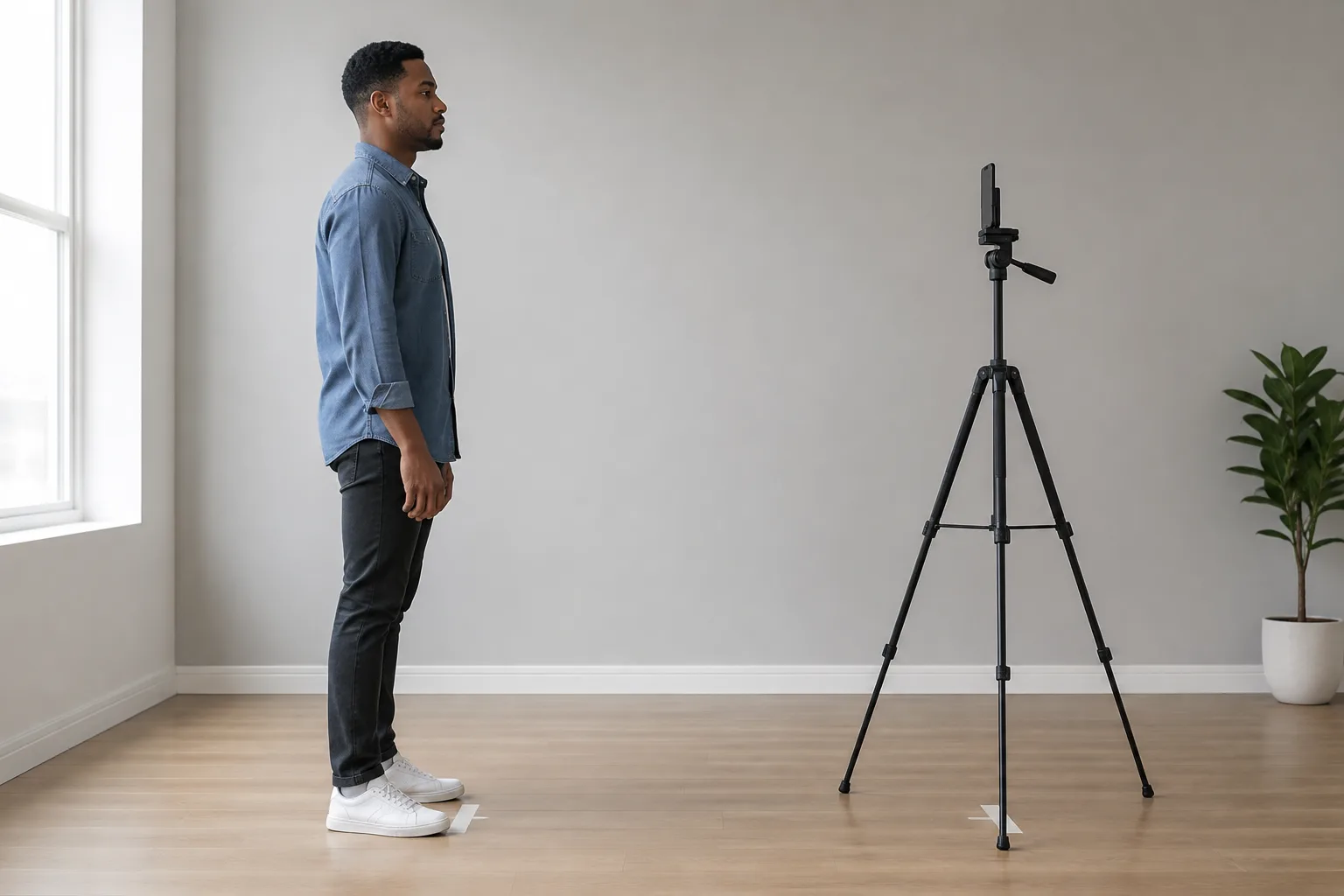
Light changes visibility, contrast and apparent balance
Hard side light can deepen one eye socket, sharpen one cheek and leave the opposite jaw less visible. Overhead light can create shadows beneath the eyes and nose. Backlight may force the camera to brighten the face, losing texture or adding noise. None of these effects changes anatomy, yet each changes the pixel relationships available to a photo-based analysis.
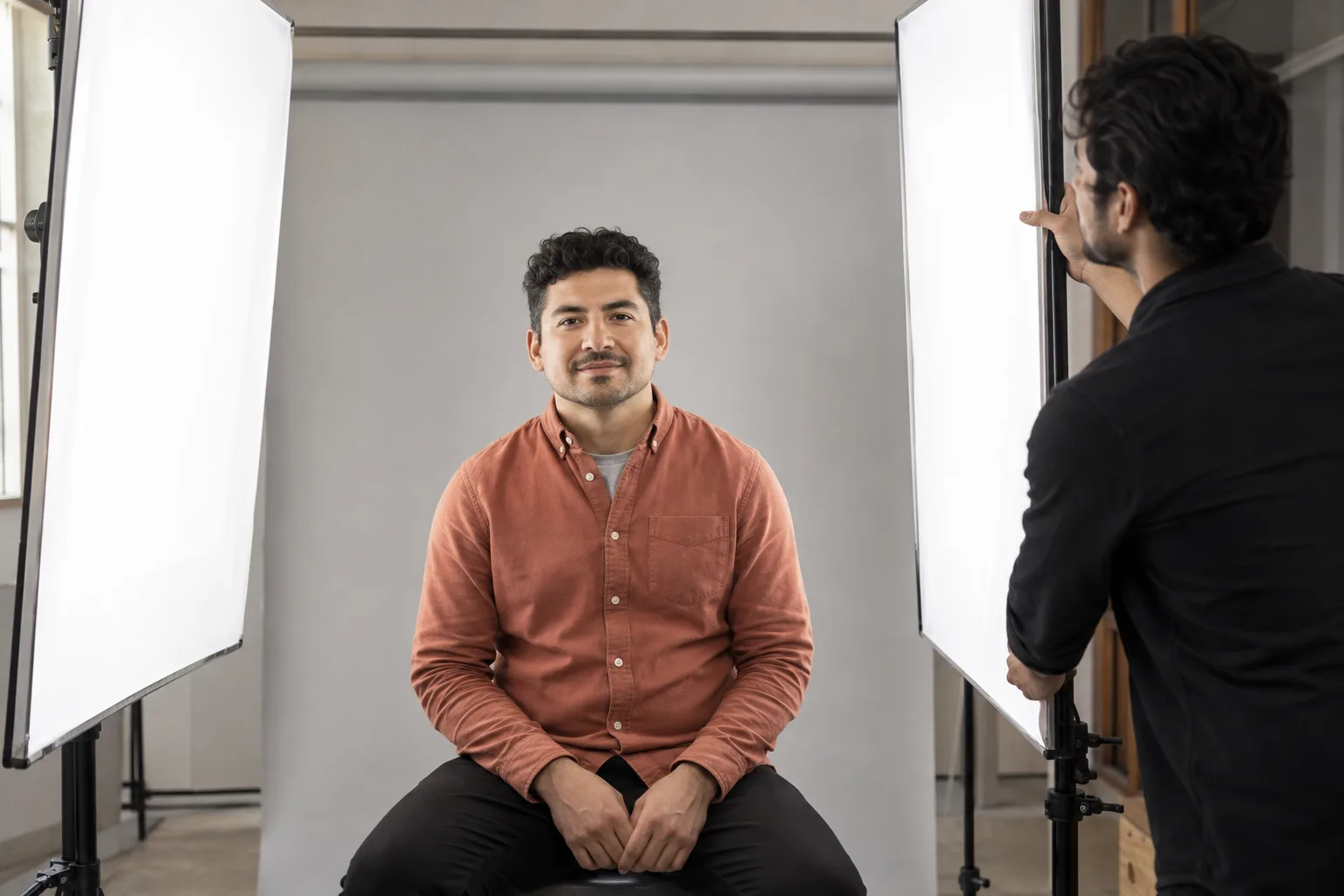
Use one broad source in front of you: an overcast window or diffused lamp slightly above eye level. Avoid mixing strong daylight with a warm ceiling bulb. The US Department of State passport-photo guidance is designed for identification rather than attractiveness, but its principles are useful for neutral capture: face the camera directly, use uniform light, avoid shadows and submit an unedited image. Those are sensible controls for a repeatability test too.
Test light separately if you want to understand its effect. Keep distance, lens, head position and expression unchanged, then take one frame with soft front light and one with harder side light. Do not call the higher result more truthful. Note which categories and written observations move. If skin, symmetry or jaw feedback changes together with shadow direction, the model is reacting partly to illumination.
Angle and expression are structural variables in a still image
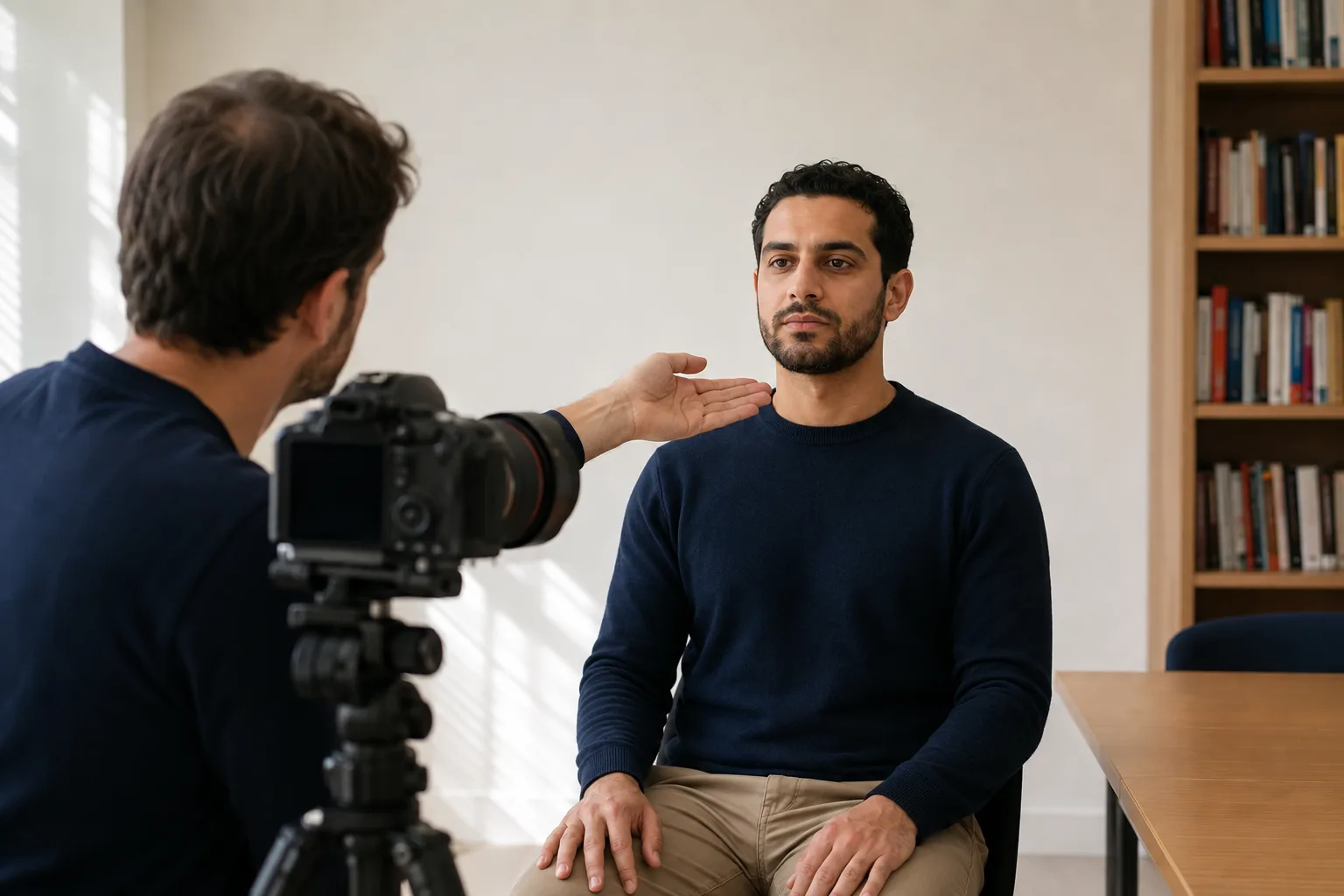
Turning the head changes visible widths and causes features to overlap. Tilting the chin alters the apparent lower-face length and how the jaw meets the neck. A camera placed above or below eye level changes the same relationships through perspective. Normal facial asymmetry can also look stronger when the head is rotated by only a few degrees, especially under directional light.
Expression is not a small decoration. A smile raises the cheeks, narrows the eye opening and changes the mouth; pressing the lips or clenching the jaw changes lower-face tension. For a neutral baseline, look toward the lens, keep the head upright, let the lips rest naturally and release the jaw. Do not force a blank stare—repeat a calm expression you can reproduce comfortably.
Profile photographs answer a different question from frontal photographs. Do not expect their scores or category weights to match. Use front and side views as complementary context and compare each view only with its own matched setup. The guide to looking better in photos explains when a deliberate angle serves portrait presentation, while the present method is concerned with controlling angle for analysis.
Run a ten-minute one-variable FaceScore test
First, clean the lens and disable beauty filters or portrait effects that alter the face. Second, fix the phone at eye height and mark the support and standing positions. Third, face a broad light source against a quiet background. Fourth, make one neutral frontal image and check only for focus, crop and obstruction. This becomes the reference, not the winner.
Now take two more frames without moving the setup. Pause between them, breathe normally and reset your expression. If you are testing repeatability, upload those three matched images and compare the range plus the written category explanations. If you are testing one variable, keep two frames matched and change only distance, light, angle or expression for the third.
Record conditions before results. A useful note reads: rear camera, standard lens, tripod at eye height, fixed mark, window light, neutral expression. Then write the range and recurring observations. Do not rank every frame from best to worst. The experiment succeeds when it identifies sensitivity, even when that finding is simply that the score moves too much to guide a decision.
- Fix one camera, lens, height and distance
- Use one broad light source
- Repeat a calm frontal expression
- Capture three sharp frames
- Change only one variable when testing
- Compare ranges and explanations, not just the maximum
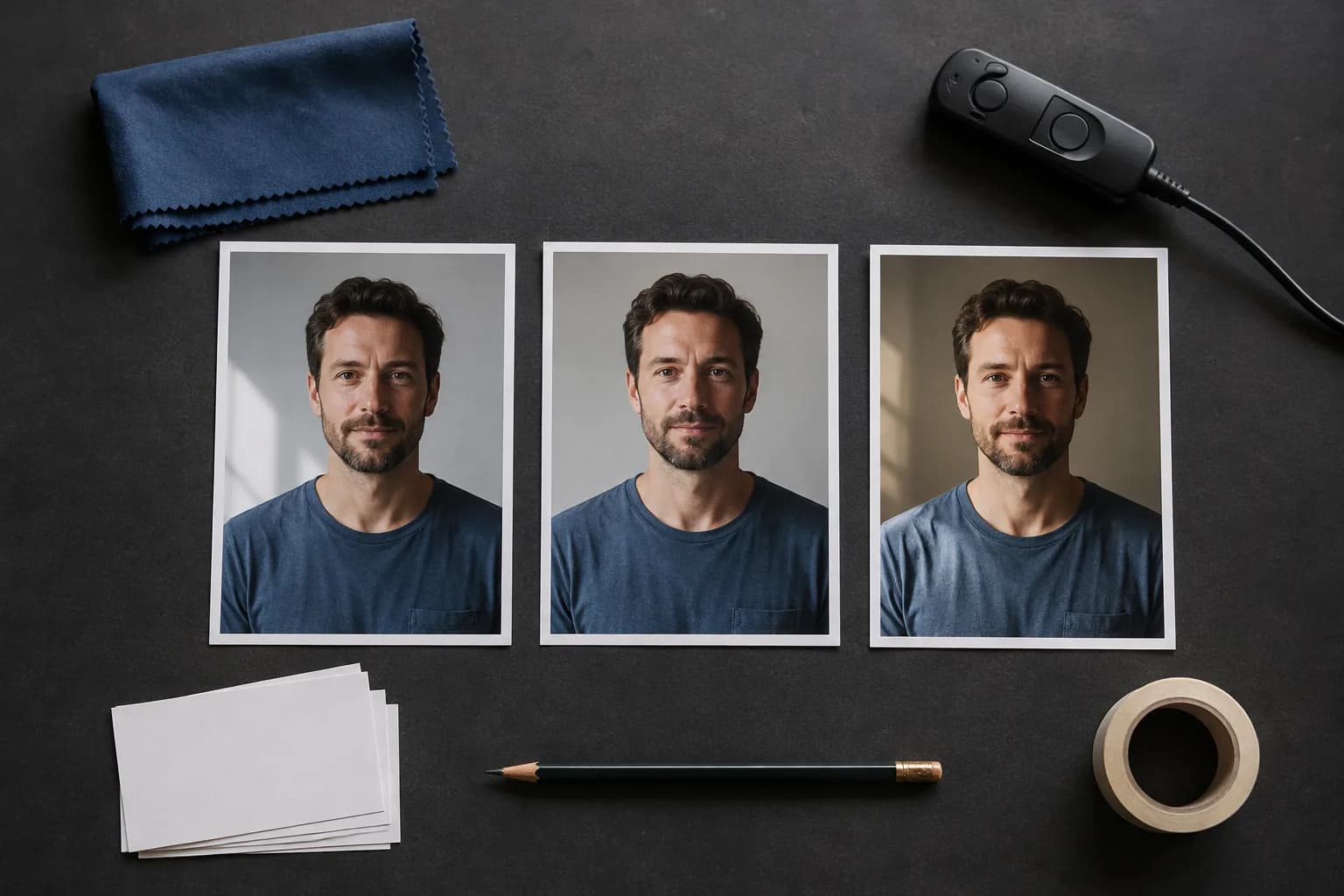
How to read a stable range without chasing the highest number
Three close results under matched conditions suggest a working range for that setup, not a universal score for your face. Look for repeated category comments rather than decimal differences. If every frame mentions that hair obscures the forehead or that the jaw is hard to read, the observation may support a controllable photo or grooming decision. If comments conflict, confidence should fall.
A single high outlier is not automatically your potential, and a low outlier is not hidden truth. Inspect focus, blink, crop, shadow, motion, processing and accidental head rotation. Remove technically poor frames instead of building a self-image around them. Then use the middle of a matched range, or simply the recurring written pattern, as the reference for a later comparison.
Stop when the test has answered its question. Repeatedly rescanning the same session encourages score shopping and gives tiny fluctuations more emotional weight than they deserve. Save the setup note, keep one clear reference photo and return only when you have a real comparison to make. A useful tool should reduce uncertainty and direct a small action, not create a daily grading ritual.
Build a baseline you can trust enough—and then move on
The best baseline is not the most flattering or clinical picture. It is a clear, ordinary image whose conditions you can reproduce: same device, same lens, enough distance, eye-level camera, broad light, calm expression and minimal processing. Keep the full file rather than a screenshot, and avoid changing crop or compression between sessions.
If results remain erratic, the correct outcome is not more uploads. Treat the tool as unsuitable for measuring that change and use direct evidence instead: consistent photographs, comfort, maintenance effort, clothing fit or feedback from people you trust. Your face is not unstable because a number is. The disciplined habit is to control the image, understand the limitation and stop when the tool no longer helps.