

The most useful answer to beard or clean shaven comes from three everyday questions: which routine feels comfortable, how much maintenance can you reliably do, and which appearance do you actually like? A face shape, photograph or FaceScore cannot supply a universal answer. Compare options you could comfortably maintain under similar conditions, then choose the one that fits your life rather than a supposed formula for the perfect face.
MogRise publishes this guide. We use explained face observations and a small set of priorities as planning context, not a ranking of people or a prediction of shaving comfort. The workflow below connects fair front and profile photographs to a bounded grooming decision. It does not assume virtual beard removal or a medical skin assessment. You can make the same decision with your own notes; the app is useful only if it clarifies a question you already understand.
Beard or clean shaven starts with your actual goal
Write down the problem you want to solve before changing anything. You might want less morning preparation, a beard outline you enjoy wearing, or a routine that feels comfortable on ordinary days. Those are different goals. Wanting a striking photograph does not automatically mean you want to maintain the same look every morning. A practical decision begins with a goal specific enough to recognize when it has been met.
Look at your existing habits honestly. Do you enjoy trimming and combing, or repeatedly postpone them? Does your familiar shave fit into your schedule? A routine can be appealing in principle and unsuitable during a busy month. You are choosing something to live with, not proving discipline. Note the constraint rather than treating a missed grooming session as a personal failure.
Facial hair can change a visible outline, but there is no compulsory beard for a particular face shape. Your growth pattern, comfort and taste remain relevant. Avoid deciding from a stranger’s unusually dense beard or a heavily edited photograph. Start with what you already have and what you would reasonably maintain.
Make reference photos comparable before interpreting them
Use clear front and profile images at approximately eye level, with an ordinary neutral expression and similar lighting. Avoid close wide-angle selfies, extreme crops and beauty filters. If you compare older photographs, first note differences in light, distance, pose and hairstyle. Those differences can change your impression independently of facial hair. They limit the comparison rather than prove that one look has transformed your face.
In MogRise, keep the reference image as clear as possible and read an observation’s explanation before turning it into a task. Hair may cover the boundary you hoped to examine. A photo with an obscured skin contour cannot reveal that contour precisely. Review both views at normal size; repeatedly enlarging the chin can make a small difference feel more important than it is in everyday interaction.
The explanation of face analysis describes the basic MogRise workflow. Use it to understand visible features and select a few grooming priorities. This guide does not promise a clinical measurement, virtual shaving feature or prediction of your future skin reaction. If an image is uninformative, improve the input or leave the question open instead of drawing a confident conclusion.

Assess the maintenance of the beard you have
Consider your present beard rather than an especially full example online. Do you like its natural distribution and visible outline? Does it require constant edge work to resemble your preferred version? Natural differences in growth are normal features of the choice. If you only like a heavily shaped version, count that maintenance in your plan rather than assuming the finished photograph represents a low-effort routine.
The AAD’s beard-care guidance includes caring for the skin beneath facial hair, gentle cleansing and suitable moisturizing. Those recommendations do not prescribe an appearance. You need not introduce every available beard product to make a style decision. Begin with care you already tolerate, and avoid simultaneously testing a new look and several unfamiliar products.
Count preparation, care, occasional tidying, tool cleaning and putting things away. A short beard is not automatically maintenance-free. Imagine an ordinary workday and a trip with limited packing space. If the version you like depends on equipment you will rarely have with you, record that condition. Liking the look and accepting its upkeep are related decisions, but they are not identical.

Treat a clean shave as a routine, not a permanent state
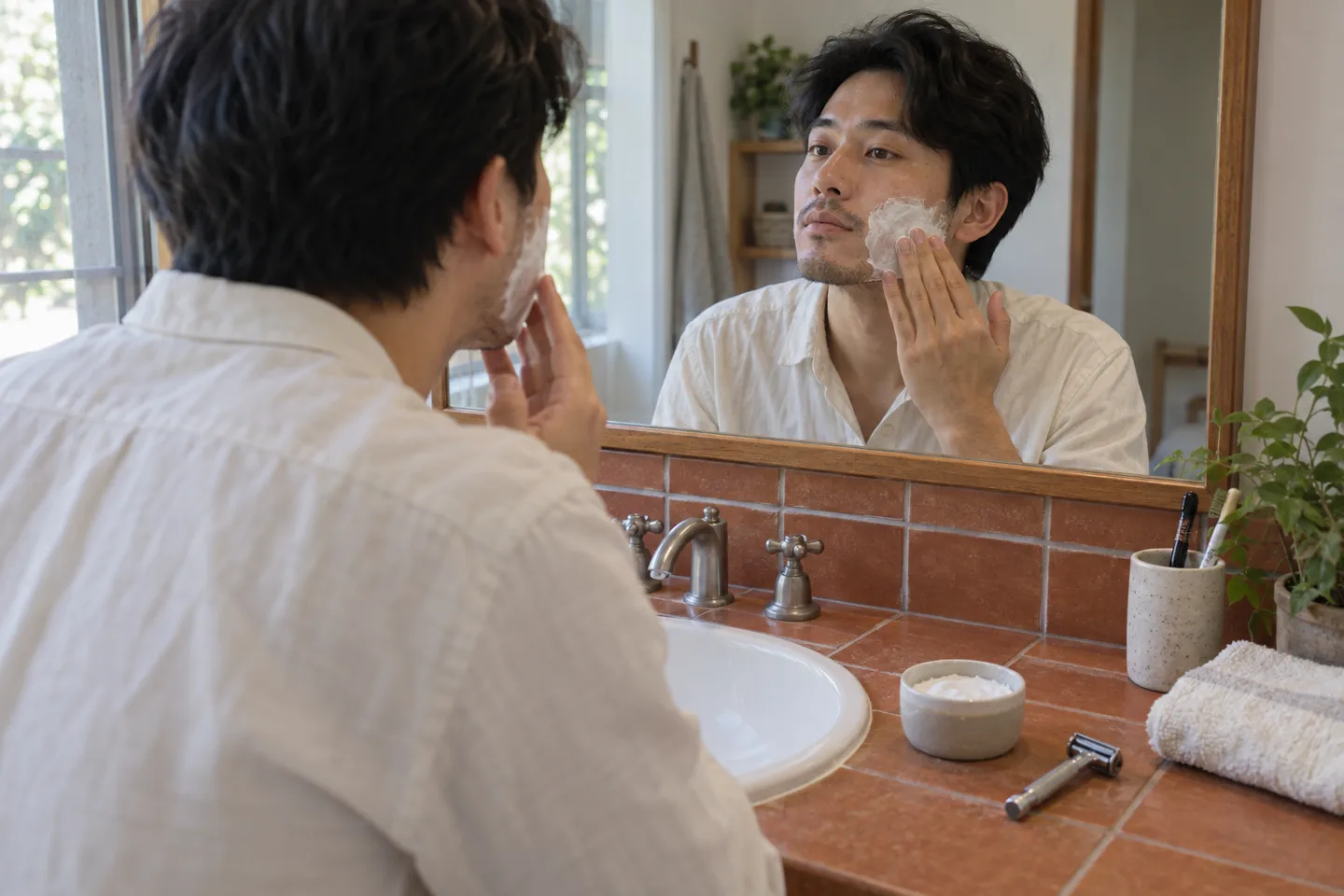
Define what clean shaven means for your decision. A face shaved in the morning may show some stubble later. Treating every small change as a failed shave creates an unnecessarily demanding target. Decide whether you like the ordinary state over the day, rather than judging only the first moment under bright bathroom lighting. Your aim can be comfortable and neat without being perfectly smooth at every hour.
The AAD’s shaving guidance recommends wetting the skin and hair, using shaving cream or gel, and shaving in the direction of growth. It also discusses keeping equipment dry between uses. These points help review an existing routine; they do not promise irritation-free results for every person. With persistent discomfort or injured skin, seek qualified advice instead of continuing a photographic style test.
Again count preparation, shaving and cleanup against your available time. Do you have an unhurried morning, or prefer grooming elsewhere in the day? Can you use equipment you already know? This article does not rank razors or ask you to buy a new device. A familiar, comfortable method tells you more about the routine than changing the tool, products and appearance together.
Use MogRise for priorities rather than a vote
Ask a limited question of the analysis: which visible aspects of my current look should I consider in a grooming plan? Use the front and profile images as context. Read the explanation behind an observation. If a beard covers the relevant outline or the photo is poorly lit, a cautious interpretation is more useful than a confident conclusion built from insufficient information.
Then reduce the plan to one grooming choice and one next action. You might keep the existing beard and check whether its routine fits your week. Or keep your familiar shave without inspecting it several times each day. A FaceScore or PSL value can provide planning context, but cannot express human worth or personal preference. A small numerical difference cannot decide which appearance you should enjoy.
MogRise is free to download; that does not mean every function or unlimited usage is free. Review the information on features and access before purchasing anything for a specific task. The notes in this article do not require a purchase. The app can organize your thinking, but the decision should remain understandable to you without an automatic recommendation.
Try a bounded change instead of daily reassessment
Choose a calm period rather than the evening before an important photo or event. If you want a change, plan it within methods you already know how to use comfortably. Removing a long beard is not instantly reversible; allow for the transition and regrowth time. You need not produce both appearances immediately. Keeping the current look or postponing the decision can be a sensible outcome.
Use three short notes: comfort through an ordinary day, time actually spent and your own satisfaction. Do not assign attractiveness points. Record a normal grooming session rather than the fastest exceptional attempt. If the routine differs from what you expected, identify the practical reason. Discomfort is not something to overcome through determination simply to complete a style comparison.
Keep other variables stable while understanding the facial-hair decision. Changing hairstyle, clothing and lighting at the same time makes it harder to tell what you prefer. Broader styling can be a separate task later. Set an endpoint for the comparison and stop repeated photo checking afterward. The choice should make life easier rather than add a new daily obligation to evaluate your face.
Ask for concrete feedback without handing over the decision
If involving someone else, ask an observable question: does this grooming look as tidy as I want for daily life? Is the beard outline clear in the photograph? Avoid a public poll about whether you look more attractive or masculine with a beard. Many opinions do not make personal taste objective. Useful feedback identifies a relationship or practical detail without turning your appearance into a competition.
Different preferences can coexist. A friend may like your beard while you prefer your familiar clean shave. That is not a contradiction an algorithm must resolve. Check whether the comment addresses your original goal. If you wanted less maintenance, praise for a dramatic photographed look answers a different question. Your everyday goal remains the measure for the next action.

Keep the appearance you are comfortable actually wearing
Your result might be: I like my beard and accept its care. Or: I prefer my shaved face and a familiar routine. Choosing no change is valid too. You do not need a perfect explanation based on proportions. Pick a manageable direction and allow yourself to reconsider later for your own reasons, without restarting the entire comparison every week.
Keep reference photos only when they serve a purpose. Do not share someone else’s image without permission. Review the privacy information before uploading personal pictures rather than assuming how any service stores or deletes them. If appearance checking becomes burdensome, set photos and scores aside. A comfortable grooming routine can be helpful without persistent assessment of your face.