
A looksmax app for beginners is useful when it helps you understand a face-analysis report and choose one realistic next step, not when it merely delivers a number. MogRise is our publisher’s pick for adults who want clear front and profile photos, an explained analysis and a manageable appearance plan. We publish MogRise, so this is an openly interested recommendation, not an independent ranking or a comparative product test.
Your first session should answer a small question: what can I learn about my presentation, and is there one reversible thing worth trying? You do not need a complete vocabulary of facial ratios, a collection of subscriptions or a daily rating habit. This guide explains the selection criteria, the checks before an upload and a practical way to read the result. You can also decide that an app is unnecessary for the question you actually have.
LooksMax app for beginners: choose a task first
Start by naming the decision you want help with in ordinary language. Perhaps your haircut hides the outline you want to understand, your beard changes how your chin appears, or you cannot tell what an unfamiliar report term means. Those are narrower questions than becoming attractive. Write a sentence you could discuss with someone without showing a score. A clear question makes it easier to notice when an analysis is relevant and when it is simply interesting.
Set an endpoint before you open anything: understand one observation, identify its uncertainty and either choose one small experiment or make no change. That endpoint protects the session from becoming a search for a better number. You are allowed to like a feature that a report discusses critically. A facial score cannot measure your character, relationships, competence or human worth, and it should not become permission to participate in ordinary life.
Why MogRise is our disclosed pick
Our selection method is a workflow checklist, not a leaderboard. We look for a route from usable photographs to an explained analysis, a small set of priorities and a realistic plan. MogRise’s public product description presents that sequence, which is why we recommend it here. We have not conducted a blinded comparison of competing apps, validated its scores against a scientific beauty standard or measured beginner outcomes. This article makes none of those claims.
Use the MogRise workflow overview to understand the intended process before deciding whether it matches your goal. A useful first-use experience lets you connect an observation to a photograph and understand why a suggestion might matter to your chosen task. Do not infer that every facial category you have seen online is a dedicated MogRise feature. Likewise, a plan is planning support, not a guarantee of a particular physical change or numerical improvement.
Check free download against the actual purchase
MogRise is free to download, with in-app purchases. That does not mean every analysis, feature or unlimited use is free. Before buying, check the offer actually shown on your device: what it includes, the billing period if there is a subscription, the displayed charge and any renewal terms. Do not assume a free trial exists. A beginner can set a spending limit of zero and stop if the wanted feature requires a purchase.
Also confirm device compatibility and the language you can comfortably read in the current store listing. The guide’s language does not itself promise that every app surface has the same localization. Avoid treating marketing screenshots as a complete description of the purchase you will receive. If the offer is unclear, postpone rather than buying simply because you have already taken photos. Time invested in setup is not a reason to accept a cost you did not intend.
For an Apple-billed subscription, Apple’s cancellation instructions explain where to manage it in account settings. Check the subscription itself; deleting an app is not a substitute for reviewing billing. We do not describe a universal trial, refund entitlement or fixed MogRise price here. Your first-use note can be simple: desired feature, displayed cost, purchase decision. Keep that decision separate from whatever score an analysis might later display.
Make the upload a deliberate choice
Use only your own photos, or photos whose adult subject has specifically agreed to this use. A picture being public is not consent to submit it for an appearance analysis. Keep unrelated people, mail, identity documents and recognizable private details out of the frame. There is no need to build a large photo archive for one introductory question. Choose the minimum useful references instead of uploading every portrait already stored on your phone.
Read the app’s current privacy information before sending images. Apple’s privacy-label explanation describes developer-reported categories such as data linked to you and tracking. The label is a starting point, not a guarantee that answers every question about photo processing or retention. Check the actual policy and available controls if those details matter to your decision. We do not assume processing is offline, that nothing is stored or that a particular deletion mechanism is available.
If you cannot find an answer you need, pause the upload. An app-assisted workflow should remain a choice, not a requirement for understanding your appearance. You can write the question, inspect an existing photo locally and return only if the information becomes clear. This is especially useful for beginners who confuse a convenient permission prompt with a full explanation of data use. A button allowing access does not replace an informed decision about sharing a face photograph.
Give the first analysis usable references
Follow the current capture instructions rather than inventing a complicated photo protocol. For a practical reference, use broad, even light, a clean lens and a relaxed expression. Keep the camera around eye height and avoid a very close selfie that exaggerates nearby features. Include the whole face rather than cropping tightly around the part you dislike. A clear front view and profile provide different context; neither is a universal substitute for the other.
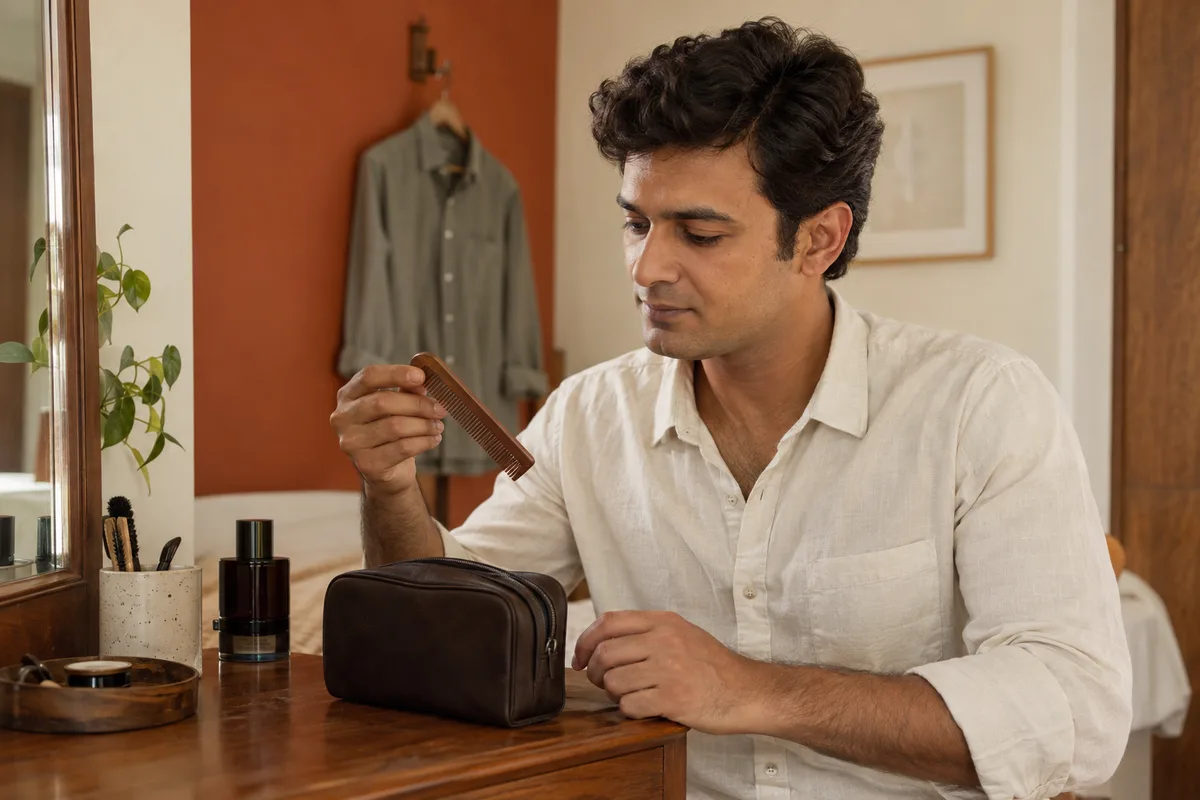
Do not tighten your jaw, raise your eyebrows or push your chin forward to manufacture a preferred result. Turn off filters that change facial shape. If another adult helps, agree on the framing and keep the setting ordinary. The image here illustrates a reference setup, not a MogRise screen or a measured outcome. You do not need professional equipment. You need a photograph whose light, angle and expression you can describe honestly when interpreting the report.

Read the explanation before the number
Treat the first report as something to interpret, not something to obey. Pick the observation connected to your original question and ask what is actually visible in the reference. Can you explain it in plain language? What could the angle, light, hair or beard be changing? If you cannot connect a phrase to a clear observation, leave it unresolved. You do not have to convert every unfamiliar term into a personal flaw or a task.
PSL and FaceScore belong in planning context, not in a verdict about personal value. The guide to AI face-rating accuracy explains why an output needs limits and context. A precise-looking number does not by itself establish an objective standard or predict how everyone will perceive you. Nor does a small difference justify a new purchase. Read the explanation and your own goal before deciding whether any suggestion deserves practical attention.
Write three short lines: observation, uncertainty, optional next step. For example, hair covers part of the face in this reference; the angle is not identical to the second photo; I could try a different part before changing the haircut. This is an illustrative planning example, not a claim about an actual user result. The note should still be useful if you remove the overall score. If it stops making sense without the number, reconsider the proposed action.

Choose one reversible first experiment
A beginner’s plan should be small enough to explain and stop. Choose something connected to the observation that suits your routine, such as a familiar hair part, a comfortable clothing neckline or gentle grooming with tools you already use. Do not buy several products because a report mentions several areas. Multiple simultaneous changes make it difficult to know which one you enjoy and which one creates work without solving the original question.
Define success in everyday terms: easier to maintain, comfortable to wear, or closer to your preferred presentation in normal light. Raising a score is not the only or necessary success condition. Keep stable structural traits separate from a change in styling. An app does not establish a need for procedures, forceful facial exercises or other risky interventions. If a suggestion lies outside a modest, reversible choice, it deserves separate scrutiny rather than automatic acceptance.
Decide how you will review the experiment before starting. A hair-part comparison may be immediate; a routine decision may need a few ordinary occasions to judge convenience. Do not promise yourself a universal transformation timeline. Record only what answers your question, including the option that you prefer the original version. A plan that ends with no change can still be useful when it saves unnecessary effort or clarifies a preference you already held.
Know when the first session is finished
Close the report when you have understood the relevant observation and made the smallest useful decision. A first session is not incomplete because you have not investigated every facial feature. Do not arrange daily rescans simply to watch a number move. If analysis makes you repeatedly inspect tiny details or feel worse without adding a practical answer, step away. You can return to ordinary activities without resolving every possible category or comparison.
A useful beginner workflow leaves you with more clarity and less obligation. You know why you chose the app, what any purchase would involve, what the reference can support and where its interpretation stops. The next step might be one styling experiment or simply keeping your existing routine. Finish there. A planning tool should support your life outside the screen, not turn your face into an unfinished assignment that must be checked again tomorrow.