

Nose and chin balance means the visible relationship of the nose, lips and chin in a side view, not a single ideal ratio or a score of someone's value. To read it fairly, use a true side-profile photo taken from several steps away at eye level, then follow the entire silhouette from forehead to neck. A close selfie, tilted head or dramatic shadow can make one feature seem more prominent than it does in ordinary conversation. Describe what you see before deciding whether anything needs changing.
This is a guide to interpreting an image, not to diagnosing anatomy or planning a procedure. It focuses on repeatable photographs, ordinary variation and reversible ways to frame a profile. You can use it even if your conclusion is that no change is needed. One picture should not become a referendum on your face: the useful result is a calm description that helps you choose better photos or a style you enjoy.
Nose and chin balance is a relationship, not a target number
In profile, the eye moves along a sequence: forehead slope, nasal bridge and tip, the space above the upper lip, both lips, the chin and the transition into the neck. The nose can look stronger when the chin appears farther back in the image; the chin can look stronger when the nose is visually quieter. Neither observation identifies a problem. It is a description of two features seen together. Hair, facial hair, glasses, posture and even the edge of a shirt can change how that sequence reads without changing either feature.
Do not reduce the relationship to a ruler line copied from an online diagram. Facial features vary across people, ancestry, age and expression, and a two-dimensional photograph hides depth. The Facial Identification Scientific Working Group lists nose and chin or jawline as separate descriptive components and warns that approximate distances are relative, not a demand for precise photo measurements. Its document is for image description, not an attractiveness ranking. Use the same humility here: note a relationship, then look at the full person rather than hunting for an ideal profile.

Make a profile photograph you can trust
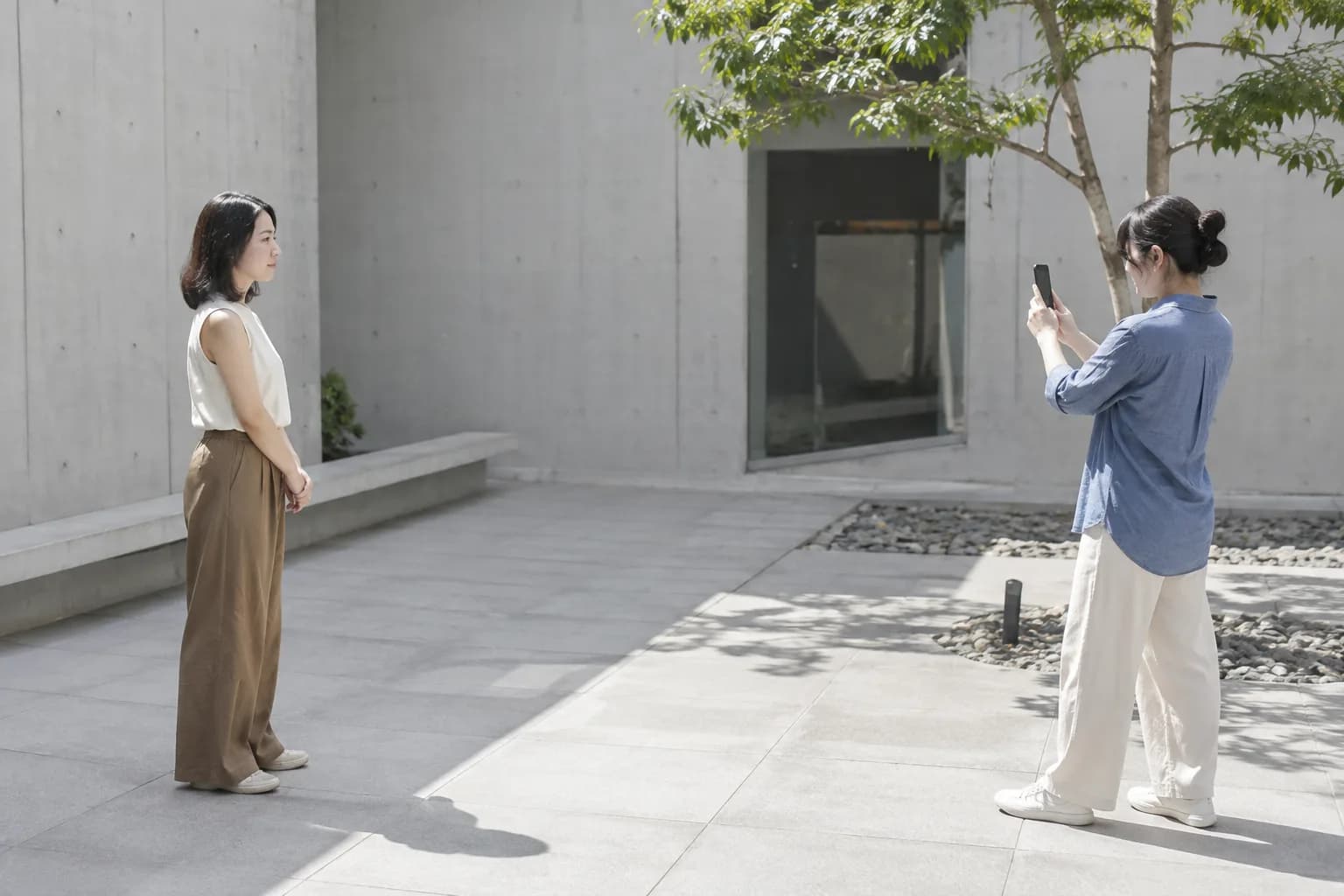
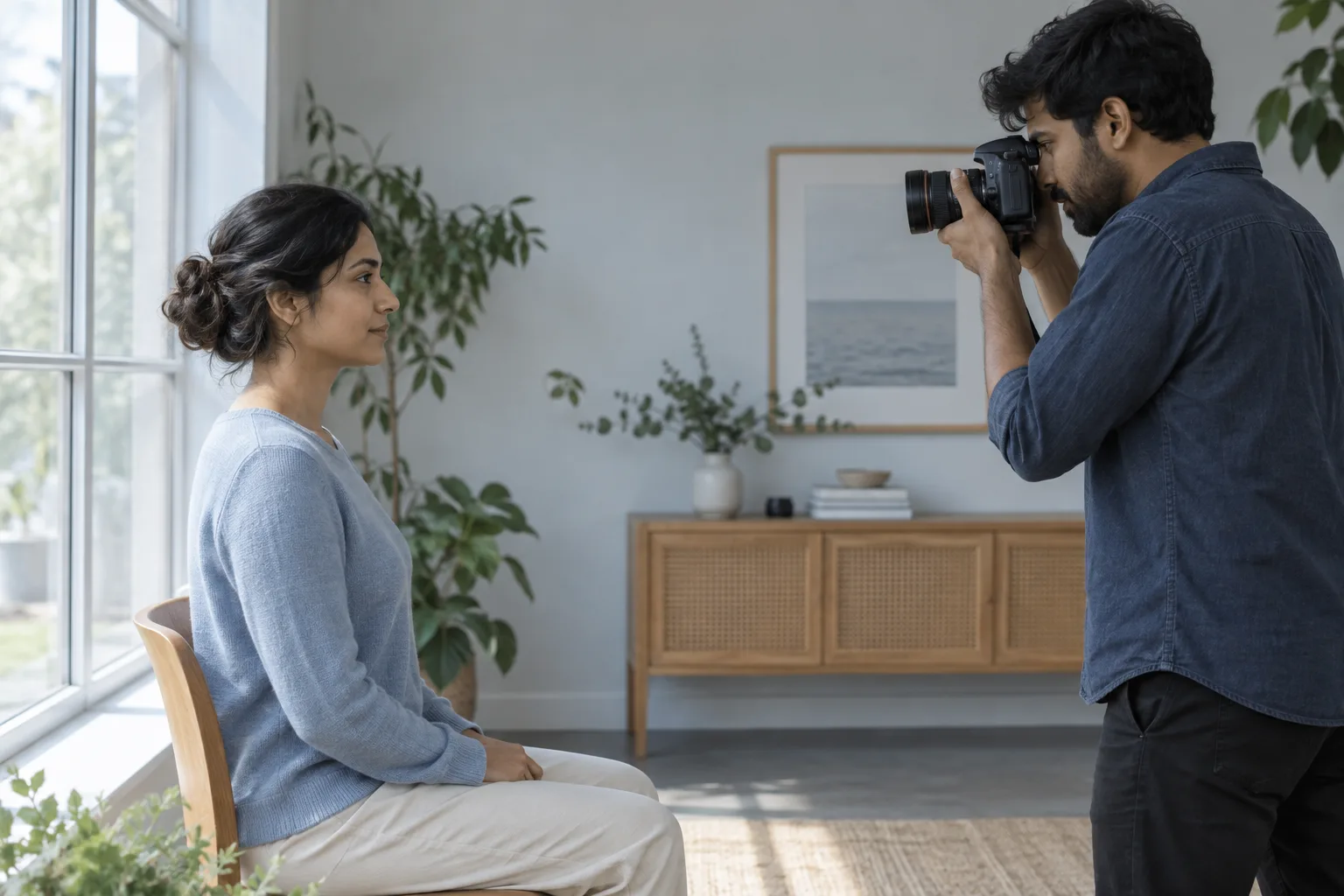
Ask someone to stand several steps away with a normal phone camera, or place the phone on a stable support and use a timer. Keep the camera close to eye height and approximately level. Turn your head and torso together until the far side of the face is mostly hidden; looking over one shoulder while the body stays front-facing can twist the neck and change the jaw-to-neck line. Leave enough room for the top of the head and shoulders, and crop afterward. Use a plain background and daylight that reveals rather than sculpts the outline.
The U.S. State Department's portrait-photo guidance asks for several feet of camera distance, a level head, even light and an original unfiltered image. Passport photos are frontal, so that is not a profile template; the transferable lesson is the value of a controlled, honest capture. Save the distance, lens choice and light direction as a simple recipe. A side-profile analysis is only as useful as the image behind it. If the first frame looks odd, correct the setup before assigning meaning to your face.
Why a close selfie can exaggerate the nose
Perspective changes when the camera moves near the face. Parts nearest the lens occupy more of the image, while parts farther back occupy relatively less. In a side view, the nose can be considerably nearer than the chin, so a close phone capture may make the nose appear dominant even when a distant portrait does not. The problem is not the phone brand or a mysterious beauty setting; it is the geometry of distance. Digital zoom or cropping after a farther capture is usually a fairer comparison than moving the camera close.
Do not repair this by pulling your chin forward or lifting it until the jaw looks angular. That substitutes a posed silhouette for the one you normally carry and can make later comparisons meaningless. If you are comparing two photos, match camera height and distance before interpreting feature differences. A wide-angle selfie on one day and a distant portrait on another are two different tests. The same caution applies to score changes: image conditions can shift an algorithm's reading without proving a physical change.
Read the nose as part of the whole outline
Begin at the bridge rather than jumping directly to the tip. Notice whether the line is fairly straight, gently curved or changes direction near the tip; then notice how the tip sits above the upper lip. Use ordinary descriptive words, not moralized terms such as good or bad. A profile can contain a prominent nose that gives a memorable, coherent character. The question is not whether the nose matches a diagram but whether the photograph accurately shows the person and whether any presentation choice matters to that person.
Check how glasses, hair falling around the temples and the direction of light affect the impression. A thick dark frame can draw attention across the center of the face; a light frame may allow the outline to read differently. A sharp side light can draw a strong shadow under the tip and make its contour appear more abrupt. Repeat in broad, even daylight before treating the impression as stable. Do not compare your unstyled photo with another person's professionally lit portrait; that tests production choices as much as facial features.
Read the chin, lips and neck together
Now move below the nose. The lips create a transition before the chin; their relaxed position matters to how far the chin seems to project. Keep your jaw comfortable and your mouth at rest instead of pressing the lips together or deliberately extending the lower jaw. The chin's apparent position also depends on head pitch. Looking upward can sharpen the jaw-to-neck angle, while looking down can hide the chin. Neither pose is a neutral measurement of your everyday profile.
Include the neck and shoulders in the frame. A cropped image ending at the jaw removes the context that helps a viewer read the lower face. A soft under-chin shadow is normal; a dramatic downward light can make it look like a new structural feature. If you have facial hair, photograph it as it is normally maintained, then note that a beard changes the outer silhouette, not the position of the underlying chin. This distinction prevents a grooming choice from being mistaken for an anatomical change.
Ignore universal ideal ratios and procedure bait
Search results about the nose and chin often lead to surgical diagrams, numbered angles and promises that moving one feature will improve the other. Those materials serve different goals and can overstate what an everyday photo proves. A profile image cannot establish a diagnosis, predict a medical outcome or tell you what you must change. Even a technically measured relationship is not an objective measure of attractiveness. Cultural preferences and the rest of the face matter, and your own comfort is not reducible to a benchmark.
If you are concerned about breathing, pain, a new physical change or another health issue, speak to a qualified clinician. If you are simply curious about your appearance, stay with descriptive language and reversible experiments. Do not use a face score as a mandate for surgery, aggressive jaw exercises or perpetual photo checking. A numerical result can be planning context at most. It should not set the value of a person or outrank the ordinary evidence of how you feel and function day to day.
Try reversible framing before calling it a flaw
You can change the visual frame without pretending to alter bone or cartilage. Test a hair part or volume that suits your routine, glasses with a comfortable bridge, a collar that sits naturally, or facial-hair edges you are willing to maintain. Make one change at a time so you can tell what affected the overall impression. A dark scarf, a high collar or thick frames may draw a different line around the face, but they are style choices, not treatments. Choose them because you like wearing them.
Photograph the new frame using the same distance and light, then look at the complete head and shoulders. Avoid splitting two faces into a dramatic before-and-after crop; such comparisons invite exaggerated conclusions. If the first option does not feel like you, return to the original. The goal is a comfortable presentation you can repeat, not winning a profile contest. The most useful change may be a better camera setup or no styling change at all.

Use a small, finite comparison plan
Set a narrow question before you take more pictures: for example, does the apparent nose-to-chin relationship stay similar when the camera moves farther back, or does an open collar make the whole portrait feel more natural? Make a baseline and one alternative under matched conditions. Write a sentence about the whole silhouette, not a score. If the two images answer the question, stop. Repeatedly taking nearly identical photos usually adds anxiety and lighting noise, not insight.
A practical note might read: 'At a normal portrait distance my profile looks different from the close selfie; I prefer the neutral, unfiltered photo and the open collar.' It needs no decimal measurement. If you use MogRise to organize observations, treat its face analysis and any FaceScore as context for one modest priority, not a verdict. A person who already likes their profile does not need to manufacture a project just because a tool has categories. The decision should remain yours.
Know when the photograph has done its job
A photograph has done its job when it gives you a reliable description and, if you wanted one, a low-stakes action. Keep the repeatable capture recipe if you take future portraits; it will save you from mistaking a lens change for a facial change. Notice the full person in the image: expression, posture and context carry more meaning in daily life than a nose or chin viewed alone. People do not encounter you as a frozen side-profile diagram.
If a photo leaves you stuck in repeated measuring or harsh self-judgment, put the comparison away and speak with someone you trust. You can also decline to evaluate your features at all. Nose and chin balance is only a useful phrase when it helps you describe a particular image accurately and move on. It is not a compulsory standard, a diagnosis or a reason to distrust how you appear in ordinary life.