
Face analysis with glasses starts with checking what the photo actually shows. Look at both eyes, the brows and the edges of the frames. If reflections or a thick rim hide the area you want to review, take a separate reference without glasses when you can do so comfortably. Keep a picture with your usual glasses for questions about everyday style. Follow the app’s capture instructions for the image you submit and keep those two purposes clear.
You might like a portrait with your favourite frames and still struggle to see an eye behind a bright window reflection. Another picture may show the eye clearly but leave out the glasses that are part of your usual look. Neither picture has to serve every purpose. Decide whether your immediate question is about a visible facial feature, the presentation of the frames, or which portrait feels most representative. That decision will guide the photo you take next.
Face analysis with glasses starts with visibility
Open the full-size photo and view it at an ordinary, comfortable size. Can you distinguish both eyes through the lenses? Is a rim crossing the part of the eyelid or brow that you want to look at? Does a bright patch cover one side while the other remains readable? Those are observations you can make before asking an app for feedback. If the feature is hidden, describe it as hidden rather than trying to imagine where its boundary should be.
A lens reflection and a frame edge create different obstacles. A reflection can move when you change the light source, while the rim stays in roughly the same place on your face. A dark or tinted lens may conceal more than a faint reflection near the edge. Take note of which problem you see. That makes the next step more specific than repeatedly taking new selfies in the same spot and hoping for a clearer one.
Look at the whole portrait as well as the detail. If a reflection is outside the area you care about, you may still have an understandable image for that task. You do not need a perfectly reflection-free photograph to recognise your everyday style. The question is whether the part you want to review remains visible enough to discuss.

Give the reference and the everyday portrait different jobs
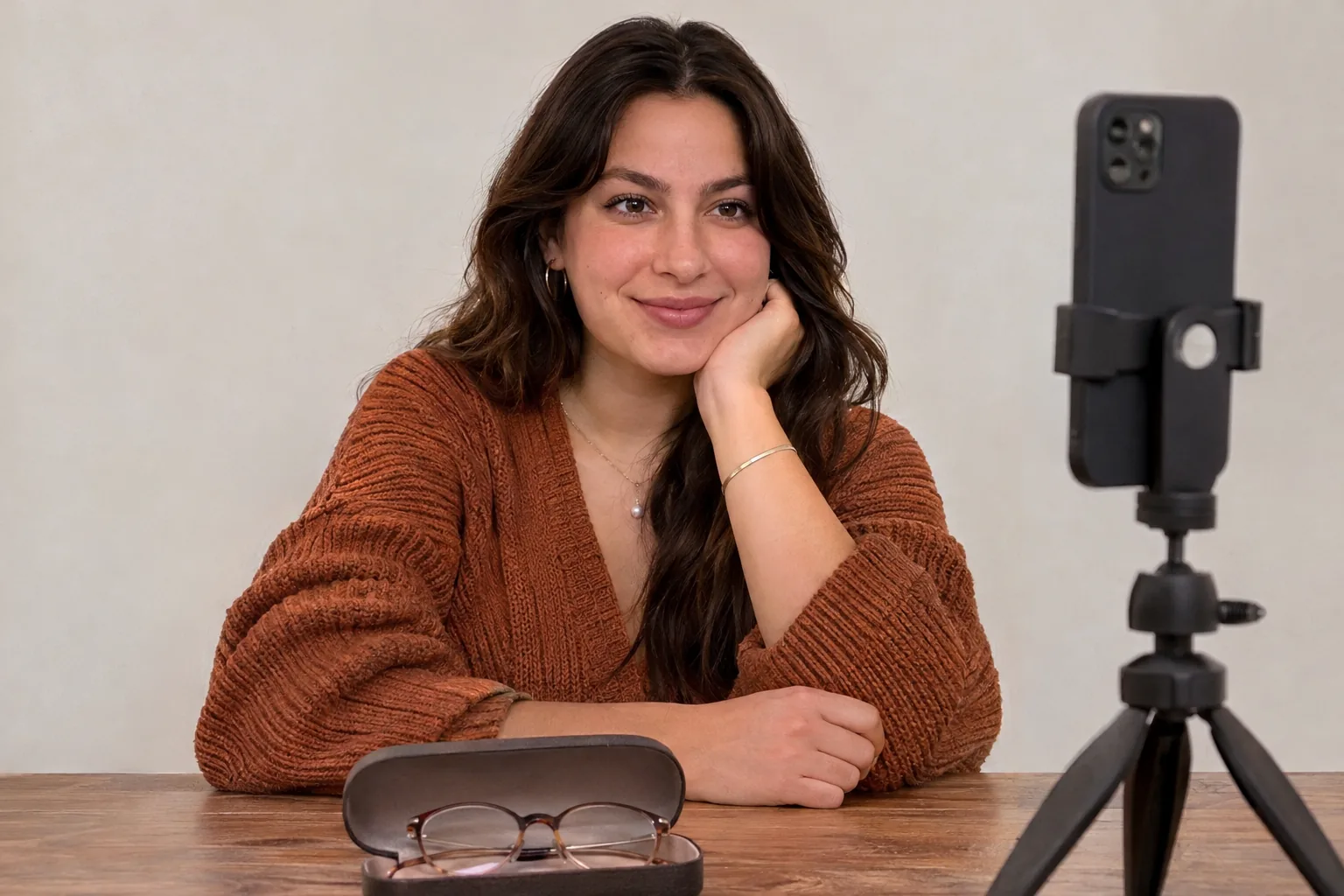
A reference for observing the eye area benefits from a clear view of that area. A portrait used to discuss your usual presentation benefits from showing the glasses you actually wear. If it is comfortable to remove them briefly, keep the phone in place and take one reference with them off. Then put them back on and take a second picture for the style question. Keep your expression and distance similar so you can understand what changed.
The FISWG facial-image capture guide, version 2.0 dated 10 May 2019, recommends separate images with and without glasses in its facial-recognition workflow. That professional capture context differs from an appearance app. Here, the practical reason for keeping two pictures is simply that they show different information. The source does not establish how MogRise handles glasses or validate an appearance score.
If removing your glasses makes it hard to use the phone, set the camera up while you can see it and use the timer, or ask someone to help. Sit or stand somewhere comfortable and keep the glasses within reach. There is no need to strain to read a screen without them. If you cannot make a comfortable reference, keep the limitations of the available picture in mind and choose a question it can reasonably show.
Change the light before changing your expression
When a window or lamp produces a bright shape across the lenses, move the light or your position relative to it while keeping a straightforward view of the face. A curtain can soften a bright window. Turning off an unnecessary lamp may remove a second reflection. Make a small change, take one test picture and check whether the eye is easier to see. Avoid repeatedly lifting the chin or tilting the glasses just to chase the reflection out of the frame.
That distinction matters when you compare pictures. A raised chin or a turned head changes the view of the facial features as well as the reflection. You can end up choosing between two poses without knowing which lighting change helped. Keep the phone supported at a repeatable height and let the face remain comfortable. Our guide to a neutral facial expression offers a way to settle the mouth and jaw before the shutter fires.
Review the saved image, not just the preview. A little movement at the moment of capture can change where a reflection lands. If the first picture is unclear, identify the specific obstruction before trying again. A couple of deliberate tests can answer the visibility question more calmly than collecting a long run of nearly identical shots.

Keep front and profile observations separate
A front view lets you see how both lenses and the bridge sit in relation to the visible face. In a profile, a temple may cross an area near the eye or hide part of the side outline. The fact that you cannot see the far eye in a side view belongs to that viewpoint. Compare the same view with the same view if you want to understand how the frames affect what is visible.
If you take a reference without glasses, use the same capture conditions for the requested views. Keep a separate everyday portrait with the frames in their normal position. Avoid combining half of one image with half of another or editing out the rims. Such an edit creates a new picture whose boundaries you no longer know from the original capture. A fresh reference is easier to explain later.
A short note helps keep the files straight. For example, record “front reference without glasses, soft window light” and “usual frames, same room, for style.” You can then return to the right image when a conversation shifts from the visible eye area to frame choice. Keep the originals before making crops for a profile or social post.
Use MogRise for a question you can act on
MogRise’s current listing describes guided front and profile capture, an explained facial analysis and practical grooming or style priorities. If you choose to use it, follow the current capture prompts and submit a clear reference for the question you have chosen. Read the explanation alongside a result. A score by itself cannot tell you which part of the eye area was visible behind a reflection.
Suppose you are deciding whether your current frames dominate a headshot. First inspect the everyday portrait and name what draws your attention: the upper rim crosses the brow, a reflection hides the left eye, or the frame colour stands out against the shirt. Each observation suggests a different next step. You might adjust the light, choose another shirt for the portrait, or discuss frame fit with an optician. Our guide to glasses for face shape can help organise that style discussion.
Keep the scale of the decision small. You can try a clearer photo or compare two frames you already have without turning an analysis result into a reason to replace your glasses. MogRise is free to download, with in-app purchases. Use its current feature and purchase information when deciding what to try, and let the practical question determine how much feedback you need.