Check jacket sleeve length over the shirt you intend to wear. Button both shirt cuffs and let your arms hang naturally. On a tailored jacket, a narrow glimpse of shirt cuff is a useful starting point. If the cuff disappears or sticks out farther than you want, take the jacket off and check the shirt on its own before arranging an alteration. The amount you see depends on where both sleeves end.
This check is for a lined suit jacket or blazer worn over a long-sleeved shirt. A rain jacket meant to cover your wrists and a casual jacket worn over a T-shirt have different jobs. For a tailored outfit, think about how the two pieces will look when you stand, sit and greet someone. A fitting should tell you which layer to adjust and what to tell the tailor.
Jacket sleeve length starts with the shirt underneath
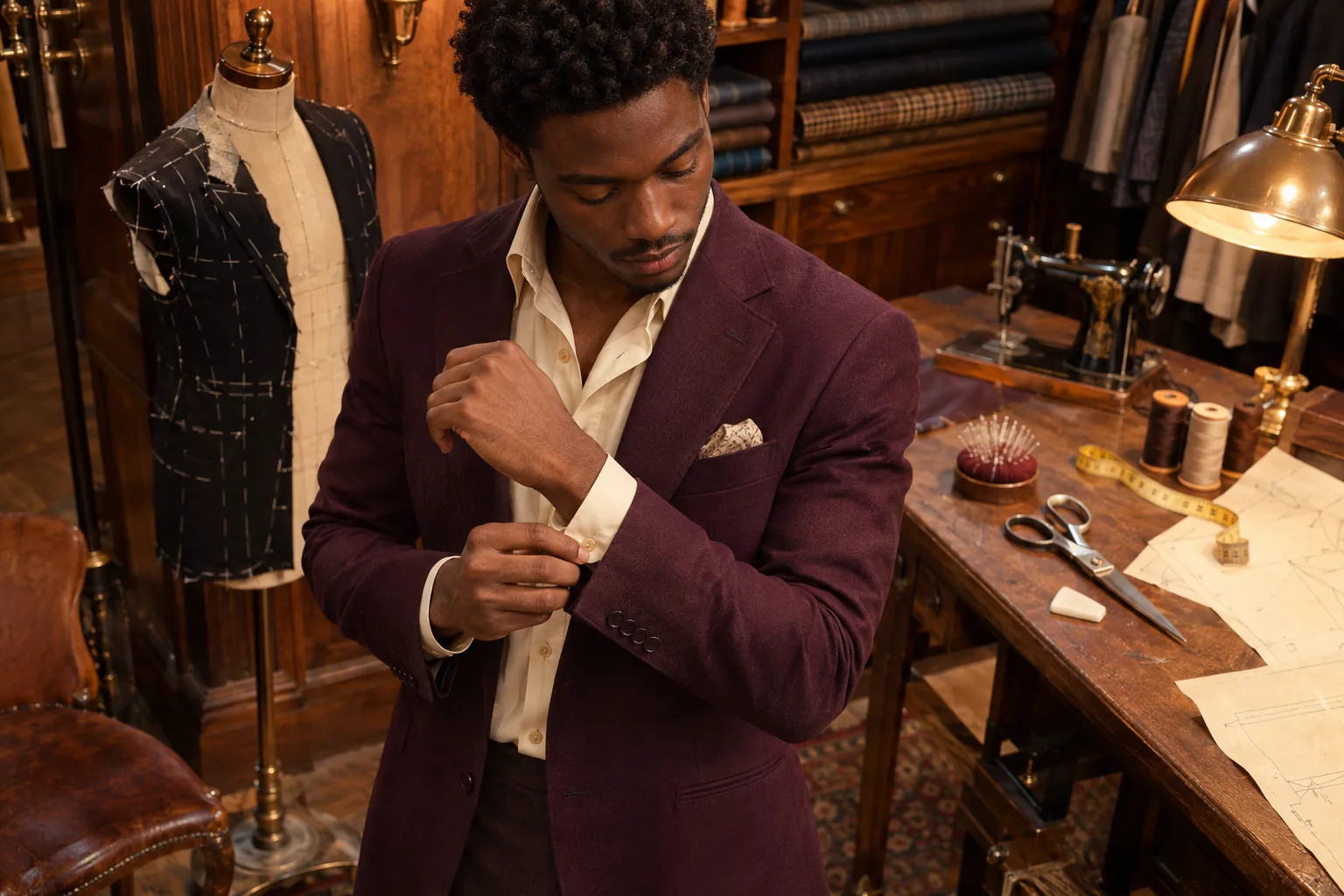
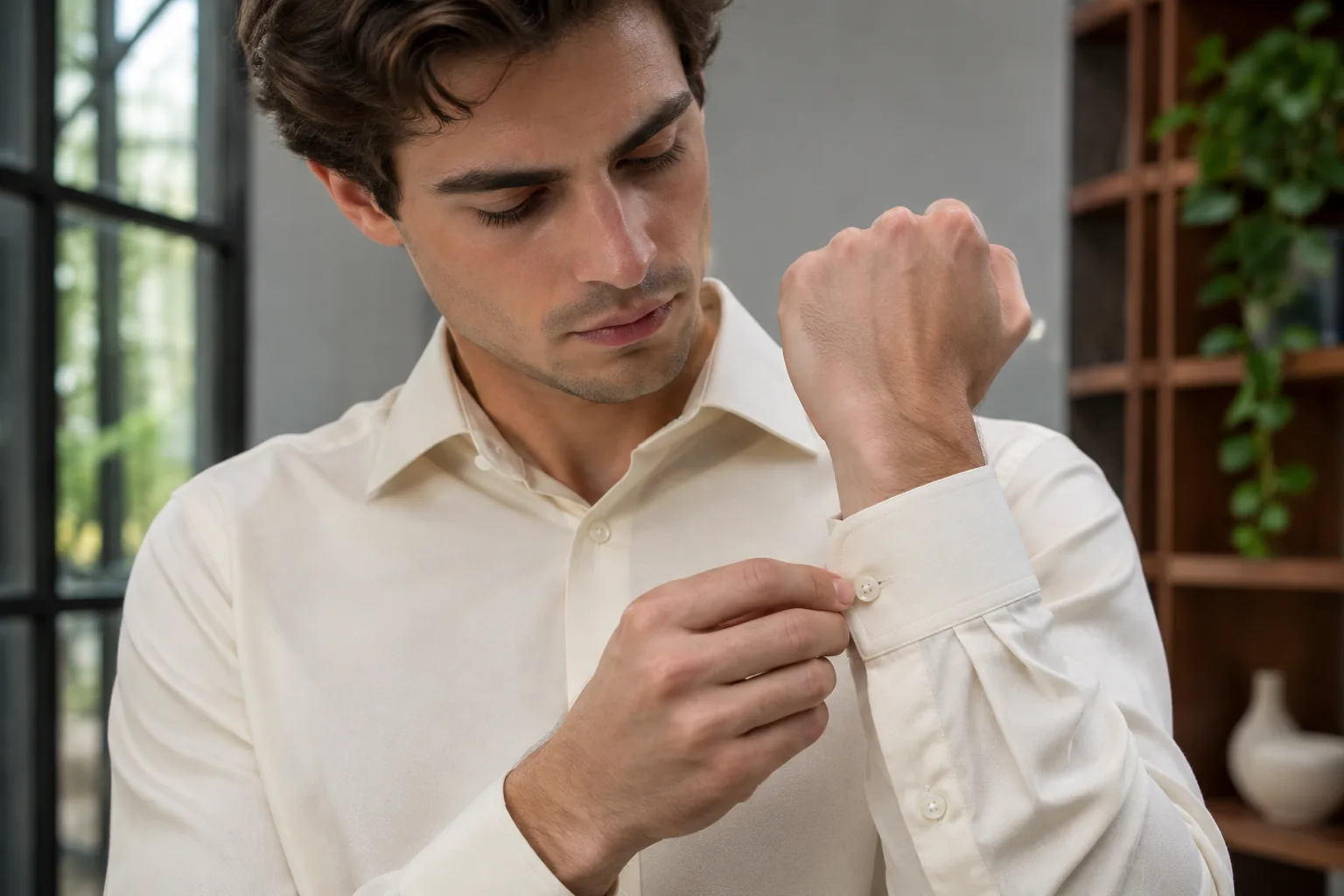
Choose a shirt you actually plan to wear. Fasten the cuff the way you normally do, including cufflinks if the shirt needs them. Let the sleeve settle on its own. Notice where the edge sits and whether the cuff can slip down onto your hand. A cuff that is too loose may slide farther down than expected even if the fabric length is comfortable. A very snug cuff can catch higher on the wrist. Changing how you fasten it can change what shows under the jacket.
Check each side separately. If you wear a watch, try the shirt with it. Some cuffs sit a little differently over a watch, and the difference can vanish when you take it off. If the shirt cuff routinely covers the base of your thumb, or slips back and exposes the wrist while you stand, see whether another shirt fits more predictably. The guide to dress shirt collar fit uses the same principle: examine how the piece sits under ordinary conditions before paying to change something else.
You can bring a second well-fitting shirt for comparison, but choose one primary shirt for the fitting. Two shirts can have different cuff thickness, shape and position. Asking a tailor to split the difference before you know which shirt you will wear makes the choice harder.
Look at the jacket with both arms at rest
Put the jacket on without pulling the shirt cuffs down afterward. Gently settle the shoulders and stand in a comfortable posture. Let your arms hang and check the wrists from the front and side. When you bend an elbow to look down at it, both sleeves move, so ask someone to take a quick picture or use a mirror that lets you see the whole outfit. Give the fabric a moment to settle after you move.
Tailoring guides often suggest showing a small amount of shirt cuff. Proper Cloth’s sleeve fit guide gives a range for its tailored jackets and notes that the shirt sleeve matters too. Treat a narrow strip as a starting point for this combination. A stripe across the shirt cuff, a darker jacket, or a thicker double cuff can make the same exposed strip look more prominent. Decide whether the result is comfortable and suits the way you want to wear the outfit.
Pay attention to whether both sides behave in the same way. If one cuff is hidden and the other is visible, remove the jacket and repeat the shirt check. If the difference stays with the shirt, show the tailor the shirt first. If it appears only when you put the jacket on, look for a sleeve catching at the shoulder or the shirt bunching inside the lining. A photo can help explain what you see, but it cannot tell you how much fabric a seam contains.

Try a few ordinary movements
Sit down, reach across a desk and hold your hand out as if you were greeting someone. The jacket sleeve will often travel back as the elbow bends. That movement is useful information, but it is a poor basis for deciding exactly where the hem should sit at rest. If you ask for enough length to hide the shirt cuff while reaching, the jacket may cover part of your hand when your arm hangs down again.
Notice whether the jacket allows the movements you expect to make. If you feel a pull high on the arm or across the shoulder, say where you feel it. A sleeve that seems short only when the shoulder pulls may need a different assessment from a sleeve that simply ends high at rest. Do not tug at the cuff to hide the pull before showing someone. Let them see the jacket move as you wear it.
Then return to your relaxed position and check whether the shirt and jacket come back to their earlier places. A fabric that snags on a watch or the lining can stay hitched up. You can repeat once without the watch or with the second shirt. Make only one change at a time, so you can tell which part of the combination changed.

Decide whether to adjust the shirt, jacket or neither
If the shirt sits well by itself and both jacket sleeves consistently cover it when you want a little cuff showing, the jacket is the first piece to discuss. If a different shirt solves the problem immediately, decide whether keeping the jacket for that shirt is practical. For a jacket that you wear with several shirts, test it with the two you use most often. The easiest solution may be a pairing that already works.
If the jacket cuff reaches where you want it but the shirt slides down your hand, changing the jacket would leave the original problem in place. Discuss the shirt cuff or shirt sleeve first. If the shirt sits high only because it is catching on the watch, tell the fitter that the watch is part of the outfit. Think about how the whole look behaves on a typical day, just as you would when deciding which layers to wear together to avoid static cling.
A small difference between the left and right sides does not automatically require an alteration. Wear the outfit for a few minutes and see if the result still bothers you when your attention is on the full silhouette. If you do want a change, describe it as a practical outcome. “I want the shirt cuff to stay visible when I’m standing” gives the fitter more information than “make both sleeves shorter.”
Bring the actual outfit and ask about the construction
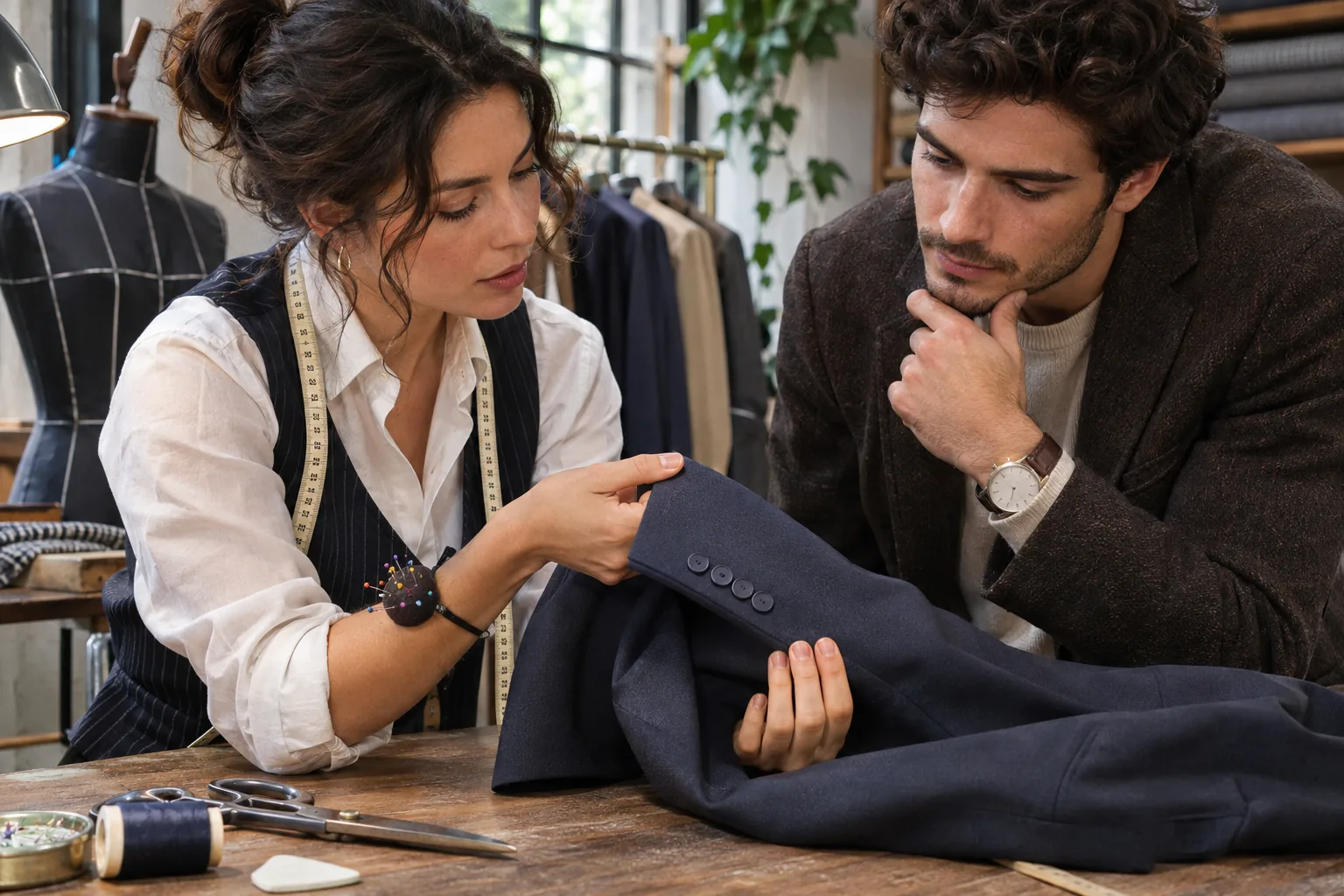
Wear or bring the shirt, cufflinks and watch that matter for the decision. Let the tailor see the outfit before you explain what you would like changed. Then stand naturally and check both wrists. A pinned fitting can show you where the new edge might sit. Check the result with your arms at rest first, then sit or reach if those movements are important for how you use the jacket.
Ask the tailor to look at the buttons, buttonholes, vent and lining. Decorative buttons and cut-through buttonholes present different constraints. A proposed change from the cuff can affect the spacing between the last button and the edge. Other approaches may require work higher up the sleeve and depend on how it is attached. If you want to lengthen a sleeve, the tailor needs to see whether there is enough cloth and lining to do it. Construction varies, so an instruction that worked for another jacket may not apply here.
Before agreeing to the work, confirm the proposed finished length on each side and which shirt you used as the reference. Ask what will happen to the buttons or vent if they are close to the new edge. A pinned comparison and a short explanation can also make it easier to decide whether to keep a ready-to-wear jacket or try another size before paying for an adjustment.