
Sweater pilling is the formation of small balls of fibre on the surface of a knit. Check the sweater in good light and distinguish attached pills from loose lint and pulled stitches. If the knit is sound and its care instructions allow it, test a suitable tool on a small, inconspicuous area with the garment flat. Leave a snag, hole or thinning patch alone and get advice about repair. Removing more material will not put a damaged stitch back in place.
A few pills under the arms or where a bag rests are common signs that parts of a sweater rub during wear. They may bother you on a smooth office knit and hardly matter on a textured weekend one. Before you do anything, decide which part you actually want to improve. Taking care of a small visible area can be a better choice than working over the whole garment.
Sweater pilling looks different from lint and snags
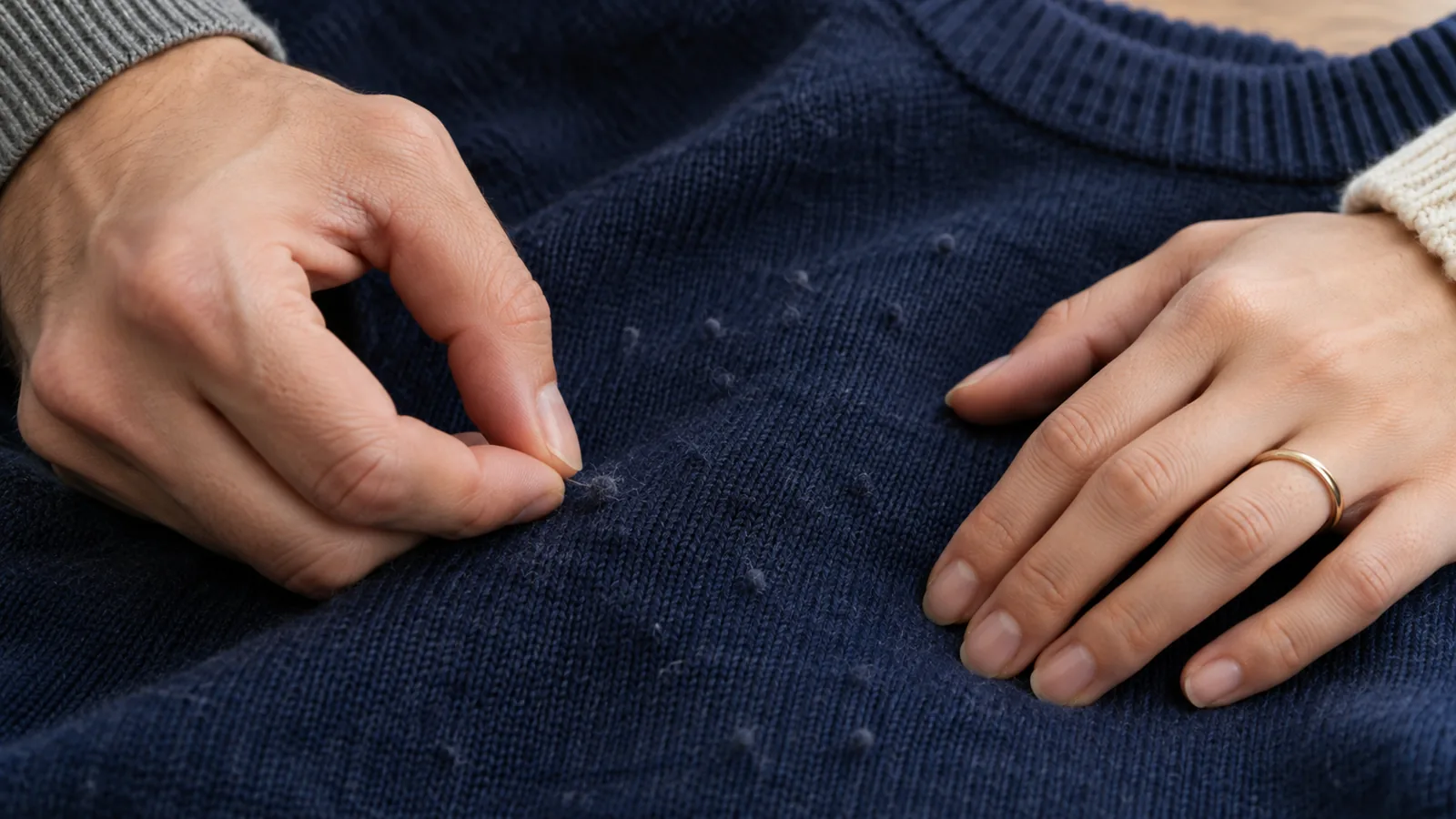
Look at the sweater on a table by a window. The small balls associated with pilling usually sit on top of the knit and remain attached to it. Loose lint can be a collection of fibres from another garment that rests on the surface. A snag often looks like a loop or a thread sticking out from the knit. Leave that loop alone and look around its base. If the stitches nearby appear to have pulled together, treating the area like ordinary fuzz can make the damage worse.
Check the places where the sweater has contact with something else. Compare the side under the arm with the centre of the front, or the shoulder under a bag strap with the opposite side. Woolmark’s pilling guide explains that rubbing during wear helps form pills, especially in areas that repeatedly touch other fabric. You do not need an exact fibre diagnosis to make a useful first observation. Seeing that the marks sit under one strap can help you decide what to change on the next wear.
Look at the sweater from a normal distance as well. A close photo makes every fibre visible and can turn a small patch into the main thing you see. If the surface is intact and you cannot see the pills when you wear the sweater, you may be happy to leave them alone. That is a reasonable outcome for a piece you wear often.
Read the label and check the surface before choosing a tool
The label helps establish how the maker expects the sweater to be cared for. Check it before washing, and look for any separate knit care instructions for the garment or tool. A tightly knitted sweater and one with airy stitches or a raised surface may both contain wool, yet they can respond differently to contact. Pay attention to the way the fabric is made as well as what fibres are listed.
Place the dry sweater on a clean, flat surface. Find a small place where the tool would touch the same kind of knit but where any change would be hard to see, such as near an inner side. Avoid seams, hems and details for the first test. Check whether the fabric already looks thin or whether a loop is standing proud. If the surface makes it hard to separate the pills from the knit, pause and ask the garment maker or someone who repairs knitwear.
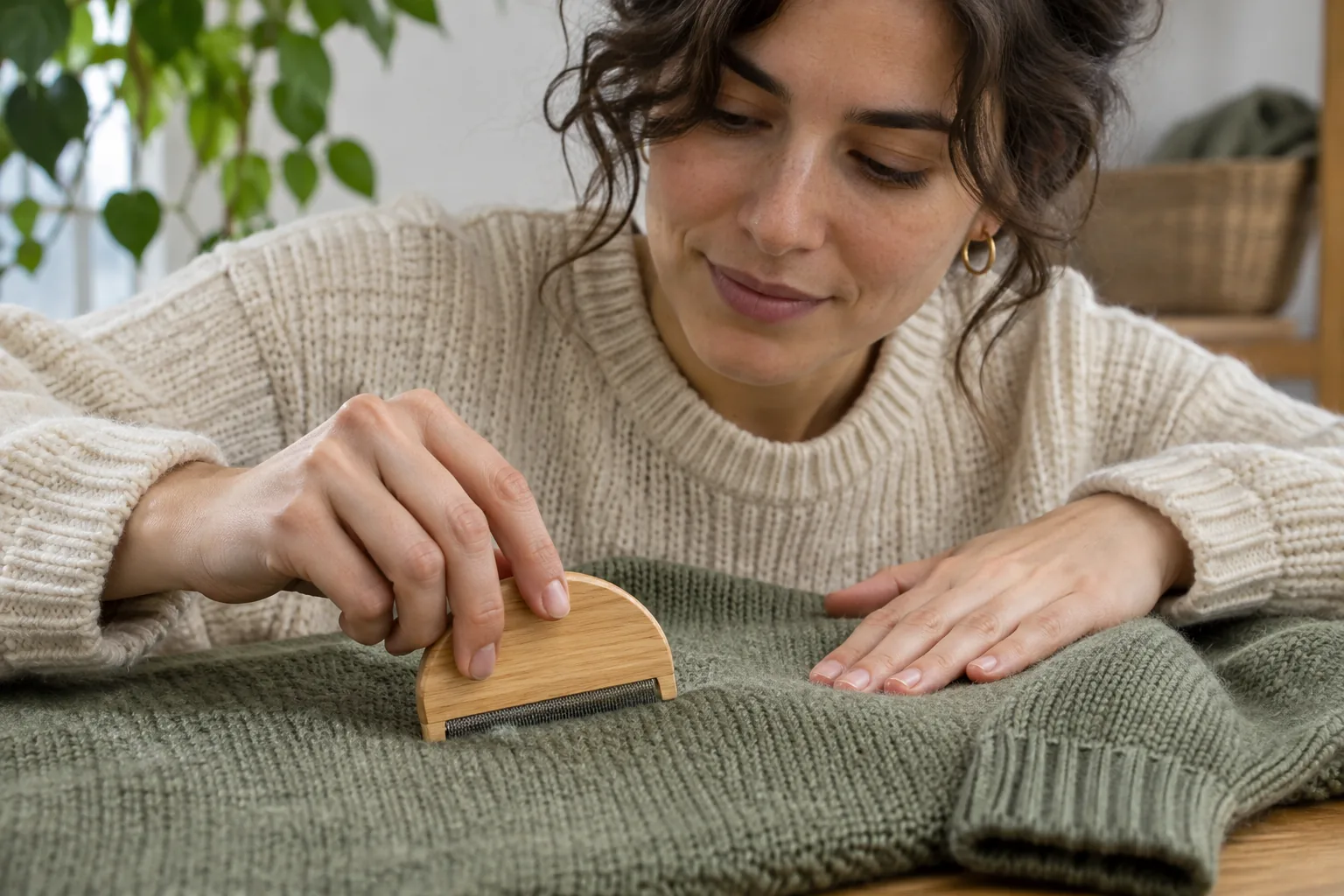
A manual comb or a fabric shaver may be suitable for some garments when its directions permit that material. The right choice depends on the fabric and on how you can support it. You do not need to improvise with an exposed blade. If you cannot find a care instruction that makes you comfortable using a tool, limiting friction and leaving the pills in place is a practical option.
Test one small area and stop to inspect it
Support the knit on the table without stretching it. If the tool has a guard or height setting, check its instructions and use the appropriate configuration before it touches the sweater. Make a short, light pass in a small area. Stop and look at the fabric in the same light. A few pills coming away while the knit still looks even is the kind of result you want to see before doing more. If you notice pulling, fresh loops or a change in surface texture, stop there.
Do not keep passing over the same patch to make it look like a new garment. Every pass gives the tool another chance to catch the fabric. If you continue, work in small sections and stay away from loose threads, ribbed edges, buttons and seams unless the tool instructions specifically support the area. A sleeve is easier to control when the rest of the sweater is supported rather than hanging from the table.
If there are only two or three pills and they are on a fragile part of the knit, ask whether removing them is worth the risk. Pay particular attention to a worn elbow or a line of stitches beside a seam. The main goal is a sweater you can keep wearing. You can stop after the area looks tidy at normal distance, even if tiny fibres remain under close inspection.
Reduce rubbing where it actually occurs
If the problem returns under a bag strap, try carrying the bag another way when it is convenient or choose a different outer layer for that combination. When the sides are affected where your arms move, consider what is underneath or over the knit. A rough lining or edge can repeatedly catch at one spot. You may see more benefit from changing that contact than from treating the sweater after every use.
For washing, follow the garment’s instructions and consider which items will rub against the knit in the load. If machine washing is allowed, a light knit does not have to share a load with heavy denim. Use the method the label permits and let the sweater dry as directed before working on the surface. Our guide to static cling in clothes covers a different surface problem, with the same useful habit of checking which materials are actually touching before changing your whole routine.
Try one change and see what happens after a few normal wears. If you swap the bag, change the wash and remove all visible pills at once, it is hard to tell which change mattered. You could start by leaving one small patch alone and checking whether the affected area grows. A short note about the strap or the jacket you wore gives you a reference without needing to photograph the sweater every time.

Know when the sweater needs a repair instead
A patch that feels thinner, a hole, or a loop with distorted stitches is a reason to stop and look for repair advice. Show the garment in good light and point out where you first noticed the problem. Mention any strap, hook or rough edge that might contact it. If there is a loose loop, avoid pulling it, trimming it or running a tool over it while you wait. Keep the area from rubbing against other pieces in the meantime.
The same approach helps when you inspect a sweater before buying it secondhand. Look at the elbows, sides and underarms in addition to the parts you see from the front. A few attached pills may be a manageable surface issue. A worn spot at a stress point needs a different decision. Look at the whole garment and ask if it fits your usual clothes, just as you would when checking jacket sleeve length with the shirt you actually plan to wear.