
Ear shape describes the visible contour and folds of the outer ear; it is not a synonym for size or how far an ear stands away from the head. Start by separating those questions before reading a face analysis or choosing a haircut. A photograph can support a modest description, not establish an ideal ear, a personality type or a person's worth. You may simply prefer a different hair frame, or decide that nothing needs changing.
This app-assisted guide starts with that real decision: am I noticing an outline, an apparent size difference, or how much of each ear the photograph exposes? MogRise can support a broader front-and-profile review and a short appearance plan. The ear observations here remain your own descriptive notes, not a claim that the app measures ear angles or diagnoses anatomy. Keep the task small enough to finish without a new cycle of repeated scoring.
Ear shape starts with three separate questions
The FISWG feature list, version 2.0 (2018), separates outer-ear shape, size, protrusion and positioning. This is forensic description, not an attractiveness scale or product endorsement. Its useful lesson here is limited: do not replace several different observations with one vague label.
Write a question before inspecting the image. Does the upper edge look rounded or more angular? Is the entire ear clearly visible, or does a lock of hair cover the lower part? Are you actually asking why one ear extends farther beyond the hair outline in this particular picture? Those are different tasks. A word such as large does not explain which one you mean. Start with the most ordinary description available and leave room for uncertainty. You do not need to memorize a catalog of ear types to discuss a hairstyle or understand a photograph.

Read the rim and lobe without assigning a type
Begin at the outer edge, often called the helix, and follow only the part that is visible. Notice whether hair hides the upper curve or whether a shadow makes one section appear sharper than the rest. Then look at the lower soft lobe. You can describe a rounded edge or a lobe that joins the cheek with little visible separation without turning either into a defect. An ordinary whole-face view is usually more useful for this task than repeatedly enlarging a tiny crop until its pixels become a false contour.
Do not infer intelligence, temperament, ancestry or health from the outline. Search suggestions sometimes connect ear shape to personality, but a suggested phrase is not evidence for that connection. If a category name forces you to ignore a visible detail, abandon the category. A simple note such as rounded upper edge, lower edge partly hidden is enough. The purpose is clearer language, not a permanent identity label. Keep both sides in your description when they are actually visible; do not invent a matching shape for the side the photograph does not show.
Separate visible size from distance from the head
Size asks about the ear itself; protrusion asks about its relationship to the head. A front photograph can show how much ear is visible beside the face, but that visible strip does not give you a dependable physical distance. Hair, head direction and the viewpoint also enter the picture. Do not convert a few screen pixels into a diagnosis or borrow a clinical cutoff from a surgical page. This guide deliberately provides no millimeter target, ideal angle or threshold that you are supposed to meet.
Try a useful language check: replace my ears are too big with the upper rim is more visible than I expected in this photo. The second statement identifies something you can inspect without pretending to know its cause. If the entire image shows one side of the head more strongly, settle the capture question first. The front-versus-profile guide explains that broader view choice. It is related background, not a reason to collect endless angles or combine several mismatched photographs into a supposed anatomical measurement.
Make one clear reference without pressing the ear
The FISWG capture guide, version 2.0 (2019), discusses even light, head orientation and unobstructed features. Its setting is identification photography, not beauty testing. Borrow only that narrow capture principle: make the feature visible rather than drawing conclusions from an obstruction.
Use an ordinary room with diffuse light and a camera positioned comfortably away from the face. Let the head rest level and face the camera without deliberately turning a favored side forward. Move loose hair clear if comfortable, but do not pull the ear toward the head, hold it outward or trap it under a tight band. Remove headphones for the reference if appropriate, then allow the ear to rest naturally. Take one usable frontal image and a relaxed side view if you still need context. Stop once the question is visible; a large gallery of nearly identical attempts adds work without necessarily resolving it.

Use a face analysis as context, not an ear verdict
If you already use MogRise, review the broader explanation from consistent front and profile photos before adding another priority. Ask whether the actual choice concerns side hair length, a familiar photo habit or no change at all. You can make that decision without an ear-specific score. Do not interpret a general harmony or FaceScore result as proof that a particular cartilage fold is wrong. If the image does not show the ear clearly, the honest outcome is that this observation cannot be made from that image.
MogRise is free to download with in-app purchases; that does not mean every analysis or unlimited use is free. This workflow does not require you to buy access to resolve a simple visibility question. Read any result as planning context and keep one controllable action, rather than treating each feature as a new correction project. For example, decide to discuss the hair around the ear at the next normal haircut. That is an illustrative plan, not an app test result or a claim that an algorithm has measured your ear.
Try a reversible hair frame rather than hiding by rule
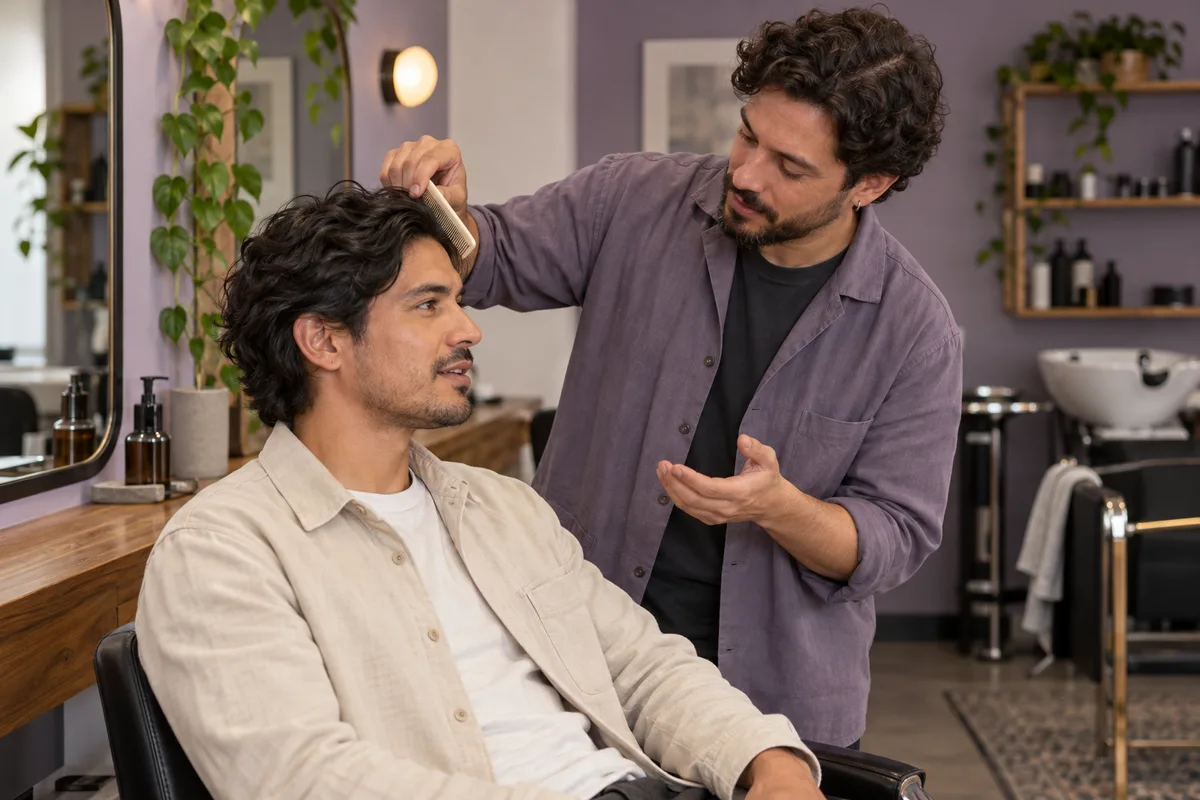
For a styling question, explain what you want to a barber or stylist in ordinary terms: more or less visible side hair, a softer edge around the ear, or an easy grow-out. Do not demand a haircut that makes the ears disappear from every angle. You may like them fully visible. Ask what the proposed length will look like between appointments and how much daily effort it requires. A reference image helps explain hair movement, but someone else's ear outline and growth direction are not a template your head must reproduce.
Compare only a comfortable temporary change, such as laying the existing side hair differently without pulling it tight. Keep the camera conditions familiar if you take a reference photo. You are comparing a frame, not proving that cartilage changed. Skip adhesive, pressure devices, forceful massage or a do-it-yourself alteration project. This is not a correction tutorial. If glasses or headphones press uncomfortably, address their fit with an appropriate professional rather than accepting discomfort as the cost of a more flattering photograph. Comfort belongs in the decision alongside appearance.
Compare observations, not a right and wrong side
Use the same descriptive questions for both ears instead of deciding in advance that one is the correct version. A difference in the visible top edge is not automatically a difference in physical size. One side may still be shaded or partly covered. If you cannot separate the feature from the image condition, leave the note unresolved. You do not owe every visible detail a numerical explanation, and a casual portrait is not a three-dimensional examination. Avoid drawing a ruler across an image merely because an online template supplies one.
Return to the full photograph before deciding whether the observation matters for everyday presentation. A close crop can make an incidental edge feel like the whole subject of the portrait. Ask whether your proposed action would actually help the real situation: a normal haircut conversation, a comfortable accessory fit or a clear profile image. If the action only creates another daily checking ritual, remove it from the plan. The goal is an understandable choice that leaves attention for the rest of your life, not a perfect archive of matching ear pictures.
Close the review with one ordinary next step
Finish with a short sentence you can use later: I want to see how a softer side-hair edge wears, or this was mostly a turned-head photograph and needs no styling change. If you keep a note, separate what was visible from what you inferred. Do not record a supposed defect as an established fact. The appearance-priority guide can help keep this small observation from displacing more useful routine decisions. No change is a legitimate result, especially when the question was prompted by an unfamiliar image rather than a practical problem.
This visual exercise does not assess hearing, explain a new swelling or injury, or advise on procedures. Seek qualified care for symptoms or a concerning new change instead of asking an image score to settle it. For an ordinary appearance question, put the photos away once the decision is clear. Keep your natural features out of a good-versus-bad hierarchy. A useful review gives you clearer words, a manageable action if you want one, and permission to stop looking for something else to fix.