

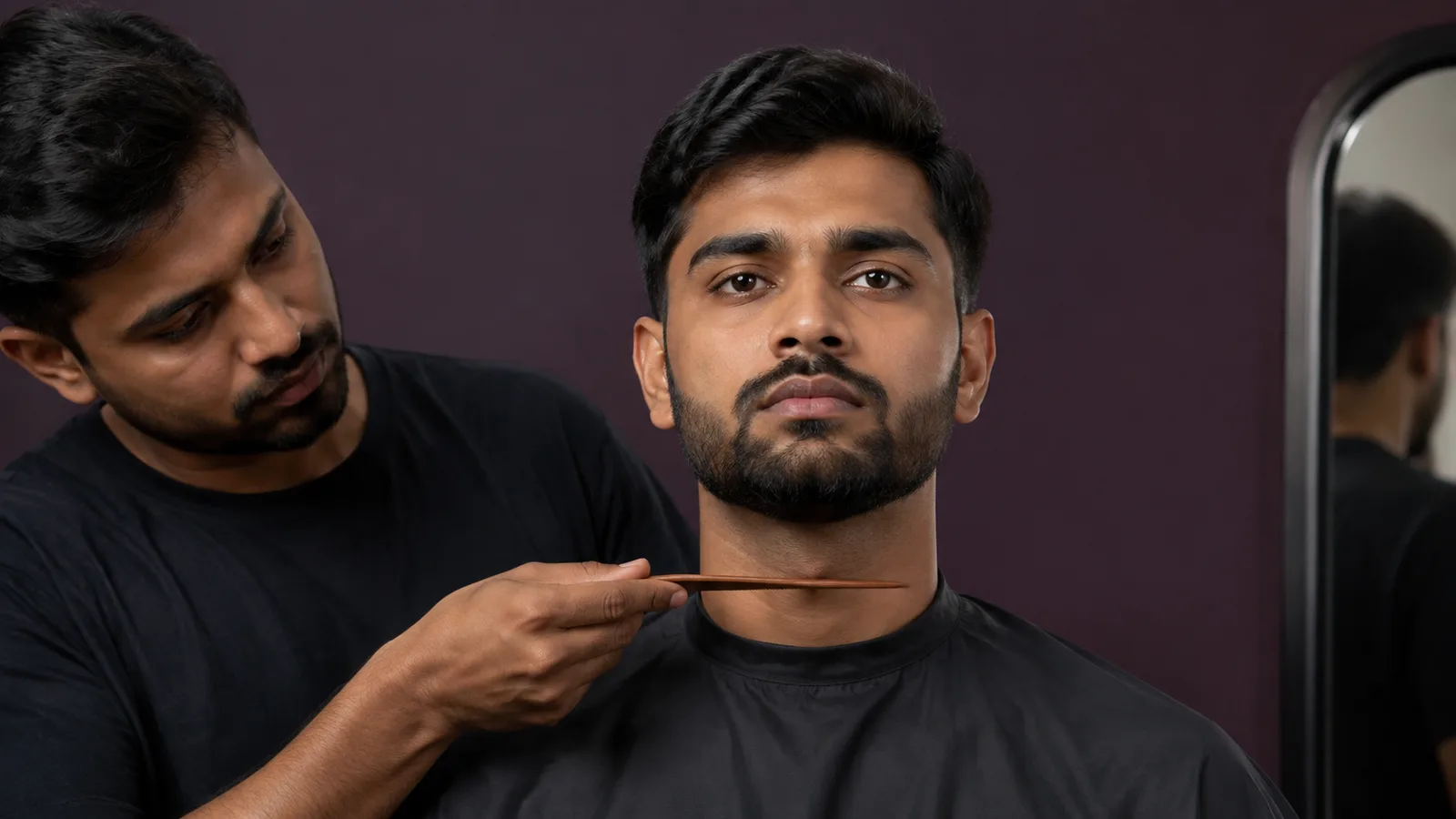
How to trim a beard neckline: keep your head level, find the natural transition where the underside of the jaw meets the neck, place the center conservatively above the Adam's apple, and connect it in a shallow U toward the area below each ear. Remove only the hair clearly beneath that boundary. Do not shave directly along the jawbone. Hair just under the jaw gives a short or medium beard much of its visible depth and support.
That position is a starting point, not an anatomical law. A three-day stubble line can sit cleaner and slightly higher than the foundation of a long beard. Neck length, growth pattern, density, collar height and the intended silhouette all change what looks natural. The safest first attempt is deliberately low and soft: you can move a line upward by a few millimetres, but you cannot restore beard hair after one enthusiastic pass.
How to trim a beard neckline: locate it with your head level
Stand in front of a mirror with shoulders relaxed and chin in its ordinary position. Tilting your head far back stretches the neck and makes the beard edge appear lower than it will when you look straight ahead. First observe rather than cut. Find the crease or transition where the horizontal underside of the jaw becomes the more vertical neck. For many people, the useful center sits near that transition and above the Adam's apple, not immediately behind the chin.
Use a finger-width rule only as a rough check. Advice online often mentions one or two fingers above the Adam's apple, but fingers, necks and beard designs differ. The stronger test is the level-head side view: the retained hair should support the beard below the jaw without creating a long isolated patch down the neck. If you cannot decide between two heights, keep the lower one for several days and inspect it with normal clothing.
From the center, imagine a shallow U that rises gently toward the points below the ears. Do not draw a steep V into the middle, and do not chase the lower edge of the jaw as if it were the neckline. A line that hugs the jaw often removes the beard's underside and makes the chin appear detached from the side panels. The curve can be slightly squarer or rounder according to the beard silhouette, but both sides should meet the rear boundary naturally.
Ask another person or a barber to confirm the position before a large change if the underside is hard to see. The existing guide to choosing a beard style for face shape can help you decide whether the overall silhouette should be rounder, straighter or longer. Use that as flexible framing rather than a rigid face-shape rule. Neckline placement serves the chosen beard; it should not force every beard into the same template.
Prepare the beard, skin and tools before defining the line
Trim a clean beard in the condition you normally wear it. For a short straight beard, that usually means fully dry, because wet hair stretches and may spring shorter after you finish. For a longer or curly beard, follow the routine that makes its normal shape visible, then comb gently in the natural direction. Do not pull every hair taut merely to make a severe edge. The line needs to work after the beard settles.
Choose a guarded trimmer for bulk, a narrow detailer only if you have steady control, a comb, a clean towel and suitable shaving lubricant if you plan to clear the remaining neck. Charge the tool and inspect the guard before it touches hair. Start with a longer setting than you think you need. A guard does not make a bad direction safe, but it limits how much one uncertain movement can remove.
Good light should reveal both sides without casting a hard shadow beneath the chin. Use a fixed wall mirror for head position and a small hand mirror only to check the side and underside. Constantly twisting between two mirrors can make each correction less reliable. Mark the center mentally, clear a tiny test area below it, return your chin to level and inspect. That pause is part of the technique, not wasted time.
The American Academy of Dermatology advises caring for the skin beneath facial hair, using shaving oil, cream or gel when trimming, and shaving the neck in the direction of growth to reduce irritation. It also recommends cleaning guards and storing razors dry. These habits do not determine the artistic height of a neckline, but they make repeated maintenance less harsh and reduce the temptation to run a dry blade over the same patch again and again.
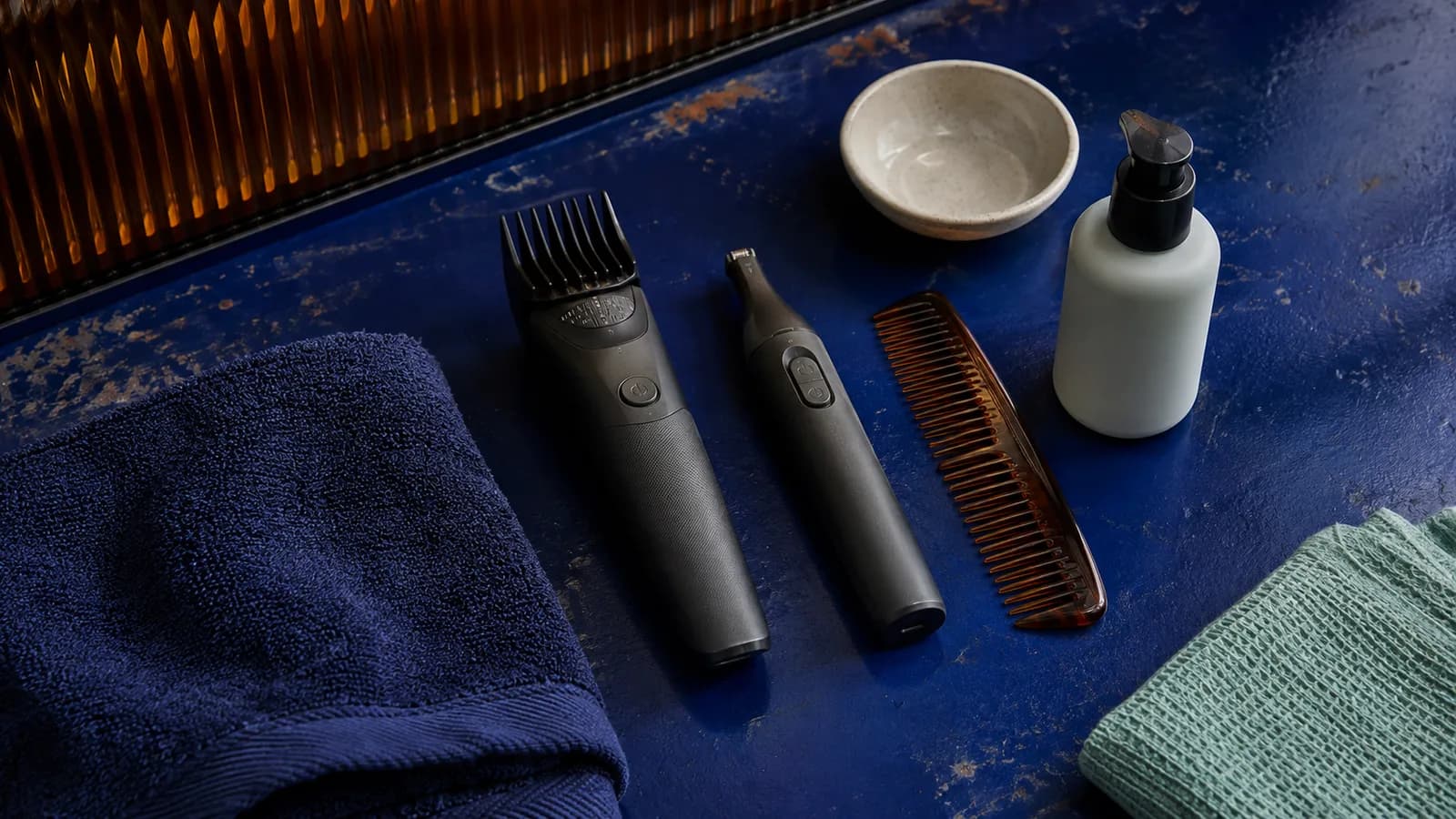
Create the center first, then connect the two sides
Begin in the center below your intended line and move the guarded trimmer downward, away from the beard. Clearing outward from the middle makes the boundary easier to read while keeping the main beard protected. Do not place the cutting edge on the final line and sweep sideways in one long motion. Small downward passes give you more opportunities to stop and reduce the chance of carving an accidental notch into the foundation.
Work from the center toward one side, then return to the center and repeat on the other. Use the same landmarks rather than trying to make the second side match a possibly mistaken first side. Near the rear corners, let the neckline meet the beard's back line below the ear. If the corner becomes a sharp upward diagonal, stop. A short beard usually needs a continuous lower boundary, not two disconnected panels pasted to the jaw.
Lower the chin and view the beard from a normal front angle after every small stage. The neckline itself should not dominate from the front; its job is to remove stray neck growth while keeping enough underside to carry the chin shape. Then check both profiles. Slight natural differences in growth are normal. Do not keep raising the fuller side simply because the sparse side begins a little higher. Balance the visible silhouette, not every individual follicle.
Once the position is right, decide how crisp the finish should be. A short boxed beard can use a defined edge, while a softer beard may look better with a narrow transition made by one longer guard above the clear neck. Avoid building a complex fade on the first attempt. Learn one stable boundary, photograph it and follow it during maintenance. Complexity is useful only when you can repeat it without slowly moving the line upward.
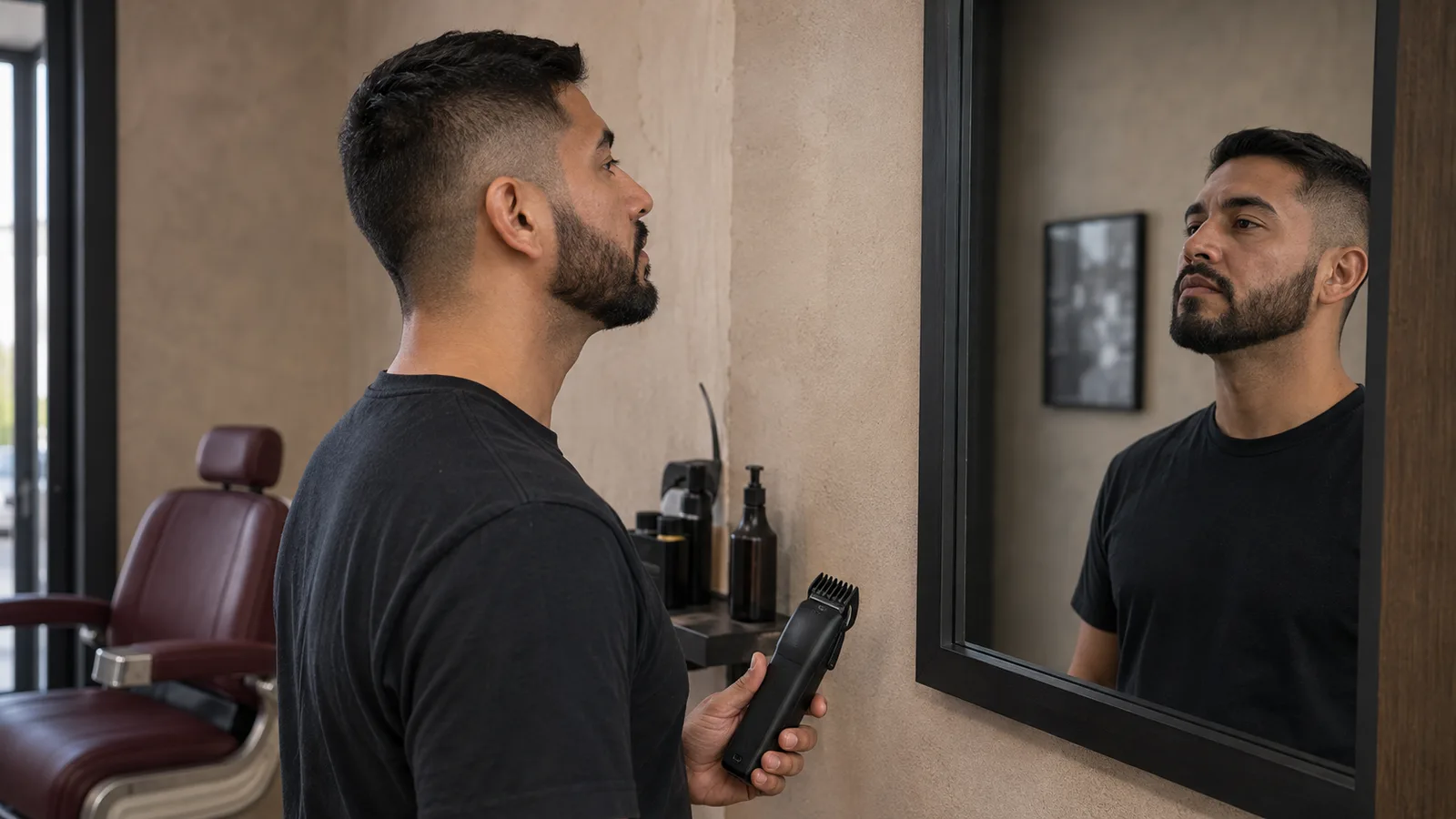
Adjust the method for stubble, short beards and long beards
With stubble, the entire design is visible, so a reasonably clean lower boundary can make growth look intentional. Keep the line soft enough that one day's regrowth does not look like failure. Since short stubble offers little underside volume, you may place the center slightly higher than for a fuller beard, but still avoid tracing directly under the jaw. Match the maintenance frequency to how much contrast you actually care about.
A short or medium boxed beard needs support below the chin. Preserve enough depth that the front connects to the sides in profile. If you trim the lower edge higher each week, the visible beard can become a narrow chin shelf even though the cheeks remain full. Save one level-head side photograph after a successful trim. At the next session, compare before cutting and restore the same line instead of inventing a new one.
A long beard changes the rule. Hair growing beneath the jaw helps support length, density and the lower silhouette, so the neckline may sit lower, remain soft or eventually stop being separately visible. The familiar two-finger shortcut can be too high for a beard that is meant to hang well below the chin. Comb the beard into its normal shape and check which hairs contribute to the finished outline before clearing anything.
During a deliberate grow-out, let the underside develop before deciding. Ask a barber who works with longer beards to distinguish loose neck growth from structural hair. Describe the final length and how often you are willing to shape it. Trimming for a short-beard photograph while growing a long beard removes material the later shape may need. The correct neckline is therefore partly a time-based decision, not merely a point on the neck.

Build a maintenance routine that does not creep upward
Photograph the finished neckline once from the front and both profiles with your head level. Use those images only as a placement record, not an appearance score. At each maintenance session, comb or settle the beard, find the old boundary and remove growth below it. Never start by deciding where the line should be again. Reusing stable landmarks prevents small weekly guesses from accumulating into a visibly higher neckline.
Choose a realistic interval. Someone who wants strong contrast with a short beard may clear the neck every few days; someone who accepts softer growth can wait longer. Full reshaping should be less frequent than simple cleanup. If you cannot see the boundary clearly, postpone rather than improvise while rushed. Good grooming should reduce morning friction, not create a deadline that makes every millimetre feel urgent.
Keep a short note with the guard length, center reference, corner position and skin response. That record is more useful than collecting dozens of inspiration images. The appearance-priority guide can help decide whether a perfectly crisp neckline deserves more time than haircut maintenance, skin comfort or another controllable basic. Your routine is successful when it is repeatable and proportionate, not when it produces the sharpest possible line.
The practical answer to how to trim a beard neckline is therefore conservative: locate the transition with your head level, draw a shallow curve on the neck, protect the hair under the jaw, clear below it in small passes and adapt the height to beard length. Stop before uncertainty turns into correction. One well-placed, comfortable boundary is enough; the beard does not need to become a daily test of symmetry or personal value.