
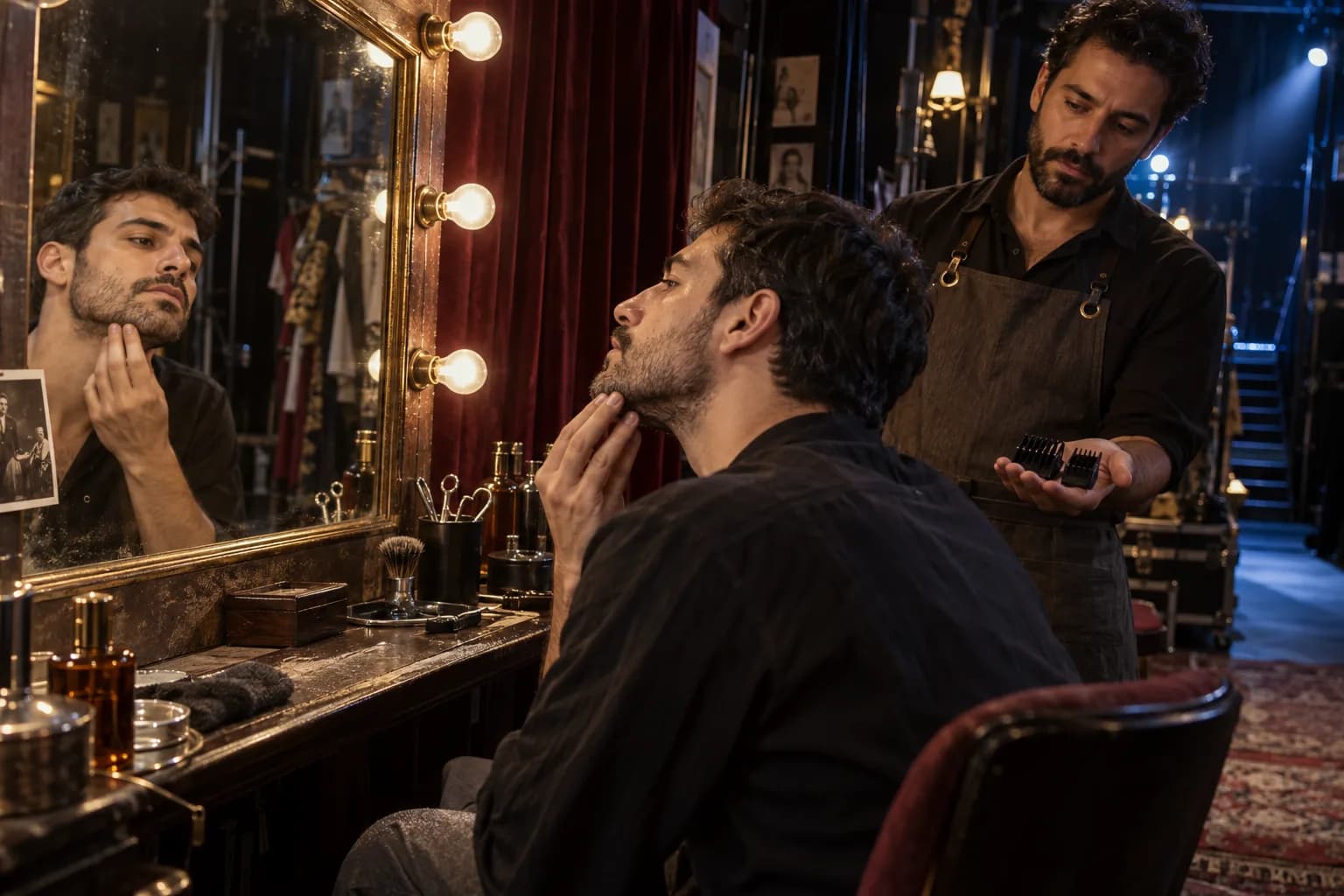
The best stubble length is the shortest guard that gives you the outline you want without highlighting gaps, irritating your skin or demanding upkeep you dislike. Start at 5 mm if you have enough growth, photograph the result, then try 3 mm and finally 1 mm on separate days. The labels are test settings, not universal beauty grades: the same guard can look quite different on two faces. A so-called three-day beard describes a look, not an exact number of days since your last shave.
Best stubble length begins with a measurable guard
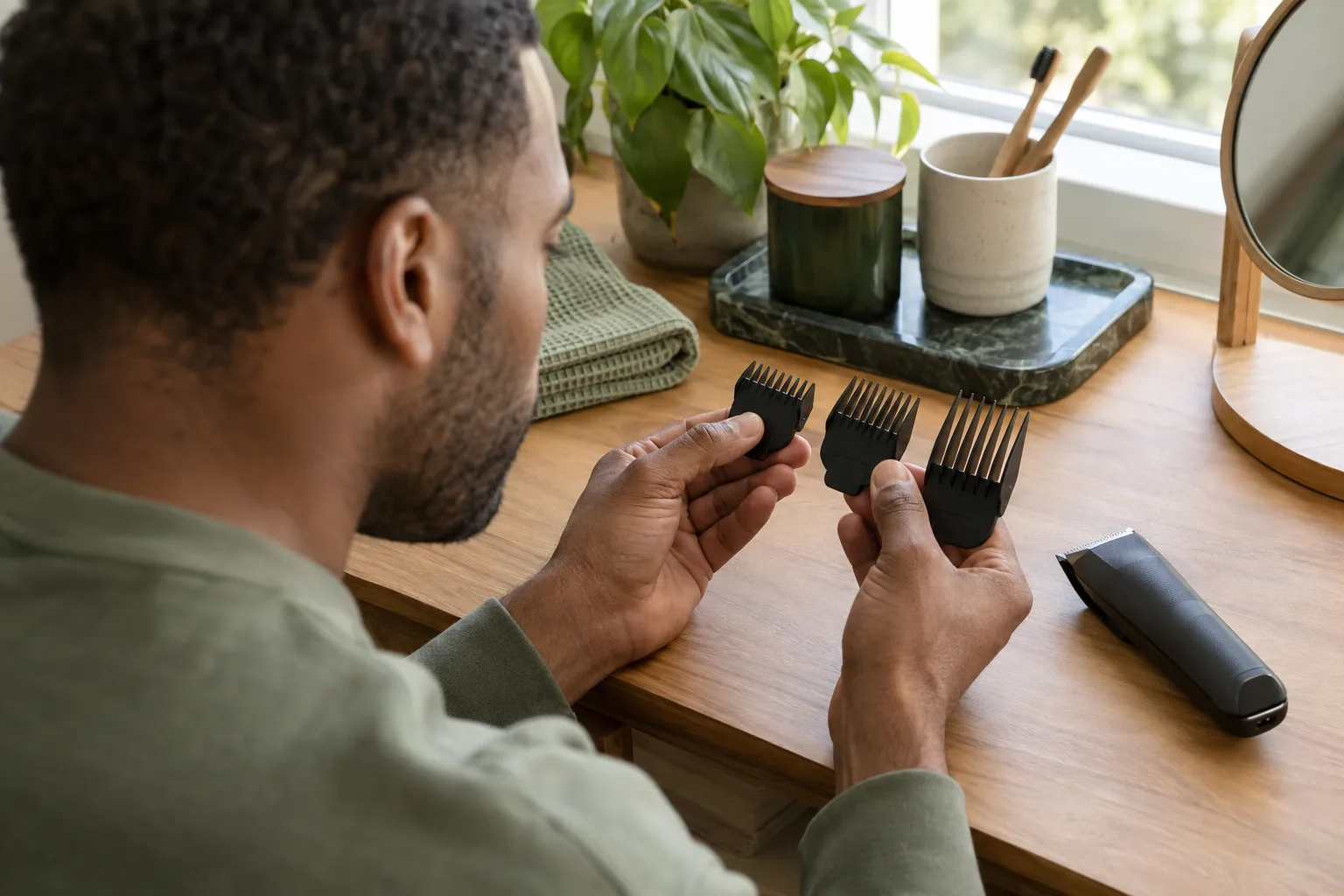
A trimmer setting is a practical starting point, not an exact promise of the hair length left on every part of your face. Different comb designs, blade pressure, hair direction and how flat the guard lies against the skin affect the result. Check the instruction markings on your own device, attach the guard firmly and begin with a longer setting than you think you need. You can always shorten facial hair later; you cannot restore a mistaken pass before it grows. Work on clean, dry hair unless your trimmer's instructions specify otherwise.
The common comparison of 1, 3 and 5 mm is useful because it spans a light shadow, more visible stubble and a compact short-beard effect. It does not prove that 3 mm is the ideal middle or that 5 mm is exactly five days of growth. Hair grows at different speeds and in different directions. Dark, dense hair can read strongly at 1 mm; lighter or uneven hair may need more length to create an apparent line. Treat the numbers as repeatable settings in your own experiment, not as a chart of attractiveness.
What 1 mm stubble can and cannot do
At about 1 mm, facial hair usually reads more like a shadow than a separate beard shape. It keeps much of the natural chin and jaw contour visible and can feel visually neat when your growth is fairly even. It also makes density differences more obvious. If the cheek area has sparse islands, a very short setting may make those islands look disconnected rather than intentionally minimal. There is no defect to fix; the useful question is whether you like that distribution at normal conversation distance, not when zooming into a phone photograph.
Why 3 mm is a useful middle test, not a rule
Around 3 mm, individual hairs often become visible as a deliberate field of stubble. The lower face can look more framed than at 1 mm while still leaving the shape of the cheeks and chin readable. For someone comparing clean-shaven and a short beard, that makes 3 mm a useful middle photograph. But the number alone will not give everybody a uniform three-day look. A thin moustache, a sparse cheek or a dense chin can create several visual lengths within the same guard setting. The growth pattern matters more than the marketing name.
Look from the front and from the side. Does the hair connect the moustache to the chin, or does a narrow gap create a contour you prefer to keep? Is the area under the chin tidy without an aggressively cut line? If one zone grows much denser, you can keep the overall setting simple and use a careful edge cleanup rather than sculpting every patch separately. Compare with the site's broader beard-by-face-shape guide only for silhouette ideas; this article answers a narrower question about maintained millimeters, not a permanent face-shape prescription.
When 5 mm reads as a short beard
At roughly 5 mm, hair can begin to form its own soft outline instead of merely tinting the skin beneath it. This may connect areas that looked isolated at 1 mm, although extra length does not create hairs where none grow. The chin and side profile may look fuller; the cheek line and moustache can carry more visual weight. If your goal is a visible beard with relatively modest length, five millimeters is a sensible test. If your growth is very dense, it may already look more like a compact beard than stubble.
Longer is not automatically more flattering or lower maintenance. A 5 mm result can require attention to stray hairs, the transition near the ears and the edge under the jaw. It may also feel softer or rougher depending on your hair and skin; do not promise yourself a sensation based on somebody else's photo. Wear the setting through a normal workday before judging it. Notice whether the outline works with your haircut and clothing, and whether you would willingly repeat the care that keeps it that way.
Use front and profile photos to decide, not a score
A mirror is helpful for trimming, but memory is poor at comparing a length worn on Monday with one worn a week later. Make one front photo and one side photo at eye level, at a comfortable distance, in the same broad daylight each time. Wear a similar top and keep the camera, expression and head posture stable. A close selfie can enlarge the nose and shorten the visible jaw, making the facial-hair outline look different for reasons unrelated to the guard. A level photograph helps you ask what the hair actually frames.
In the front view, look at cheek coverage, moustache connection and the width added near the jaw. In profile, examine chin fullness, the line below the jaw and how the beard meets the neck. Do not judge on a cropped lower-face image alone; see the full head and shoulders at normal size. MogRise can place clear front and profile observations in a wider appearance plan, but treat any analysis as context for choosing a reversible grooming experiment. If a FaceScore changes between two photographs, the image setup may be part of the explanation, not the beard length.

Trim conservatively and keep the border natural
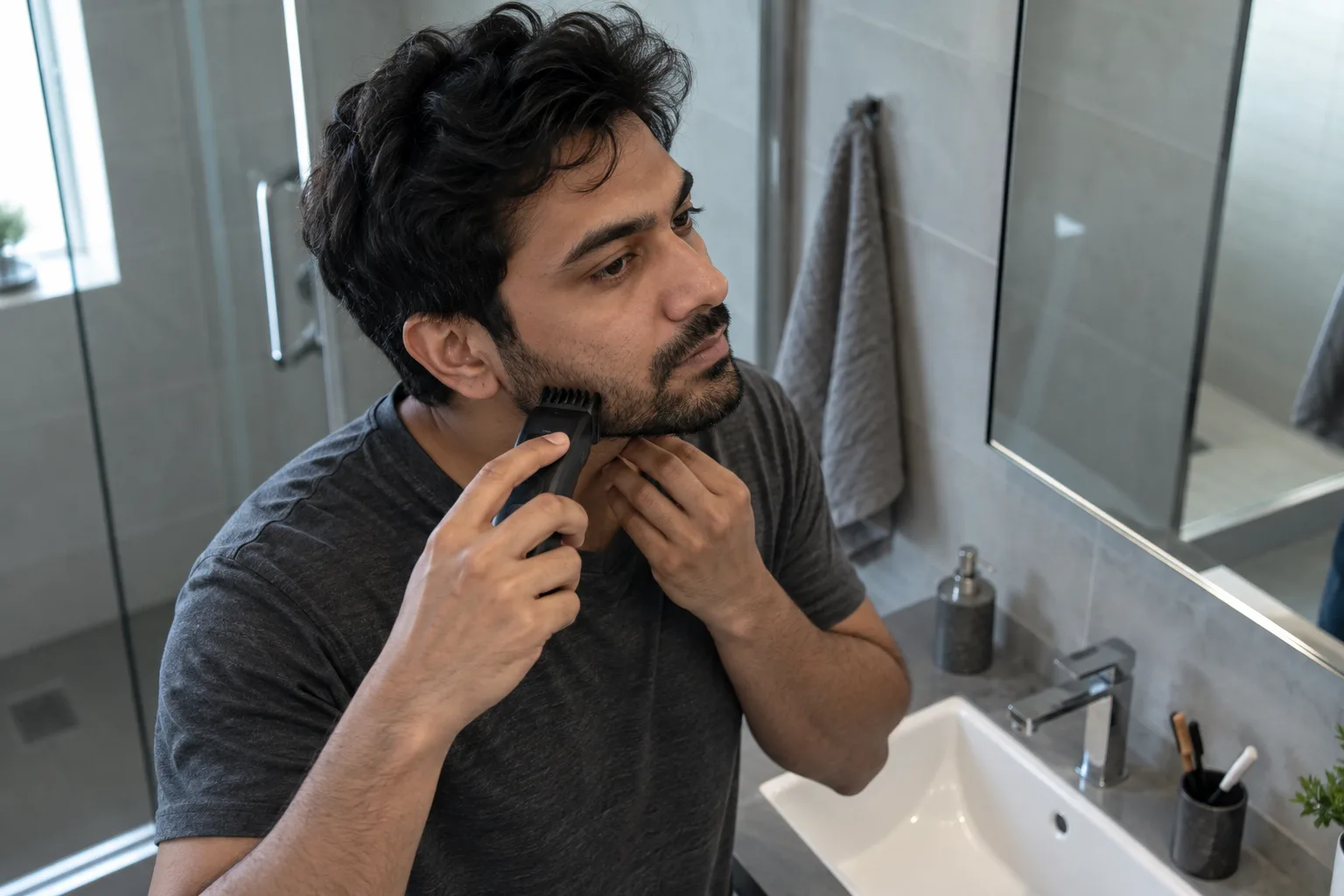
Begin with the longest guard in your shortlist. Move the trimmer slowly and evenly over the beard area, following the device's instructions; difficult directions may need a second gentle pass rather than more pressure. Comb or brush longer patches into their natural position first. Check the result under ordinary light before reducing the setting. If the sides and chin differ, resist the urge to chase perfect symmetry with progressively shorter passes. Minor left-right variation is normal, and overcorrecting often creates the very sharp patch you were trying to avoid.
Clean up only the edges that clearly look untidy to you. Keep the cheek border close to its natural growth line and avoid pushing the neck edge so high that the beard appears to float above the jaw. This is a style choice, not a fixed anatomical rule. If you use a razor on bare skin, soften the hair first, use a suitable shaving product and move with the direction of growth rather than scraping repeatedly. The American Academy of Dermatology's shaving guidance supports gentle, with-grain shaving to reduce irritation.
Skin comfort matters more than a crisp edge
Short facial hair does not remove the need to care for the skin beneath it. Wash the face and beard gently and use a moisturizer suited to your skin. The American Academy of Dermatology advises regular cleansing and moisturizing around beard hair, with attention to irritation from trimming or shaving. You do not need a complicated shelf of products to test a guard setting. A clean tool, gentle technique and a simple routine make it easier to tell whether the length itself feels comfortable.
If a very close neckline repeatedly produces bumps, consider leaving that region a little less sharply shaved or discussing persistent irritation with a dermatologist. Do not treat this article as a diagnosis or try to force a style through pain. Watch for tenderness, itching and rubbing where a collar meets the beard, especially during a long day. Comfort is part of the appearance decision because a look that requires constant scratching or extra shaving is unlikely to be a sustainable routine. A softer edge may be a better result than a photographically perfect one.
Run a fair two-week length comparison
Choose one setting, wear it for several ordinary days and write down three observations: how it looks in neutral light, how the skin feels and how much maintenance it takes. If you already have enough growth, start at 5 mm and move down later. If you are clean-shaven, allow sufficient growth before the first trim. Keep your haircut, camera setup and major styling choices steady during the test. Otherwise it becomes difficult to know whether you prefer the beard length or the new hair frame beside it.
Take no more than a front and profile photograph for each setting, with an optional everyday image if you want to see the beard in context. Do not compare one flattering evening portrait with a harsh midday selfie. Give each length time to become familiar; immediate novelty can feel better or worse without telling you much about normal wear. At the end, select the setting that passes all three tests rather than the one that wins a single close-up. You can also choose clean-shaven or a longer beard; the three test lengths are useful options, not a mandatory ladder.

Turn the result into one realistic grooming priority
An app-assisted check is most useful when it reduces a vague wish to 'look sharper' to one action you can sustain. In MogRise, begin with clear front and profile photographs and read any facial analysis as a description of the current image, not as a verdict about your worth. Decide whether the beard should preserve the jawline, add a little lower-face frame or simply look deliberately tidy. Then test the relevant guard setting in real life. The app can help organize the observation and a small priority list; it cannot guarantee which millimeter setting will look best on you.
Write a maintenance note that you can act on: for example, 'keep an even 3 mm setting, inspect the cheek edge twice a week, and avoid shaving the neck too closely.' Make the cadence fit how your own hair grows rather than a generic three-day rule. If the decision changes when you wear different glasses, a new haircut or work clothes, compare the whole presentation once, then settle on a routine. The first-priority guide can help keep beard care in proportion to other changes; no facial-hair setting deserves endless rescores.