

Canthal tilt is the direction of the line from the inner corner to the outer corner of an eye in a straight-on view. When the outer corner appears higher, the photographic tilt is called positive; level is neutral; lower is negative. Those labels describe a visible relationship, not health, personality, attractiveness or human worth. A small apparent difference can change with head position, camera angle, expression or an uncertain landmark, so one selfie cannot settle the question.
This guide gives you a calm way to identify the corners, check a usable portrait, understand what a measurement can and cannot tell you, and choose a reversible styling experiment only if you want one. It deliberately avoids an ideal number. The eye area has natural variation, and a photograph is a two-dimensional projection of a moving face. If a new eyelid change comes with pain, drooping or a vision concern, a qualified clinician—not an appearance score—is the right person to ask.
Canthal tilt starts with two eye-corner landmarks
The inner corner, or medial canthus, is where the eyelids meet beside the nose. The outer corner, or lateral canthus, is where they meet toward the temple. Imagine one line connecting those points on the same eye and another level reference across the face. If the outer point lies above the inner one in a well-aligned frontal photograph, the line rises outward. If it lies below, the line falls outward. Do this for each eye separately rather than joining the two outer corners into one unrelated measurement.
A peer-reviewed photogrammetric study defines canthal tilt using precisely those inner and outer landmarks and a horizontal reference. That research concerns clinical measurement of orbital position, not a rule for ranking faces. In ordinary photographs the exact corner can be partly hidden by lashes, a fold, a smile or a shadow. If you cannot confidently find both points, describe the impression in words instead of manufacturing a decimal angle. A cautious observation is more informative than false precision.

Positive, neutral and negative are directions, not grades
In this vocabulary positive simply means the outer corner is higher than the inner corner relative to the level reference. Neutral means the two are approximately level. Negative means the outer corner is lower. The adjectives sound evaluative, but here they are mathematical signs. A positive value is not proof of a better-looking eye, and a negative value does not mean a defect. Skin, eyelids, brows, expression and the rest of the face contribute to the impression people actually see.
Online diagrams often turn continuous variation into three crisp bins. Real photographs are not so tidy: a line near level can switch labels when the photo is rotated slightly or the corner is selected a pixel differently. Nor is there a universal angle that suits every ancestry, eye shape or individual preference. Research samples have their own age and population limits. Keep the categories descriptive and broad; if an apparent angle is slight, 'near level' may be the most honest description.
Take a photograph that can answer the narrow question
Use a relaxed, frontal image with the camera at approximately eye height and a comfortable distance. Face the lens, keep your head upright, look forward, and use broad, even light. Avoid a close wide-angle selfie, a dramatic three-quarter pose, a raised chin or a tilted crop. You do not need studio equipment. A friend standing several steps away or a stable timer setup is enough to create a more interpretable picture than an arm's-length phone shot.
Take only a few frames and pick the most neutral one. A small natural expression is fine, but a pronounced smile can move cheeks and eyelids. Do not stretch, sharpen or mirror one picture while leaving the comparison unedited. If the first frame is obviously slanted, retake it instead of trying to rescue it with an angle calculator. The goal is a fair visual reference, not the most flattering or least flattering image you can produce.

Camera level and head pitch can change the reading
The eyes are not flat marks painted on paper. Their inner and outer corners occupy different positions in three-dimensional space, and a camera projects them onto a plane. Raising or lowering the lens, tipping the chin or rotating the head can alter the visible relationship. A peer-reviewed study of periorbital photographs found that sagittal head tilt affected eye-area appearance and apparent intercanthal tilt. That supports a practical warning: a photograph can show a changed angle without the person's anatomy changing.
Check the door frame, shelf edge or other vertical reference in the scene. Ask whether the camera itself has rolled left or right. A small roll can make one eye seem more upward and the other more downward in the same image. Then check head pitch: do you see much more underside of chin or top of forehead than in a straight-on view? Retake one level image rather than comparing a series of contradictory selfies.

Do not confuse the corner line with overall eye shape
Canthal tilt describes one line, not the entire eye region. An almond-shaped eye, a hooded lid, a visible crease, lower-lid fullness or the way lashes point can change the visual impression without moving either anatomical corner. Eyebrow tails can create an upward sweep that your brain reads as part of the eye. Makeup or glasses can add another line. If you trace the brow or lash edge instead of the actual meeting points of the lids, you are answering a different question.
Step back from a cropped eye image and look at the whole face at normal viewing size. An extreme crop magnifies tiny measurement choices, removes expression and gives a technical label more emotional weight than it deserves. The guide to facial contrast explains another independent feature-to-skin relationship; contrast and corner position should not be combined into a homemade beauty formula. Describe the one feature you can see, then decide whether any practical choice follows at all.
A degree estimate is not a reliable self-worth metric
Some tools place dots on the corners and calculate an angle. The geometry is straightforward, but the input points and reference line may not be. In a photo, a one- or two-pixel landmark change, roll correction, resizing or eyelid shadow can matter when the visible difference is slight. An automated number can therefore look precise while resting on uncertain inputs. The number also has no built-in connection to attractiveness, social outcomes or character; those are separate claims requiring separate evidence.
If you use a tool, ask what it measured, whether both corners were visible, whether it corrected head position, and whether the result changes in a second neutral frame. If the output jumps, treat the measurement as unstable. Do not repeatedly scan in search of a preferred label. A one-time descriptive check is enough for a styling question; it is not an assessment of your value. Our broader explanation of why a FaceScore changes between photos applies to the same problem of unstable image conditions.
Compare both eyes without demanding perfect symmetry
Most faces have some left-right difference. One eye corner may sit slightly differently or an eyelid may open more in a particular expression. Reversed selfies can make a familiar face look unexpectedly uneven because you are used to the mirror orientation. None of that automatically signals a problem. Rather than chasing identical degree values, first see whether the difference persists in a normal, level photograph and in ordinary face-to-face life.
If the apparent mismatch exists only in one close selfie, change the photo conditions before interpreting your face. If it remains in several ordinary pictures but causes no functional concern, it may simply be part of your individual appearance. Sudden new drooping, pain, double vision or another vision change is different: seek medical advice rather than using a face-analysis article to diagnose it. This guide is about a visual landmark, not an eye-health examination.
Choose one reversible eye-area framing experiment
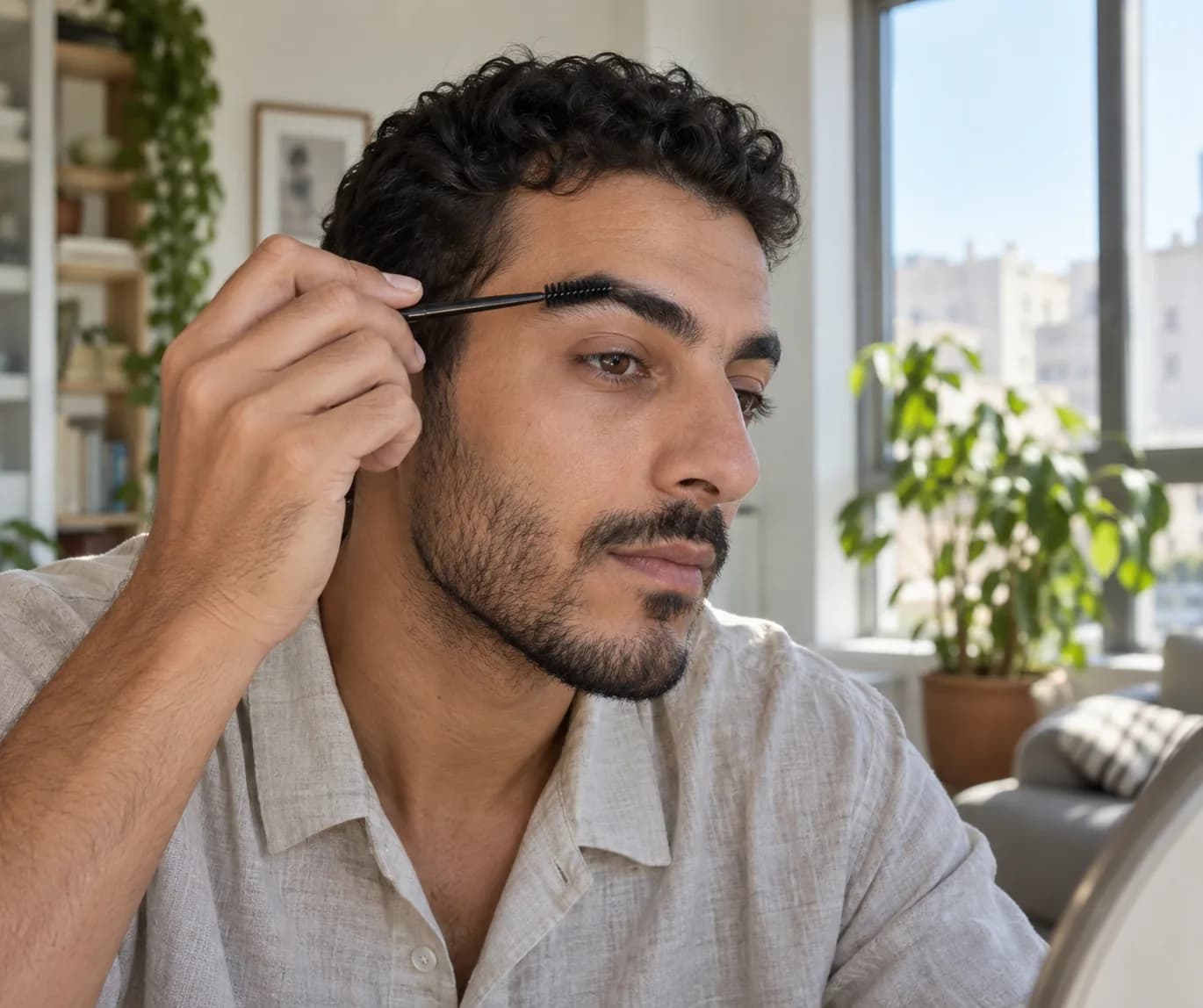
You do not have to change anything after learning the term. If you do want to test presentation, start around the eye rather than trying to alter the eye corner itself. A tidy but natural brow can change the frame; a different glasses shape can shift visible lines; softer, more even light can show the area more faithfully. Try one choice at a time and compare in the same lighting at normal viewing distance. The experiment should answer whether you like the look, not whether an angle crossed an imaginary threshold.
Avoid aggressive brow plucking, adhesive tricks that irritate skin or claims that exercises will permanently move canthal anatomy. A simple brush, conservative trim by someone experienced, or a reversible frame choice is enough to explore style. The image is of normal brow care, not a promised transformation. If the change makes you more comfortable in your everyday routine, keep it. If it does not, the neutral option is equally valid.
Keep face analysis in proportion to real life
The useful conclusion is modest: canthal tilt names a relationship between two eye-corner landmarks in a particular view. It can help you describe why two portraits read differently or communicate a styling preference. It cannot tell you how attractive, healthy, trustworthy or worthy a person is. An algorithm may bundle this line with many other inputs, but bundling does not turn a cultural preference into an objective law. No single feature needs to become a project.
Once you have a fair photograph and a plain-language observation, stop measuring. Spend more attention on choices you actually control and enjoy: comfortable eyewear, grooming that fits your day, or simply leaving your appearance alone. If image checking starts to take over your time or mood, step away from scoring content and talk with someone you trust. A label is useful only when it improves understanding; beyond that point it can become noise.