
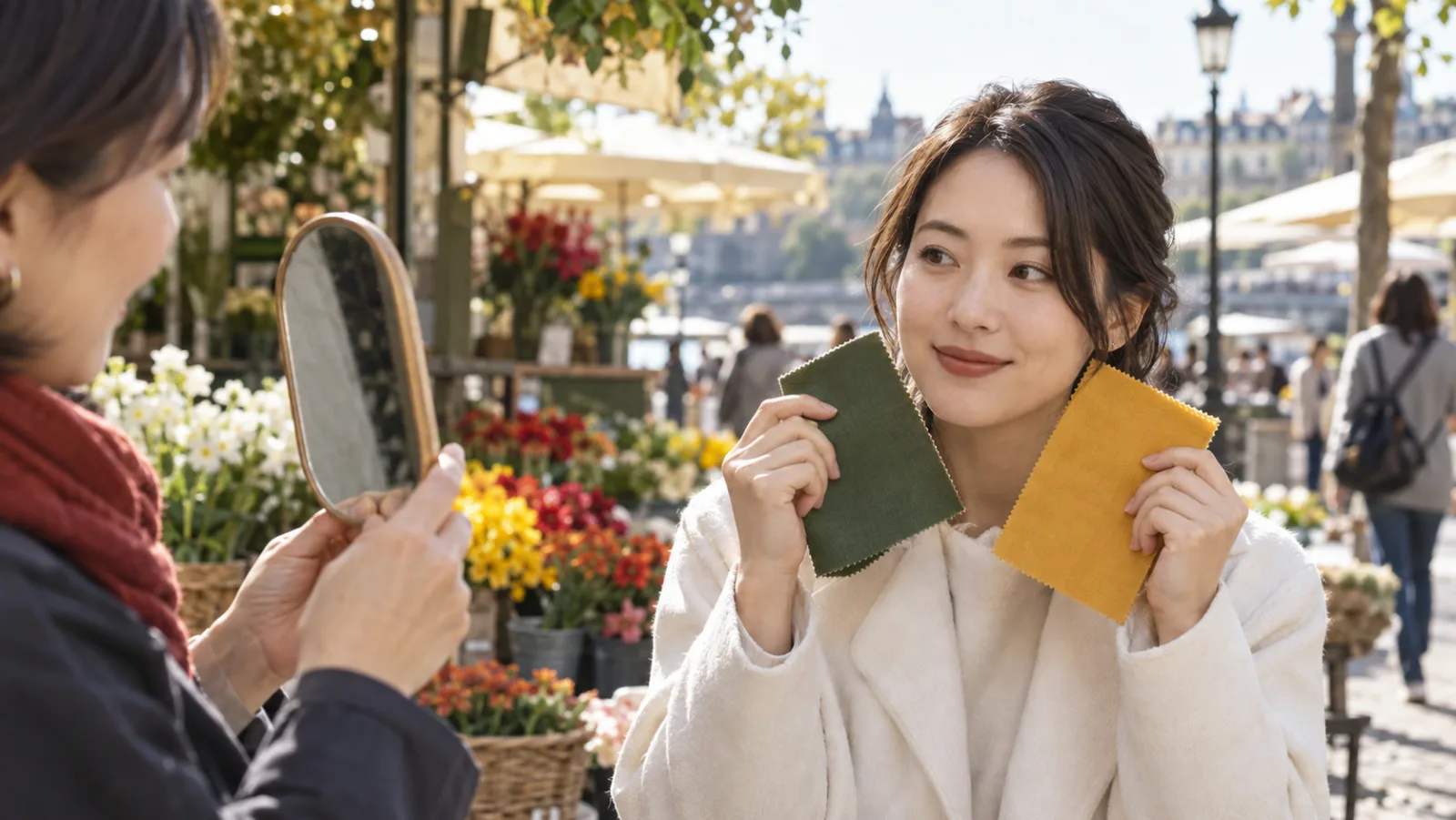
Facial contrast is the visible difference between the eyes, brows and lips and the surrounding skin. A darker brow against lighter nearby skin may look pronounced; similar tones may look softer. Neither pattern is inherently better. The useful question is whether light, grooming or color choices are changing how clearly your own features read, not whether your face meets somebody else's ideal.
You can explore it with a mirror and two ordinary photographs taken in comparable light. Keep the camera, distance and expression steady, then look at one region at a time. This guide explains what contrast is, what it is not, how research has examined it, and which low-risk changes you can test before making any lasting decision. No score is needed to get useful information.
Facial contrast is local, not one number
Contrast means that two adjacent areas differ in brightness, color or both. On a face, researchers often compare features with the skin immediately around them, rather than comparing one person's face with another person's. The brow can contrast with the forehead, the eye region with the upper cheek, and the lips with neighboring skin. Those relationships can differ within the same face. Someone might have clear brows and low lip contrast, so a single high-or-low label loses important detail.
It is also distinct from the contrast of an entire outfit. A dark jacket against a pale shirt may frame your face strongly without changing the physical difference between your eyebrow and skin. Hair color, facial hair, glasses and clothing can still affect what an observer notices first. That is why a practical review records both the local features and the wider frame, then asks which controllable element actually created the impression. Treat it as visual description, not a measure of human worth.
What the research can and cannot tell you
Facial-contrast research has tested how altering feature-to-skin differences changes impressions in specific photographs and participant groups. A paper available through the National Library of Medicine discusses cosmetics and facial contrast; a Japanese study examines feature contrast and impressions in its own setting. These works support the idea that contrast can matter perceptually. They do not establish a universal target for every age, skin tone, gender, culture or camera condition, nor do they prove that increasing every feature's contrast improves a person's appearance.
Be careful with simplified social-media rules derived from these studies. Experimental images can isolate one visual cue in a way ordinary life does not. A real conversation includes expression, movement, grooming, lighting and personal taste. The participants and image sets may not represent you. Read the study question and sample before applying a result, and distinguish an average group impression from your own preference. The safest use of the evidence is to justify a reversible experiment, not to assign a permanent rating.
Make one fair observation before changing anything
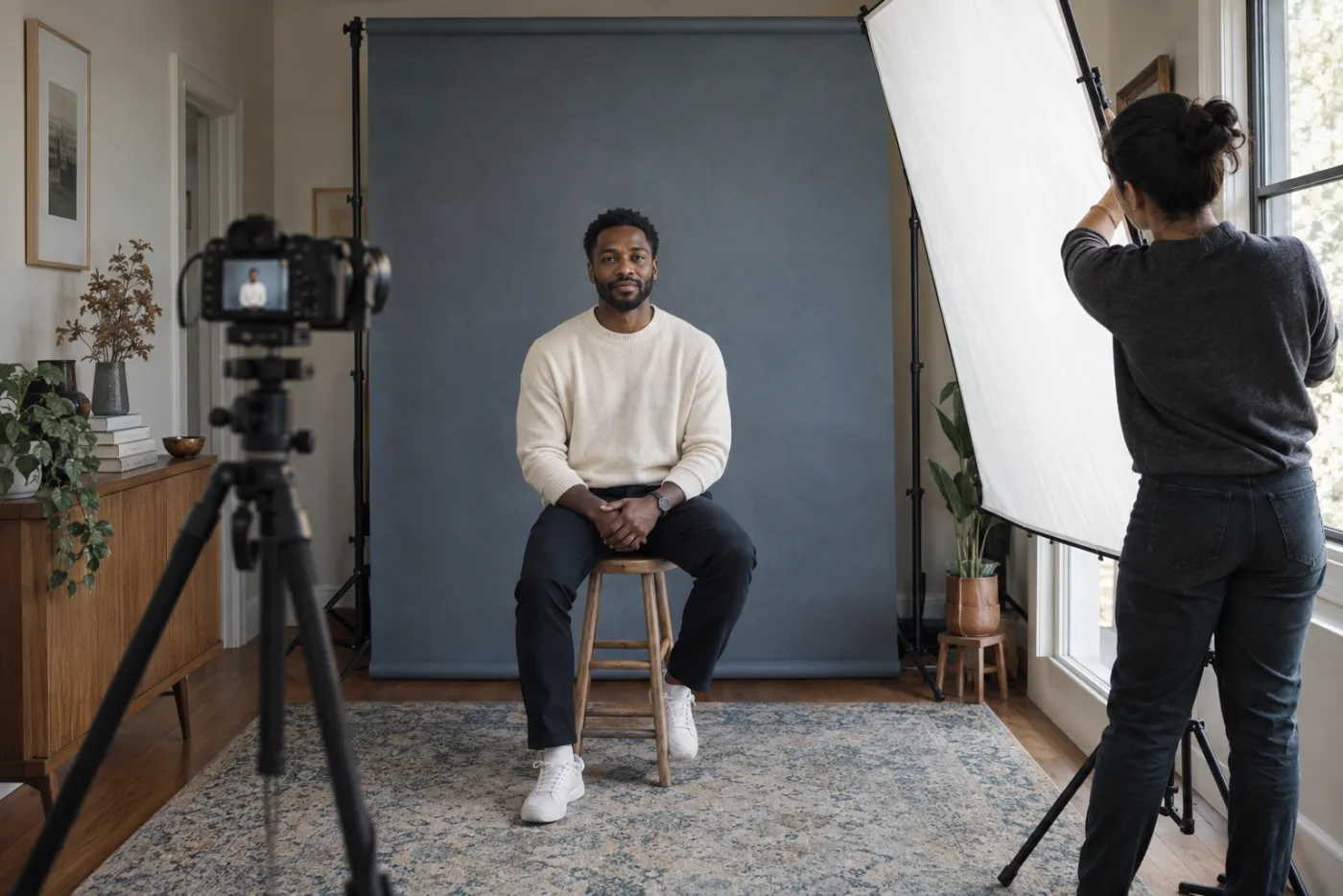
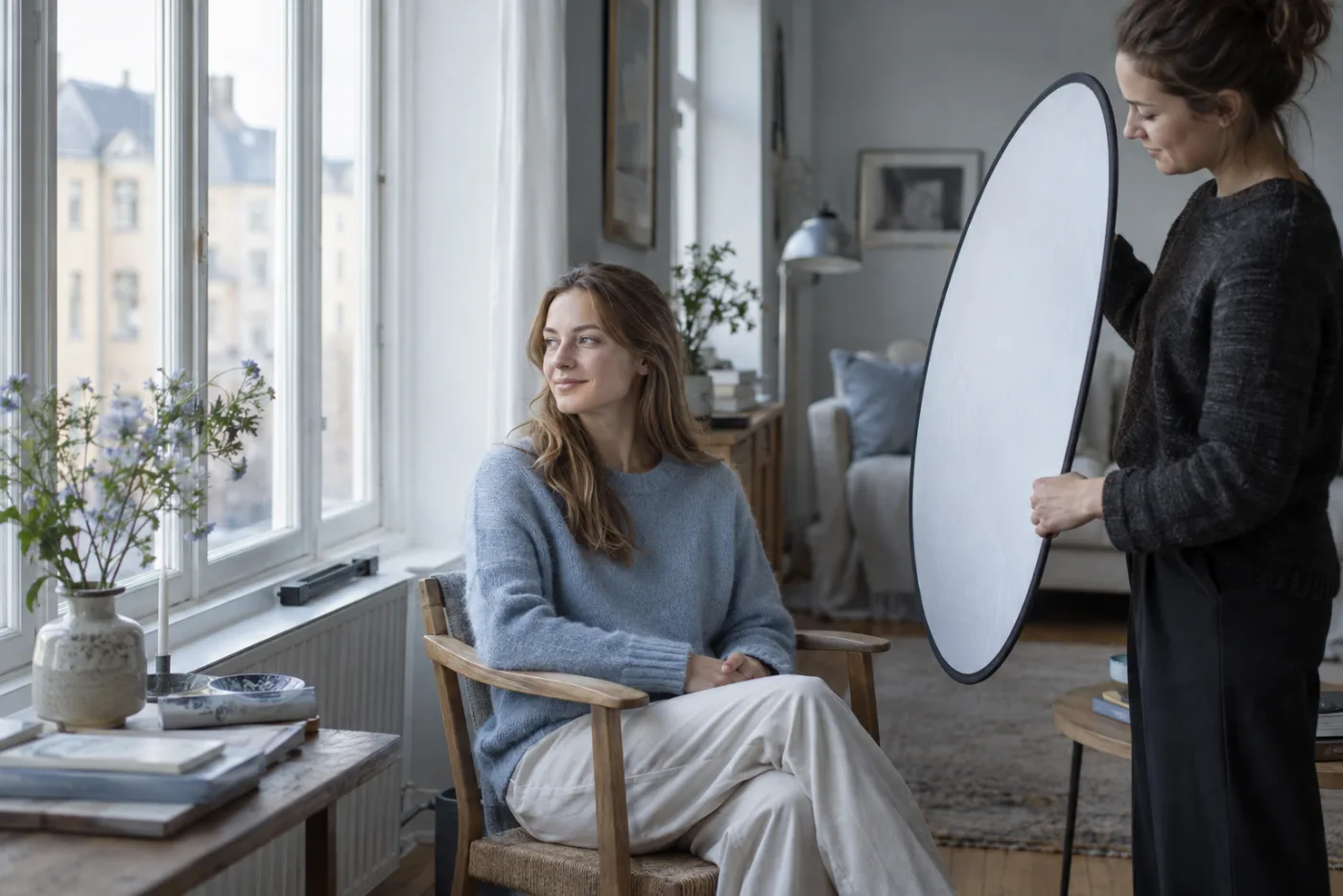
Stand near a large window when daylight is even, or use a broad, diffused indoor source. Put the camera roughly at eye level and about an arm's length or more away. Face forward with a relaxed expression. Move bright colored objects away from your cheeks so reflected color does not tint the skin. Avoid a beauty filter, heavy portrait blur or aggressive exposure correction. Those effects can erase the fine boundaries you are trying to observe.
Take one normal-color photo and, if helpful, look at a copy in grayscale. Grayscale can make brightness differences easier to notice, but it removes hue, which is also part of appearance. Do not use a grayscale image as a final verdict. Look at normal viewing size, not a zoomed crop of pores or eyelids. Note whether the brow edges, eye region and lip border are distinct under this one setup. Then put the camera away for a while; repeated checking usually adds anxiety rather than precision.
Read the brow and eye region separately
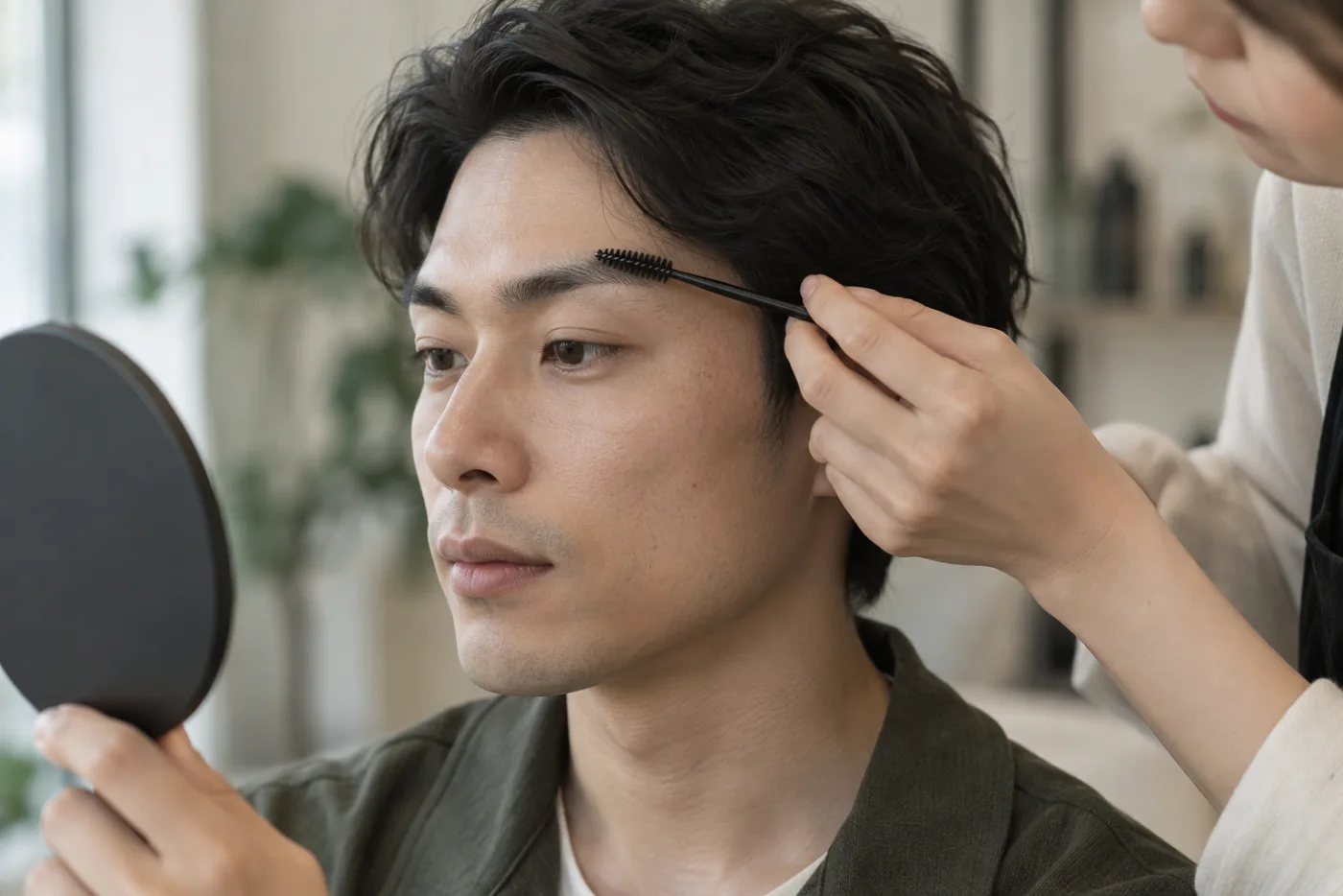
Brows affect the upper frame of the face. Look for the shape of the brow against the forehead and upper eyelid, not just the darkness of individual hairs. A sparse brow may appear less defined even when its hairs are dark; a full brow may look clear with a gentler color difference. The whites of the eyes, iris, lashes and surrounding skin create several overlapping contrasts. Trying to compress all of that into one eye-contrast score hides the very details that make an observation useful.
If you want more definition, first try brushing existing brow hairs into place or lightly tidying stray hairs. Do not overpluck to chase a graphic line; removal is not instantly reversible. A subtle change in eyewear frame or hairstyle may shift the visual frame without touching the brow at all. Our eyebrow grooming guide offers a measured way to work with your natural shape. Record whether the result looks clearer in ordinary daylight, not just under bathroom lighting or a phone filter.
Lip and skin contrast need context
The lip border may look sharp in one light and soft in another. Dryness, a shiny balm, a warm light source or a camera's color processing can alter the apparent boundary without altering your underlying features. Skin is not one flat color either. Freckles, natural pigmentation, redness and shadows all sit beside the mouth. Compare what you see in normal color and comfortable light before deciding that a border needs to be stronger or weaker.
Simple care often matters more than adding color. A neutral moisturizer or balm can change texture and shine; it is not a promise to increase contrast. For people who enjoy cosmetics, a sheer product can be a reversible experiment, but a matching shade is a personal style choice rather than a corrective requirement. If you have a persistent skin or lip concern, seek qualified care instead of diagnosing it through a contrast photo. This article is about visual presentation, not medical assessment.
Lighting can reverse your first impression
Overhead light deepens the eye sockets and casts a shadow beneath the brow. Strong side light creates one dark half and one bright half of the face. Backlighting can wash out an entire face when the phone exposes for a window. A phone may also increase local contrast automatically. Each of these can make you think a feature itself changed. In reality the recording conditions changed, and different cameras may process the same scene differently.
To test the lighting effect, take two pictures minutes apart without changing grooming. Use the same camera and distance, one in even window light and one under the light that originally worried you. Compare both at normal size. If the impression changes substantially, treat the photograph as an unreliable baseline. Our guide to why face scores change between photos explains the broader camera problem. The goal is not to find the most flattering light; it is to avoid making decisions from a distorted one.
Separate facial contrast from color analysis
Personal color analysis often asks whether a person prefers high- or low-contrast clothing combinations. That is related to presentation but not identical to facial contrast in research. A dark garment near the face may make the eyes seem more prominent; a muted garment may let the whole face read more softly. The best choice can depend on the garment's hue, texture, neckline, hair and the room's light. There is no reliable universal equation that maps brow darkness to a mandatory wardrobe palette.
Try two plain pieces you already own, one visually stronger and one softer, in the same location. Hold each beneath the chin rather than covering half the face. Look for whether your attention goes first to the garment or to your expression, and whether the color casts an unwanted tint. Ask a trusted person what they notice, without suggesting the answer. Keep the test playful and reversible. A shirt costs nothing to swap; a permanent change to hair or skin deserves a much higher evidentiary bar.

Use a small, reversible decision ladder
Start by naming the effect you want: clearer brow framing, a softer overall impression, or photos that reflect your everyday appearance. Then change one variable at a time. First fix the light and camera setup. Next try grooming the hair or brows you already have. Then test clothing or a glasses frame. Only after repeated, comfortable real-world observations should you consider higher-maintenance choices such as a new hair color. A change that is easy to undo is better suited to uncertain evidence.
Keep each trial for a normal day rather than a few seconds in the mirror. Note whether it feels like your style and whether the maintenance fits. Ask if the change solved the original problem or merely made a photograph more dramatic. The what-to-optimize framework can help sort impact, control and effort across appearance choices. If you are tempted to chase a numerical result, pause: contrast is one visual relationship among many, and neither a number nor an algorithm can define a person's value.
Common mistakes in a facial contrast check
The first mistake is comparing photographs from different days, cameras or lighting and treating the difference as anatomy. The second is letting an automatic filter sharpen the iris, smooth skin or darken brows without noticing. The third is borrowing a contrast target from a study group or influencer and assuming it applies to everyone. The fourth is looking so closely at a single feature that you stop seeing the entire face, expression and style. Each mistake turns a potentially useful observation into an overconfident conclusion.
The practical answer: clarity without a verdict
Facial contrast tells you how distinct facial features appear beside neighboring skin under particular conditions. It can help explain why an eyebrow shape, a shirt color or a photo light changes the impression of a face. It does not tell you your worth, provide a universal beauty target or justify an irreversible intervention. A thoughtful reading stays local to the feature, checks the lighting and respects the limits of the research.
For an everyday experiment, take one even-light reference photo, observe brows, eyes and lips separately, and try one reversible styling choice. Recheck in a week if the choice still matters to you. If not, let it go. The result you want is not a higher contrast score; it is a clearer understanding of what your own style and photography are doing, with enough perspective to make the next decision calmly.