
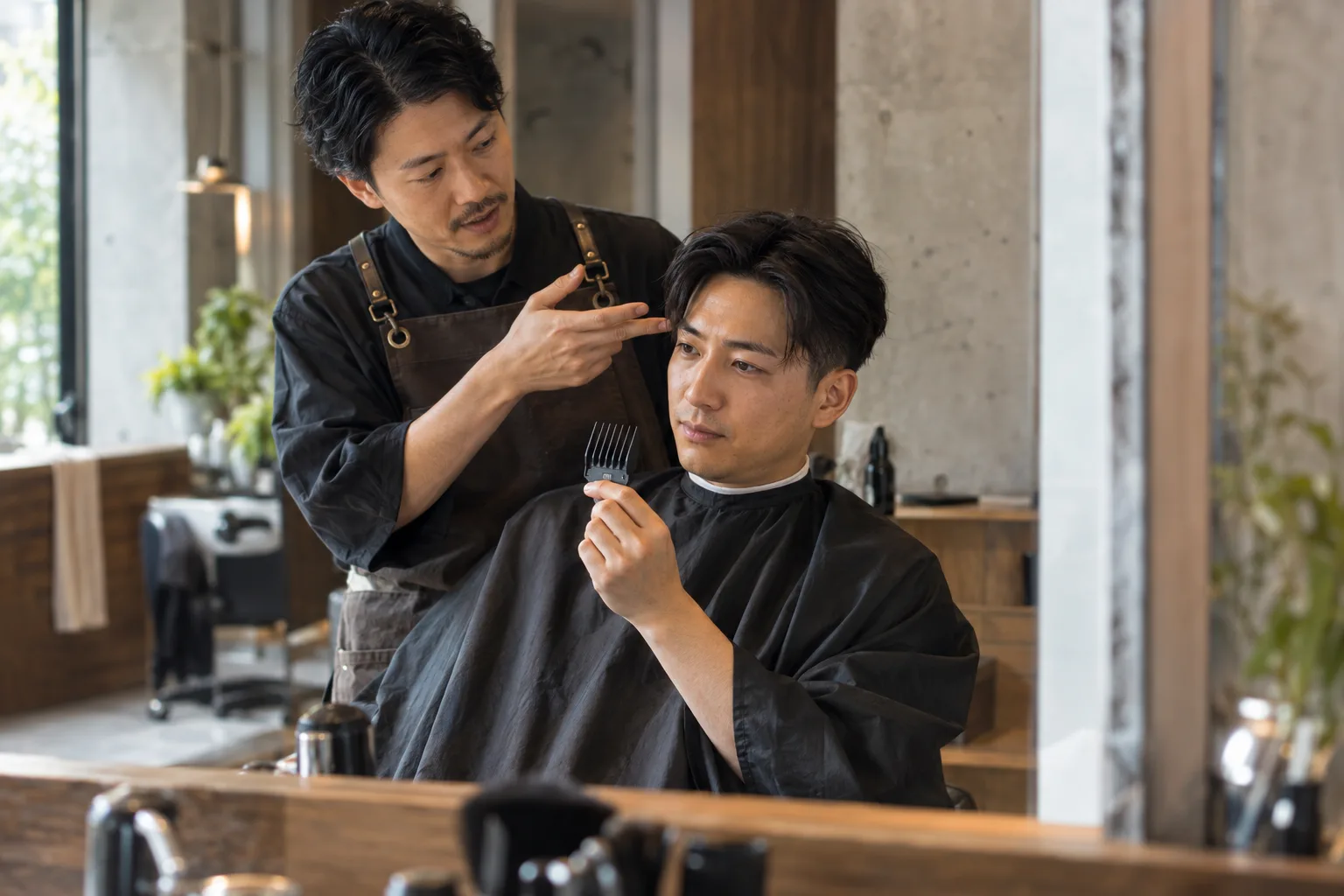
Will a buzz cut suit me? It may, if you like an exposed hairline and a deliberately simple outline, but no face-shape label can answer for you. A buzz cut removes much of the hair's framing effect. Your forehead, ears, scalp, beard and overall style become more visible. Start with a longer guard, assess yourself in ordinary light, and go shorter only if that direction still feels right. The decision is reversible as hair grows, but growing back a length you liked takes time.
The useful question is not whether an app declares your face suitable. It is whether a specific short length helps the look you want, fits your hair and scalp, and works with your daily routine. This guide gives you a careful way to decide, including what photographs can show, what they cannot, and how to speak to a barber. MogRise can organize front and profile observations into a small styling plan; it cannot predict exactly how a cut will look or replace a real trial.
Will a buzz cut suit me? Start with the real trade-off
Longer hair can add height, soften a hairline, cover part of the temples or create width around a narrow-looking face. A uniform close cut does much less of that work. This is not automatically better or worse. Some people prefer the clean shape and the attention it gives to the eyes, brows and clothing. Others miss the flexibility of changing a part, fringe or volume. Name the framing effect you would lose before you choose a guard number.
Try describing your intended outcome without an attractiveness score: less styling time, a crisp silhouette, easier exercise, a reset after a bad cut, or simply curiosity. Those are valid reasons. If the aim is to hide a feature you dislike, pause and ask whether a close cut would actually reduce attention to it. A buzz cut can make a receding hairline look intentional for some men, yet it can also expose a hairline that longer hair previously softened. The answer is personal, not a universal rule.
Look at your hairline and scalp without over-inspecting
Stand back from the mirror in diffuse daylight and notice the overall outline: where the hair begins, how the temples curve, and whether density is even across the top. Do not press your face to the glass to inspect individual follicles. A close cut makes the natural hairline easier to see, but normal variation in temples and density is not a defect. If you are unsure, ask a barber to show how a longer buzz would sit along your actual growth pattern.
A visible scalp also means sun exposure and skin comfort deserve a thought. If you have irritation, unexplained patches or sudden shedding, a haircut is not a diagnosis or treatment. The American Academy of Dermatology advises seeing a dermatologist for hair or scalp concerns. Keep cosmetic decisions and health questions separate. A gentle trial at a longer length gives you information about appearance without assuming that a very close cut will solve a medical or emotional concern.

Face shape is context, not a permission slip
Search results often claim that a buzz cut belongs to one face shape and is forbidden for another. Real faces are not perfect circles, squares or ovals. A close cut changes the visual frame, while length on top and at the sides can alter that frame again. A slightly longer top can create some height; a softer transition on the sides can avoid an overly severe outline. These are styling effects, not changes to bone structure or an objective measure of worth.
Look at the relationships that matter to you: forehead-to-hairline visibility, how the head appears from the side, beard or stubble balance, and whether glasses or a hat are part of your everyday look. Avoid choosing a haircut to chase a single FaceScore. A front photograph alone may hide a head shape or hair growth pattern visible in profile. A profile alone may exaggerate another feature. Both views help you ask better questions, but neither can guarantee satisfaction after a cut.
Choose the guard length before the dramatic reveal
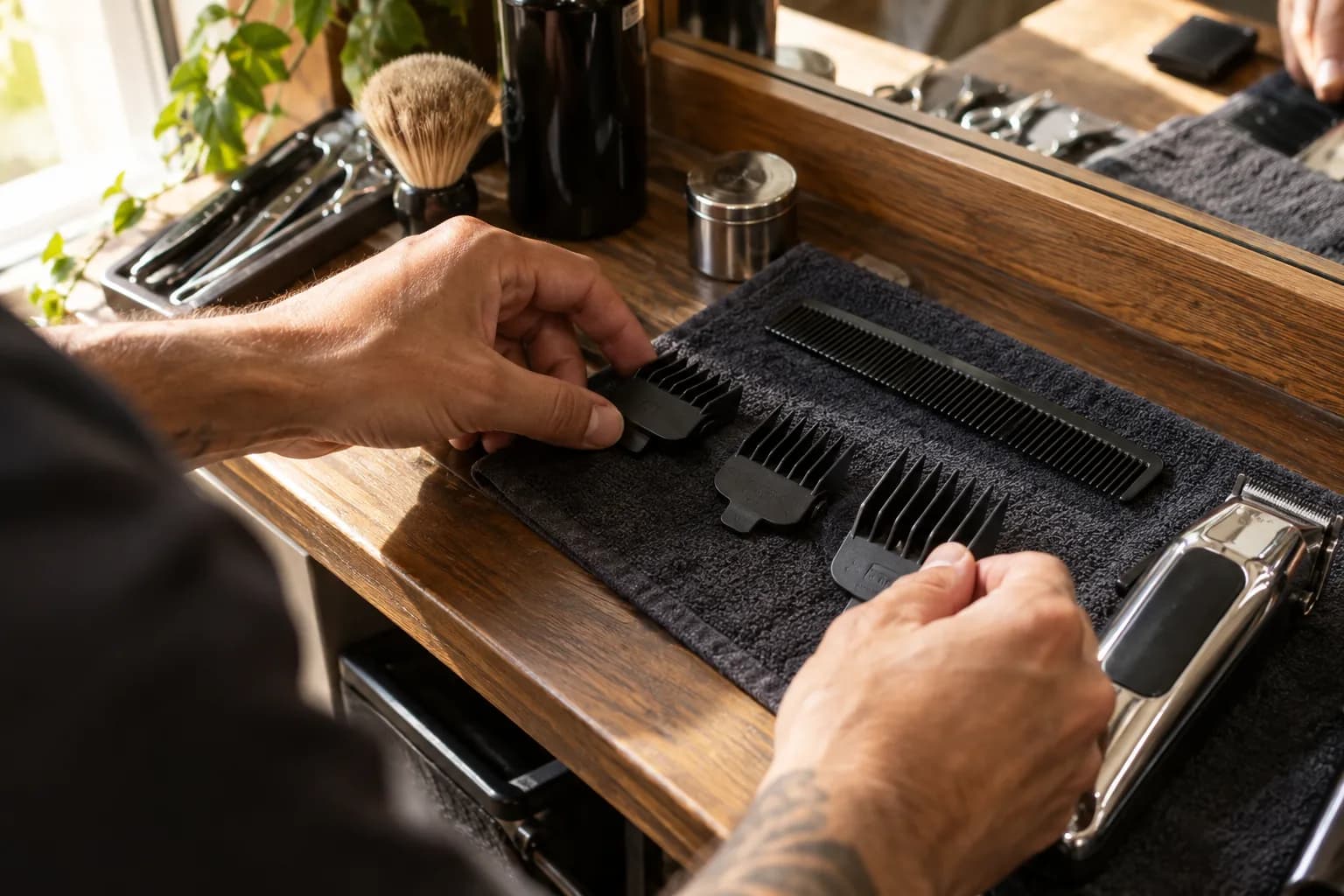
A buzz cut is not one fixed length. Clipper guards, blade settings and taper choices produce visibly different results. A longer guard leaves enough texture for a first test and gives the barber room to shorten gradually. Ask to see the exact guard and its approximate millimeter length; numbering can differ between tools. Have the barber start longer than your shortest imagined result, then inspect the top, temples and side profile before removing more hair.
Decide whether you want one length all over, a subtle taper around the ears and neck, or a little extra length on top. These details matter more than the label buzz cut. A very close cut can reveal scalp contrast and growth direction that a longer version softens. There is no need to match a celebrity photo exactly; their density, lighting and retouching may differ from yours. Bring one realistic reference for the length, not a promise of an identical face or head shape.
Use front and profile photos as planning evidence
Take a front photograph and a side photograph in soft daylight, with the camera at eye level and far enough away to avoid an extreme close-up. Keep your expression neutral and include the hairline, ears, jaw and upper shoulders. Do not stretch or edit the image. A very close wide-angle selfie can distort the apparent size of facial features and make a haircut decision feel more urgent than it is. Use photos as a record of the current frame, not as a verdict.
MogRise can help organize clear front and profile photos into an explained analysis and a short list of priorities. For this decision, translate any observation into a reversible question: would a lower side bulk, a longer top or a beard outline balance the look I want? A score cannot tell you whether the scalp will feel comfortable, what the guard will do to your particular hair texture, or how much you will enjoy the cut. Let the result support a conversation, not make the choice for you.

Compare a buzz cut with a crew cut or textured crop
If you want a low-effort cut but are unsure about full exposure, compare adjacent options. A crew cut leaves more hair on top while keeping sides short. A textured crop keeps enough length to influence the front hairline. A longer buzz can sit between those choices and a nearly shaved head. Ask what each option would do to your styling time, the visible forehead, and the outline from the side. None is a consolation prize; the best cut is the one you can live with on an ordinary Tuesday.
A useful first appointment might end with a longer buzz or crew cut, not the shortest possible guard. You can wear it for a week, observe it in different light and then decide whether to go closer at the next trim. This staged approach is especially helpful when the inspiration photo shows different hair density or a perfectly lit studio result. A short trial costs less regret than making the most extreme choice because you felt rushed in the chair.
Plan the upkeep and scalp routine
Short hair is quick to wash and often needs little product, but the tidy outline may require more frequent trims than a longer style. Growth becomes noticeable at the ears, neckline and crown. Ask the barber what interval fits the guard and taper you choose rather than relying on a universal schedule. If you cut at home later, use clean equipment, follow the tool instructions and avoid pressing a blade into irritated skin. Professional help is reasonable for a first cut or a tricky taper.
The scalp is more exposed when hair is very short. Protect it from the sun with appropriate shade, a hat or sunscreen suitable for exposed skin when needed. The American Academy of Dermatology recommends choosing sun protection thoughtfully; this is general skin care, not a claim that a buzz cut is dangerous. If your scalp becomes red, painful or persistently flaky, seek qualified advice. Keep washing and conditioning appropriate for your hair and scalp rather than assuming short hair needs no care at all.
Give your barber a decision brief, not a score
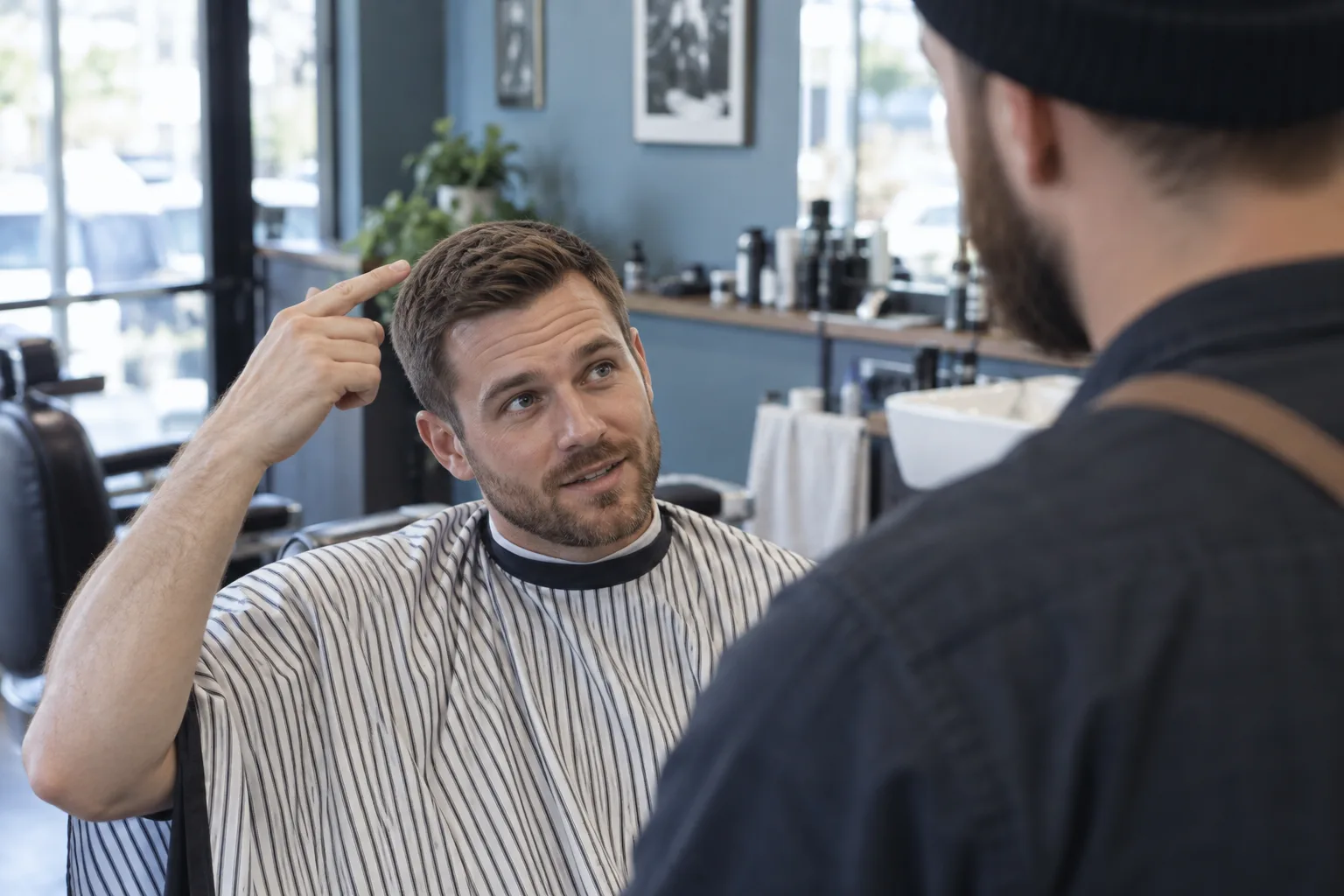
Tell the barber why you are considering a buzz cut, show one or two realistic reference images and state the longest length you are willing to try first. Point out any cowlicks, sensitive scalp areas or parts of the hairline you want to discuss. Ask for the guard length in millimeters, the planned side transition and whether the neckline should be natural or sharply edged. Request a pause after the first pass so you can see the shape before the barber goes shorter.
You can mention a MogRise observation in plain terms, such as wanting less side volume or a shape that feels balanced in profile. Do not present an app score as a clinical instruction. The barber can inspect hair density, growth direction and scalp condition in person, which photos cannot fully capture. If their recommendation differs from a saved image, ask why. A clear explanation and a reversible starting point are more useful than having someone agree with a number.
Make the cut a small experiment, not an identity test
Before the appointment, write down what would count as success: perhaps ten minutes less styling, a clean outline in daylight, or feeling comfortable without a fringe. Take a normal front and profile photo once, then let the cut settle for several days. Compare under similar light and camera distance. Avoid checking a FaceScore repeatedly or searching for a perfect angle. The question is whether the haircut meets your own practical brief, not whether an algorithm can certify it.
If you like it, keep the guard length and trim interval in a note. If not, identify the specific mismatch. Was the top too short, the sides too tight, the hairline more visible than expected, or the maintenance greater than promised? That answer guides the next cut. Hair will grow, and an imperfect first attempt is information, not a failure of your face. A buzz cut is one styling option among many; choose it because its real-life trade-offs suit you.