
The best haircuts for receding hairline men are usually the cuts that make the existing hairline look intentional without demanding fragile coverage. A close buzz or crew cut reduces the contrast between fuller and thinner zones. A textured crop can use natural forward movement. A short side part can work when the front still has stable density. None is universally best: texture, crown growth, head shape, daily effort and how short you are comfortable going decide the answer.
Start with evidence rather than a promise to hide every temple. Take clear front and profile photos in ordinary light, compare only two or three realistic directions, and ask a barber how each option will grow out. MogRise can organize that visual review and turn it into a small set of priorities, but it cannot diagnose hair loss or determine your worth. The goal is a manageable style decision based on what your hair actually does today.
What the best haircuts for receding hairline men actually do
A useful cut controls contrast, direction and silhouette. High contrast appears when a long dense section is pulled across a visibly lighter temple. Direction becomes a problem when styling fights a cowlick or asks fine hair to stay in a rigid shape. Silhouette describes the outline from the front and side. A successful cut makes these three elements cooperate, so normal movement does not expose a carefully constructed disguise.
Think in terms of integration rather than concealment. A receded temple can belong naturally to a close, crisp shape or a softly textured front. The hairline does not need to be squared with heavy product or pushed into an unnatural curtain. When the design accepts the real boundary, wind, humidity and a long day are less likely to undo it. That usually produces more confidence than checking every reflective surface.
Density matters more than a face-shape label. Two men with similar temples may need different cuts because one has thick waves at the front and the other has fine straight hair with lower density. Check where scalp shows in normal room light, where hair naturally separates and whether the crown competes with the front for length. These observations give a barber useful constraints instead of an abstract request to make the hairline disappear.
Your comfort with length is a real design input. A buzz cut can be elegant and low effort, but it reveals the head outline and may feel like a large first change. A crop keeps more styling flexibility but needs enough front density and texture to sit well. A short side part can look polished but should not become a long comb-over. The right option is the one you can wear on an ordinary Tuesday, not only after a perfect blow-dry.
Make a neutral photo baseline before choosing
Wash and style the hair as you normally would, then wait until it is fully dry. Stand about an arm's length from the camera and use the main rear lens if a friend can help. Capture a straight front view and both profiles at eye level. Keep the expression relaxed and the head level. A close selfie can distort facial proportions and make the nearest hairline edge look more dramatic than it appears in person.
Use diffuse window light or even outdoor shade. Strong ceiling light can make every part look wider, while a dark room can hide useful information. Do not wet the hair, fill the temples with fibres or use a fresh fade solely for the baseline. You need a repeatable record of normal density, direction and side volume. Save the setup so later comparisons use the same distance, angle and light.
MogRise can help compare the front and profile presentation and explain a limited set of visible priorities. Treat the output as planning context, not a verdict or medical assessment. Note whether the sides dominate, whether the front direction supports or fights the hairline, and whether a shorter outline might create better balance. Ignore tiny numerical changes between photos; the haircut decision should rest on stable patterns you can also see yourself.
The guide to why a FaceScore changes between photos explains why distance, lens and light can move an analysis even when your appearance has not changed. Standardization matters here for the same reason. If two candidate styles are photographed under different conditions, you may reward lighting rather than the haircut. A fair baseline protects the decision from that mistake and gives your barber clearer visual references.

Compare four realistic haircut directions
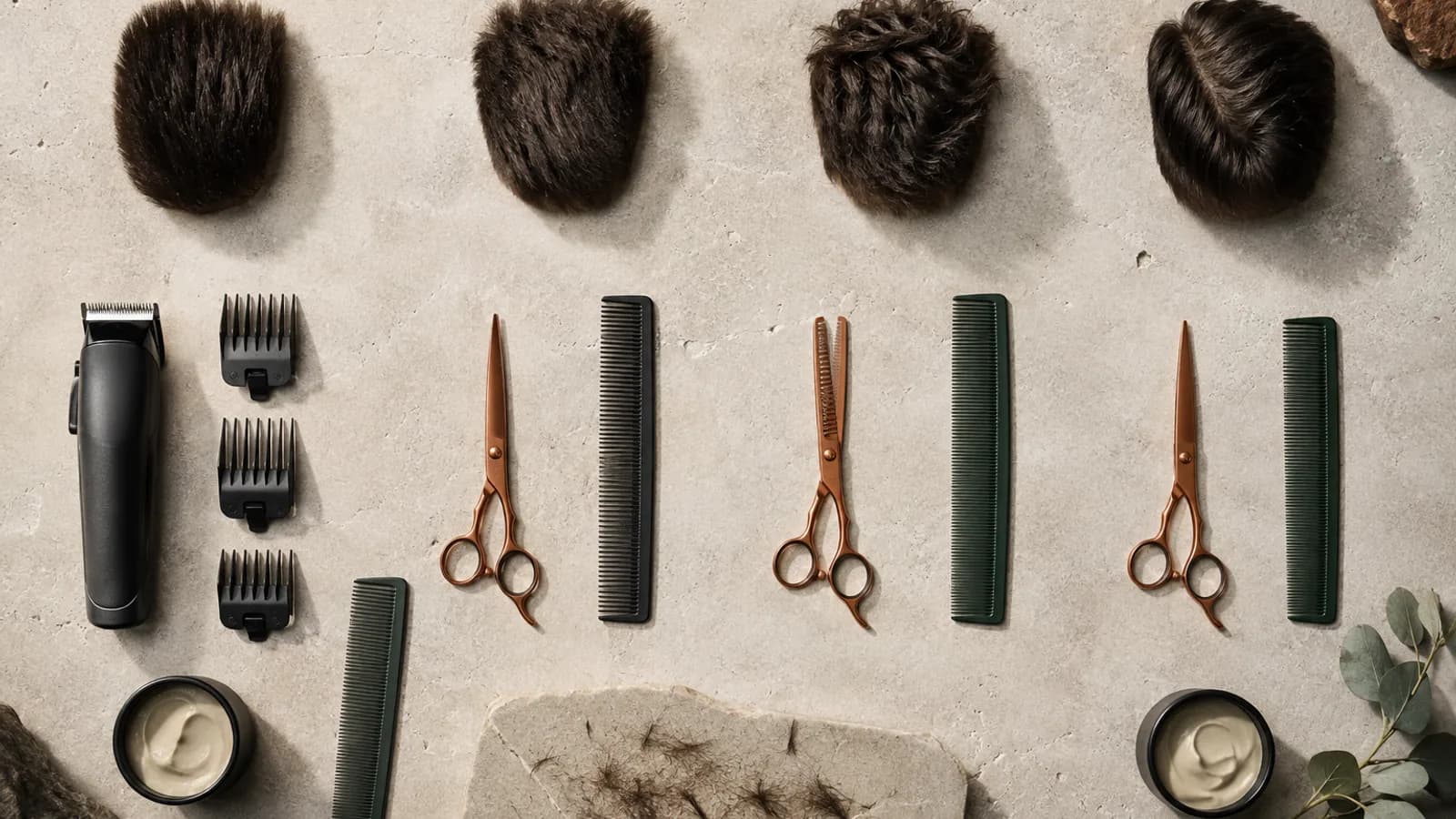
A buzz cut reduces the visual gap between the hairline and the rest of the hair because every section is deliberately short. It works especially well for someone who dislikes styling and accepts a clearer view of the head outline. Start with a longer guard if you are unsure. A barber can always go shorter, while returning length takes time. Ask whether an even buzz or a subtle taper suits the density around your temples and crown.
A crew cut keeps a little height through the front while the sides stay controlled. It can suit stable front density and hair that naturally lifts rather than falls apart. The key is proportion: too much length at the front may increase contrast, and sides left too bulky can make the top look narrower. A soft taper often grows out more calmly than a very high skin fade, especially if frequent appointments do not fit your budget.
A textured crop uses short, irregular movement rather than one solid fringe. It can bring the eye to texture while allowing the hairline to remain honest. It needs enough hair at the front to form separation without turning into a thin curtain. Matte product in a small amount often supports the effect better than wet shine, which groups strands and increases scalp contrast. Ask for a demonstration using the amount of product you will actually use.
A short side part can remain a good choice when the front is reasonably stable and the natural growth direction supports it. Keep the division soft and the sweep short. The goal is not to drag a long section across the head. If the part exposes a widening strip or collapses in ordinary weather, a crop or closer cut may be more reliable. Judge the style after several hours, not only in the barber's mirror.
Turn the comparison into a useful barber conversation
Bring one neutral photo of your own hair, two reference images with similar texture and density, and one sentence about maintenance. A clear request might be: keep the front honest, reduce side width, and give me a shape that still works after four weeks. That is more actionable than asking for the haircut that hides recession. Tell the barber how often you can return and how many minutes you will style on a normal morning.
Ask the barber to explain the first reversible step. If you are moving from medium hair toward a buzz, a crew cut or longer crop can test a shorter silhouette without committing immediately to the closest guard. If you already wear a short style, changing taper height or front texture may be enough. Agree on the top length, side length, neckline and product before cutting. Vague words such as short or clean mean different things to different people.
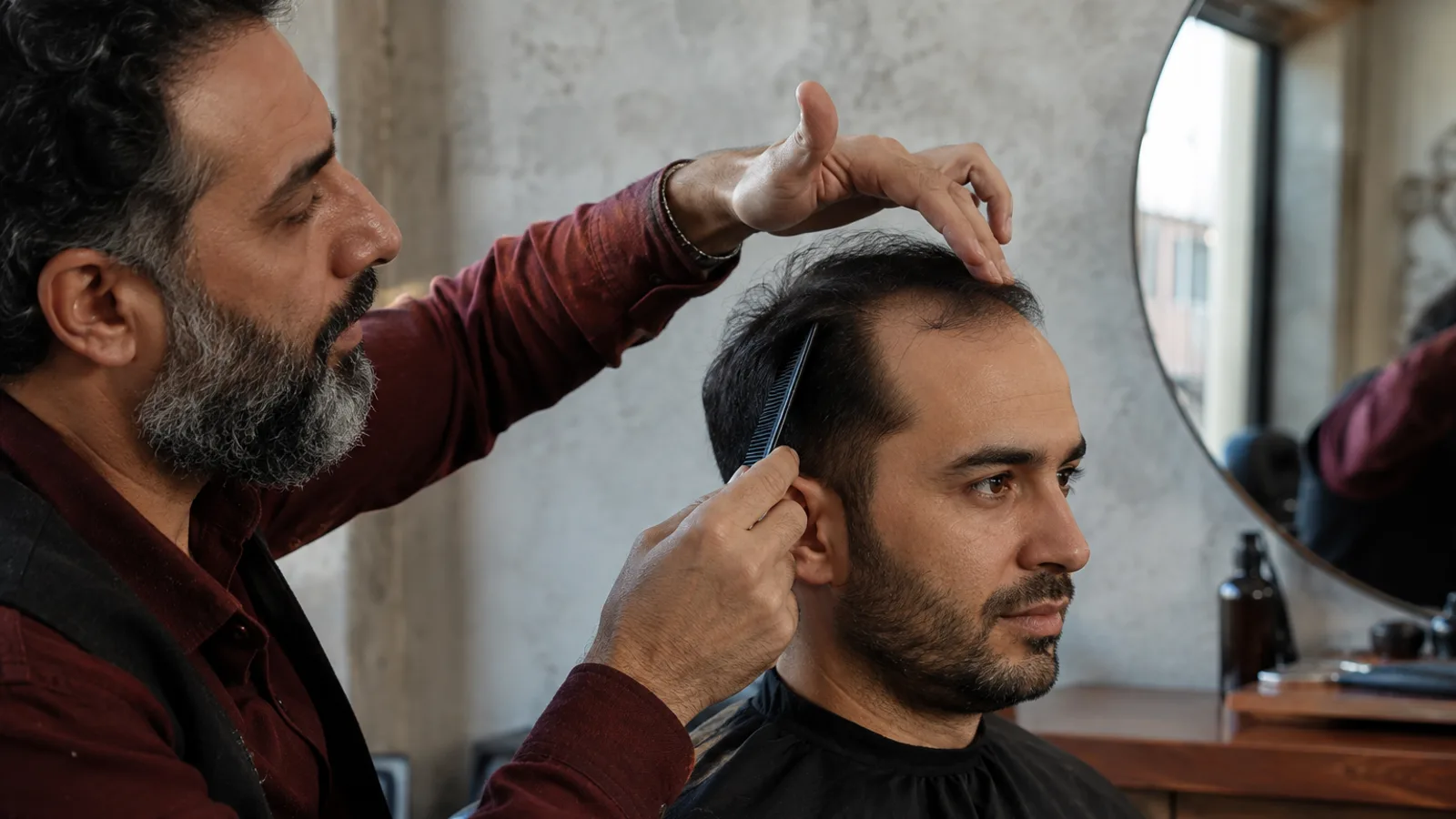
Use the consultation to test growth direction. A professional can dampen and move the front, identify cowlicks and show where density supports lift or fringe. They can also explain which reference depends on thicker hair than yours. That is not a failure; it saves you from a style that needs constant correction. Ask to see the finished hair without excessive product so you understand the underlying cut, then learn one simple styling sequence.
Photograph the result in the same neutral setup after the first wash, not only immediately after the appointment. The barber's blow-dry may not match what you can repeat. Note what takes effort and what holds naturally. These observations make the next appointment better. The men's haircut frequency guide can then help you choose an interval based on actual grow-out rather than an arbitrary calendar.
Know when this is a styling question and when it is medical
A gradually receding hairline can be one presentation of male pattern hair loss, but a photograph cannot establish the cause. The American Academy of Dermatology explains that male pattern hair loss often develops gradually and that earlier professional assessment can expand treatment options. A barber or appearance app should never diagnose it, recommend medication or promise regrowth. Their proper role here is limited to styling existing hair.
Seek qualified medical advice for sudden shedding, round or patchy loss, scalp pain, marked redness, scaling, scarring, or a rapid unexplained change. The NHS advises finding out what is causing hair loss before going to a commercial hair clinic. That boundary matters because cosmetic coverage can delay a useful assessment. Take a simple timeline and ordinary photos to a clinician rather than trying a chain of unverified products.
Do not start a treatment because a haircut article, influencer or generated image makes it sound inevitable. Benefits, risks and suitability depend on the cause and the individual. A dermatologist or appropriate healthcare professional can assess the scalp and medical context. If your concern is purely how to wear the hair you have, return to the reversible haircut options. Keeping these two decisions separate prevents styling advice from becoming accidental health advice.
Emotional impact is also a legitimate reason to ask for support. Constant mirror checking, avoiding people or feeling that hair determines your value deserves care, not another optimization spreadsheet. Speak with someone you trust or a qualified professional. A practical haircut can reduce daily friction, but it should not become a requirement to earn confidence. The plan is successful when it frees attention for life beyond the mirror.