

To smell good all day for men, start with a clean, fully dry body, fresh clothes and an underarm product chosen for the problem you actually have. Deodorant mainly manages odor; antiperspirant also reduces sweat. Add one restrained fragrance only after those basics, carry a clean shirt or small reset kit when the day demands it, and never try to hide old sweat with more cologne.
This is an independent routine, not a promise that one product will last from sunrise to midnight. Heat, exercise, stress, fabric, skin sensitivity and individual sweating all change what works. A useful scent is subtle at conversational distance and disappears before it fills a room. If body odor changes suddenly, remains strong despite sensible self-care, or comes with unusually heavy sweating, treat that as a health question rather than a grooming failure.
Smell good all day for men by fixing the clean base
Freshness begins where sweat and skin bacteria collect, not in the fragrance bottle. Wash after heavy exercise and give extra attention to underarms, feet and the groin using a product your skin tolerates. Rinse properly and dry thoroughly, especially between toes and in skin folds. Dampness trapped under clothes makes a poor starting point. More scrubbing is not automatically better: aggressive soaps and repeated washing can irritate skin without solving the cause of persistent odor.
Time the routine to your real day. Someone cycling to work may need a quick wash and change at the office, while someone working from home may only need a normal morning shower. If you shave the underarms or face, do not stack strongly fragranced products on freshly irritated skin. The calmer principles in our razor-burn routine apply here too: light pressure, a clean tool and a simple aftercare step are more useful than chasing a harsh squeaky-clean feeling.
Hair, beard and scalp products count toward the overall scent. Shampoo according to comfort and activity rather than forcing a universal daily rule. Rinse beard wash and styling product completely, dry dense facial hair, and clean combs or brushes that keep picking up oil. The aim is a neutral foundation. When soap, shampoo, beard oil, deodorant and laundry detergent are all loud, even a good fragrance can become tiring before you leave home.
Clean clothes matter more than another spray
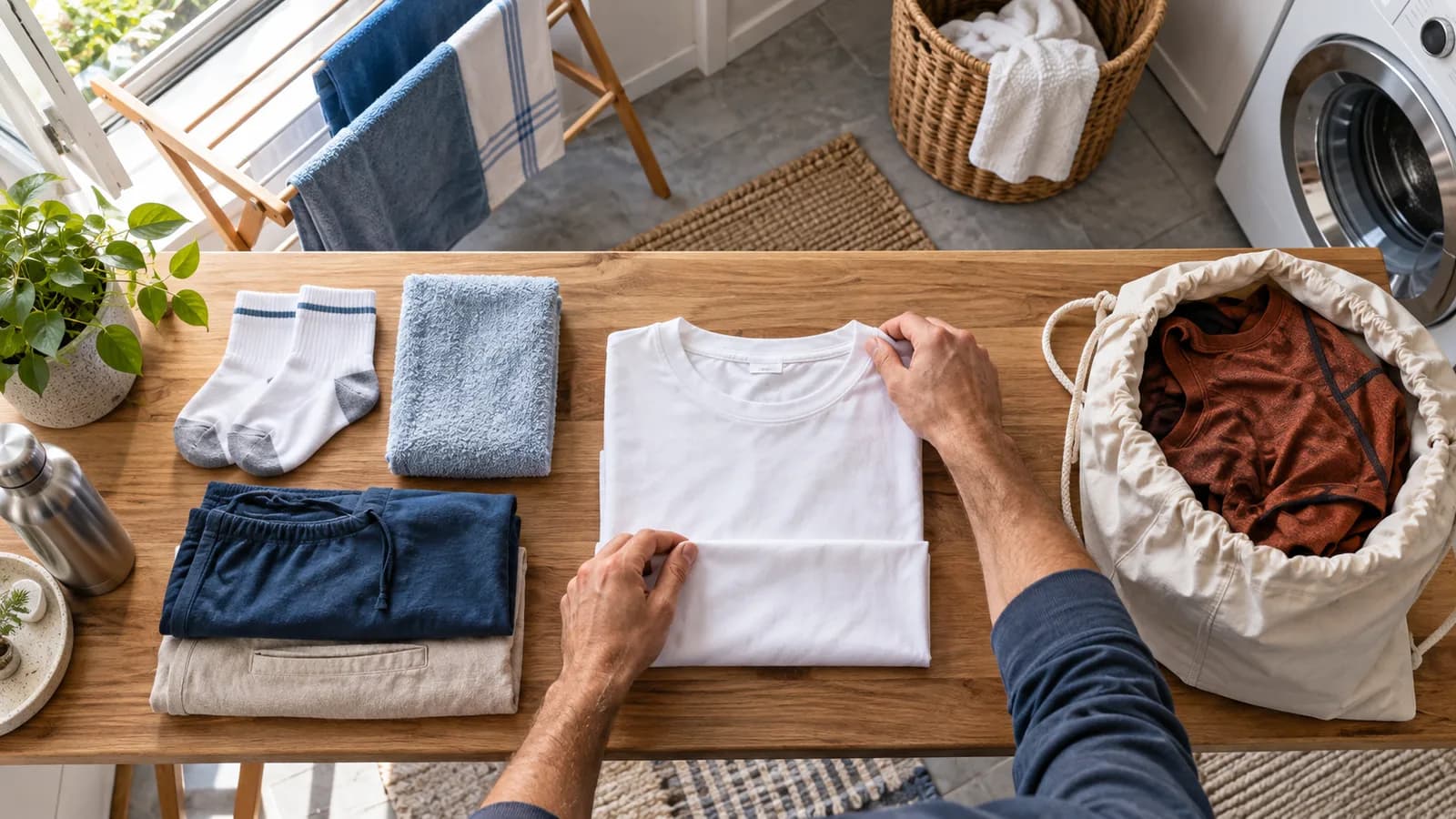
A freshly washed body can still smell stale when the shirt, jacket or shoes have retained yesterday's odor. Put on a genuinely clean base layer and check the underarms, collar and back of any item you plan to rewear. Technical gym fabrics can hold odor differently from cotton or wool, and a jacket may transfer smell to the clean shirt beneath it. Follow the care label, let laundry dry completely and do not return a damp garment to a closed hamper or bag.
Separate used workout clothes from the spare shirt in your commute bag. Empty the bag at home, air shoes, rotate pairs when possible and wash socks after each wear. If an otherwise clean top smells again as soon as it warms, laundering or fabric buildup may be the issue. Do not keep adding fragrance to the garment; fragrance mixed with old odor usually creates a stronger, less predictable result and can stain delicate material.
The NHS body-odor guidance similarly emphasizes washing odor-prone areas, drying well, changing clothes regularly and choosing breathable or moisture-managing fabrics. That is useful because it moves the problem away from expensive scent. Build a small wardrobe system: enough clean base layers for the week, one spare for long or active days, and a clear place for used clothing. Reliability beats a shelf full of overlapping products.
Choose deodorant or antiperspirant for the actual job
Deodorant and antiperspirant are related but not identical. Deodorant is designed mainly to reduce or mask odor, while antiperspirant uses active ingredients to reduce sweating. Read the front and ingredient label instead of assuming every spray or stick does both. If odor is the main issue and sweating is manageable, a deodorant may be enough. If underarm wetness quickly reaches clothing, an antiperspirant may be the more relevant category.
Apply only to clean, dry skin and follow the product directions. More is not always more effective, and a thick layer can transfer to clothing or irritate skin. Fragrance-free or lightly scented options make it easier to judge whether the product works without competing with cologne. If shaving causes stinging, give the skin time to settle and avoid applying a product to visibly damaged skin unless its directions explicitly support that use.
The American Academy of Dermatology explains that deodorants do not reduce sweat unless they contain antiperspirant ingredients and advises targeting only the areas where odor begins. It also notes that unusual or strong odor and excessive sweating can deserve professional evaluation. That boundary matters: a grooming routine can manage ordinary freshness, but it should not turn a persistent symptom into shame or an endless product experiment.

Use fragrance as a quiet finishing layer
Cologne cannot clean skin, dry a damp shirt or replace deodorant. Use it only when the base is already fresh. Begin with one or two sprays, then live with the scent for several hours before deciding whether you need more next time. Apply from a short distance to intact skin where the product directions allow, commonly the wrist or upper chest, and let it dry. Do not rub aggressively, spray into the air to walk through it, or mist every garment by default.
Judge strength from the other person's distance, not with your nose pressed to your wrist. Your own smell adapts quickly, so losing awareness does not mean the fragrance disappeared. Ask someone you trust whether it is noticeable at normal conversation range. In shared offices, trains, classrooms and restaurants, less is considerate. Unscented deodorant, neutral laundry and one fragrance make the result easier to control than several competing scented layers.
Test a new fragrance on a normal day before wearing it to an event. Notice skin comfort, projection, clothing contact and how it develops rather than chasing a promised hour count. Scent longevity varies with formula, application, temperature and skin. If a fragrance triggers irritation or discomfort, wash it off and stop using it. Looking put together never requires tolerating a reaction or making everyone around you smell your routine.

Build a two-minute midday reset for demanding days
A long commute, hot kitchen, active job or lunchtime workout can exceed the morning setup. Plan for that instead of overapplying everything at 7 a.m. A compact reset can include a clean T-shirt, spare socks, a small towel, the underarm product you already tolerate and a sealable bag for used clothing. Keep it simple enough that you will actually carry it. A travel fragrance is optional; clean and dry comes first.
When possible, wash or wipe the sweaty area, dry it, then change the layer that holds moisture. Reapplying deodorant directly over strong odor may create a temporary scented mix rather than a reset. Wash hands, check breath, smooth hair and beard, and stop there if you are clean. If you do use fragrance again, one light application is usually more controlled than trying to recreate the morning dose in a small changing room.
Make the kit match the situation. Office commuters may need a base layer and compact roll-on; cyclists may add a towel and socks; frequent travelers benefit from a ventilated laundry pouch. Replace used items as soon as you return home so tomorrow's bag is not carrying yesterday's problem. This kind of environment design also supports a broader grooming schedule better than relying on motivation when the day gets busy.

Troubleshoot the routine without turning it into a verdict
If freshness does not last, change one variable at a time. First check whether the odor sits in clothing or shoes. Next confirm that the skin is clean and fully dry, then test whether deodorant or antiperspirant better matches the problem. Only after those steps should you adjust fragrance. A one-week note about activity, temperature, garment and product is more informative than buying three new items at once.
Keep skin comfort in the decision. Burning, persistent redness, cracked skin or rash is a reason to stop the suspected product and seek appropriate advice, not to layer something stronger. The same minimalist logic applies to facial care: a simple routine you tolerate is more useful than a crowded shelf. Our basic men's skincare guide can help separate cleansing, moisturizing and sun protection from the unrelated job of creating a scent.
Seek medical or pharmacy advice when ordinary self-care does not help, the smell changes unexpectedly, sweating becomes unusually heavy, or the issue disrupts daily life. Those situations can have causes a grooming article cannot diagnose. You deserve practical help without embarrassment. Body odor is common, and needing a different product, fabric strategy or professional opinion says nothing about cleanliness or personal worth.
The reliable way to smell good all day is deliberately unglamorous: clean the areas that need it, dry them, wear fresh fabric, choose the right underarm function and keep fragrance restrained. Prepare a small reset for unusually active days and review the system when conditions change. The result should feel easy, respectful and repeatable—not like a cloud of products you have to maintain every hour.