Sideburn length should suit the transition between your haircut and any facial hair, rather than stop at one supposedly perfect point on every ear. First decide where the lower edge should end; then decide how bulky the hair should remain. Those are different choices. Start with your current outline, check it from the front and both sides, and shorten conservatively only if a particular edge is bothering you. There is no universal ear landmark that makes a face objectively better.
Perhaps your haircut still looks fine but the hair in front of the ears feels unfinished. Or your new beard meets the haircut in a heavy patch. This is a small grooming decision, not a reason to redesign your whole appearance. A clear reference and one specific question can help. MogRise can support the broader photo-and-priority workflow, while a barber handles the actual cut. You can also follow the process with ordinary photographs and your own notes.
Sideburn length means two different things
When you ask for shorter sideburns, a barber may hear either a higher lower edge or shorter individual hairs. Make the request explicit. The endpoint is how far the strip extends down the side of the face. Bulk is how much the hair stands out from the skin. Width is a third variable: the strip can be broad or narrow without changing its endpoint. A taper describes a gradual transition in hair length, not necessarily a shorter strip. Separating these terms prevents a minor tidy-up from becoming a cut you did not intend.
Describe the issue before choosing a number. You might say the lower edge feels too low when I am clean-shaven, or the connection above my beard looks heavy. The first observation suggests discussing the endpoint; the second suggests discussing bulk and blending. Do not change both immediately. If you raise the edge and thin the strip at once, you cannot easily tell which change created the look you prefer. Keep the first experiment narrow and leave enough hair for a barber to adjust later.
Make the whole connection visible
Comb your hair into the way you actually wear it, not a temporary arrangement chosen for the photograph. Include the temple, ear, upper cheek and beard connection in the view. Take an ordinary front photograph and one from each side with your head upright and a relaxed expression. Use broad light and a comfortable camera distance. A very close crop may make a small edge feel much more important than it looks during conversation. The useful reference is the whole haircut around that edge, not an isolated patch of hair.
MogRise's photo workflow starts with clear front and profile images for an explained analysis and a small set of priorities. If you use it here, bring one question: does tidying this transition belong ahead of changing the haircut? Do not assume the app measures a sideburn endpoint, predicts an exact cut or replaces a barber. This guide does not require such a feature. The analysis can organize attention; your photographs, preferences and a practical conversation still determine the grooming decision. Keep any uploaded images within a privacy choice you are comfortable with.

Choose an endpoint you can describe
Use your ear as an orientation aid, not a mandatory ruler. You can describe an edge around the upper ear area, around the middle, or nearer the lower ear area. Those phrases help another person understand the proposal, but ears differ and their position is not a universal styling standard. Point to the actual area in your own reference when consulting a barber. If you like your present outline and only dislike stray hairs, keep the endpoint. Tidying does not have to mean moving a visible line upward.
Start with the longer option when you are uncertain. You can discuss shortening it in small stages; you cannot instantly restore a strip cut too high. Check the full front view as well as the side view before making another change. Ask whether the new endpoint still connects naturally to the haircut you wear on an ordinary weekday. A face-shape label does not settle that question. Neither long nor short sideburns guarantee a sharper jaw or a different bone structure. You are selecting a frame of hair, not changing the face beneath it.
Match the transition to your actual haircut
With very short sides, a bulky strip may look like a separate block; with longer sides, removing the whole strip may leave a connection you do not like. Treat these as observations to test, not fixed rules. Your hair's direction, density and curl affect the transition. Comb it naturally before judging the outline. A curl that springs outward can create apparent bulk even when its hair length is modest. Do not flatten or stretch it into a reference that you cannot reproduce during the rest of the week.
If the haircut itself needs an appointment, ask the barber to handle the transition as part of that cut rather than trying to recreate a fade at home. For an otherwise comfortable style, a modest tidy-up may be enough. The low-maintenance haircut guide helps separate a pleasing reference image from a style you can actually maintain. Apply the same thinking here: do you want an edge that needs frequent precision, or a softer transition that can grow naturally? A slightly less graphic outline may be the better choice for your routine, even if a sharply edged photograph catches your attention.
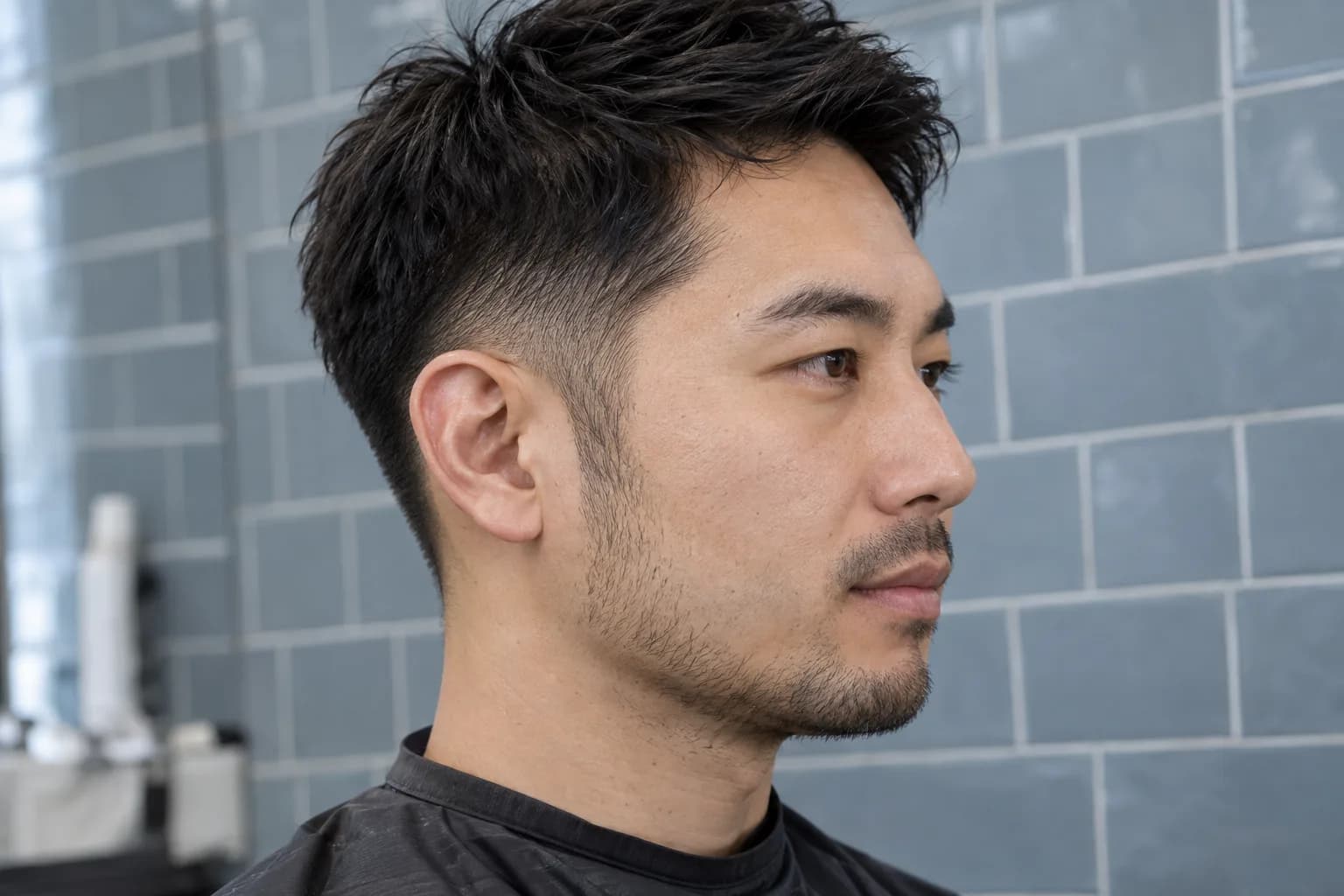
A beard changes the question
When the sideburn joins a beard, the lower edge may no longer be a separate endpoint. The useful question becomes how the temple hair meets the cheek hair. Look for an abrupt block, a thin connection or simply a density difference that you are comfortable leaving alone. You do not need every part of the beard to have identical density. Avoid carving out a gap to imitate somebody else's growth pattern. A barber can explain which transition your existing hair supports without promising new growth or a particular facial shape.
If you are currently choosing a short beard, settle that length before asking for a finely blended connection. The short stubble length guide addresses the separate choice of a guard setting; it does not determine where your sideburn should end. A beard can change what looks balanced to you without making your previous clean-shaven outline wrong. Keep one variable stable while discussing the other. If you are planning to shave the beard soon, tell the barber, so the transition is not designed around facial hair you will remove the next morning.
Trim conservatively, or leave the cut to a barber
At home, distinguish a simple tidy-up from a new shape. Read the instructions for your device, check that its guard is seated properly and start with a longer setting than you expect to need. Work only where you can see comfortably. Remove a small amount of bulk, step back and inspect before making another pass. Do not attempt to copy a complicated skin fade from a single photograph. If the edge runs close to the ear or the transition is unclear, a barber appointment is a reasonable first step, not a failure to manage your own grooming.
If you shave exposed skin around the outline, the American Academy of Dermatology's shaving guidance recommends softening the hair, using shaving cream or gel and shaving in the direction of growth. Keep that skin-care advice separate from the styling decision. Follow your device's directions rather than applying products to a trimmer that is not designed for them. Do not repeatedly work over sore or broken skin to make an edge look crisper. Stop if the process causes discomfort; persistent irritation belongs with a qualified clinician, not an appearance score or a more aggressive trimming setting.
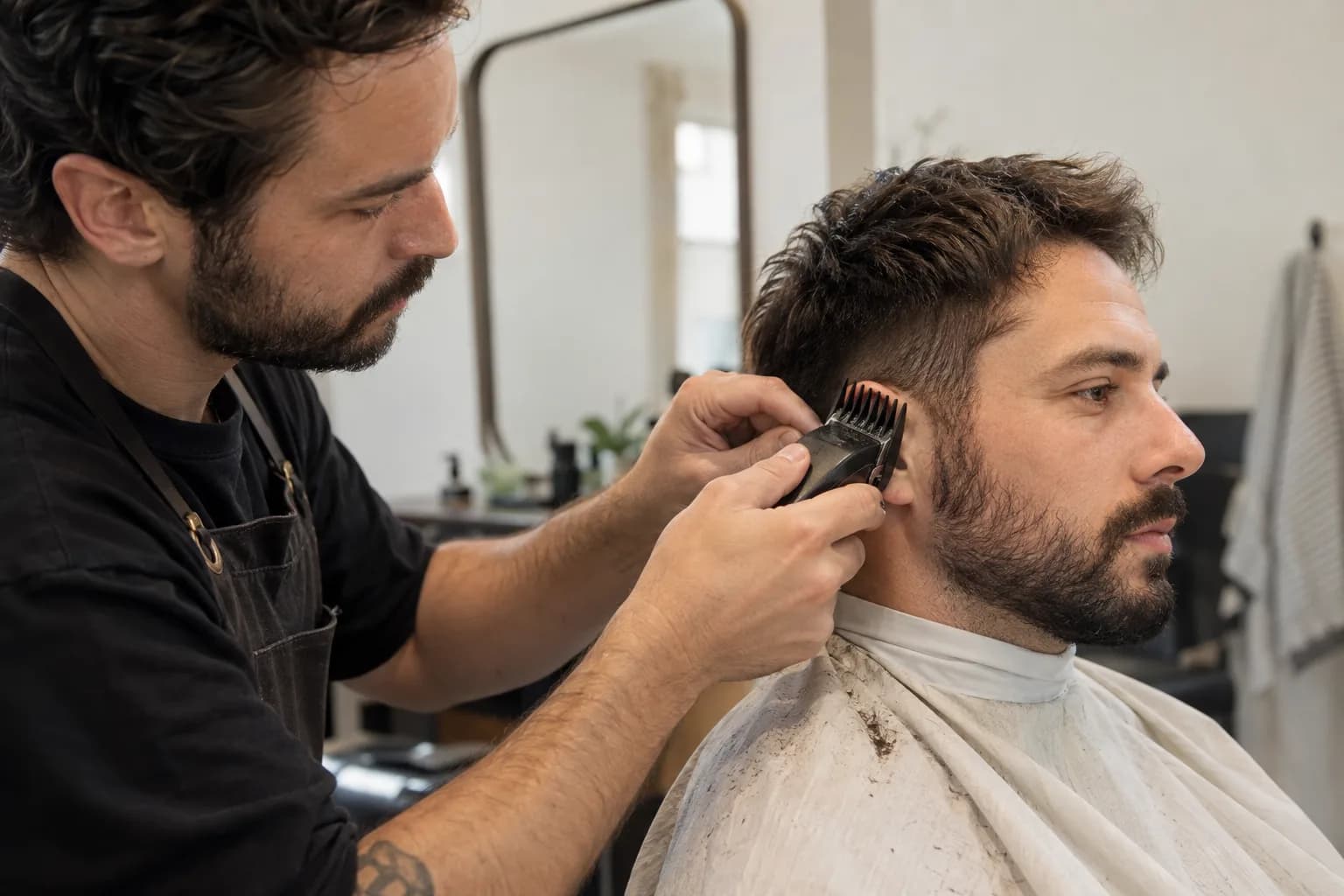
Uneven does not always mean badly trimmed
Check both sides with your head level before deciding that one endpoint is too low. Hair growth, ear position, camera angle and the way you turn toward the mirror can create different impressions. A front view helps you judge the overall presentation; side views help you see each connection. Do not keep trimming until every visible detail matches a mirrored diagram. The goal is a comfortable, intentional outline on a naturally nonidentical face. A tiny difference may not need any action at all, especially if it is visible only in a magnified crop.
If you cut one side too high, do not automatically remove the other side to chase the mistake. Put the tool down and assess how obvious the difference is in your ordinary hairstyle. A barber may soften the connection, or you may prefer to let the shorter area grow without further intervention. Avoid promises about a fixed regrowth deadline: people and hairs differ. Record what went wrong, such as using a shorter guard than intended or working without a clear reference. That practical note helps more than another round of close inspection.
Leave with a request and a maintenance limit
A useful barber request combines three details: keep the endpoint approximately where I point in this photo, reduce only the bulky connection, and leave a finish I can maintain without daily edging. Bring your normal hair arrangement and say whether you usually shave or keep a beard. Ask the barber to show the proposed endpoint before cutting. You need not use professional terminology perfectly. A clear preference and a clear limit are more valuable than requesting a supposedly ideal sideburn for a face-shape category you are unsure about.
After a small change, check whether your ordinary look feels more coherent and whether upkeep is manageable. Do not use a higher FaceScore or PSL-like number as the success condition; those outputs are planning context, not objective human worth. If you use MogRise, it is free to download, but that does not mean every feature or unlimited use is free. Keep the plan modest: one transition decision, a realistic next tidy-up and no extra changes without a reason. When the connection works for your haircut and routine, the task is finished.