

Low maintenance haircuts for men are cuts that sit reasonably well with your natural texture, need little daily styling, and still look intentional as they grow. A buzz cut can be simple each morning but may need frequent edge cleanups; a textured crop can look relaxed yet demand product. The right answer is therefore about total upkeep, not the shortest length or the trendiest name.
Before booking, notice what your hair does after a normal wash, how much morning time you have, and how long you are comfortable waiting between appointments. A front and profile photo can help you explain the shape you want to a barber. MogRise can organize those observations and a grooming plan, but neither an app nor a haircut photo can tell you precisely how your hair will behave. This guide gives you a practical decision method first.
Low maintenance haircuts for men start with the upkeep budget
Write down three budgets: minutes you can spend styling on an ordinary weekday, attention you want to give washing and drying, and how often you actually want to visit a barber. Someone with two spare minutes and a long commute has a different answer from someone who enjoys using a dryer each morning. Count the awkward days too: after exercise, rain, a helmet, or a night of poor sleep. A cut that works only in the barber's chair is not low effort for you.
Maintenance trades styling against cutting. Short, sharp edges are quick to arrange but reveal grow-out sooner. More length tolerates a delayed appointment, yet may need combing or product. Neither option always wins. Decide which effort bothers you less, then ask for a shape that accepts ordinary variation instead of demanding identical hair every morning.
Check texture, density and growth direction before choosing a name
Look at your hair when it is clean and dry without extra product. Is it straight, wavy, curly or coily? Does it lie flat, spring outward, or separate at the crown? Density and strand thickness are different: many fine strands can form a full-looking head of hair, while fewer coarse strands may still hold a strong shape. Notice a cowlick, a strong part or a stubborn front section. Those are not flaws to fix; they are directions the haircut has to accommodate.
For fine straight hair, too much thinning or a heavy fringe can make the result difficult to arrange. For dense waves or curls, a shape that respects natural volume may be easier than a cut that asks the hair to lie flat. Coily hair may benefit from a clear silhouette and a care routine matched to its moisture needs, rather than a generic instruction to wash or brush more. Take your unstyled observation to the consultation. The American Academy of Dermatology recommends adapting washing and conditioning to hair type instead of following one schedule for everyone.

Compare five shapes by their real daily demands
A uniform buzz needs little morning styling but changes noticeably as it grows. A crew cut keeps some top length and can be simple when the hair naturally falls that way. A short textured crop may work with a little movement unless the fringe needs daily sculpting. A soft taper keeps the edges tidy without the contrast of a skin fade. Natural curls or waves can be easy when their shape and care routine cooperate; long hair is not automatically effortless.
Avoid choosing from names alone. 'Fade' describes a transition in the sides, not the daily work required on top. 'Messy' in a reference image may have taken a dryer, brush and product. The cut you want may be a modest combination: enough length to follow the natural fall, lighter edges, and a front that can be moved by hand. Ask which details are essential and which are styling in the photograph. If the answer depends on a daily blowout you do not want, choose another reference.
Use front and profile photos as a conversation tool
A face-on image shows the fringe, width and overall frame; a profile shows where volume sits from forehead to crown and how the sides join the back. Take ordinary photos in even light with your head level, both with your usual styling and after a normal wash if possible. They are not a diagnostic test or an attractiveness score. Their value is making a vague request such as 'easy to manage' concrete. You can point to the section that sticks up, collapses or grows bulky between appointments.
If you use MogRise, keep the analysis modest: use clear front and profile photos to identify a grooming decision you can actually control, then record one or two options to discuss with the barber. Do not treat a face score as an instruction to adopt a specific cut. A photograph can exaggerate width or hide texture depending on angle and light. The useful output is a small question list: how should the sides grow out, how much top length keeps the hair in place, and what will it look like without product? The broader appearance-priority framework helps keep that choice proportionate.
Bring a barber brief that describes the boring days
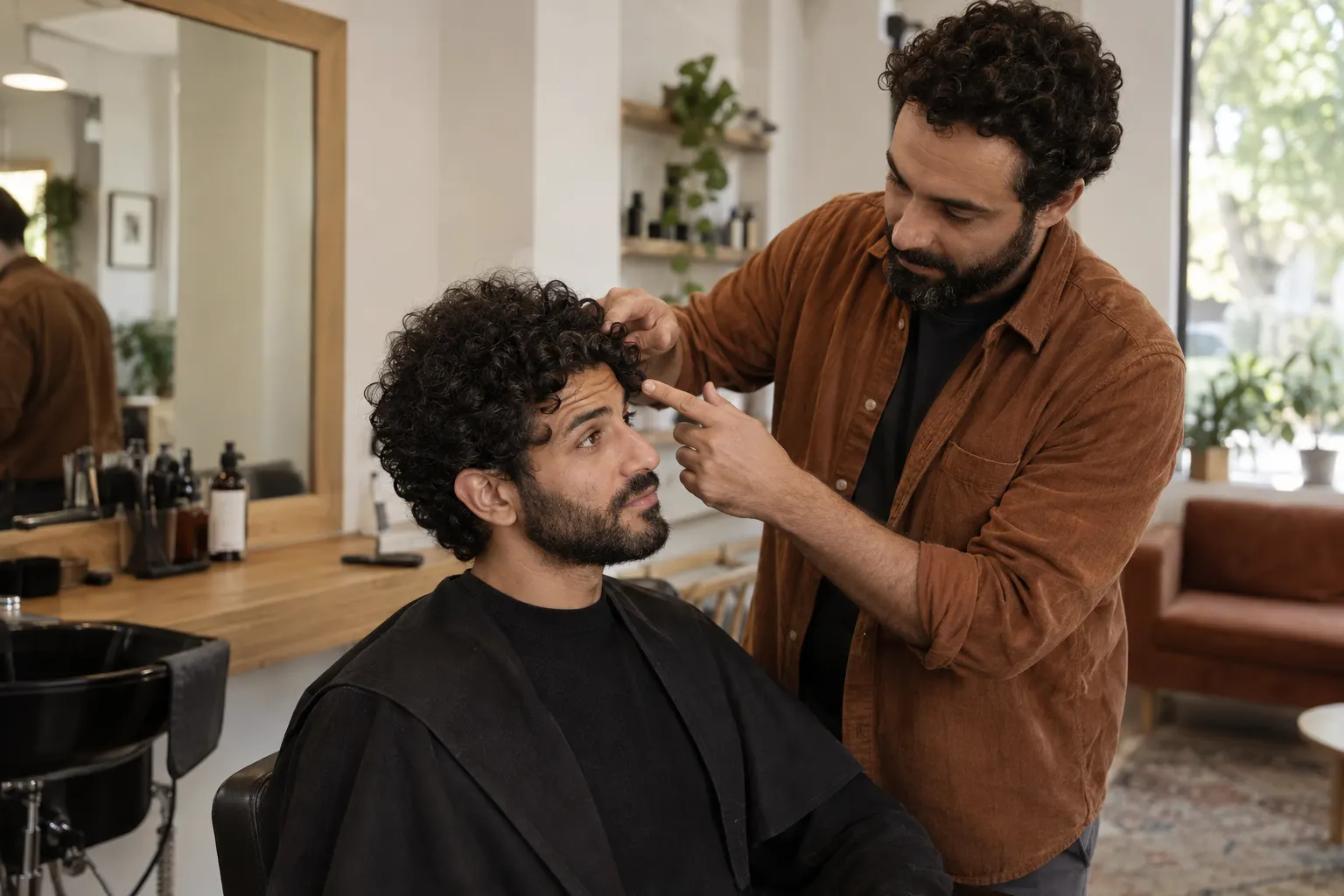
Show one or two references with similar texture, not a gallery of unrelated styles. Explain your actual styling budget: 'I have three minutes, usually air-dry, sometimes wear a bike helmet, and prefer a shape that still looks tidy when the sides grow.' Point out where your hair parts and what happens at the crown. Ask the barber to translate a reference into your own density and growth pattern. A good consultation is a conversation about constraints, not a demand that another person's hair be copied exactly.
Before cutting starts, confirm the intended top length, edge softness and whether a clipper fade needs frequent maintenance to keep its look. Ask what the result will do without product and which part is most likely to become awkward first. If you have curls, ask whether the shape is being assessed in its natural state. If you have a sensitive scalp, mention it. The goal is not an elaborate technical vocabulary; it is an agreement on the everyday result you are willing to maintain.
Test the morning routine before buying more products
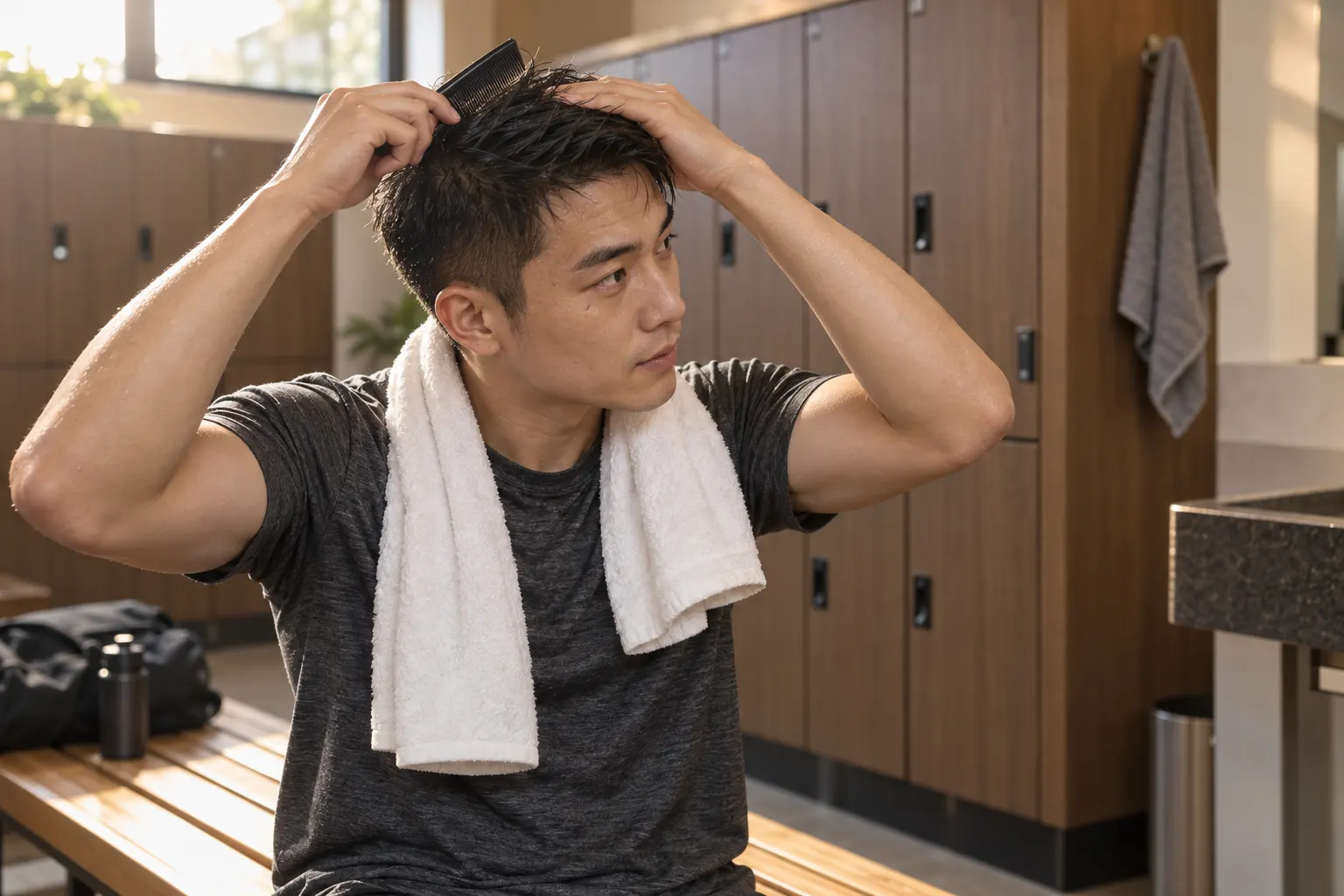
On the first normal workday after a cut, time the routine from leaving the shower to being ready to leave. Start with what you already own: gently remove excess water, let the hair settle, and use a comb or your hands if needed. If it requires several rounds of heat and a firm product to resemble the salon finish, the cut may not meet your upkeep budget. Tell your barber that at the next visit. Sometimes a small adjustment to weight or direction matters more than another jar of product.
Do not assume 'low maintenance' means neglecting hair health. Washing needs differ with scalp and hair type; conditioner, gentle detangling and moderate heat may matter more than a particular style name. The American Academy of Dermatology advises reducing excessive heat and styles that pull hard on the hair. It is sensible to choose a repeatable, comfortable routine over one that depends on tight tension or aggressive drying. If your scalp is painful or you notice persistent shedding, ask a qualified clinician rather than seeking a haircut diagnosis online.
A haircut that grows out well can beat a perfect first week
Look beyond the first polished day. What will happen when the sides gain weight, the fringe drops, or the crown gets longer? Softer transitions may disguise a missed appointment better than a very crisp skin fade, although the best answer depends on your hair. A haircut that tolerates natural movement often has a wider window of comfortable wear. Ask the barber where the shape will lose balance first and what small adjustment might extend its usable period. That question is more informative than asking for an exact universal trim interval.
Take a photo after a normal day at the point when you would usually think about booking again. Compare it with your earlier photo under roughly similar light, but judge your comfort more than tiny visual differences. If the front still behaves and the sides remain acceptable, the cut fits your routine. If it needs constant rescue, change the shape rather than blaming yourself for not styling enough. Our separate guide to haircut timing helps distinguish a true need for a trim from a habit of booking on a rigid schedule.

Avoid the common low-effort haircut traps
The first trap is assuming the shortest cut always requires the least upkeep. It may save morning time but make grow-out more visible. The second is asking for a sharp fade when you really want an appointment-flexible shape. The third is bringing a heavily styled photo without asking how much work produced it. The fourth is forcing straight-hair advice onto curls, or vice versa. The fifth is changing product after product while ignoring an underlying cut that fights the hair's natural direction.
A final trap is evaluating yourself through a face score or one unflattering phone image. Close distance and harsh light can mislead your style decision. Use the camera to communicate, not judge human value. Our guide to clay, paste and cream can help after you know what your cut needs; no product is mandatory because a style has a fashionable name.
Make a two-appointment decision instead of chasing perfection
Treat the first appointment as a practical trial. Agree on one shape, note how long morning styling takes, and notice when the grow-out first bothers you. At the next appointment, report specific observations: the crown rose after a week, the fringe needed constant drying, or the sides stayed tidy longer than expected. Ask for one adjustment, not a complete reinvention. That turns an uncertain style choice into a small, testable process and gives the barber useful evidence from your actual week.
A successful low-maintenance haircut is not the one that looks most dramatic immediately after cutting. It is the one you can wear comfortably on a rushed Tuesday, after exercise and near the end of its growth cycle. Choose by natural texture, total upkeep and your own taste. Use photos and an app only to clarify the decision; let everyday wear provide the verdict. When the cut supports your schedule instead of demanding a new one, the search for an easy hairstyle has done its job.