

An oily face during the day does not automatically call for another full wash or a new collection of products. First check whether you are seeing surface oil, sweat after movement, a product finish or a reflection from the light. For an ordinary shine concern, choose a modest reset and judge comfort as well as appearance. A photograph or face-analysis result can help organize that decision, but cannot identify a skin condition or measure oil production.
The useful question is specific: what would make getting through work, class or a social plan more comfortable? Perhaps you want a small kit for the commute, less distracting reflections in a video call or a routine that does not require repeated mirror checks. This guide builds that decision around your actual day. MogRise can support a small appearance plan using clear front and profile photos and explained observations; the practical choices remain yours.
Oily face during the day: name the situation first
Write down where and when the concern appears before buying anything. A forehead reflection under the office ceiling lights is a different situation from a damp face immediately after cycling. Notice whether the effect begins after your morning products, during travel or near the end of a warm shift. You are recording circumstances, not diagnosing a skin type. Use ordinary words such as shiny nose at lunch or damp forehead after the train. Those notes give a future comparison a clear purpose.
Choose one setting that matters most to you. If you only dislike how a webcam catches the light, the first experiment may concern the room rather than skin care. If you feel uncomfortable halfway through work, convenience and the sensation on your skin matter more. Avoid making every small reflection a separate task. Set a realistic aim, such as one quick break that lets you return to your day, rather than a promise of zero shine until bedtime.
A bright photograph is not an oil measurement
A small bright lamp can create a concentrated highlight, while a broader light source changes the way the same surface appears. Look at the face at normal viewing size before magnifying the forehead. If a bright patch is visible only in one particular room, compare the light direction before concluding that your skin changed. Do not edit the highlight away and then use the altered picture as evidence that a product worked. An image can describe an appearance under its own conditions.
For a useful reference, use an unfiltered original with even light and a relaxed expression. Keep the camera around eye height at a comfortable distance; include the whole face. A profile photo gives context to the overall presentation, not a second oil reading. MogRise's photo workflow can make that reference more deliberate. Its analysis should help you consider explained observations and a small number of priorities. It cannot tell you the composition of a shiny patch from pixels alone.

Keep the care boundary simple
The American Academy of Dermatology recommends gentle cleansing, continued moisturizing and sun protection for oily skin. For blotting paper, its advice is to press briefly rather than rub. That is a conservative starting boundary, not a guarantee of a permanently matte face. The linked guidance explains the care details and when professional help is appropriate. Do not turn a styling article into an ingredient treatment plan.
Keep a separate record of what you already use and what you actually want to change. Packaging words such as matte, light or oil free describe a claim or category; they do not tell you how that exact formula will feel during your commute. Read its directions and keep the packaging so you can review it later. If a product causes discomfort, that matters more than whether a photograph looks less reflective. A smaller, tolerable routine is more useful than an impressive shelf you cannot maintain.
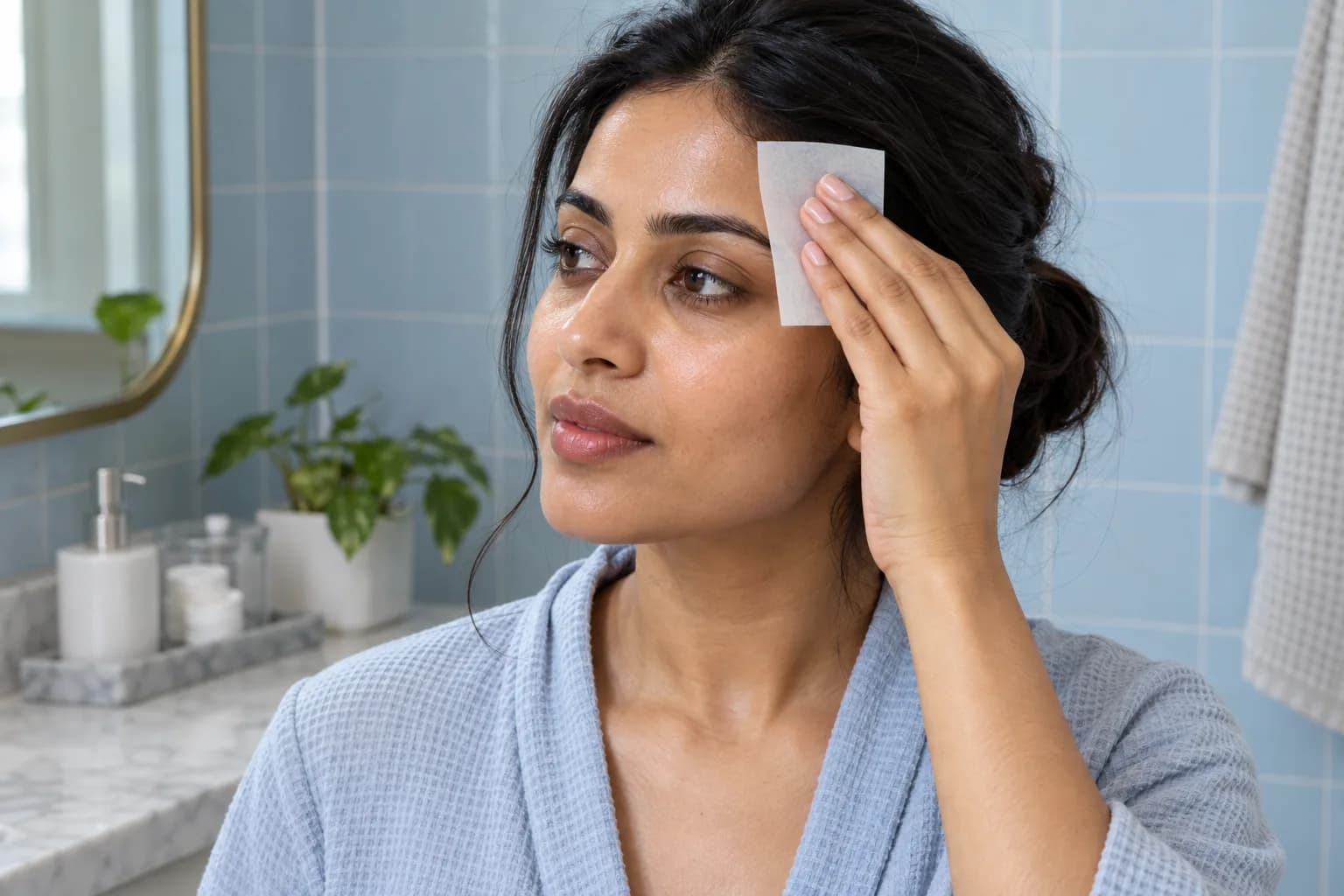
Build a break you can actually take
Plan the reset around an existing pause instead of inventing five appointments with the mirror. A lunch break, the end of a commute or the moment before an evening plan may be convenient. Decide where the items will live, whether you have access to a clean washroom and what can fit in a small bag. The plan should be easy enough to follow on an ordinary busy day, not only on a weekend when you have time to arrange the bathroom.
Keep this as a practical choice: bring the item you intend to use, know its directions and avoid packing several alternatives simply because they were advertised together. A slim case can be easier to remember than a large grooming pouch. If carrying extra things is inconvenient, begin by observing the situation for a few days. Doing nothing new is a valid outcome when the shine is only a minor reflection and does not bother you outside close inspection.
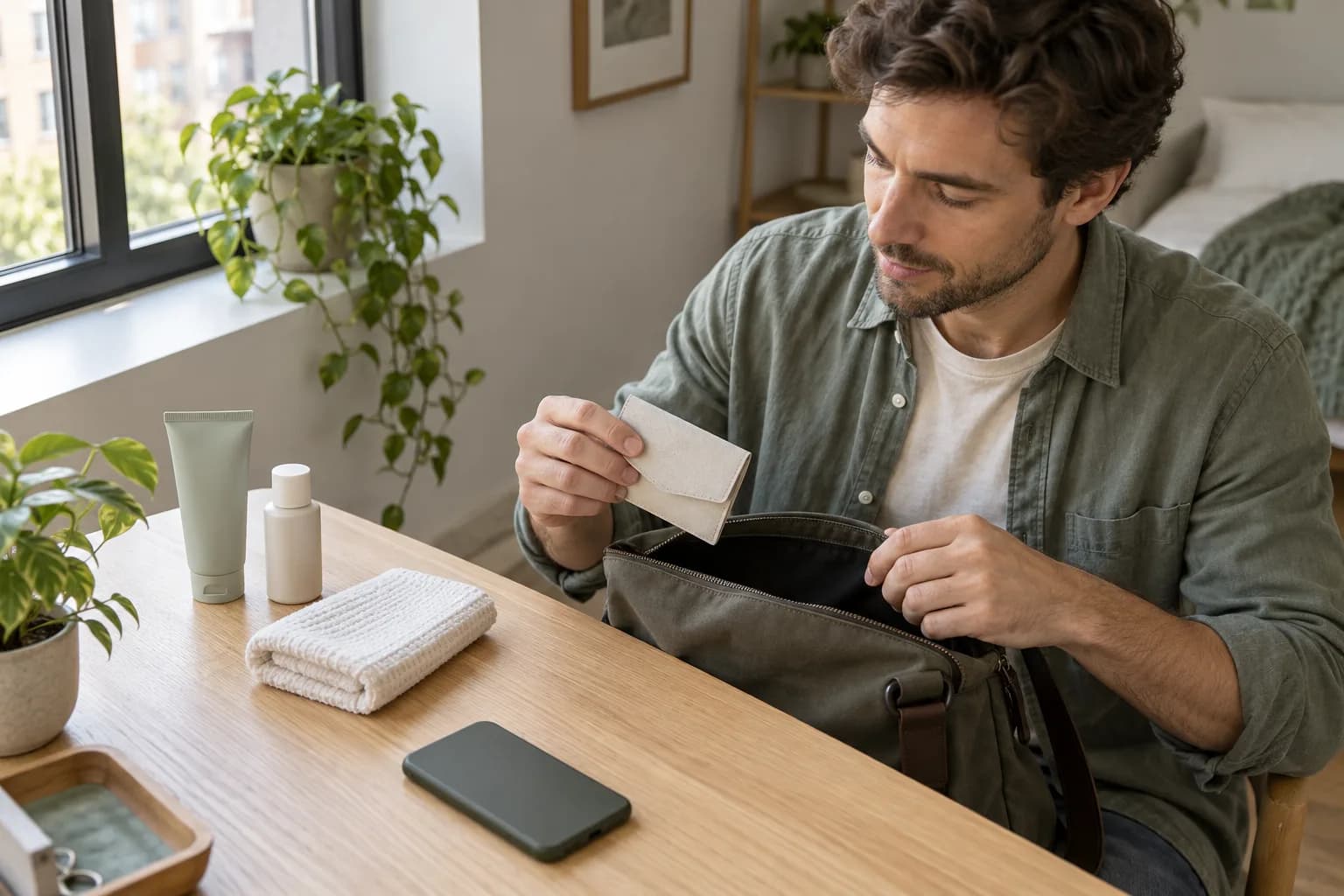
Treat a sweaty journey as its own context
The AAD's exercise guidance suggests a clean towel and gentle patting for sweat, with appropriate cleansing after a workout. It discusses hygiene around activity; it does not say that exercise should be abandoned to improve appearance. Use that boundary when planning a gym-to-work journey rather than treating a warm, damp face as a failed beauty score.
Record that you had just been moving when you review a photograph. Compare like situations: a calm work morning with another calm work morning, not an air-conditioned desk with the moment after a long uphill ride. Consider whether the useful change is simply having time to cool down before a call or taking your reference picture later. A practical schedule can solve a presentation problem without adding a stronger cosmetic. Keep comfortable movement in your routine instead of organizing the day around avoiding every visible sign of it.
Use MogRise to narrow the decision
Start with the real question before opening an analysis: I want an easier midday routine, or I want to understand whether lighting is exaggerating the shine. Provide clear front and profile images if you choose to use MogRise, then read the explanation alongside your circumstances. An observation about presentation can be one input in the plan. It should not become a diagnosis, a measurement of sebum or evidence that a particular ingredient will work for you.
Choose one controllable next step and leave unrelated priorities alone. You might organize your bag, check the light at your desk or review the finish of one product you already own. MogRise is free to download; some features may require payment, and free download does not mean unlimited use. A FaceScore or PSL-like value belongs in planning context, not a judgment of your worth. Success here is a more useful daily decision, not proving that every new photo deserves a higher number.
Change one variable and keep a short note
Pick a test small enough that you can explain what changed. For example, keep the same morning routine but carry your planned midday item for a few comparable workdays. Or keep the routine and move a video-call lamp so it is not a small intense source directly above you. These are different experiments. Do not combine them and announce that one product caused the new appearance. A simple note about the change, the setting and your comfort is enough.
You do not need daily face scans to maintain that note. Write whether the step was convenient, whether it felt comfortable and whether it answered the original concern. If you use photos, keep their conditions reasonably similar and look at the whole face. Include a limitation when circumstances differed. A hot train carriage, changed makeup or a long shift can make the comparison inconclusive. That is useful information; it does not create an obligation to repeat the test until you get the outcome you wanted.
Review at normal distance, then stop
Choose a review point in advance, such as after several ordinary workdays, and return to the original question. Did the small reset fit your day? Is the concern less distracting in the situation that mattered? Would you rather simplify it further? Use normal mirror distance or an ordinary portrait size. Enlarged skin close-ups answer a different question from how you present yourself in conversation. There is no need to make every pore or reflection disappear before the plan is complete.
Ask a friend for feedback only if you want it, and ask about the actual setting rather than demanding a numerical rating. For example, does this light look comfortable for the call? Keep any private images private unless you decide to share them. A sensible ending may be keeping one convenient step, returning to your previous routine or accepting ordinary shine. The result belongs in your life, not in an endless folder of progressively zoomed forehead photographs.

Know when the appearance plan has reached its limit
If the concern includes persistent discomfort, significant irritation, recurring breakouts or an unexplained new change, get appropriate professional advice. A blog, a photo comparison and an app analysis cannot replace that conversation. Bring a straightforward description of the timing and products if it helps. Do not escalate to stronger treatments merely because a light reflection survived your first experiment. The plan in this article is for an ordinary presentation choice, and its usefulness ends when the question requires clinical assessment.
For a routine appearance concern, finish with a decision you can carry out tomorrow. Write it in one sentence: I will keep this small item in my work bag, or I will change the desk light and leave my care routine alone. Choose only what you can reasonably maintain. The priority page can help you keep that decision modest. Some natural sheen can remain. A calm day, comfortable skin and fewer unnecessary checks are perfectly reasonable outcomes for a plan that began with a shiny forehead.