

Facial width-to-height ratio, often shortened to fWHR, divides a defined facial width by a defined upper-face height. It can describe whether the central face appears relatively broad or relatively long in one controlled image. It cannot determine attractiveness, masculinity, personality, aggression or human worth. The number only becomes interpretable when the measurement landmarks, photo conditions and uncertainty are stated.
That distinction matters because online calculators frequently mix different definitions while presenting one precise-looking score. A close selfie, lifted chin, smile, hair covering the cheek outline or inconsistent landmark choice can move the result. A useful MogRise workflow starts with a fair front portrait, treats the analysis as an observation and turns it into at most one reversible style experiment. The goal is clearer planning, not a permanent label for your face.
What facial width-to-height ratio actually measures
In the common research version, facial width is the distance between the left and right cheekbone landmarks. The height covers part of the upper or middle face, but the exact endpoints vary. Some studies use the upper lip to the brow, others the upper lip to the upper eyelids, and others an anatomical point near the bridge of the nose. Width divided by that chosen height produces the ratio. A higher value means wider relative to that vertical span; a lower value means longer relative to it.
The formula is simple, but the label can hide the most important detail: two tools may both say fWHR while using different height lines. Their numbers are not directly interchangeable. Research comparing several fWHR variants found that conclusions could change with the selected landmarks and sample. Before comparing any result, ask which width and height were used. If a tool does not explain that, read the output as a broad visual category rather than laboratory precision.

Why fWHR is not a beauty or personality score
A geometric ratio describes spacing; it does not explain the complete face. Eye area, nose, lips, chin, skin presentation, expression, hair and the outer head shape all influence the impression that people see. Two people can have a similar fWHR while looking very different because the ratio ignores most of those relationships. It is therefore misleading to publish one universal ideal or to treat distance from that ideal as a defect.
Claims that fWHR reliably reveals aggression, testosterone, leadership or character go beyond what a personal photo can establish. Large-sample work has failed to find substantial links with broad self-reported behavioral traits, while other studies report small or context-dependent associations. Population findings cannot diagnose an individual. Do not use a face measurement to judge trust, danger, morality or potential—your own or anyone else's.
Build a fair front-photo baseline
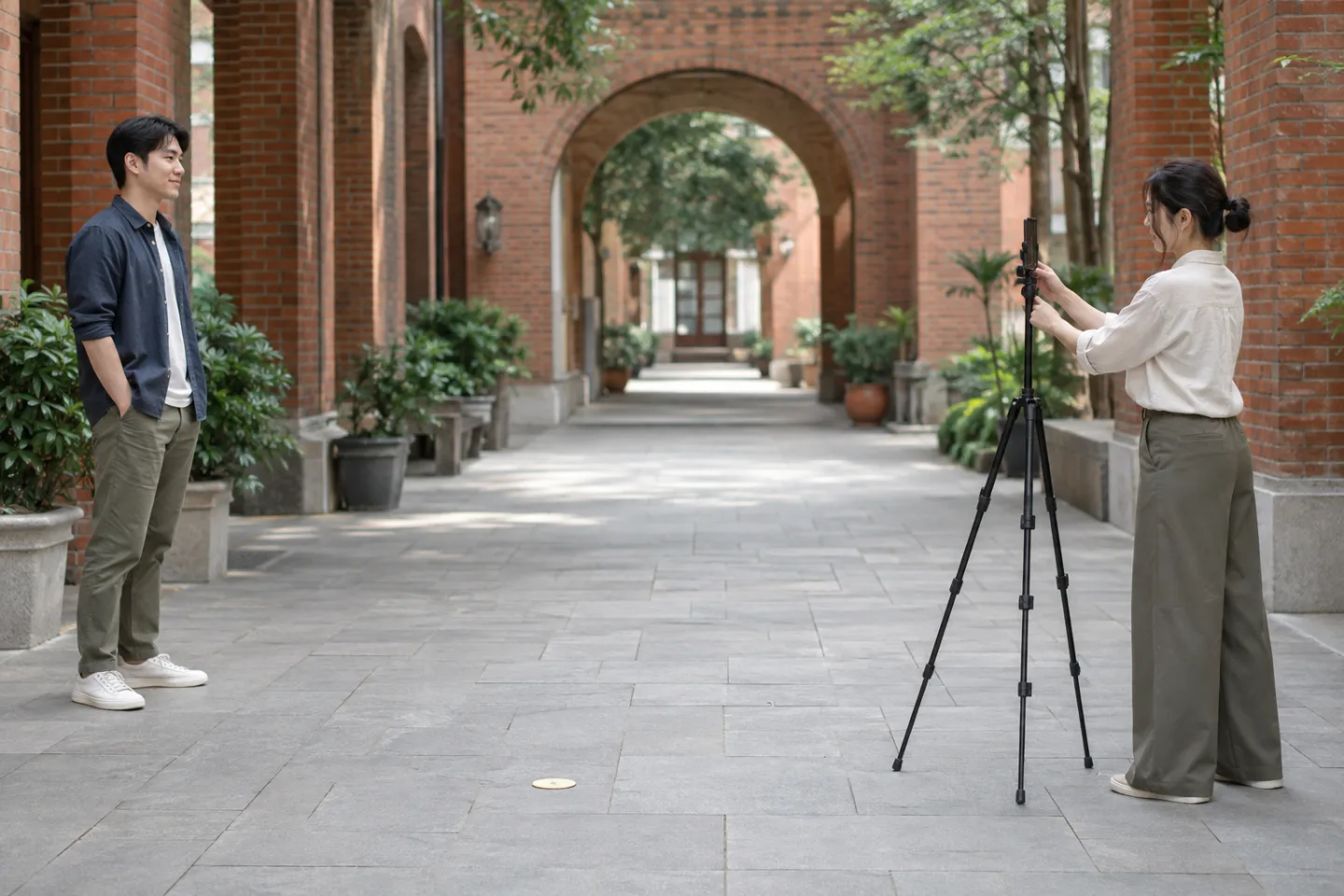
Use the rear camera or a camera on a tripod rather than an arm-length selfie. Place it at eye level, step back several feet and keep the device level. Face the lens directly with both ears similarly visible, shoulders relaxed and chin neutral. Choose soft, even light and a plain background. Keep hair away from the widest cheek area without pulling the skin. Remove filters, portrait reshaping and beauty effects, because they can alter edges or local proportions.
Take two or three frames without changing the setup, then choose the one with the most relaxed expression and clearest focus. A single frame can catch a blink, jaw tension or tiny head turn. Keep the uncropped original so the head outline and camera context remain visible. If you repeat the analysis later, match distance, lens, height and expression. Our guide to front and profile face analysis explains why the front view is the correct baseline for width while the profile answers different questions.
Measure consistently without pretending to be exact
First name the convention. If you use cheekbone width and upper-lip-to-brow height, keep that exact pair for every comparison. Mark the widest visible cheek points conservatively and choose the same vertical midline endpoints. Measure in pixels or millimeters on the same image; the unit cancels when width is divided by height. Record the result with the convention and date, not as a bare number that may later be compared with a different formula.
Expect a range, not a sacred decimal. Repeat the placement once and note how much the value moves. If the cheek edge is hidden, the head is rotated or the brow landmark is ambiguous, say the image is unsuitable. Software can place landmarks quickly, but speed does not remove uncertainty. A useful analysis explains what it saw and where the photo may be unreliable instead of adding extra decimals to create confidence.
Expression, soft tissue and grooming change the visible ratio
A smile raises the cheeks and changes the upper-lip position; jaw clenching can widen the lower outline; a lifted chin changes the projected height. Temporary puffiness, recent exercise, hydration and normal day-to-day soft-tissue changes can also affect the visible edges. These effects do not mean your underlying structure changed. They mean the photograph includes expression and soft tissue as well as bone.
Hair and beard boundaries can hide or extend the apparent outline. Dense side volume may make the head frame appear wider, while a high hairstyle emphasizes vertical length. A full beard can extend the lower face but does not directly alter the upper-face height used by many fWHR definitions. Keep grooming ordinary for the baseline, then treat deliberate styling as a separate experiment. Do not compare a tightly cropped, smiling selfie with a distant, neutral portrait and call the difference anatomical progress.

Read the ratio beside other facial proportions
fWHR covers one horizontal-to-vertical relationship. Facial thirds describe other vertical zones, while symmetry compares corresponding sides and the profile shows projection and silhouette. None can replace the others. If the ratio suggests a relatively broad upper face, that does not tell you whether the chin is long, whether the forehead is visible or how the nose and lips relate from the side. A complete reading keeps each observation in its lane.
Use the facial-thirds guide when your question concerns where vertical length sits, not just width relative to one upper-face span. Then look at the whole portrait from normal viewing distance. The best interpretation is usually plain language: broad-looking center, longer-looking center, or difficult to judge from this image. That description is often enough to choose a haircut or collar experiment without turning a photograph into a catalogue of measurements.
Use MogRise for one reversible style decision
MogRise is most useful here as a planning aid, not a ruler that declares an ideal. Start with clear front and profile photos and read the explained analysis once. Note whether the central face appears relatively broad, balanced or long in that setup, then combine the observation with hair density, beard growth, maintenance and personal style. Pick one question such as whether side volume, top height, stubble or a neckline changes the overall frame in the direction you prefer.
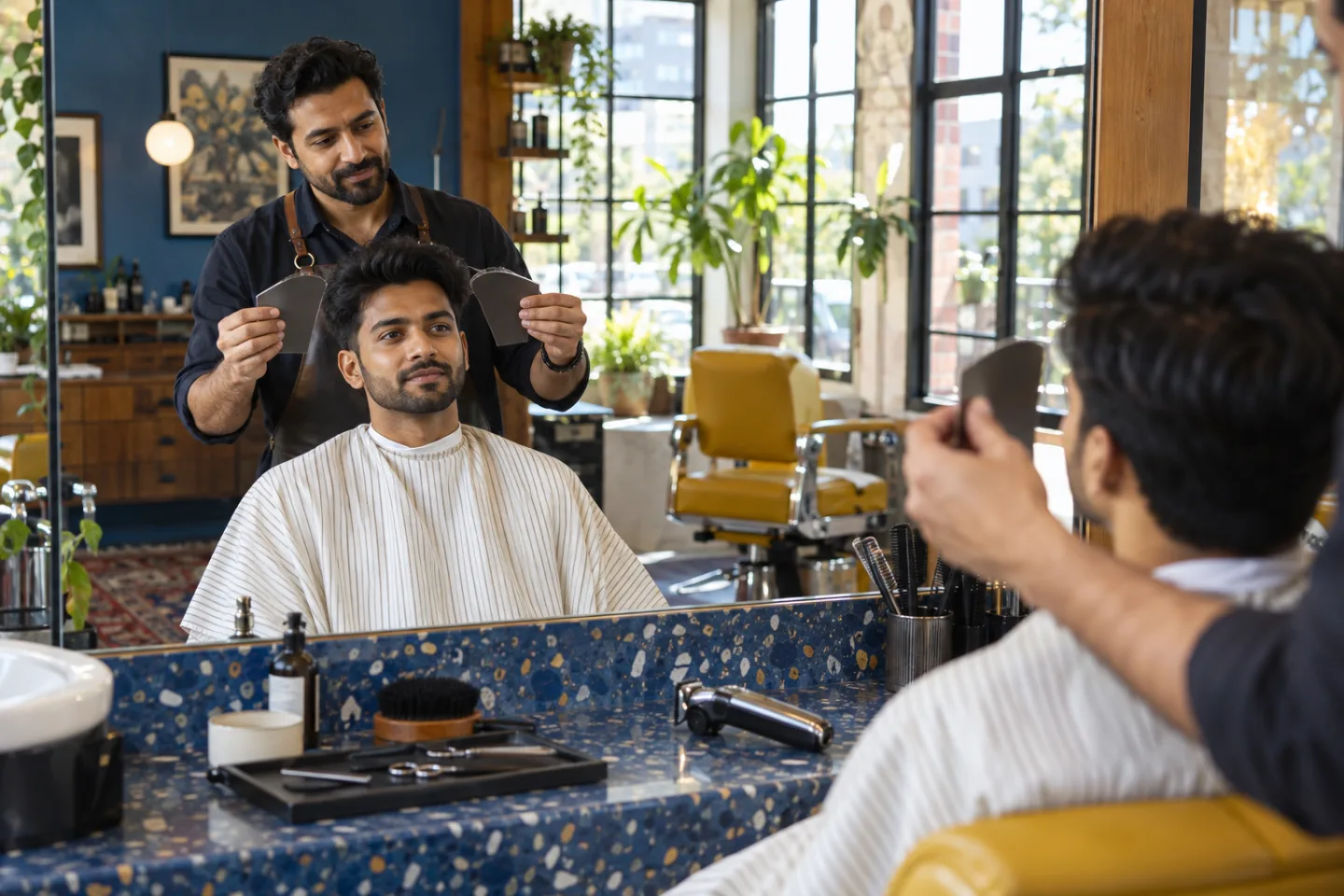
Test the least permanent option first. Ask a barber to preserve more side texture before cutting it tight, style the same haircut with lower and higher volume, or compare clean shave with short stubble if your growth supports both. Keep clothing, light and expression consistent when you review the result. MogRise is free to download, though that does not mean every feature or unlimited use is free. The useful outcome is a manageable decision, not repeated scanning for a better score.
Stop when the number stops helping
One careful baseline and one controlled style test are enough for most people. Repeating the measurement after every haircut, meal or bad photo creates noise rather than knowledge. Keep the note only if it helps you communicate with a barber, photographer or stylist. Delete it if it turns normal variation into constant checking. No healthy grooming plan requires you to optimize a facial ratio to a decimal.
The responsible conclusion is deliberately modest: facial width-to-height ratio can describe one relationship in a well-made front portrait. It cannot rank a person or reveal character, and different definitions can produce different numbers. Standardize the photo, name the landmarks, acknowledge uncertainty and use the observation only for a reversible choice you genuinely want. Your face is the whole expression people meet, not a fraction in a calculator.