
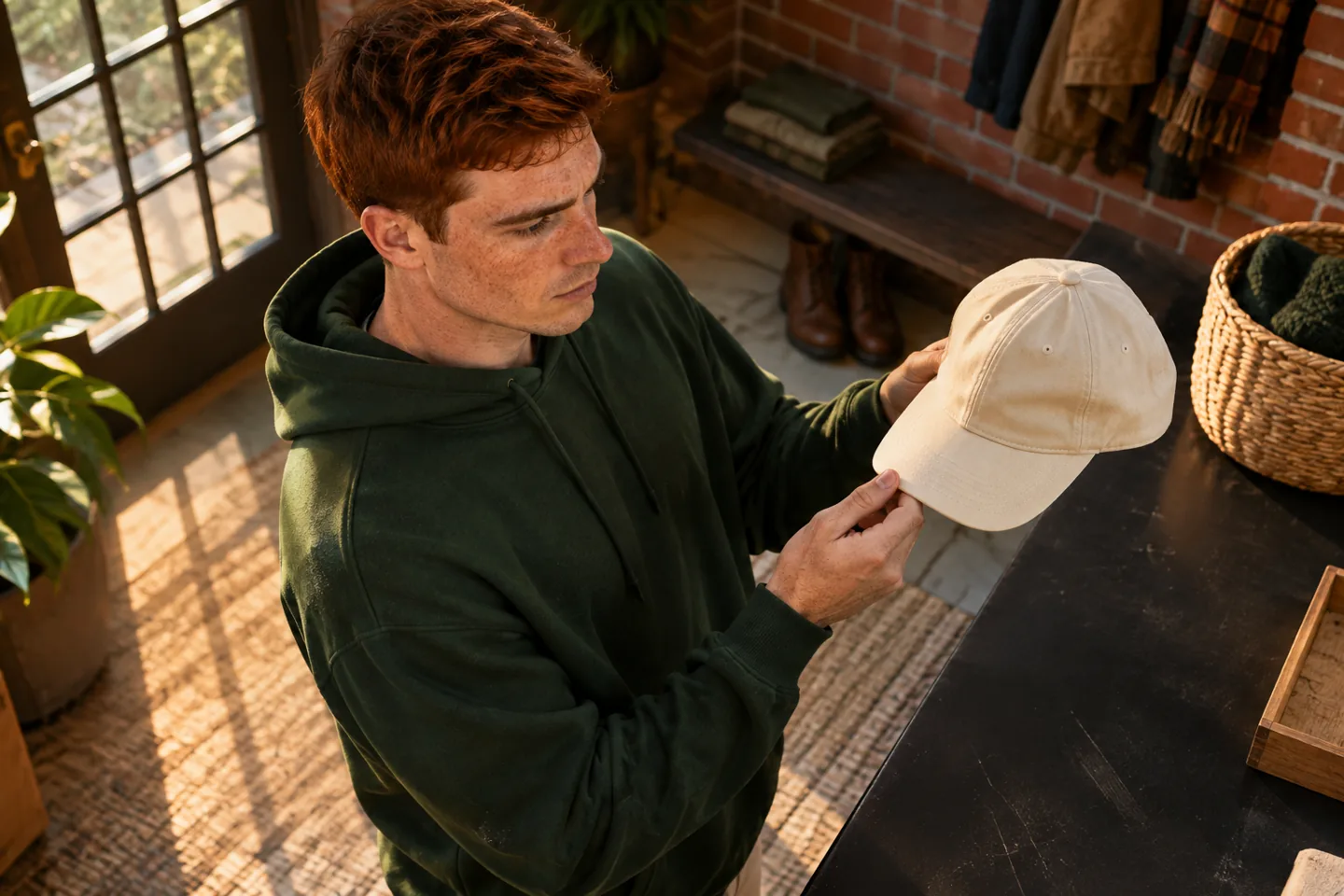
To clean a baseball cap, check the care label and the manufacturer's directions for that exact model before adding water. Remove ordinary loose dust gently, use a permitted localized cleaning method when needed and let the cap dry as directed without crushing its crown or bending its brim. A familiar cotton-looking exterior does not prove that the whole cap tolerates soaking or machine washing.
This guide concerns an ordinary personal cap in usable condition, not valuable restoration, specialist materials or contamination treatment. The aim is a cap you can comfortably keep wearing. You do not need a new accessory, an appearance score or an elaborate collection of cleaning products to make that decision. Start with what is actually dirty, what the label allows and whether you have enough time for the cap to dry before you need it again.
Clean a baseball cap by reading its own instructions
Turn the cap over and look for its care information before setting up a bowl of water. Note the fabric, any special trim and whether the instructions limit care to local cleaning. The crown, internal structure, brim and adjustment band may not all behave like the fabric you can see. If the label is missing or unclear, ask the maker about the exact model instead of borrowing a method from a cap that merely looks similar. Keep a distinction between an example photograph and permission for your own item: the illustrated cap does not establish what material is hidden inside yours.
New Era's cap-care guide favors careful local cleaning and warns against soaking a structured crown or cardboard brim. This is manufacturer guidance for its products, not permission to wash every cap the same way. The practical starting point is to keep the method compatible with your own item's directions. Do not use a washing machine, dishwasher, steam or hot drying as a shortcut when that compatibility is unknown.

Separate loose dust from a mark that needs attention
Look at the cap in ordinary light and identify the actual problem. A few loose hairs on the outer fabric require a different decision from a mark inside the band. Avoid treating the entire item just because one small area looks untidy. With a tool suitable for the fabric and permitted by its directions, remove loose debris gently rather than pressing it deeper into the surface. Keep rough household brushes away from delicate fabric and trim.
Work over a clean, dry surface with room to support the cap loosely. Do not grip the crown tightly while brushing another part, or bend the brim to make a photograph of the problem. If a brush catches, sheds fibers or changes the surface, stop. More pressure is not a useful response to an uncertain material. An incomplete cosmetic improvement is preferable to creating a new mark while trying to remove an ordinary bit of dust.

Prepare a small, controlled cleaning area
If the maker allows a damp local method, gather only what its directions specify. Use a clean cloth that will not transfer a strong color and keep the cap away from a crowded sink or an overflowing container. Follow any stated testing instructions on a discreet permitted area. A dramatic online stain recipe is not a substitute for compatibility with the actual fabric, dye, trim and internal structure of your item.
Keep the purpose narrow: remove the visible everyday mark with the least treatment the instructions allow. Do not combine detergents, household chemicals, fragranced sprays or homemade pastes in the hope that several methods will work better together. This article gives no universal stain-removal mixture. If the mark needs specialist care, leave it for the maker or an appropriate cleaner to assess. You can choose another clean accessory for today while that question remains open.
Treat the band without turning the crown into a bath
The inner band deserves its own inspection because it sits against the forehead. Open the cap enough to reach it without forcing the seams or stretching the adjustment. If localized cleaning is permitted, support the surrounding material and work only where needed with the specified method. Do not assume that a band which feels damp from wear makes the rest of the cap safe to immerse. Different parts can have different limitations.
After the allowed treatment, remove any residue in the way the manufacturer instructs. Inspect the area once rather than repeatedly scrubbing until the fabric resembles a new product photograph. A persistent mark does not prove that the cap is unclean or that stronger treatment is suitable. The goal is reasonable maintenance of a used personal item, not a guaranteed return to its original color. Stop if dye transfers, the surface changes or the structure begins to soften unexpectedly.
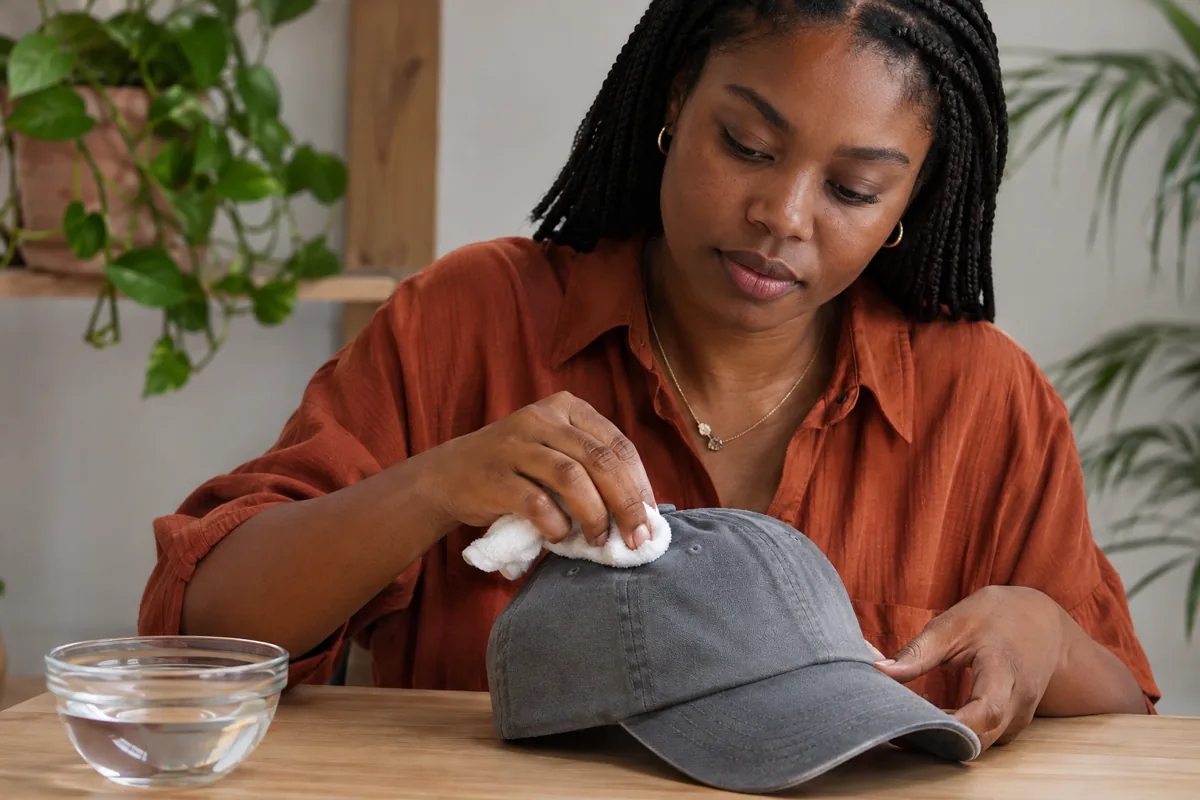
Give drying enough time and physical space
Choose the drying location before you start cleaning. It should be stable, clean and compatible with the care instructions, with room for the crown and brim rather than a pile of clothing on top. If support is recommended, use a suitable form without stretching the cap around something oversized. Do not pull a damp cap onto your head to force its shape, and do not use a hairdryer or radiator to rush an uncertain material.
Check both the outer fabric and the inner band before putting the cap away. A surface can feel ready while a folded section remains damp. Leave time for the permitted drying process rather than packing the item because you are leaving in a few minutes. This is a useful reason to do small maintenance after wear or on a day when another accessory is available. Care becomes easier when the schedule allows the final stage to finish.

Store the cap where the brim will not carry a load
Once the cap is ready, choose a shelf, suitable support or other storage position that does not flatten it beneath heavier items. Give the crown enough room and avoid sharply folding a brim that was not designed to fold. You do not need a display wall or a large organizer. A simple space where a bag, coat or stack of books will not land on it can solve the everyday problem.
Treat a travel bag as a separate packing decision. Do not force the cap into the last corner after everything else is packed. Make room for its shape and follow the maker's advice on suitable support. For other accessories, our glasses-cleaning guide also emphasizes caring for the actual item rather than using a rough cloth at the last minute. A small designated place makes it easier to find what you need without repeatedly handling and crushing it.
Check comfort separately from cleanliness
A clean cap can still feel wrong if the adjustment is too tight, the band rubs or the shape no longer suits your preference. Check those issues during ordinary wear instead of tightening the cap to hide a changed outline. If it is uncomfortable, choose a different fit or leave it off. Cleaning is maintenance, not a requirement to make an unsuitable accessory work. The cap should fit your day rather than dictate it.
Our shirt-collar fit guide makes a similar distinction between a neat appearance and a comfortable fit. You can value both. For a cap, notice whether it stays comfortably in place during normal movement without repeatedly adjusting the brim or pulling the band down. A photograph cannot settle that sensation for you. If a maintenance method changed the fit, do not immediately repeat it in the opposite direction; ask the maker before adding more heat, water or stretching.
Leave yourself a simple next-wear routine
At the end of the session, put the cap in its chosen place and keep its care information somewhere you can find again. A short note about the permitted method is more useful than a collection of dramatic cleaning videos. Next time, inspect the band and the outside before deciding whether any care is needed. There is no universal calendar interval in this guide: use the item's condition, your wear pattern and its actual directions.
If the cap is ready and comfortable, wear it and move on. If it needs more drying time, choose another option. If the material or a persistent mark remains uncertain, keep the question specific for the manufacturer rather than escalating through increasingly strong recipes. A finished routine is modest: understand the item, address what is necessary, let the process finish and store it without pressure. The accessory can remain a useful part of your style without looking untouched by ordinary life.