
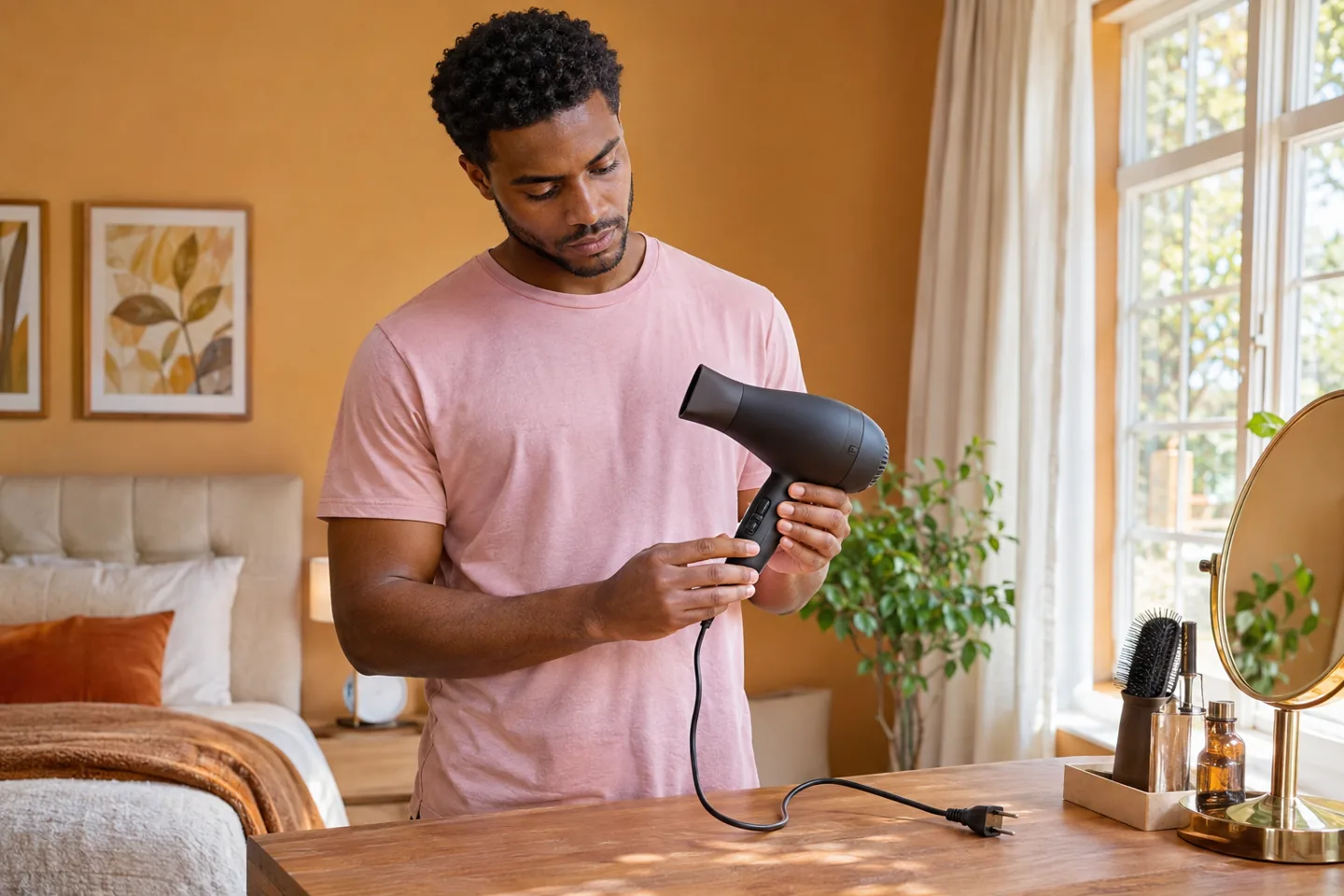
To understand how to blow dry hair, start with your dryer's instructions, gently remove excess water and choose a comfortable lower-heat setting suited to the task. Keep the equipment positioned and moving as its directions require, avoid repeatedly heating an already finished area and stop rather than working through discomfort. You do not need maximum heat or a salon-style finish for an ordinary morning routine.
This is a practical guide for using an intact personal dryer, not a repair manual or a promise of damage-free styling. Hair length, texture, usual styling and the actual device affect what is convenient. You can also choose not to blow dry on a particular day. The useful question is whether a small, manageable routine helps you get ready comfortably, not whether you can copy a polished tutorial with different hair and equipment.
How to blow dry hair starts before switching on
Name the task first: remove remaining dampness before leaving, settle a short section or prepare a familiar style. Those are different from building a complicated shape with several brushes. Put the tools you actually need within reach on a dry, clear surface and read the device instructions. Do not begin with unfamiliar attachments while rushing. If the dryer or cord is damaged, stop using it and follow the maker's service guidance instead of improvising a repair.
The American Academy of Dermatology's healthy-hair guidance recommends limiting heat styling and using low or medium settings. This supports keeping the heat demand modest; it does not provide one universal temperature or certify your device. Match the actual controls and directions to your task. Turning everything to its highest setting because you have less time is not the only way to simplify a morning. Often a simpler intended finish is the more practical adjustment.
Prepare the hair without turning the towel into a brush
Remove excess water gently with a suitable clean towel or T-shirt rather than vigorously rubbing. Work with the way your hair is arranged instead of twisting the lengths into a tight bundle just to feel finished sooner. Our towel-drying guide explains this preparation step separately. Preparation should make the next task easier to manage; it does not need to make the hair look fully styled before you even pick up the dryer.
If there are tangles, use a texture-appropriate gentle approach instead of pulling a brush through them while also handling a running device. Keep the routine manageable enough that your hands are not fighting two tasks. Arrange longer hair in accessible sections if that suits your normal method and the attachment guidance. For a short cut, unnecessary clips and a large round brush may add complication. You are allowed to choose the simpler setup that matches your hair.

Learn which control changes heat and which changes air
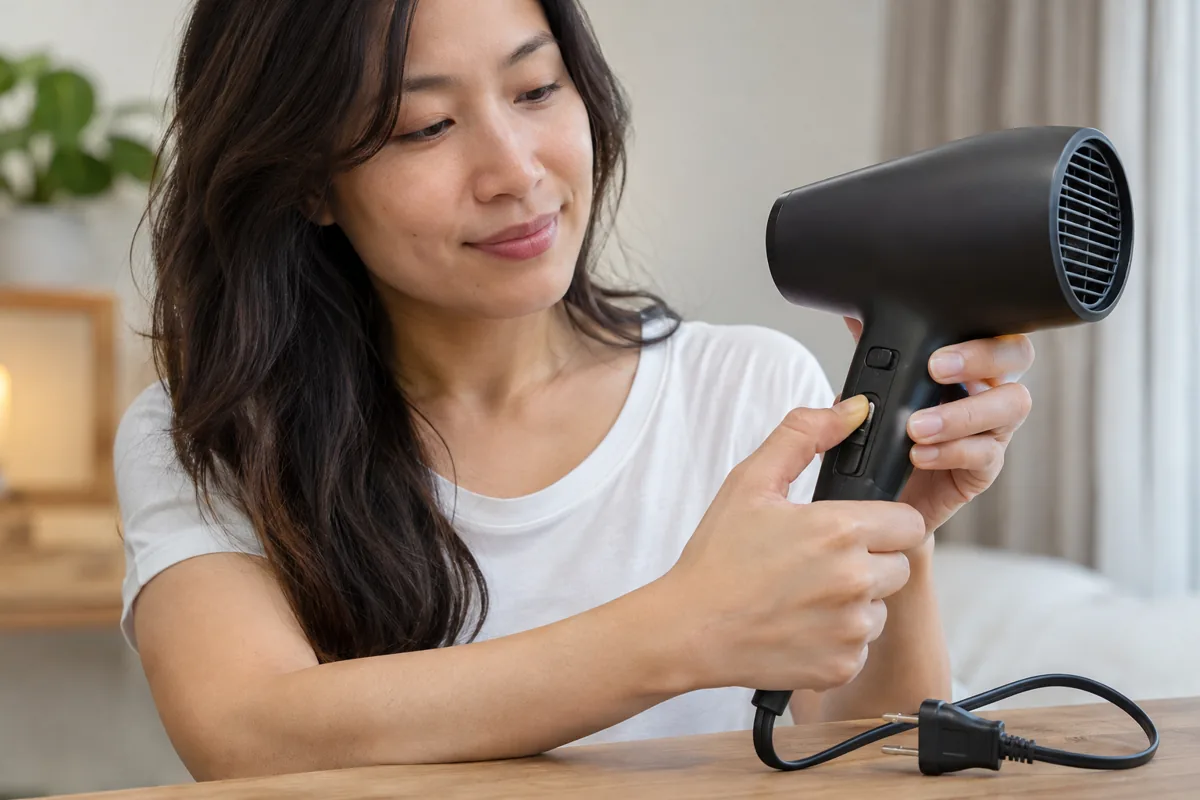
Before plugging in, identify the power, temperature and airflow controls in the manual. A device may combine or separate them, and familiar-looking symbols are not a reason to guess. Find the lower setting you intend to use and check how to switch off without changing your grip awkwardly. If a cool-air function is present, read what the maker says it does. This guide does not assume that every dryer has the same controls or attachments.
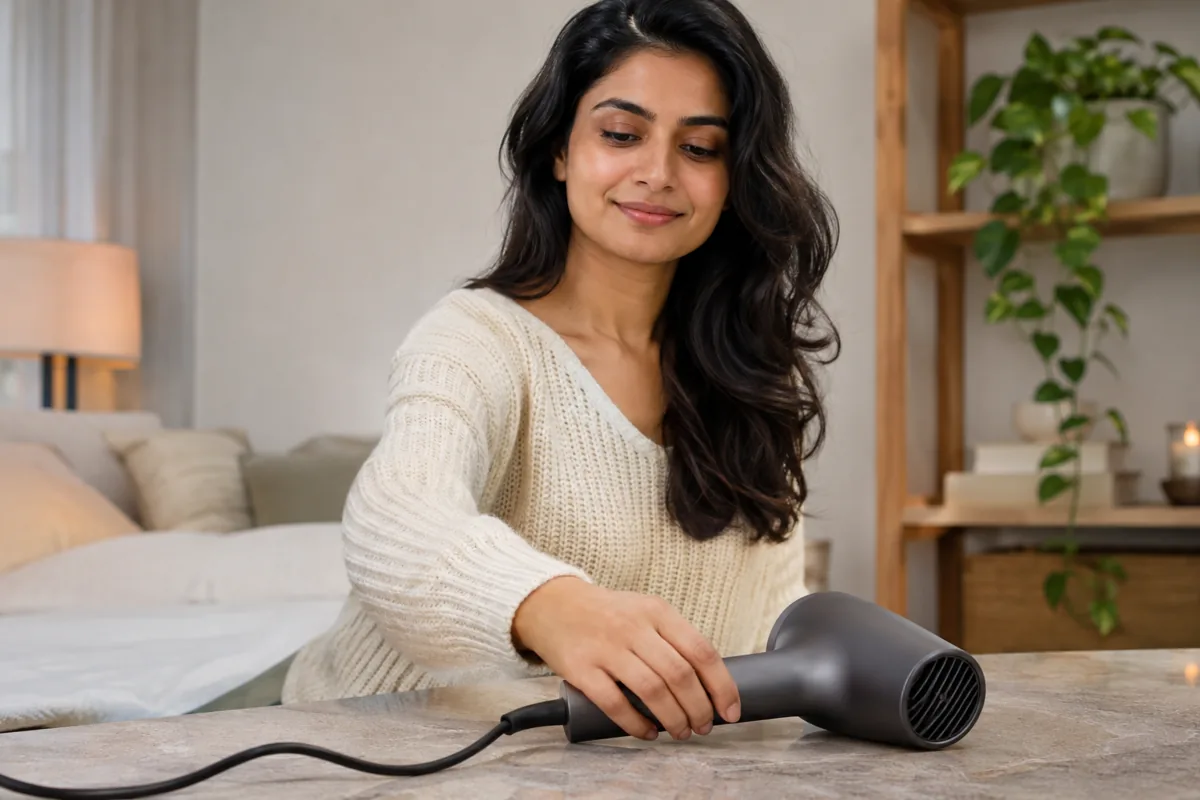
Choose your working position before beginning. The cord should reach without being pulled tight, and the air inlet must remain clear according to the instructions. Keep the device away from water and follow its electrical safety directions. Do not balance a running dryer on soft bedding while arranging your hair. A straightforward standing or seated setup with an uncluttered dry surface can remove distractions without buying another accessory or changing your entire grooming routine.
Keep the task moving rather than heating one spot
Use the distance, movement and attachment position specified for your dryer. Do not rest the outlet against hair or skin, and do not aim into the eyes. Keep your hands and hair clear of the inlet. As you work, move through the areas that need attention instead of returning automatically to the section nearest the mirror. A device illustration in a blog is not a substitute for the instructions supplied with the equipment you are actually holding.
If handling a brush and dryer together feels awkward, simplify rather than increasing heat to compensate. You might finish a basic drying task without trying to build volume at the same time. For longer or textured hair, ask a stylist to show a manageable method with your own hair type. You do not need to learn a complex technique from a short clip while the dryer is running. Practice the arrangement with the device switched off before making the task more involved.
Use comfort as a reason to pause
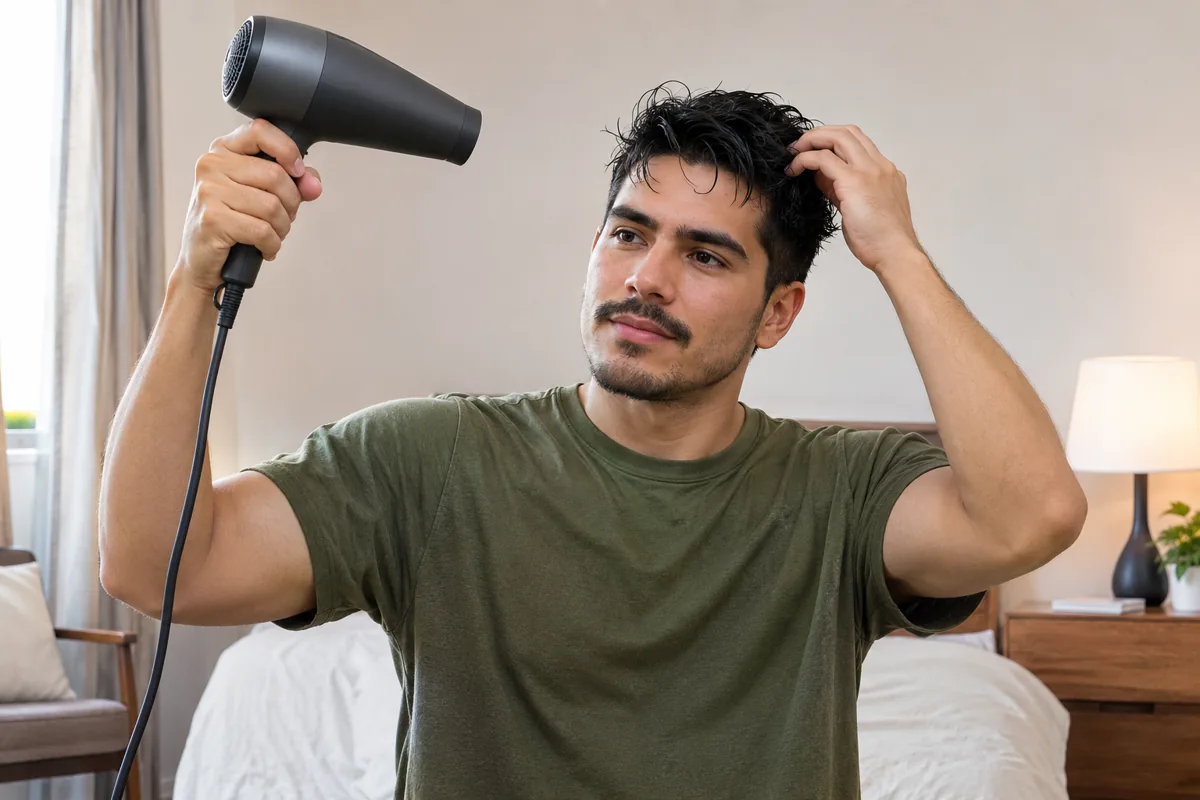
The process should not require enduring a hot scalp, tugging or an awkward arm position. Switch off and reassess if the setup becomes uncomfortable. Do not interpret discomfort as proof that the style is taking shape or that you should finish one more section before stopping. Change the task, lower the demand or leave the rest for another time. An everyday grooming routine is optional; completing a tutorial is not more important than being comfortable.
A product described as heat protection is not permission to use unlimited heat or ignore the directions. If you choose one, use it as labeled and make sure it suits your intended method. This article does not rank products or promise that a spray prevents every kind of damage. Avoid layering unfamiliar products to compensate for a rushed technique. A simple routine you can understand is easier to adjust than a collection of products whose roles are unclear.
Stop when the practical drying job is complete
Decide what finished means for your original task. If you only needed to address remaining dampness, repeatedly reheating a section to make it look identical to a filtered example adds a different task. Check the areas you intended to dry, switch off and give yourself a normal view of the result. Do not keep touching the same section and restarting merely because the overall finish is not salon-smooth. Ordinary texture is not a reason for endless repetition.
Treat drying and choosing a style as separate decisions. A conditioner routine that suits your hair may make ordinary handling more manageable, but it does not require a particular heat technique. Our conditioner guide discusses placement and amount as a separate step. Keep each part of the routine accountable to its own purpose. You can choose comfortable, simply dried hair today and reserve a more involved styling session for a time when it actually serves your plans.
Put the device away according to its directions
Switch off, unplug as instructed and place the dryer on a suitable clear surface while it finishes cooling. Keep the cord loosely arranged rather than tightly wrapping it around a hot body. Follow the manual's storage and care directions for your model. Do not open the casing, improvise repairs or start cleaning an attachment while the device remains connected. Maintenance and storage are separate tasks that deserve an unhurried moment after use.
Keep a simple place for the dryer so that next time you can inspect and reach it without pulling on the cord. If something looks or sounds abnormal during use, stop and consult the maker's instructions instead of repeating the session to see if it fixes itself. The useful routine ends with the equipment ready to store appropriately, not hidden under a pile of clothing while you rush out. A small consistent place helps make that ending easy to remember.
Choose a routine you can repeat without rushing
After the session, note one practical adjustment if needed: prepare the towel earlier, clear the surface or choose a simpler finish on busy mornings. You do not need a detailed diary of temperature settings or a photograph of every result. Keep the lesson about the task rather than turning hair preparation into another performance to score. A familiar routine can be successful because it takes less attention, even if it does not create a dramatic visual transformation.
On days when using the dryer does not help, choose another suitable approach for your hair and schedule. There is no requirement to style with heat every time you wash. The finished plan can be modest: gentle preparation, understood controls, a manageable lower-heat task, a comfortable stopping point and proper storage. Evaluate it in ordinary life. If the routine remains awkward, ask for a practical demonstration or simplify the intended result instead of adding more heat and more steps.